Naturalistic Art

2,121 Results
to
441
1,150
362
216
189
269
Overall Width
to
Overall Height
to
198
720
463
807
38
39
12
19
19
24
12
19
23
10
180
120,779
65,144
58,044
30,017
14,487
10,281
7,024
6,733
4,306
3,304
2,607
2,239
2,018
592
481
428
410
289
260
228
214
208
142
140
124
105
97
84
81
81
77
70
69
63
985
557

Use search to find more

135
81
43
37
36

Use search to find more

Style: Naturalistic
merchant
merchant

merchant

Located in New York, NY

Anton Chotka Anton Chotka (1881-1955) Orientalist figural table lamp merchant Austria, c. 1900 cold-painted bronze, marble, resin14¾ h × 9½ w × 9½ d in (37 × 24 × 24 cm)

Category

Early 1900s Naturalistic Art

Materials

Bronze

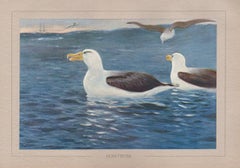
Albatross, colour process bird print, 1916

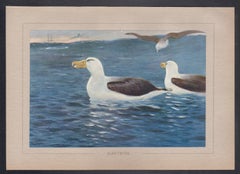
Albatross, colour process bird print, 1916

By Wilhelm Kuhnert

Located in Melbourne, Victoria

'Albatross' The print depicts two large albatrosses soaring low over a deep blue choppy sea, their dark brown backs and white undersides clearly rendered. A third seabird is visible...

Category

Early 20th Century Naturalistic Art

Materials

Lithograph

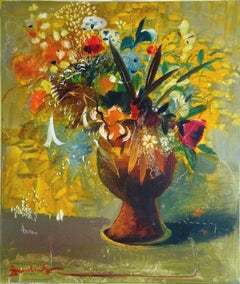
Summer flowers. 2002. Cardboard, oil, 71x60 cm

Summer flowers. 2002. Cardboard, oil, 71x60 cm

By Juris Zvirbulis

Located in Riga, LV

Juris Zvirbulis was born in 1944 in Riga. 1970 graduated from the Riga Secondary School of Applied Arts decorators department. 1971 Member Artists' Union of the Latvia. In 1971 F...

Category

Early 2000s Naturalistic Art

Materials

Oil, Cardboard

Original Flower Watercolor #9 by Robert Rives

Original Flower Watercolor #9 by Robert Rives

Located in Paonia, CO

Beautifully rendered flower watercolor #9 by American artist Robert Rives. Rives uses the medium to its full depth in his details and color ranges. Painted on a heavy paper board w...

Category

20th Century Naturalistic Art

Materials

Watercolor

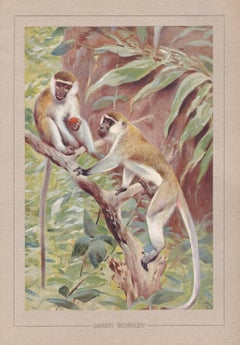
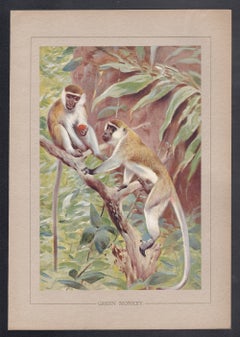
Green Monkey, colour process animal print, 1916

Green Monkey, colour process animal print, 1916

Located in Melbourne, Victoria

'Green Monkey' The print depicts two green monkeys, also known as vervet monkeys, in a lush tropical forest scene. One monkey sits on a branch holding a small red fruit while the se...

Category

Early 20th Century Naturalistic Art

Materials

Lithograph

Indian Python, colour process snake print, 1916

Indian Python, colour process snake print, 1916

Located in Melbourne, Victoria

'Indian Python' The print depicts a large Indian Python coiled around a tree branch amid dense grass, with its jaws agape attacking a vivid red bird with spread wings. The illustrat...

Category

Early 20th Century Naturalistic Art

Materials

Lithograph

Der Alpensee

Der Alpensee

By Karl Kaufmann

Located in Atlanta, GA

Karl Kaufmann was an Austrian painter best known for his depictions of cities and landscapes throughout Europe. His work is notably atmospheric, and often highlights the particular a...

Category

19th Century Naturalistic Art

Materials

Oil

50: Sailing Barges

50: Sailing Barges

Located in Columbia, MO

Edward William Cooke was born in Pentonville. His father, George Cooke, and uncle William Bernard Cooke were also well-known line engravers. Growing up in an environment of artists,...

Category

1820s Naturalistic Art

Materials

Etching

The Colony
The Colony

The Colony

Located in London, GB

Born in Surrey in 1967, Lorna Holdcroft-Kirin is now based in Suffolk, England. Having trained at the Wimbledon School of Art she was awarded the Prize for Drawing. She then went o...

Category

2010s Naturalistic Art

Materials

Acrylic

3 plates from The Wondrous Transformation of Caterpillars & their Strange Diet..

3 plates from The Wondrous Transformation of Caterpillars & their Strange Diet..

By Maria Sibylla Merian

Located in Middletown, NY

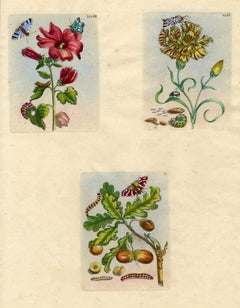
Three plates from The Wondrous Transformation of Caterpillars and their Strange Diet of Flowers. “Wolfsmelk Rupsen;" “Wolfsmilch, Raupe und Schmetterling" Amsterdam: J F Bernard, 1730. Each an engraving with hand coloring in watercolor and gouache printed on one sheet of watermarked Honig cream laid paper, each measures 6 1/4 x 5 inches (157 x 121 mm), sheet measures 20 5/8 x 14 inches (522 x 355 mm), full margins. With handling creases in the lower right sheet quadrant, as well as minor, loose cockling, otherwise in very good condition. The colors are superb with exceptionally fresh and bright saturation. Engraved between 1679 and 1683, printed 1730. Plates included: XLVIII; XLIX & L. MARIA SIBYLLA MERIAN was one of the most highly respected entomologists of the 17th century, and remains today one of the field's most significant figures. A German-born naturalist and scientific illustrator, she reared herself on the study of caterpillars, and made tremendous contributions to the knowledge of the life cycles of numerous species. Until her detailed and careful study of the process of metamorphosis it was thought that insects were "born of mud," through spontaneous generation. Trained as a miniature painter by her stepfather, she published her first book of illustrations in 1675, at the age of 28. In 1679, Merian published the first volume of the two-volume series on caterpillars, The Wondrous Transformation of Caterpillars and their Strange Diet of Flowers; the second volume followed in 1683. Each volume contained 50 plates that she engraved and etched. In 1699, Merian traveled to Dutch Guiana...

Category

Early 18th Century Naturalistic Art

Materials

Watercolor, Engraving

View of Tenerife with Mount Teide, 1902, Signed Gouache on Paper.

View of Tenerife with Mount Teide, 1902, Signed Gouache on Paper.

Located in Stockholm, Stockholm

Panoramic maritime view of Tenerife with Mount Teide, 1902 by Sir John Charles Ardagh (1840–1907). Gouache and watercolour on paper, signed and dated lower right: Tenerife 1902 – J.C...

Category

Early 1900s Naturalistic Art

Materials

Paper, Watercolor, Gouache

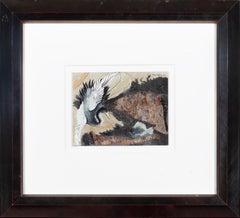
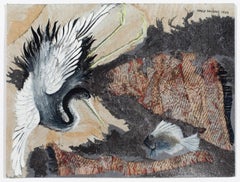
Bird Collage No. 2
Bird Collage No. 2

Bird Collage No. 2

By Kelly Fearing

Located in Columbia, MO

Born in 1918 in Fordyce, Arkansas and raised in Louisiana, Fearing first studied art at Louisiana Tech University, and later earned a master’s degree at Columbia University in New Yo...

Category

Mid-20th Century Naturalistic Art

Materials

Silver

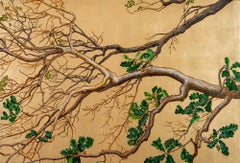
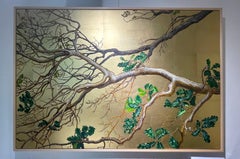
Mighty oak on a gold-leaf background by  Italian botanical artist

Mighty oak on a gold-leaf background by Italian botanical artist

By Margherita Leoni

Located in Milan, IT

The artist has an elegant mark of nature, and the experience of working en plein air allows her to capture emotions that would otherwise not be possible. She is considered Italy's best botanical artist and collaborates with many botanical gardens where she also holds watercolour courses, a technique she masters like few contemporary artists. The artist herself prepared the background in real, stainless gold, which gives it a modern, warm surface that chameleonically matches the colours of the surrounding walls. Margherita Leoni was born and raised in Italy, however, she spent most of her adult life in San Paulo, Brazil. It was there that she started a collaboration with the botanical faculty of the local university, allowing her to develop interesting research in rare botanical species studies and drawings. For this reason, most of her artworks, illustrate Brasilian botanical species, both rare and common. The artist's mastery of watercolour allows her to take part in botanical expeditions where she paints in plein air. Given her exquisite watercolour technique and her extensive botanical knowledge, Margherita Leoni is considered the heir of Margaret Mee. Among her most important exhibitions, three of her artworks were selected by Shirley Sherwood...

Category

2010s Naturalistic Art

Materials

Canvas, Oil

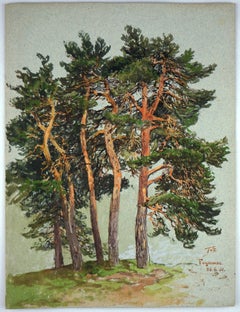
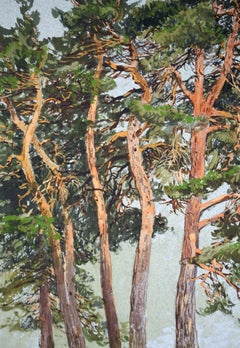
Norwegian Pine Grove - The inner glow of the trees -

Norwegian Pine Grove - The inner glow of the trees -

Located in Berlin, DE

Themistokles von Eckenbrecher (1842 Athens - 1921 Goslar), Norwegian pine grove, 1901. Watercolor on blue-green paper, 30 x 22 cm. Signed, dated and inscribed in his own hand "TvE. Fagermes [i.e. Fagermes]. 26.6.[19]01." - Slight crease throughout at left margin, otherwise in good condition. About the artwork Themistokles von Eckenbrecher often traveled to Norway to study the nature that fascinated him there. On June 26, 1901, near the southern Norwegian town of Fagernes, in the summer evening sun, he saw a small pine grove, which he immediately captured in a watercolor. He exposed the trees growing on a small hill in front of the background, so that the pines completely define the picture and combine to form a tense motif. The tension comes from the contrast of form and color. The trunks, growing upward, form a vertical structure that is horizontally penetrated by the spreading branches and the pine needles, which are rendered as a plane. This structural tension is further intensified by the color contrast between the brown-reddish iridescent trunks and branches and the green-toned needlework. Themistokles von Eckenbrecher, however, does not use the observed natural scene as an inspiring model for a dance of color and form that detaches itself from the motif and thus treads the path of abstracting modernism. Its inner vitality is to be brought to light and made aesthetically accessible through the work of art. It is precisely in order to depict the inner vitality of nature that von Eckenbrecher chooses the technique of watercolor, in which the individual details, such as the needles, are not meticulously worked out, but rather a flowing movement is created that unites the contrasts. The trees seem to have formed the twisted trunks out of their own inner strength as they grew, creatingthose tense lineations that the artist has put into the picture. The inner strength continues in the branches and twigs, culminating in the upward growth of the needles. At the same time, the trunks, illuminated by the setting sun, seem to glow from within, adding an almost dramatic dimension to the growing movement. Through the artwork, nature itself is revealed as art. In order to make nature visible as art in the work, von Eckenbrecher exposes the group of trees so that they are bounded from the outside by an all-encompassing contour line and merge into an areal unity that enters into a figure-ground relationship with the blue-greenish watercolor paper. The figure-ground relationship emphasizes the ornamental quality of the natural work of art, which further enforces the artwork character of the group of trees. With the presentation of Themistokles von Eckenbrecher's artistic idea and its realization, it has become clear that the present watercolor is not a study of nature in the sense of a visual note by the artist, which might then be integrated into a larger work context, but a completely independent work of art. This is why von Eckenbrecher signed the watercolor. In addition, it is marked with a place and a date, which confirms that this work of nature presented itself to him in exactly this way at this place at this time. At the same time, the date and place make it clear that the natural work of art has been transferred into the sphere of art and thus removed from the time of the place of nature. About the artist Themistocles' parents instilled a life of travel in their son, who is said to have spoken eleven languages. His father, who was interested in ancient and oriental culture, was a doctor and had married Francesca Magdalena Danelon, an Italian, daughter of the British consul in Trieste. During a stay in Athens - Gustav von Eckenbrecher was a friend of Heinrich von Schliemann and is said to have given him crucial clues as to the location of Troy - Themistokles saw the light of day in 1842. After an interlude in Berlin, where Themistokles was educated at the English-American School, the journey began again. From 1850 to 1857 the family lived in Constantinople, after which the father opened a practice in Potsdam, where Themistokles, who wanted to become a painter, was taught by the court painter Carl Gustav Wegener. In 1861 the von Eckenbrechers left Potsdam and settled in Düsseldorf. There Themistokles received two years of private tuition from Oswald Aschenbach, who greatly admired the talented young artist. After his artistic training, he undertook extensive travels, often accompanied by Prince Peter zu Sayn-Wittgenstein, which took him to northern and eastern Europe, but above all to the Middle East and even to South America. The paintings that resulted from these journeys established his artistic reputation and led to his participation in large panoramas such as the 118 x 15 metre Entry of the Mecca Caravan into Cairo, painted for the City of Hamburg in 1882. 1882 was also the start of a total of 21 study trips to Scandinavia, most of them to Norway, and the unique Norwegian landscape with its rugged fjords became a central motif in his work. Along with Anders Askevold and Adelsteen Normann...

Category

Early 1900s Naturalistic Art

Materials

Watercolor

"Jockey, Wife, & Lion" Modern Naturalistic Figurative Portrait Oil Painting

"Jockey, Wife, & Lion" Modern Naturalistic Figurative Portrait Oil Painting

Located in Houston, TX

Modern naturalistic portrait painting by well-known Houston-based artist Herb Mears. The work features a detailed rendering of a jockey wearing a yellow and blue outfit standing next to his wife and a young lion. Signed by the artist in the front lower right corner. Retains the original DuBose Gallery label on the reverse. Currently hung in a complementary frame. Dimensions Without Frame: H 48 in. x W 54 in. Artist Biography: Born in New York City in 1923, Herb Mears was interested in art from a young age. He studied under Fernand Leger in Paris and went on to paint and study in various studios in France and Italy before his arrival in Houston in 1951. With colleague David Adickes, whom he had met in Paris, Mears decided to open an art school. Their Studio of Contemporary Arts finally settled in an old building on Main Street with Mears and Adickes hoping to give classes to potential students. However money was tight and Mears found himself as a draftsman for Houston Lighting and Power Company, a job he excelled at and enjoyed. Later, Mears was involved in the Contemporary Arts Association, frequently making trips to ensure security in addition to enjoying the art scene the Association provided. From the CAA to the Art League of Houston and the Museum of Fine Arts, Mears began to gain recognition. An abstract, or non-objective piece as he called it, won a prize at a competition held by the Museum of Fine Arts, earning him a teaching position at the Museum School. Mears also taught at the Contemporary Arts Museum, University of Houston...

Category

20th Century Naturalistic Art

Materials

Oil, Panel

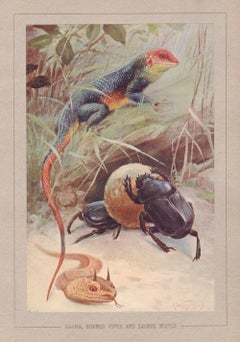
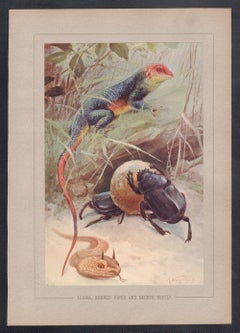
Agama, Horned Viper and Sacred Beetle, colour process print, 1916

Agama, Horned Viper and Sacred Beetle, colour process print, 1916

Located in Melbourne, Victoria

'Agama, Horned Viper and Sacred Beetle' The print depicts three North African creatures in a naturalistic setting: a brilliantly coloured agama lizard with a vivid red head and irid...

Category

Early 20th Century Naturalistic Art

Materials

Lithograph

Lipton Challenges the Cup

Lipton Challenges the Cup

By Pete Peterson

Located in Columbia, MO

Born in Denver, Colorado, in 1931, Peterson spent four years at sea with the U.S. Navy. His principal duty – as a hand on an ocean-going tug sailing the Aleutian islands, North Pacif...

Category

21st Century and Contemporary Naturalistic Art
Materials

Screen

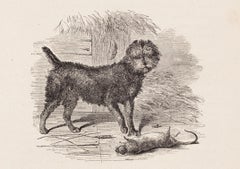
"Peto, " a Scotch Terrier

"Peto, " a Scotch Terrier

Located in Columbia, MO

"Peto, " a Scotch Terrier 1887 Etching

Category

Late 19th Century Naturalistic Art
Materials

Etching

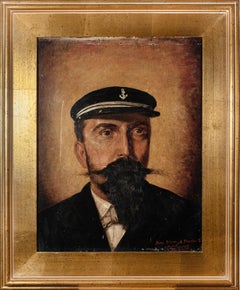
Captain
Captain

Captain

Located in Columbia, MO

F. CLEVEROT Captain 1898 Oil on panel 18 x 14 inches Framed: 28 x 24 inches Hand signed lower right recto

Category

19th Century Naturalistic Art
Materials

Oil, Wood Panel

Naturalistic art for sale on 1stDibs.

Find a wide variety of authentic Naturalistic art available for sale on 1stDibs. Works in this style were very popular during the 21st Century and Contemporary, but contemporary artists have continued to produce works inspired by this movement. If you’re looking to add art created in this style to introduce contrast in an otherwise neutral space in your home, the works available on 1stDibs include elements of blue, orange, green, red and other colors. Many Pop art paintings were created by popular artists on 1stDibs, including Miguel Winograd , John James Audubon, McKenney & Hall, and William Curtis. Frequently made by artists working with Paint, and Engraving and other materials, all of these pieces for sale are unique and have attracted attention over the years. Not every interior allows for large Naturalistic art, so small editions measuring 0.5 inches across are also available. Prices for art made by famous or emerging artists can differ depending on medium, time period and other attributes. On 1stDibs, the price for these items starts at $38 and tops out at $191,816, while the average work sells for $863.