Naturalistic Art

2,121 Results
to
441
1,150
362
216
189
269
Overall Width
to
Overall Height
to
198
720
463
807
38
39
12
19
19
24
12
19
23
10
180
120,779
65,144
58,044
30,017
14,487
10,281
7,024
6,733
4,306
3,304
2,607
2,239
2,018
592
481
428
410
289
260
228
214
208
142
140
124
105
97
84
81
81
77
70
69
63
985
557

Use search to find more

135
81
43
37
36

Use search to find more

Style: Naturalistic
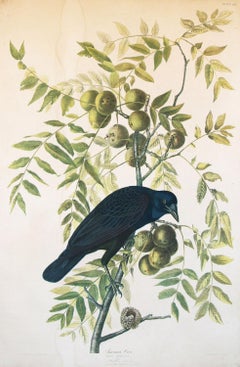
American Crow 1858 Chromolithograph by J.J. Audubon Plate, Julius Bien Edition

American Crow 1858 Chromolithograph by J.J. Audubon Plate, Julius Bien Edition

By John James Audubon

Located in Paonia, CO

American Crow by J.J. Audubon from his Birds of America folio shows an adult male crow in a Black Walnut bush with a nest of a Ruby-Throated Hummingbird in a branch below the crow. This original chromolithograph plate no. 226 is in good condition with a repairable water mark in the image on the left side as can be seen in the photos. The ” Birds of America” by John James...

Category

1850s Naturalistic Art

Materials

Lithograph

Dunkeld, Perth
Dunkeld, Perth

Dunkeld, Perth

By Alfred de Breanski Sr.

Located in Hillsborough, NC

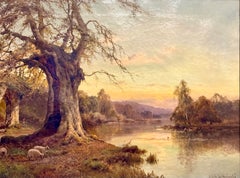
Alfred de Breanski Sr is one of the finest plein art artists of the Scottish Highlands. Renowned for capturing the fleeting light of sunset and sunrise, de Breanski masters layers an...

Category

Late 19th Century Naturalistic Art

Materials

Oil, Canvas

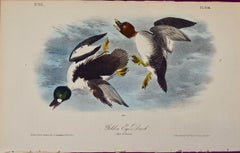
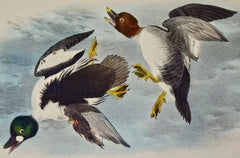
Golden Eye Duck: an Original 1st Edition Hand Colored Audubon Bird Lithograph

Golden Eye Duck: an Original 1st Edition Hand Colored Audubon Bird Lithograph

By John James Audubon

Located in Alamo, CA

An original rare and extremely collectible first edition John James Audubon hand colored royal octavo lithograph entitled "Golden Eye Duck", No. 82, Plate 406, from Audubon's "Birds of America". It was lithographed, printed and colored by J. T. Bowen and published in Philadelphia between 1840-1844. It depicts male and female Golden Eye ducks in flight. This original rare first edition hand colored Audubon bird lithograph is in excellent condition. The sheet measures 6.25" x 10". The original text pages, pages 362-366, from Audubon's publication are included. John James Audubon (1785-1851) was a naturalist and artist. He was initially unsuccessful financially prior to the publication of his famous work “The Birds of America”, spending time in debtor’s prison, once stabbing a disgruntled investor in self-defense. However, his obsession with birds and art motivated him to persist in his goal of documenting every bird in America via his watercolor paintings and publishing his works for all to enjoy. Audubon's first illustrations were published in a large elephant folio size. Due to their expense they were purchased in rather small numbers by the wealthy. To reach a larger audience, Audubon, with the help of his sons and J. T. Bowen, published a smaller octavo sized lithograph version, which were much more affordable. With the success of his bird projects, Audubon then turned his attention to four-legged animals. He explored the Missouri River in 1843 sketching the four-legged animals he encountered in their natural setting. His expedition covered some of the same regions recently explored by Lewis and Clark, traveling from present day Alaska to Mexico. Audubon realized that this was an opportunity to document these animals in the still relatively pristine American wilderness, before man encroached on their environment. Between 1845 and 1848, Audubon and his sons John Woodhouse Audubon and Victor Gifford Audubon produced a set of elephant folio sized lithographs that were primarily engraved and hand colored by J. T. Bowen in Philadelphia. The publication, which included text descriptions of the animals was published 3 years before Audubon died. As with the birds, this was followed by a three-volume set of 155 octavo-sized plates entitled “The Quadrupeds of North America” completed and published by Audubon’s sons, John, Jr. and Victor. Audubon prints continue to be popular and a wise investment. The double elephant folio set...

Category

Mid-19th Century Naturalistic Art

Materials

Lithograph

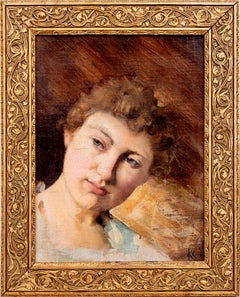
Female Head Study, Signed 1883 Oil on Canvas, 34 x 42 Portrait

Female Head Study, Signed 1883 Oil on Canvas, 34 x 42 Portrait

Located in Stockholm, Stockholm

Female Head Study signed with monogram and dated 1883 lower right by Axel Kulle (1846–1908). Oil on canvas laid down on panel. Original giltwood frame with relief ornamentation. The ...

Category

1880s Naturalistic Art

Materials

Canvas, Oil, Cardboard

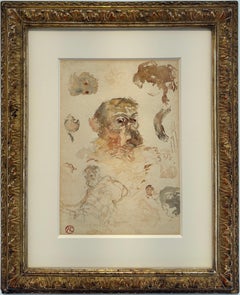
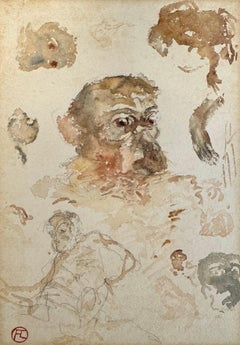
"Singes (Monkeys)" 1881 by Henri de Toulouse-Lautrec Watercolor & Graphite Study

"Singes (Monkeys)" 1881 by Henri de Toulouse-Lautrec Watercolor & Graphite Study

By Henri de Toulouse-Lautrec

Located in Yardley, PA

About this work: Before he became the celebrated chronicler of Montmartre’s nightlife, Lautrec was surrounded by a different kind of spectacle. At his family’s estates, the young art...

Category

1880s Naturalistic Art

Materials

Paper, Watercolor, Graphite

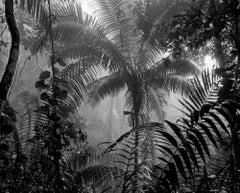
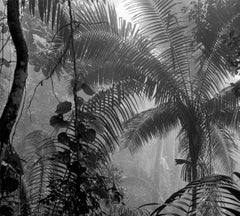
Bosque Húmedo Tropical II Nuquí, Silver Gelatin Print

Bosque Húmedo Tropical II Nuquí, Silver Gelatin Print

By Miguel Winograd

Located in Miami Beach, FL

The artist looks for a path between tangled branches. Reconfiguring a personal archive of diverse Colombian landscapes, experimenting with a variety of printing materials to reconstr...

Category

21st Century and Contemporary Naturalistic Art

Materials

Silver Gelatin, Black and White

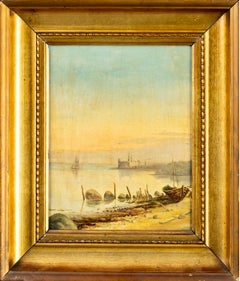
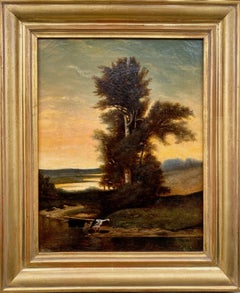
Sunset at Öresund, 19th Century Oil on Canvas, Original Gilt Frame

Sunset at Öresund, 19th Century Oil on Canvas, Original Gilt Frame

Located in Stockholm, Stockholm

Sunset at Öresund with Kronborg Castle, late 19th century Danish school, oil on canvas. Original gilt wood frame. The present small format painting depicts Öresund at dusk, viewed from the Danish coast, with Kronborg Castle visible across the water in the middle distance. The castle is shown in a subdued atmospheric light, its towers and buildings softly defined against the pale evening sky. Several sailing boats are visible on the Sound, while in the foreground a small wooden boat has been hauled up onto the sandy shore. Rocks, posts and traces of seaweed provide additional detail along the water's edge. The work, most likely from the end of the 19th century, is executed on an unusually small canvas for a finished coastal view of this type. The intimate format, measuring only 18 × 14 cm, suggests that it may have been painted as a small personal memento, study, or gift, rather than as a formal exhibition work. The restrained palette of pale blue, ochre, grey and warm yellow is particularly effective in conveying the evening light. The distant architecture is handled with a light and economical touch, while the foreground boat and shoreline are painted with more defined brushwork. Despite its modest dimensions, the artist has created a convincing sense of recession from the beach across the water towards Kronborg. Kronborg and the surrounding coastline of northern Zealand were important subjects for Danish artists throughout the 19th century. The area around Helsingør, Kronborg and Øresund attracted painters from the Danish Golden Age onwards, while the coast and fishing communities continued to provide subjects for later 19th-century artists. Marine painting was an established speciality within Danish art, with artists such as Carl Dahl, Carl Frederik Sørensen...

Category

Late 19th Century Naturalistic Art

Materials

Canvas, Oil

Botanical Studies, Signed and Dated 1898

Botanical Studies, Signed and Dated 1898

Located in Stockholm, Stockholm

Three botanical studies, watercolor on paper, mounted together in a single frame. Signed and dated Ester Brunstedt, 1898 on the reverse. This elegant group of three botanical waterco...

Category

1890s Naturalistic Art

Materials

Paper, Watercolor

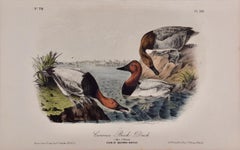
Canvass Back Duck: An Original 19th C. Audubon Hand-colored Bird Lithograph

Canvass Back Duck: An Original 19th C. Audubon Hand-colored Bird Lithograph

By John James Audubon

Located in Alamo, CA

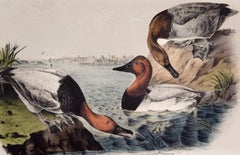
This is an original John James Audubon hand-colored lithograph entitled "Canvass Back Duck, 1. Male 2. Female, View of Baltimore, Maryland", No. 79, Plate 395 from Audubon's "Birds o...

Category

Late 19th Century Naturalistic Art

Materials

Lithograph

Scottish Iona Island, Seas, shore, sails and coastline, 19th Century

Scottish Iona Island, Seas, shore, sails and coastline, 19th Century

By Duncan Cameron

Located in Hillsborough, NC

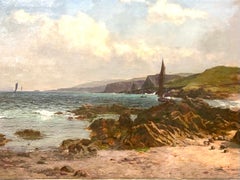
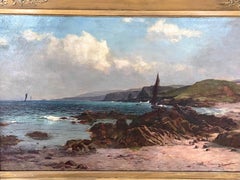
Fine painting of iconic Iona Island coast by celebrated Scottish artist Duncan Cameron (1837-1916). Renowned for his landscape paintings, this work captures the natural light on the sea, sand and rocks with splashes of rich color under a big sky. Iona off the west coast of Scotland, has attracted artists for for its dramatic scenery and northern light, including the Scottish Colourists who favored the fresh pure light. The cliffs and coastal rocks are reminiscent of works by Samuel Peploe, John MacLauchlan Milne, Francis Cadell, and Duncan Fergusson of this fabled island. In 1876 Cameron won a Gold Medal for landscape painting, at the Crystal Palace exhibition. The year after this painting (circa 1870s) Cameron began exhibiting in the Royal Academy, Society of British Artists, and Royal Scottish Academy, showing his work consistently from 1880. Other venues for exhibiting his work include the Glasgow Institute, Walker Art Gallery in Liverpool, Manchester City Art Gallery, and the Royal Hibernian Academy. His work is sold today in Fine Art Galleries in the UK and in Saltire Gallerie, USA. His landscape paintings are widely acclaimed, and this landscape painting of considerable size and detail is a fine example. Born in Perthshire, Cameron studied in Dundee and in South Kensington, London. He later died in Edinburgh. The highest auction sale of his work reached nearly 20,000 GBP. He was widely acclaimed as a landscape artist, painting Scottish farmlands and haystacks, coastal scenes and lochs. In this work the colors of the sea change from blue to green with white crests of waves. The rocks have splashes of red, rust and orange, and the beach has red and green in the sand. Water laps at the edge of beach and rock. A sailboat is a focal point, with distant sailboats on the water, and a rowboat by the central sailboat. A hill rises behind the beach painted...

Category

1870s Naturalistic Art

Materials

Canvas, Oil

Bolivian Rainbow Hummingbirds: A Framed 19th C. Hand-colored Lithograph by Gould

Bolivian Rainbow Hummingbirds: A Framed 19th C. Hand-colored Lithograph by Gould

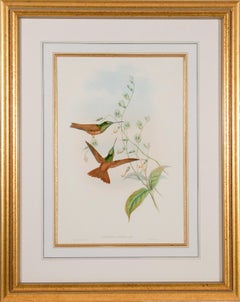
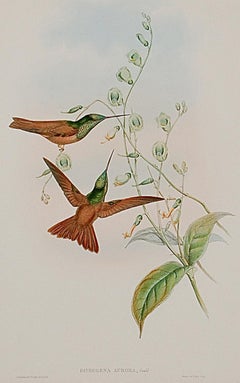
This is an original framed 19th century hand-colored folio-sized lithograph entitled "Diphogena Aurora" (Bolivian Rainbow Hummingbirds) by John Gould, from his "Monograph of the Trochilidae, or Family of Hummingbirds", published in London in 1853. The print depicts two Bolivian Rainbow hummingbirds feeding on the nectar of small flowers on a branch. This striking framed Gould hand-colored lithograph is presented in a antiqued gold frame, a gold-colored fillet, and a light tan French mat, embellished with a mint-colored broad band. The frame measures 32" high, 25.5" wide and 1.25" thick. The hand-coloring is enhanced by the use of gum-arabic paint on the hummingbirds heads and necks, giving them an iridescent appearance. The descriptive text page from Gould's original publication is included. It is affixed to the back of the frame in a clear sleeve. The piece is in excellent condition. There are several other unframed Gould bird lithographs available on our 1stdibs and InCollect storefronts. Two or more of these striking lithographs would make an attractive display grouping. A discount is available for purchase of a set depending on the number. These additional Gould hummingbirds may be viewed by typing Timeless Intaglio in the 1stdibs or InCollect search field to be taken to our storefront. John Gould (1804-1881]) was an English ornithologist and artist. He, like his American contemporary John James Audubon, published a number of books on birds in the mid 19th century, illustrated by hand-colored lithographs. His wife and fellow artist, Elizabeth Gould, and several other artists including Edward Lear and Henry Constantine Richter produced lithographs for his various publications. He has been considered the father of bird study in Australia and the Gould League in Australia is named after him. Charles Darwin referenced Gould’s work in his book, "On the Origin of Species" and Gould named a bird after Darwin; "Darwin's finches". Gould began his career in London as a taxidermist, but in 1827 became the first curator and conservator at the museum of the Zoological Society of London. In this position naturalists brought him collections of birds from all over the world. He began creating drawings and eventually hand-colored lithographs with his wife and Edward Lear, which were the basis for his first publications. Darwin brought him specimens from the Galapagos Islands, including 12 species of finches which had never been described. In 1838, Gould and his wife travelled to Australia and their work led to the seven volume publication of “The Birds of Australia”. Gould had a fascination for hummingbirds and collected specimens of 320 varieties before ever seeing a live hummingbird on a trip to the United States in 1857. He eventually published “A Monograph of the Trochilidae, or Family of Humming-birds". Other large publications include: "The Birds of Europe"," A Monograph of the Ramphastidae, or Family of Toucans”, “A Synopsis of the Birds of Australia, and the Adjacent Islands”, “A Monograph of the Odontophorinae, or Partridges of America”, “The Birds of Asia”, “The Birds of Great Britain” and "The Birds of New Guinea and the Adjacent Papuan Islands, including many new species recently discovered in Australia". John Gould (1804-1881) was a British ornithologist and illustrator who is best known for his monumental work, "The Birds of Europe," published between 1832 and 1837. Gould was born in Lyme Regis, Dorset, England, and began working as a taxidermist and natural history dealer in London in the 1820s. In 1827, Gould was appointed the first curator and preserver of birds at the Zoological Society of London, where he began to build his collection of specimens and began to study the birds of the world. He published his first monograph, "A Century of Birds from the Himalaya Mountains," in 1831, which included 80 plates of Himalayan birds. Gould continued to publish numerous volumes on the birds of the world throughout his life, including "The Birds of Australia" (1840-1848) and "The Birds of Great Britain" (1862-1873). His works were highly regarded for their accuracy and detail, and he was one of the most prominent ornithologists of his time. In addition to his work as an ornithologist, Gould was also a successful businessman, and he used his profits to fund expeditions and to support the scientific community. He was elected a Fellow of the Royal Society in 1843, and he was awarded the Royal Medal...

Category

Mid-19th Century Naturalistic Art

Materials

Lithograph

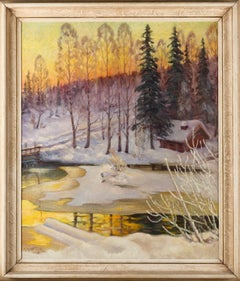
Swedish Golden Twilight Winter Landscape, Oil on Canvas, Signed 1945

Swedish Golden Twilight Winter Landscape, Oil on Canvas, Signed 1945

Located in Stockholm, Stockholm

Swedish winter landscape at dusk. The painting depicts a quiet winter landscape in the late afternoon and the setting sun, rendered in warm, softly atmospheric colors. Snow-covered ...

Category

1940s Naturalistic Art

Materials

Canvas, Oil

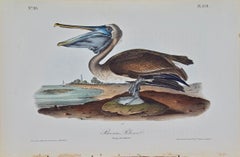
Brown Pelican: An Original Audubon 1st Edition Hand-colored Bird Lithograph

Brown Pelican: An Original Audubon 1st Edition Hand-colored Bird Lithograph

By John James Audubon

Located in Alamo, CA

This is an original rare and extremely collectible first octavo edition John James Audubon hand colored lithograph entitled "Brown Pelican, Young First Winter", No. 85, Plate 424, fr...

Category

Mid-18th Century Naturalistic Art

Materials

Lithograph

Solitaire, sanglier en bronze de Josechu Lalanda (1939-2015)

Solitaire, sanglier en bronze de Josechu Lalanda (1939-2015)

Located in Ixelles, BE

Josechu Lalanda (1939-2015) Solitaire, sanglier Bronze à patine brune H. : 15 cm ; L. : 24 cm ; P. : 12 cm Daté « 1986 », signé « J. Lalanda » et numéroté « 186 / 250 » Fonte d’édi...

Category

1980s Naturalistic Art

Materials

Bronze

19thC English School Marine View With Royal Navy Man-of-War, Watercolour

19thC English School Marine View With Royal Navy Man-of-War, Watercolour

By Samuel Owen

Located in Cheltenham, GB

US buyers pay no import tariffs on this item. This early 19th-century watercolour, attributed to English artist Samuel Owen (1769-1857), depicts several vessels buffeted by turbulen...

Category

Early 19th Century Naturalistic Art
Materials

Watercolor

Whaling – Vintage 1900 Monumental Zoology Lithograph

Whaling – Vintage 1900 Monumental Zoology Lithograph

Located in Myrtle Beach, SC

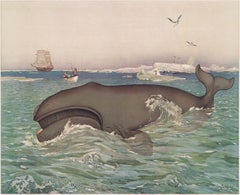
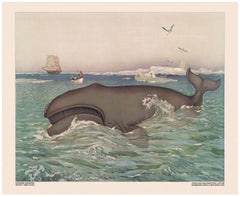
Joseph Fleischmann, 'Whaling' (Hartingers Wandtafeln: Zoologie T. XXXII), monumental vintage color lithograph, 1900. Signed in the matrix, lower right. A superb, beautifully nuanced impression, on cream wove paper, the full sheet with margins (1 1/2 to 2 3/16 inches), in very good condition. The full sheet, unmounted and unmatted—shipped carefully rolled and protected. Sheet size 28 x 38 1/2 inches (711 x 978 mm). Rendering by A. Berger after Joseph Fleischmann. Published in "Hartinger's Wandtafeln Zoologie" (Hartinger's Zoological Wall Charts) by "Verlag von Carl Gerold's Sohn, Wien" (Published by Carl Gerold's Son, Vienna), 1900. This Artic whaling scene depicts a Greenland whale in the foreground pursued by whalers. A whaling ship is seen in the background and at right, another whale among icebergs with seagulls overhead. The composition is exceptionally accomplished. Rather than depicting the whale as a specimen, Fleischmann presents it as a monumental living creature within its Arctic environment. The distant sailing ship and whaleboats establish scale, while the drifting pack ice, seabirds, and subdued northern light create an atmospheric narrative. The image succeeds equally as a work of natural history and as a decorative maritime print. ABOUT THE ARTIST Josef Fleischmann was an Austrian painter, illustrator, and lithographic designer active in Vienna during the late nineteenth and early twentieth centuries. Working at a time when Vienna stood among Europe's foremost centers of chromolithographic printing, he became known for producing richly detailed natural history illustrations that combined scientific accuracy with exceptional artistic craftsmanship. Fleischmann worked for the distinguished Viennese publisher Carl Gerold's Sohn, contributing illustrations to the celebrated educational series Hartinger's Wandtafeln, a collection of zoological and botanical wall charts produced for schools, universities, and scientific institutions throughout the Austro-Hungarian Empire. Printed by the renowned lithographic establishment of Albert Berger...

Category

Early 1900s Naturalistic Art

Materials

Lithograph

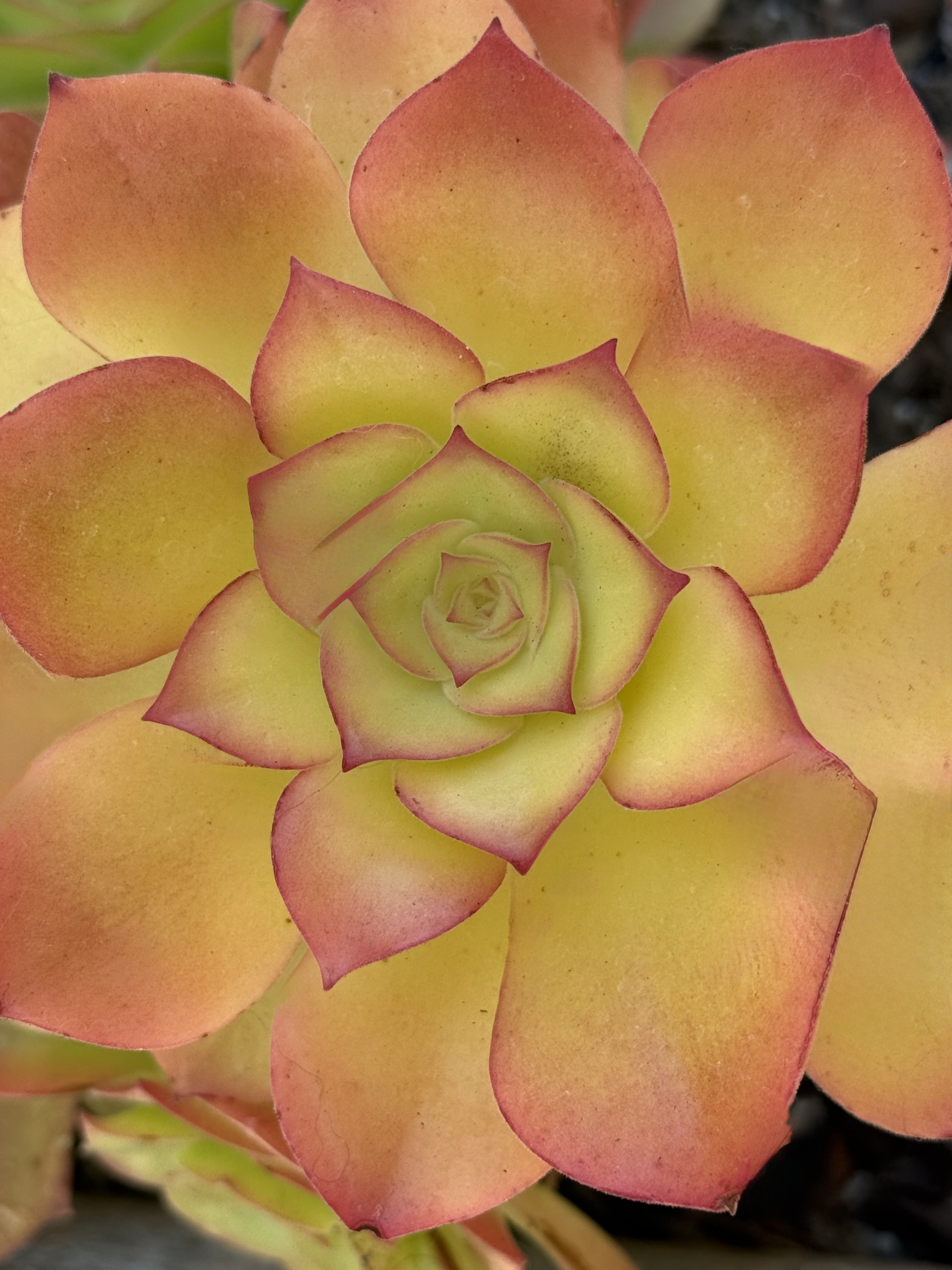
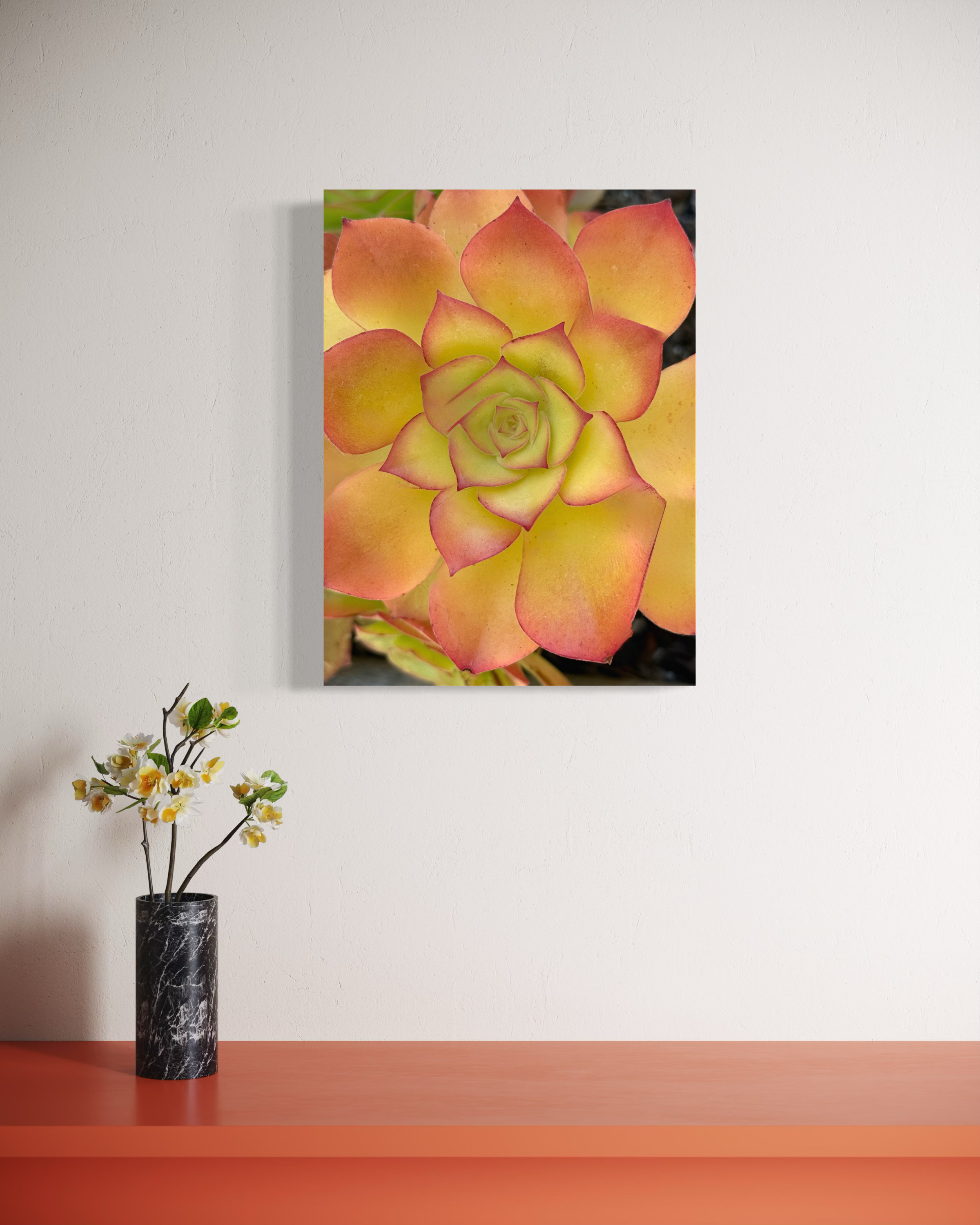
Golden Blush - Contemporary Succulent Botanical Fine Art Photography

Golden Blush - Contemporary Succulent Botanical Fine Art Photography

Located in Carmel, CA

Nicholas Trofimuk is a fine art photographer and Master Printer whose work spans black-and-white landscapes, archival pigment color prints, and his signature "Vibographs." Raised in ...

Category

2010s Naturalistic Art

Materials

Photography

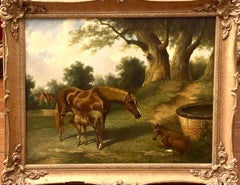
Mare and Two Foals in Pastoral British Landscape

Mare and Two Foals in Pastoral British Landscape

By Robert Alexander

Located in Hillsborough, NC

Original oil painting, signed by Robert Alexander and dated indistinctly, lower right. Fine painting of a mare and two foals in pastoral landscape setting, this work is presented in...

Category

1860s Naturalistic Art

Materials

Oil, Board

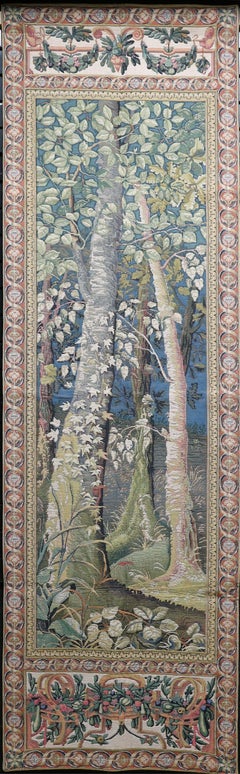
"The Woodland" Tapestry

"The Woodland" Tapestry

Located in Atlanta, GA

Arcadian landscape inspired tapestry. Belgian made, jacquard woven with relief stitch. Fully lined with rod pocket for hanging. Cotton and rayon. Measurements are approximate.

Category

Late 20th Century Naturalistic Art

Materials

Tapestry

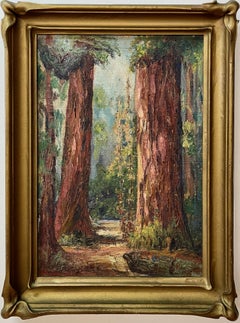
The Timeless Beauty of California’s Redwoods

The Timeless Beauty of California’s Redwoods

Located in San Francisco, CA

One feels very small yet peaceful strolling among Sequoia Sempervirens, California’s oldest living residents. And if that’s not enough to make a human feel insignificant, these coast...

Category

1930s Naturalistic Art

Materials

Canvas, Oil, Board

Vigilant Fox - The psyche of the fox -

Vigilant Fox - The psyche of the fox -

By Carl Friedrich Deiker

Located in Berlin, DE

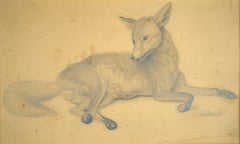
Carl Friedrich Deiker (1838 Wetzlar - 1892 Düsseldorf). Vigilant fox. Pencil drawing on brown paper, 18 × 29.5 cm (inside measurement), 31.5 x 43.5 cm (mount), signed and dated "Deiker [18]54" at lower right. - a little bit stained, with a light water stain at lower right About the artwork Carl Friedrich Deiker's consummate ability to depict animals is already evident in this early work. He brought a whole new psychological dimension to animal painting, so that one could literally speak of animal portraits. The naturalistic appearance of the fox alone makes it seem alive. Every strand of muscle, even every hair, is captured, which requires an intensive artistic study of animal anatomy and physiology. But the fox's real liveliness comes not from its natural appearance, but from its internal movement: Stretched out, it has been brought out of rest. It turns around and, with its ears pricked up, looks intently in the direction from which it has seen something. His mouth is slightly open and his pointed teeth are bared, as if he were growling. Tension gradually takes hold of his whole body. While the hind legs were still in a relaxed position, closely observed by Deiker, one front leg was already raised, ready to begin a rising movement. The fox seems so alarmed with all its senses that one gets the impression that, at any moment, its tail will move jerkily and the animal will jump up. While wild animals have traditionally been portrayed as beasts or anthropomorphised, often for caricatural purposes, Deiker explores their inherent nature by attempting to capture their psychic impulses. The wild animal is neither bestial nor human, but a creature in its own right, valued by Deiker for its own sake. In this way, he brought the dignity of the animal into representation and raised animal painting to a whole new artistic level. About the artist Carl Friedrich Deiker was the son of the drawing teacher Christian Friedrich Deiker and the younger brother of the animal painter Johannes Deiker. In addition to the family art lessons, Christian Friedrich shared a studio with his brother Johannes at Braunfels Castle, Deiker attended the drawing academy in Hanau, and from 1858 he was a student at the Karlsruhe Art Academy, where he studied under the landscape painter Johann Wilhelm Schirmer. Carl Friedrich Deiker was already in demand as an artist during his first year: Grand Duke Frederick I of Baden, Margrave Max of Baden and Grand Duke Michael of Russia bought hunting scenes by him. In 1859 he went on a study trip to the Reinhardswald. Just as the Barbizon School had rediscovered the landscape, Deiker opened up the forest for animal painting. From 1861-64 Deiker had his own studio in Karlsruhe, then moved to Düsseldorf, where his brother Johannes followed four years later. Deiker married a daughter of the landscape painter Karl Hilger and remained in Düsseldorf until his death. In 1868 he finally achieved international fame with his painting 'Pursued Noble Deer' and was regarded as a virtuoso new founder of animal painting. "Deiker brought for the first time a truly great artistic quality to animal painting [...]". - Hans Vollmer From 1870 he participated in the academic art exhibitions in Berlin, Dresden, Munich and Hanover. He was also very busy as an illustrator. He drew for the Gartenlaube, the Salon, the Universum, and produced many of the finely illustrated hunting and animal books of the period. He also worked as a printmaker, while his oil paintings circulated as reprints by Franz Dinger. From 1865 to 1892 Deiker was a member of the artists' association Malkasten. Carl Friedrich Deiker's life's work was honoured with a large posthumous memorial exhibition at the Düsseldorf Kunsthalle in 1892. His son Carl Deiker, born in 1879, also became a painter. Selection of art museums that own works by Carl Friedrich Deiker: Hamburger Kunsthalle / Kunsthalle Karlsruhe / Kunstmuseum Düsseldorf / Wallraff Richartz Cologne. Selected Bibliography H. Schmidt: Johannes and...

Category

1850s Naturalistic Art

Materials

Pencil

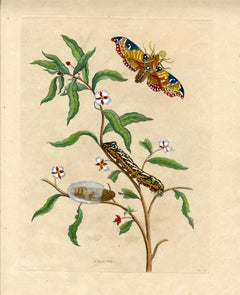
4 plates from The Wondrous Transformation of Caterpillars & their Strange Diet..

4 plates from The Wondrous Transformation of Caterpillars & their Strange Diet..

By Maria Sibylla Merian

Located in Middletown, NY

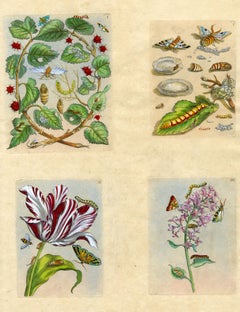
Four plates from The Wondrous Transformation of Caterpillars and their Strange Diet of Flowers. “Wolfsmelk Rupsen;" “Wolfsmilch, Raupe und Schmetterling" Amsterdam: J F Bernard, 1730. Each an engraving with hand coloring in watercolor and gouache printed on one sheet of watermarked Honig cream laid paper, each measures 6 1/4 x 5 inches (157 x 121 mm), sheet measures 20 5/8 x 14 inches (522 x 355 mm), full margins. With handling creases in the lower right sheet quadrant, as well as minor, loose cockling, otherwise in very good condition. The colors are superb with exceptionally fresh and bright saturation. Engraved between 1679 and 1683, printed 1730. Plates included: No.1:I; No. 2:1; II & III. MARIA SIBYLLA MERIAN was one of the most highly respected entomologists of the 17th century, and remains today one of the field's most significant figures. A German-born naturalist and scientific illustrator, she reared herself on the study of caterpillars, and made tremendous contributions to the knowledge of the life cycles of numerous species. Until her detailed and careful study of the process of metamorphosis it was thought that insects were "born of mud," through spontaneous generation. Trained as a miniature painter by her stepfather, she published her first book of illustrations in 1675, at the age of 28. In 1679, Merian published the first volume of the two-volume series on caterpillars, The Wondrous Transformation of Caterpillars and their Strange Diet of Flowers; the second volume followed in 1683. Each volume contained 50 plates that she engraved and etched. In 1699, Merian traveled to Dutch Guiana...

Category

Early 18th Century Naturalistic Art

Materials

Watercolor, Engraving

'Peony no.2' cotton canvas scroll, floral photography, Limited edition 4 of 5

'Peony no.2' cotton canvas scroll, floral photography, Limited edition 4 of 5

By Ugne Pouwell

Located in London, GB

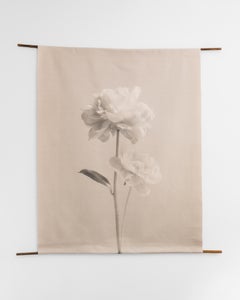
"Peony no.2" – Edition 4 of 5 Cotton Canvas Scroll Floral Fine Art Photography Soft as breath and grounded in timeless stillness, “Peony no.2” is a meditation on fragility, presenc...

Category

21st Century and Contemporary Naturalistic Art

Materials

Fabric, Organic Material, Wood, Cotton Canvas

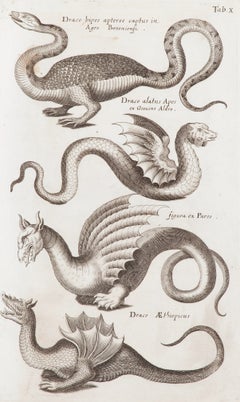
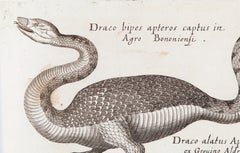
Serpents and Dragons

Serpents and Dragons

Located in Columbia, MO

Merian & Johnston not signed

Category

17th Century Naturalistic Art

Materials

Paper, Etching

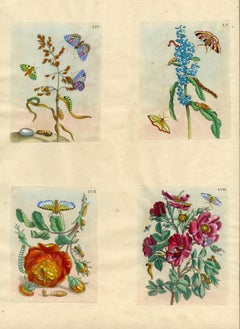
4 plates from The Wondrous Transformation of Caterpillars & their Strange Diet..

4 plates from The Wondrous Transformation of Caterpillars & their Strange Diet..

By Maria Sibylla Merian

Located in Middletown, NY

Four plates from The Wondrous Transformation of Caterpillars and their Strange Diet of Flowers. “Wolfsmelk Rupsen;" “Wolfsmilch, Raupe und Schmetterling" Amsterdam: J F Bernard, 1730. Each an engraving with hand coloring in watercolor and gouache printed on one sheet of watermarked Honig cream laid paper, each measures 6 1/4 x 5 inches (157 x 121 mm), sheet measures 20 5/8 x 14 inches (522 x 355 mm), full margins. With handling creases in the lower right sheet quadrant, as well as minor, loose cockling, otherwise in very good condition. The colors are superb with exceptionally fresh and bright saturation. Engraved between 1679 and 1683, printed 1730. Plates included: LIV, LV, LVI, & LVII. MARIA SIBYLLA MERIAN was one of the most highly respected entomologists of the 17th century, and remains today one of the field's most significant figures. A German-born naturalist and scientific illustrator, she reared herself on the study of caterpillars, and made tremendous contributions to the knowledge of the life cycles of numerous species. Until her detailed and careful study of the process of metamorphosis it was thought that insects were "born of mud," through spontaneous generation. Trained as a miniature painter by her stepfather, she published her first book of illustrations in 1675, at the age of 28. In 1679, Merian published the first volume of the two-volume series on caterpillars, The Wondrous Transformation of Caterpillars and their Strange Diet of Flowers; the second volume followed in 1683. Each volume contained 50 plates that she engraved and etched. In 1699, Merian traveled to Dutch Guiana...

Category

Early 18th Century Naturalistic Art

Materials

Watercolor, Engraving

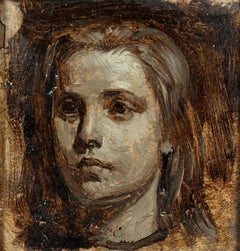
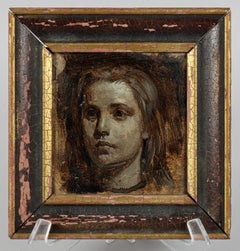
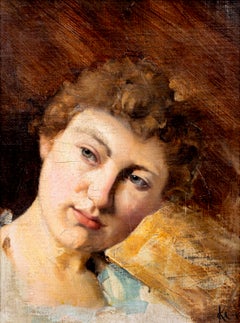
Portrait Study of a Young Woman, Oil on paper, 19th Century

Portrait Study of a Young Woman, Oil on paper, 19th Century

Located in Stockholm, Stockholm

This is a sensitive small-scale study portrait of a young girl, executed in warm monochrome brown tones. Painted during the second half of the 19th century, oil on paper and mounted ...

Category

19th Century Naturalistic Art
Materials

Paper, Oil, Cardboard

Naturalistic art for sale on 1stDibs.

Find a wide variety of authentic Naturalistic art available for sale on 1stDibs. Works in this style were very popular during the 21st Century and Contemporary, but contemporary artists have continued to produce works inspired by this movement. If you’re looking to add art created in this style to introduce contrast in an otherwise neutral space in your home, the works available on 1stDibs include elements of blue, orange, green, red and other colors. Many Pop art paintings were created by popular artists on 1stDibs, including Miguel Winograd , John James Audubon, McKenney & Hall, and William Curtis. Frequently made by artists working with Paint, and Engraving and other materials, all of these pieces for sale are unique and have attracted attention over the years. Not every interior allows for large Naturalistic art, so small editions measuring 0.5 inches across are also available. Prices for art made by famous or emerging artists can differ depending on medium, time period and other attributes. On 1stDibs, the price for these items starts at $38 and tops out at $191,816, while the average work sells for $863.