Roland Ayers Paintings

American, 1932-2014

Roland Ayers was born on July 2, 1932, the only child of Alice and Lorenzo Ayers and grew up in the Germantown district of Philadelphia. Ayers served in the US Army (stationed in Germany) before studying at the Philadelphia College of Art (currently University of the Arts). He graduated with a BFA in art education, 1954. He traveled Europe, 1966–67, spending time in Amsterdam and Greece in particular. During this period, he drifted away from painting to focus on linear figurative drawings of a surreal nature. His return home inaugurated the artist’s most prolific and inspired period (1968–1975). Shortly before his second major trip abroad in 1971–72 to West Africa, Ayers began to focus on African themes and African American figures populated his work almost exclusively. Despite Ayers’ travel and exploration of the world, he gravitated back to his beloved Germantown, a place he endowed with mythological qualities in his work and literature. His autobiographical writing focuses on the importance of place during his childhood. Ayers’ journals meticulously document the ethnic and cultural make-up of Germantown and tell a compelling story of class marginalization that brought together poor families despite racial differences. The distinctive look and design of Germantown inform Ayers’ visual vocabulary. It is a setting with distinctive Gothic Revival architecture and haunting natural beauty. These characteristics are translated and recur in the artist’s imagery. During his childhood, one of the only books in the Ayers household was an illustrated Bible. The images within had a profound effect on the themes and subjects that would appear in his adult work. Figures in Ayers’ drawing often seem trapped in a narrative of loss and redemption. Powerful women loom large in the drawings, they suggest the female role models his journal record in early life. The drawings can sometimes convey a strong sense of conflict and at other times, harmony. Nature and architecture seem to have an antagonistic relationship that is, ironically, symbiotic. A critical turning point in the artist’s career came in 1971, when he was included in the extremely controversial Whitney Museum show, Contemporary Black Artists in America. The exhibition gave Ayers an international audience and served as a calling card for introductions he would soon make in Europe. Ayers is a particularly compelling figure in a period when black artists struggled with the idea of authenticity. A question often asked was “Is your work too black or not black enough?” Abstractionists were considered by some peers to be sell-outs, frauds or worse. Figurative work was accused of being either sentimental or politically radical depending on the critical source. Ayers made the choice early on to be a figurative artist but considered his work devoid of political content. Organizations such as Chicago’s Afri-Cobra in the late 1960s asserted that the only true black art of any relevance must depict the black man and woman. A martial agenda of this nature trivialized the work in Ayers’ view. A devotee of Eastern religions, Ayers sought to explore deeper subjects of a less topical nature, thereby stepping outside political discourse. This is not to suggest that he was a man who rejected the physical world. He was profoundly interested in awareness of the environment and how it relates to self-awareness. He often spoke of universality and timelessness as qualities to strive for in his art. Roland Ayers, In His Own Words, ”A person who refuses or is unable to give in to the consensus of his or her society may retain the capacity to see the world in a vastly different way. That person, in addition to having his or her construct of the world — and we all have that — usually has also retained the capacity to be more aware of that unique way of seeing as well as to use it."

to
2
2
Overall Width
to
Overall Height
to
2
2
2
2

Use search to find more

36
794
779
760
660

Use search to find more

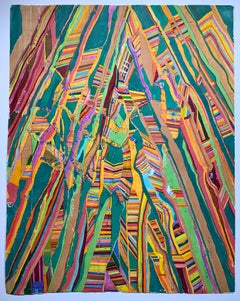
Artist: Roland Ayers
Improvisation abstract African-American artist painting.

Improvisation abstract African-American artist painting.

By Roland Ayers

Located in Wilton Manors, FL

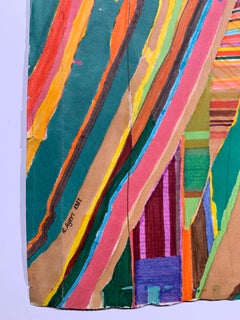
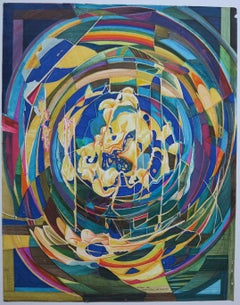
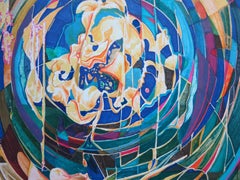
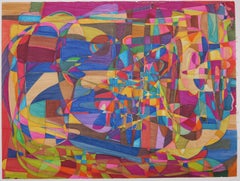
Roland Ayers (1932-2017). Improvisation, 2nd Series, #5. Ink on paper, measures 19 x 24 inches. Unframed and unmounted. Signed and dated lower right, titled lower left. There are a few minor areas of loss in margins as depicted in close-up photos. Additionally, there a a few minor tears in margins. Ayers holds the distinction of having participated in the first important survey of African-Americans, Contemporary Black Artists in America, a 1971 show at The Whitney. Biography: Artist and art educator, Roland Ayers was born on July 2, 1932, the only child of Alice and Lorenzo Ayers, and grew up in the Germantown district of Philadelphia. Ayers served in the US Army (stationed in Germany) before studying at the Philadelphia College of Art (currently University of the Arts). He graduated with a BFA in Art Education, 1954. He traveled Europe 1966-67, spending time in Amsterdam and Greece in particular. During this period, he drifted away from painting to focus on linear figurative drawings of a surreal nature. His return home inaugurated the artist’s most prolific and inspired period (1968-1975). Shorty before his second major trip abroad in 1971-72 to West Africa, Ayers began to focus on African themes, and African American figures populated his work almost exclusively. In spite of Ayers’ travel and exploration of the world, he gravitated back to his beloved Germantown, a place he endowed with mythological qualities in his work and literature. His auto-biographical writing focuses on the importance of place during his childhood. Ayers’ journals meticulously document the ethnic and cultural make-up of Germantown, and tell a compelling story of class marginalization that brought together poor families despite racial differences. The distinctive look and design of Germantown inform Ayers’ visual vocabulary. It is a setting with distinctive Gothic Revival architecture and haunting natural beauty. These characteristics are translated and recur in the artist’s imagery. During his childhood, one of the only books in the Ayers household was an illustrated Bible. The images within had a profound effect on the themes and subjects that would appear in his adult work. Figures in an Ayers’ drawing often seem trapped in a narrative of loss and redemption. Powerful women loom large in the drawings: they suggest the female role models his journals record in early life. The drawings can sometimes convey a strong sense of conflict, and at other times, harmony. Nature and architecture seem to have an antagonistic relationship that is, ironically, symbiotic. A critical turning point in the artist’s career came in 1971 when he was included in the extremely controversial Whitney Museum show, Contemporary Black Artists in America. The exhibition gave Ayers an international audience and served as a calling card for introductions he would soon make in Europe. Ayers is a particularly compelling figure in a period when black artists struggled with the idea of authenticity. A questioned often asked was “Is your work too black, or not black enough?” Abstractionists were considered by some peers to be sell-outs, frauds or worse. Figurative* work was accused of being either sentimental or politically radical depending on the critical source. Ayers made the choice early on to be a figurative artist, but considered his work devoid of political content. Organizations such as Chicago’ s Afri-Cobra in the late 1960‘s asserted that the only true black art of any relevance must depict the black man and woman...

Category

1980s Abstract Roland Ayers Paintings

Materials

Paper, Ink

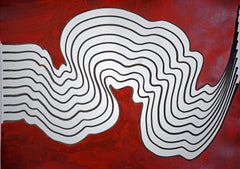
Untitled
Untitled

Roland AyersUntitled, 1982

$960Sale Price|20% Off

Untitled

By Roland Ayers

Located in Wilton Manors, FL

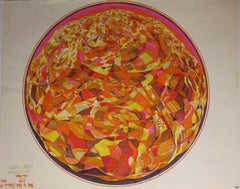
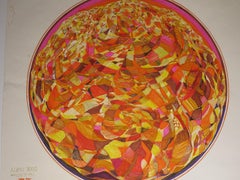
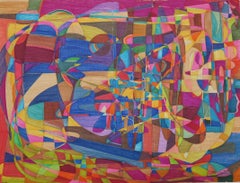
Roland Ayers (1932-2017). Untitled, 1983. Ink on paper, measures 17 x 23 inches. Unframed and unmounted. Signed and dated lower left. Ayers holds the distinction of having participated in the first important survey of African-Americans, Contemporary Black Artists in America, a 1971 show at The Whitney. Biography: Artist and art educator, Roland Ayers was born on July 2, 1932, the only child of Alice and Lorenzo Ayers, and grew up in the Germantown district of Philadelphia. Ayers served in the US Army (stationed in Germany) before studying at the Philadelphia College of Art (currently University of the Arts). He graduated with a BFA in Art Education, 1954. He traveled Europe 1966-67, spending time in Amsterdam and Greece in particular. During this period, he drifted away from painting to focus on linear figurative drawings of a surreal nature. His return home inaugurated the artist’s most prolific and inspired period (1968-1975). Shorty before his second major trip abroad in 1971-72 to West Africa, Ayers began to focus on African themes, and African American figures populated his work almost exclusively. In spite of Ayers’ travel and exploration of the world, he gravitated back to his beloved Germantown, a place he endowed with mythological qualities in his work and literature. His auto-biographical writing focuses on the importance of place during his childhood. Ayers’ journals meticulously document the ethnic and cultural make-up of Germantown, and tell a compelling story of class marginalization that brought together poor families despite racial differences. The distinctive look and design of Germantown inform Ayers’ visual vocabulary. It is a setting with distinctive Gothic Revival architecture and haunting natural beauty. These characteristics are translated and recur in the artist’s imagery. During his childhood, one of the only books in the Ayers household was an illustrated Bible. The images within had a profound effect on the themes and subjects that would appear in his adult work. Figures in an Ayers’ drawing often seem trapped in a narrative of loss and redemption. Powerful women loom large in the drawings: they suggest the female role models his journals record in early life. The drawings can sometimes convey a strong sense of conflict, and at other times, harmony. Nature and architecture seem to have an antagonistic relationship that is, ironically, symbiotic. A critical turning point in the artist’s career came in 1971 when he was included in the extremely controversial Whitney Museum show, Contemporary Black Artists in America. The exhibition gave Ayers an international audience and served as a calling card for introductions he would soon make in Europe. Ayers is a particularly compelling figure in a period when black artists struggled with the idea of authenticity. A questioned often asked was “Is your work too black, or not black enough?” Abstractionists were considered by some peers to be sell-outs, frauds or worse. Figurative* work was accused of being either sentimental or politically radical depending on the critical source. Ayers made the choice early on to be a figurative artist, but considered his work devoid of political content. Organizations such as Chicago’ s Afri-Cobra in the late 1960‘s asserted that the only true black art of any relevance must depict the black man and woman...

Category

1980s Abstract Roland Ayers Paintings

Materials

Paper, Ink
Related Items
ABSTRACT Black Bamboo Painting Texture Italian Artist Silvia De Marchi Minimal

ABSTRACT Black Bamboo Painting Texture Italian Artist Silvia De Marchi Minimal

By Silvia De Marchi

Located in Barcelona, Barcelona

At Escat Gallery we are committed to maintaining the highest standards of trust and professionalism for our collectors. Every artwork in our collection comes with a Certificate of Au...

Category

2010s Abstract Roland Ayers Paintings

Materials

Gesso, Ink, Handmade Paper, Bamboo Paper

"Burn Scar (No. 4)" Mixed Media Forest Fragment on Canvas by Katherine Filice

"Burn Scar (No. 4)" Mixed Media Forest Fragment on Canvas by Katherine Filice

By Katherine Filice

Located in Hollister, CA

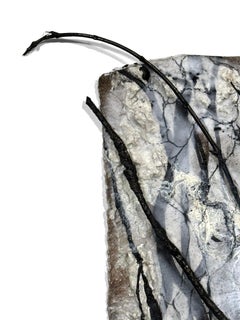
"Burn Scar (No. 4)" is a 16.5 x 23-inch work made with ink, paper, burnt branches, charcoal, and stucco on buried canvas. Katherine Filice uses scorched natural materials to tell a s...

Category

Early 1600s Abstract Roland Ayers Paintings

Materials

Canvas, Charcoal, Found Objects, Archival Ink, Acrylic, Archival Paper, ...

"Arabic Calligraphy 6" Abstract Painting 22" x 28" inch by Mohamed Hassan

"Arabic Calligraphy 6" Abstract Painting 22" x 28" inch by Mohamed Hassan

By Mohamed Hassan

Located in Culver City, CA

"Arabic Calligraphy 6" Abstract Painting 22" x 28" inch by Mohamed Hassan Mohamed Hassan is a traditional Arabic calligraphist, he obtained his official license to practice this art...

Category

21st Century and Contemporary Abstract Expressionist Roland Ayers Paintings

Materials

Paper, Ink
Loving Red Abstract Painting, Acrylic and Inks on Paper, 30x22 Inches

Loving Red Abstract Painting, Acrylic and Inks on Paper, 30x22 Inches

By Betty Efferson

Located in Baton Rouge, LA

This 30x22 acrylic and inks on paper piece is sure to dominate your space with its bold pops of red and aggressive black marks. This piece is currently unframed, but reach out if yo...

Category

2010s Abstract Roland Ayers Paintings

Materials

Archival Ink, Acrylic, Archival Paper

French Contemporary Art by Sandra Detourbet - Le Premier

French Contemporary Art by Sandra Detourbet - Le Premier

By Sandra Detourbet

Located in Paris, IDF

Ink, gouache on canvas & handmade paper Sandra Detourbet is a French artist born in 1967 who works & lives in Ivry-sur-Seine, near Paris. She is grad...

Category

2010s Abstract Expressionist Roland Ayers Paintings

Materials

Canvas, Ink, Gouache, Handmade Paper

"Lord" Abstract Arabic Calligraphy Painting 28" x 31.5" inch by Mohamed Hassan

"Lord" Abstract Arabic Calligraphy Painting 28" x 31.5" inch by Mohamed Hassan

By Mohamed Hassan

Located in Culver City, CA

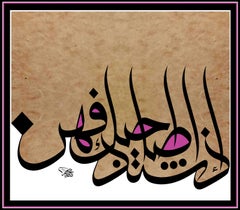
"Lord" Abstract Arabic Calligraphy Painting 28" x 31.5" inch by Mohamed Hassan Medium: ink on paper Artwork full name: "Lord, expand my chest and make my task easy for me" Mohamed ...

Category

21st Century and Contemporary Abstract Expressionist Roland Ayers Paintings

Materials

Paper, Ink
"Arabic Calligraphy 2" Abstract Painting 28" x 31.5" inch by Mohamed Hassan

"Arabic Calligraphy 2" Abstract Painting 28" x 31.5" inch by Mohamed Hassan

By Mohamed Hassan

Located in Culver City, CA

"Arabic Calligraphy 2" Abstract Painting 28" x 31.5" inch by Mohamed Hassan Mohamed Hassan is a traditional Arabic calligraphist, he obtained his official license to practice this a...

Category

21st Century and Contemporary Abstract Expressionist Roland Ayers Paintings

Materials

Paper, Ink
"NGC-6397, " Pigment Ink on Paper

"NGC-6397, " Pigment Ink on Paper

By Jan Pieter Fokkens

Located in Chicago, IL

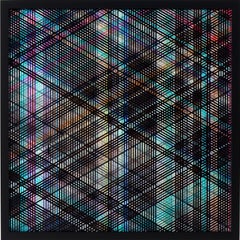
Chicago-based artist Jan Pieter Fokkens uses his work as a means of processing the incomprehensible. Navigating the relationship between algorithmic abstraction and the tangible qualities of pattern and color, Fokkens meditates on how reality is mediated by digital image. Entitled "NGC-6397," this vibrant drawing offers a representation of the globular cluster NGC-6397, also known as Caldwell 87, located 7,800 light-years from Earth. Using an image taken by the NASA/ESA Hubble Space Telescope...

Category

21st Century and Contemporary Abstract Geometric Roland Ayers Paintings

Materials

Archival Ink, Photographic Paper

"E0102-72.3, " Pigment Ink on Photo Paper

"E0102-72.3, " Pigment Ink on Photo Paper

By Jan Pieter Fokkens

Located in Chicago, IL

The colorful paintings of Jan Pieter Fokkens transport us to distant worlds beyond our comprehension. Within his seemingly infinite networks of lines, dots, and crosses, he decodes the recognizable to create something unfamiliar. Each work begins with a colorized photo captured by a deep-space...

Category

21st Century and Contemporary Abstract Geometric Roland Ayers Paintings

Materials

Ink, Photographic Paper

"Arabic Calligraphy 5" Abstract Painting 29.5" x 20" inch by Mohamed Hassan

"Arabic Calligraphy 5" Abstract Painting 29.5" x 20" inch by Mohamed Hassan

By Mohamed Hassan

Located in Culver City, CA

"Arabic Calligraphy 5" Abstract Painting 29.5" x 20" inch by Mohamed Hassan Medium: ink on paper Mohamed Hassan is a traditional Arabic calligraphist, he obtained his official lice...

Category

21st Century and Contemporary Abstract Expressionist Roland Ayers Paintings

Materials

Paper, Ink
"Fragments" - Vibrant Mixed Media Contemporary Abstract in Warm Pastel Palette

"Fragments" - Vibrant Mixed Media Contemporary Abstract in Warm Pastel Palette

By Steven H. Rehfeld

Located in Carmel, CA

Steven H. Rehfeld (American, born 1954) "Fragments", 2022 Oil paint, Newsprint, Ink, Mixed Media, Canvas, Stretcher Bars The artist signed the back of the painting. "Fragments" is a...

Category

2010s Abstract Roland Ayers Paintings

Materials

Canvas, Oil, Mixed Media, Ink, Newsprint, Stretcher Bars

Jacques Lipchitz; The Rape Of Europa Sculpture Painting 1938

Jacques Lipchitz; The Rape Of Europa Sculpture Painting 1938

By Jacques Lipchitz

Located in Dallas, TX

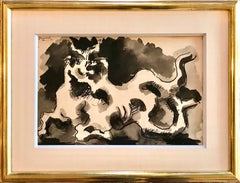
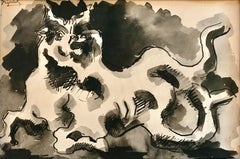
Jacques Lipchitz Watercolor with ink and wash sculptural Painting. this painting represents Lipchitz’s most iconic Bronze and stone sculpture “The Rape of Europa” which was exhibited...

Category

1930s Abstract Roland Ayers Paintings

Materials

India Ink, Watercolor, Archival Paper

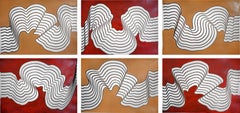
Indian Contemporary Art by Sumit Mehndiratta - Mucky Waves

Indian Contemporary Art by Sumit Mehndiratta - Mucky Waves

By Sumit Mehndiratta

Located in Paris, IDF

India ink and acrylic paint on archival paper Set of six drawings Sumit Mehndiratta is an Indian artist born in 1986 who lives & works in New Delhi, India. He has pursued Master of...

Category

2010s Abstract Roland Ayers Paintings

Materials

India Ink, Acrylic, Archival Paper

"Composition with Figure, " Irene Rice Pereira

"Composition with Figure, " Irene Rice Pereira

By Irene Rice Pereira

Located in New York, NY

Irene Rice Pereira Composition with Figure, 1951 Inscribed, signed and dated Salford/Pereira 2/51 (lr); inscribed I Rice Pereira/2669 Great Clowes St/Sa...

Category

1950s Abstract Roland Ayers Paintings

Materials

Paper, India Ink, Casein

'Louisiana Irises.' blue white yellow green tropical nature flower abstract

'Louisiana Irises.' blue white yellow green tropical nature flower abstract

By Sophia Milligan

Located in Penzance, GB

'Louisiana Irises (I Burned As You Bloomed)' Original artwork. Framed, ready to hang ___________________ Blazing heat and azure sky, glamorous flamboyant blooms, the exquisite flush...

Category

2010s Abstract Roland Ayers Paintings

Materials

Paint, Paper, Ink, Mixed Media

Previously Available Items
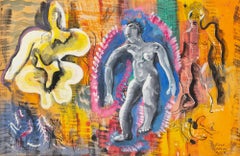
3rd Mandala
3rd Mandala

3rd Mandala

By Roland Ayers

Located in Wilton Manors, FL

Roland Ayers (1932-2017). 3rd Mandala, 1982. Ink on paper, measures 17 x 23 inches. Unframed and unmounted. Signed and dated lower right. A note in corner may indicate the occasion for the creation of this piece, or it may me an incidental, unrelated note jotted in the margin. Ayers holds the distinction of having participated in the first important survey of African-Americans, Contemporary Black Artists in America, a 1971 show at The Whitney. Biography: Artist and art educator, Roland Ayers was born on July 2, 1932, the only child of Alice and Lorenzo Ayers, and grew up in the Germantown district of Philadelphia. Ayers served in the US Army (stationed in Germany) before studying at the Philadelphia College of Art (currently University of the Arts). He graduated with a BFA in Art Education, 1954. He traveled Europe 1966-67, spending time in Amsterdam and Greece in particular. During this period, he drifted away from painting to focus on linear figurative drawings of a surreal nature. His return home inaugurated the artist’s most prolific and inspired period (1968-1975). Shorty before his second major trip abroad in 1971-72 to West Africa, Ayers began to focus on African themes, and African American figures populated his work almost exclusively. In spite of Ayers’ travel and exploration of the world, he gravitated back to his beloved Germantown, a place he endowed with mythological qualities in his work and literature. His auto-biographical writing focuses on the importance of place during his childhood. Ayers’ journals meticulously document the ethnic and cultural make-up of Germantown, and tell a compelling story of class marginalization that brought together poor families despite racial differences. The distinctive look and design of Germantown inform Ayers’ visual vocabulary. It is a setting with distinctive Gothic Revival architecture and haunting natural beauty. These characteristics are translated and recur in the artist’s imagery. During his childhood, one of the only books in the Ayers household was an illustrated Bible. The images within had a profound effect on the themes and subjects that would appear in his adult work. Figures in an Ayers’ drawing often seem trapped in a narrative of loss and redemption. Powerful women loom large in the drawings: they suggest the female role models his journals record in early life. The drawings can sometimes convey a strong sense of conflict, and at other times, harmony. Nature and architecture seem to have an antagonistic relationship that is, ironically, symbiotic. A critical turning point in the artist’s career came in 1971 when he was included in the extremely controversial Whitney Museum show, Contemporary Black Artists in America. The exhibition gave Ayers an international audience and served as a calling card for introductions he would soon make in Europe. Ayers is a particularly compelling figure in a period when black artists struggled with the idea of authenticity. A questioned often asked was “Is your work too black, or not black enough?” Abstractionists were considered by some peers to be sell-outs, frauds or worse. Figurative* work was accused of being either sentimental or politically radical depending on the critical source. Ayers made the choice early on to be a figurative artist, but considered his work devoid of political content. Organizations such as Chicago’ s Afri-Cobra in the late 1960‘s asserted that the only true black art of any relevance must depict the black man and...

Category

1980s Abstract Roland Ayers Paintings

Materials

Paper, Ink
Improvisation #8, Series 1

Improvisation #8, Series 1

By Roland Ayers

Located in Wilton Manors, FL

Roland Ayers (1932-2017). Improvisation #8, Series 1, 1980. Ink on paper, measures 18 x 24 inches. Unframed and unmounted. Signed and dated lower right, titled lower left. Ayers holds the distinction of having participated in the first important survey of African-Americans, Contemporary Black Artists in America, a 1971 show at The Whitney. Biography: Artist and art educator, Roland Ayers was born on July 2, 1932, the only child of Alice and Lorenzo Ayers, and grew up in the Germantown district of Philadelphia. Ayers served in the US Army (stationed in Germany) before studying at the Philadelphia College of Art (currently University of the Arts). He graduated with a BFA in Art Education, 1954. He traveled Europe 1966-67, spending time in Amsterdam and Greece in particular. During this period, he drifted away from painting to focus on linear figurative drawings of a surreal nature. His return home inaugurated the artist’s most prolific and inspired period (1968-1975). Shorty before his second major trip abroad in 1971-72 to West Africa, Ayers began to focus on African themes, and African American figures populated his work almost exclusively. In spite of Ayers’ travel and exploration of the world, he gravitated back to his beloved Germantown, a place he endowed with mythological qualities in his work and literature. His auto-biographical writing focuses on the importance of place during his childhood. Ayers’ journals meticulously document the ethnic and cultural make-up of Germantown, and tell a compelling story of class marginalization that brought together poor families despite racial differences. The distinctive look and design of Germantown inform Ayers’ visual vocabulary. It is a setting with distinctive Gothic Revival architecture and haunting natural beauty. These characteristics are translated and recur in the artist’s imagery. During his childhood, one of the only books in the Ayers household was an illustrated Bible. The images within had a profound effect on the themes and subjects that would appear in his adult work. Figures in an Ayers’ drawing often seem trapped in a narrative of loss and redemption. Powerful women loom large in the drawings: they suggest the female role models his journals record in early life. The drawings can sometimes convey a strong sense of conflict, and at other times, harmony. Nature and architecture seem to have an antagonistic relationship that is, ironically, symbiotic. A critical turning point in the artist’s career came in 1971 when he was included in the extremely controversial Whitney Museum show, Contemporary Black Artists in America. The exhibition gave Ayers an international audience and served as a calling card for introductions he would soon make in Europe. Ayers is a particularly compelling figure in a period when black artists struggled with the idea of authenticity. A questioned often asked was “Is your work too black, or not black enough?” Abstractionists were considered by some peers to be sell-outs, frauds or worse. Figurative* work was accused of being either sentimental or politically radical depending on the critical source. Ayers made the choice early on to be a figurative artist, but considered his work devoid of political content. Organizations such as Chicago’ s Afri-Cobra in the late 1960‘s asserted that the only true black art of any relevance must depict the black man and...

Category

1980s Abstract Geometric Roland Ayers Paintings

Materials

Ink

The People (Urban African-American Afrofuturism Landscape)

The People (Urban African-American Afrofuturism Landscape)

By Roland Ayers

Located in Wilton Manors, FL

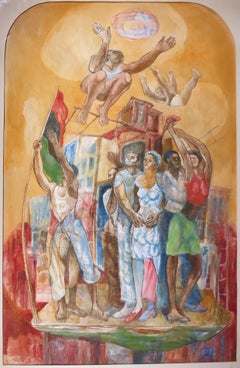
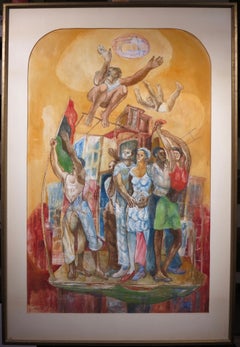
Roland Ayers (1932-2014), The People, 1975. Image measures 25 x 39 inches, 32 x 46 inches framed. Signed and dated lower left. Search terms: Black artist; Philadelphia artist; Afrofuturism; Afrofuturist Biography: Artist and art educator, Roland Ayers was born on July 2, 1932, the only child of Alice and Lorenzo Ayers, and grew up in the Germantown district of Philadelphia. Ayers served in the US Army (stationed in Germany) before studying at the Philadelphia College of Art (currently University of the Arts). He graduated with a BFA in Art Education, 1954. He traveled Europe 1966-67, spending time in Amsterdam and Greece in particular. During this period, he drifted away from painting to focus on linear figurative drawings of a surreal nature. His return home inaugurated the artist’s most prolific and inspired period (1968-1975). Shorty before his second major trip abroad in 1971-72 to West Africa, Ayers began to focus on African themes, and African American figures populated his work almost exclusively. In spite of Ayers’ travel and exploration of the world, he gravitated back to his beloved Germantown, a place he endowed with mythological qualities in his work and literature. His auto-biographical writing focuses on the importance of place during his childhood. Ayers’ journals meticulously document the ethnic and cultural make-up of Germantown, and tell a compelling story of class marginalization that brought together poor families despite racial differences. The distinctive look and design of Germantown inform Ayers’ visual vocabulary. It is a setting with distinctive Gothic Revival architecture and haunting natural beauty. These characteristics are translated and recur in the artist’s imagery. During his childhood, one of the only books in the Ayers household was an illustrated Bible. The images within had a profound effect on the themes and subjects that would appear in his adult work. Figures in an Ayers’ drawing often seem trapped in a narrative of loss and redemption. Powerful women loom large in the drawings: they suggest the female role models his journals record in early life. The drawings can sometimes convey a strong sense of conflict, and at other times, harmony. Nature and architecture seem to have an antagonistic relationship that is, ironically, symbiotic. A critical turning point in the artist’s career came in 1971 when he was included in the extremely controversial Whitney Museum show, Contemporary Black Artists in America. The exhibition gave Ayers an international audience and served as a calling card for introductions he would soon make in Europe. Ayers is a particularly compelling figure in a period when black artists struggled with the idea of authenticity. A questioned often asked was “Is your work too black, or not black enough?” Abstractionists were considered by some peers to be sell-outs, frauds or worse. Figurative* work was accused of being either sentimental or politically radical depending on the critical source. Ayers made the choice early on to be a figurative artist, but considered his work devoid of political content. Organizations such as Chicago’ s Afri-Cobra in the late 1960‘s asserted that the only true black art of any relevance must depict the black man and woman...

Category

1970s American Realist Roland Ayers Paintings

Materials

Watercolor, Archival Paper

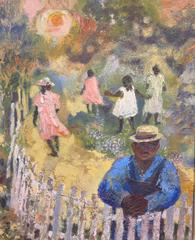
The Backyard
The Backyard

Roland AyersThe Backyard, 1960

Sold

H 25 in W 21 in D 2 in

The Backyard

By Roland Ayers

Located in Wilton Manors, FL

Magical Realist painting by African-American artist, Roland Ayers (1932-2014). The Backyard, 1960. Oil on artist board, 16 x 20 inches; 21 x 25 inches in a carved and gilt wood frame...

Category

1950s Surrealist Roland Ayers Paintings

Materials

Board, Oil

Roland Ayers paintings for sale on 1stDibs.

Find a wide variety of authentic Roland Ayers paintings available for sale on 1stDibs. You can also browse by medium to find art by Roland Ayers in ink, paper and more. Much of the original work by this artist or collective was created during the 1980s and is mostly associated with the abstract style. Not every interior allows for large Roland Ayers paintings, so small editions measuring 19 inches across are available. Customers who are interested in this artist might also find the work of Allie William Skelton, Ronald Ahlstrom, and William (Bill) Alpert. Roland Ayers paintings prices can differ depending upon medium, time period and other attributes. On 1stDibs, the price for these items starts at $1,200 and tops out at $1,800, while the average work can sell for $1,500.