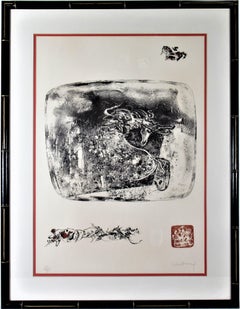
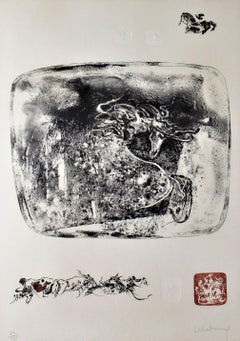
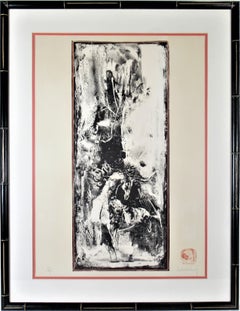
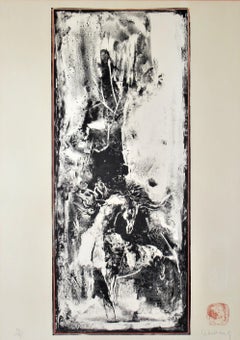
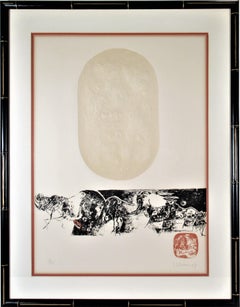
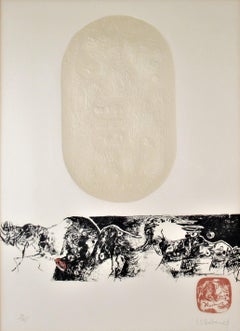
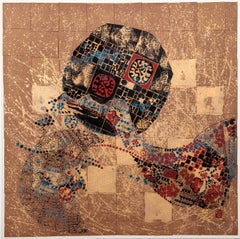
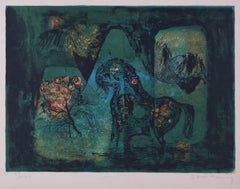
Hoi Lebadang Animal Prints

Vietnamese, 1922-2015
Lebadang was born in 1921 in Bich-La-Dong, a village along the Huong River in Quang-Tri Province of Hue, Vietnam. He expressed himself through a variety of media, including painting, watercolor, sculpture, jewelry and graphic works. He often combined various media, creating sculptural, highly textured artwork. “Life is a sinking ship and work is a lifeboat.” This described her husband perfectly. He lived in Paris since 1939, studying at the École des Beaux-Arts in Toulouse for six years until his first one-man show in 1950. He created large-scale abstract oil paintings with vivid blues and glowing puddles of orange and red. Painting and printmaking were Lebadang’s most frequently used media but he also worked in terra cotta and a variety of other media, such as “Vessel” (1994). Whatever he created, each piece spoke to the entangled roles of man and nature. In his 1981 “La Comédie Humaine,” he wrote: “In my work, I use the circle, the magic symbol of life, to enclose reliefs and landscapes. It symbolizes that nature is inseparable from man. Man finds sustenance and spiritual nourishment in every source.” And while the human form was not represented figuratively in his work until the late 1970s, he confirmed that man was always present.. His oil paintings of the ’60s are ambiguous at first glance, yet the faint outlines of boats, bridges, and horses gently float to the top. After his shift in style, bringing definition to his paintings, these dreams were made more lucid. Many of his figures become emotive and highly dramatic, this time with visible faces. . Mixing media, he painted aerial scenes of mountains and oceans where the viewer was stationed in the heavens. These paintings elaborated on man’s relationship to the natural world, continuously presented as a flurry of memories. Memories—objects that haunt the entire oeuvre of the artist—are a familiar subject to Lebadang. “Art, in all its forms, whether literature, philosophy, or the visual arts, expresses an attempt to understand the riddle of life and helps lessen the fear of death,” he wrote. His work is exhibited in many public and private collections, including the Cincinnati Museum of Art in Ohio, the Phoenix Art Museum in Arizona, the Rockefeller Collection in New York, the Foundation Museum in Kenya, the Lund University Museum in Sweden, the Loo Collection in Tokyo, and the Museum of Arts and Letters in France. Lebadang was honored with numerous awards and accolades during his career. He also designed an award for the International Institute of St. Louis. The Lebadang Award is presented biannually to an individual who has demonstrated extraordinary volunteer service. The award program was established by the institute in 1989 to recognize organizations and individuals who exemplify “Peace within you, your country, and the world.” “My artwork is often strange but simple,” Lebadang once said. “So everyone can hopefully feel happy and relaxed, and that’s why they like them.”
to
1
1
5
5
1
Overall Width
to
Overall Height
to
12
2
3
7
2
5
4
2
2
2
2
1
1
1
12

Use search to find more

160
148
126
125
121

Use search to find more

Artist: Hoi Lebadang
Horses #II
Horses #II

Horses #II

By Hoi Lebadang

Located in San Francisco, CA

This artwork "titled "Horses #II" 1974 is an original color lithograph, with embossing by French/Vietnamese artist Hoi Lebadang, 1922-2015. It is hand signed and numbered 32/275 in p...

Category

Late 20th Century Modern Hoi Lebadang Animal Prints

Materials

Lithograph

Two Horses and Flowers Gold Screenprint by Lebadang

Two Horses and Flowers Gold Screenprint by Lebadang

By Hoi Lebadang

Located in Long Island City, NY

Untitled - Two Horses and Flowers by Lebadang, Vietnamese (1922 - 2015) Medium: Silkscreen, signed in pencil Edition: EA Size: 31 x 47 in. (78.74 x 119.38 cm)

Category

1970s Academic Hoi Lebadang Animal Prints

Materials

Screen

Horses #V
Horses #V

Horses #V

By Hoi Lebadang

Located in San Francisco, CA

This artwork "titled "Horses #V" 1974 is an original color lithograph, with embossing by French/Vietnamese artist Hoi Lebadang, 1922-2015. It is hand sign...

Category

Late 20th Century Modern Hoi Lebadang Animal Prints

Materials

Lithograph

Horses #IV
Horses #IV

Horses #IV

By Hoi Lebadang

Located in San Francisco, CA

This artwork "titled "Horses #IV" 1974 is an original color lithograph, with embossing by French/Vietnamese artist Hoi Lebadang, 1922-2015. It is hand sig...

Category

Late 20th Century Modern Hoi Lebadang Animal Prints

Materials

Lithograph

Horses #III
Horses #III

Horses #III

By Hoi Lebadang

Located in San Francisco, CA

This artwork "titled "Horses #III" 1974 is an original color lithograph, with embossing by French/Vietnamese artist Hoi Lebadang, 1922-2015. It is hand si...

Category

Late 20th Century Modern Hoi Lebadang Animal Prints

Materials

Lithograph

Horses #I
Horses #I

Horses #I

By Hoi Lebadang

Located in San Francisco, CA

This artwork "titled "Horses #1" 1974 is an original color lithograph, with embossing by French/Vietnamese artist Hoi Lebadang, 1922-2015. It is hand signed and numbered 32/275 in pe...

Category

Late 20th Century Modern Hoi Lebadang Animal Prints

Materials

Lithograph

Horses in Moonlight, Signed Folk Art Equestrian Lithograph by Lebadang

Horses in Moonlight, Signed Folk Art Equestrian Lithograph by Lebadang

By Hoi Lebadang

Located in Long Island City, NY

Horses in Moonlight by Lebadang, Vietnamese (1922 - 2015) Year: circa 1975 Medium: Lithograph, signed in pencil Edition: Epreuve d'Artiste Size: 25.25 x 19.5 in. (64.14 x 49.53 cm)

Category

1970s Modern Hoi Lebadang Animal Prints

Materials

Lithograph

'Equestrian Actress', Modernism, Circus, Vietnamese, French, Horse, Acrobats

'Equestrian Actress', Modernism, Circus, Vietnamese, French, Horse, Acrobats

By Hoi Lebadang

Located in Santa Cruz, CA

Signed lower right, 'Lebadang' for Hoi (Dang) Lebadang (Vietnamese-French, 1922-2015) and with number and limitation, 163/215, lower left. This notable artist was born in Quang Tri...

Category

1960s Hoi Lebadang Animal Prints

Materials

Paper, Lithograph

Landscape with Deer Herds

Landscape with Deer Herds

By Hoi Lebadang

Located in San Francisco, CA

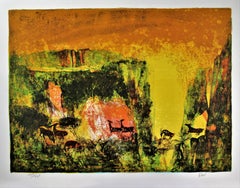
This artwork "Landscape with Deer Herds" c.1970 is an original color lithograph by French/Vietnamese artist Hoi Lebadang, 1922-2015. It is hand sig...

Category

Late 20th Century Modern Hoi Lebadang Animal Prints

Materials

Lithograph

Hoi Lebadang Horse in Red Lithograph, Signed , Numbered & Framed

Hoi Lebadang Horse in Red Lithograph, Signed , Numbered & Framed

By Hoi Lebadang

Located in Plainview, NY

An abstract Lithograph by Lebadang , known as Hoi ( Vietnamese , French 1921 - 2015) of a horse in red with a hint of blue, yellow and black. The art work is signed by the artist " ...

Category

20th Century Abstract Hoi Lebadang Animal Prints

Materials

Lithograph

Related Items
Emilio Vedova - Original Lithograph

Emilio Vedova - Original Lithograph

By Emilio Vedova

Located in Collonge Bellerive, Geneve, CH

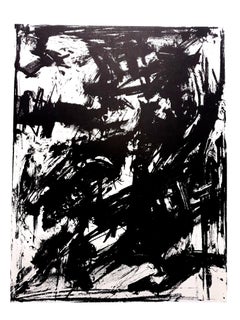
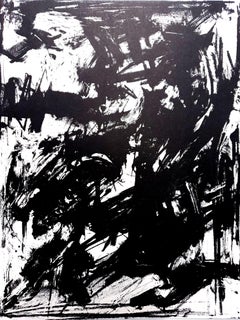
Emilio Vedova - Original Lithograph Abstraction 1961 From the art revue XXe Siecle Dimensions: 32 x 24 Edition: G. di San Lazzaro. Unsigned and unumbered as issued

Category

1960s Modern Hoi Lebadang Animal Prints

Materials

Lithograph

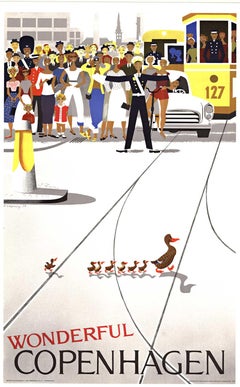
Original "Wonderful Copenhagen" vintage travel poster

Original "Wonderful Copenhagen" vintage travel poster

Located in Spokane, WA

Original vintage poster: WONDERFUL COPENHAGEN created by the artist Viggo Vagnby. This antique poster is archival linen-backed, in excellent condition, and ready to frame. No da...

Category

1950s American Modern Hoi Lebadang Animal Prints

Materials

Lithograph

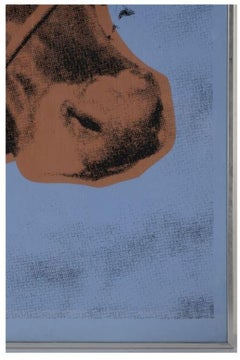
Cow
Cow

Andy WarholCow, 1971

$11,000

H 45.25 in W 28 in

Cow

By Andy Warhol

Located in New York, NY

Color screenprint on wallpaper, 1971. Printed by Bill Miller's Wallpaper Studio, Inc., New York. Published for a Warhol exhibition at the Whitney Museum by Factory Additions, New Yor...

Category

1970s Pop Art Hoi Lebadang Animal Prints

Materials

Screen

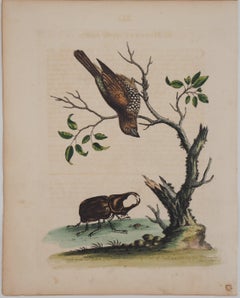
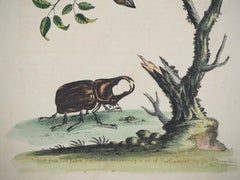
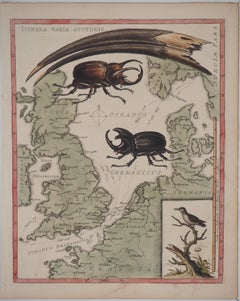
Bird and Beetle - Etching and watercolor (Natural History of Birds, 1741)

Bird and Beetle - Etching and watercolor (Natural History of Birds, 1741)

By George Edwards

Located in Paris, IDF

George EDWARDS Bird and beetle ('The Gowry Bird') Original engraving, enhanced with watercolor Printed signature in the plate Dated, 1741 28.8 x 23.3 cm Created for Volume I of the...

Category

1740s Academic Hoi Lebadang Animal Prints

Materials

Engraving, Watercolor

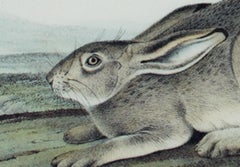
19th century color lithograph hares animal nature print wildlife

19th century color lithograph hares animal nature print wildlife

By John James Audubon

Located in Milwaukee, WI

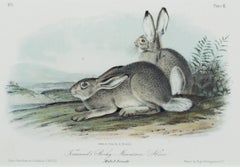
"Townsend's Rocky Mountain Hare" is an original color lithograph by John James Audubon. This artwork features two gray hares in a muted, cool-colored landscape. 5 1/2" x 8 1/4" art...

Category

Mid-19th Century Academic Hoi Lebadang Animal Prints

Materials

Lithograph

Horses of Camargue
Horses of Camargue

Fran BullHorses of Camargue

$275

H 22 in W 29.25 in

Horses of Camargue

By Fran Bull

Located in Hollywood, FL

Artist: Fran Bull Title: Horses of the Camargue Medium: Silkscreen Signed: Hand Signed Edition: From the edition of 250 Measurements: 22" x 29 1/4" Frame: This piece is sold UNF...

Category

Late 20th Century Contemporary Hoi Lebadang Animal Prints

Materials

Screen

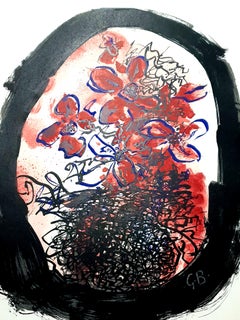
Georges Braque - Original Lithograph

Georges Braque - Original Lithograph

By Georges Braque

Located in Collonge Bellerive, Geneve, CH

Georges Braque - Original Lithograph 1963 Dimensions: 32 x 24 cm Andre Sauret, Monte Carlo The father of Cubism Three Cubist that distinguishes art historian periods were initiated and developed by Georges Braque: The Cubist Cézanne (1907-1909), Executive (1909-1912) and synthetic (1912-1922). Post-Impressionist and fawn, Braque no longer adheres to the contingency of a decorative way or the other. Cézanne’s paintings exhibited at the Grand Palais during the retrospective of 1907 are a revelation: Cézanne sought and invented a pictorial language. In his footsteps, Braque went to the South with the reasons of the Master. He returned with Estaque landscapes and surprising Ciotat it keeps Cezanne geometric model and retains the “passages” continuity from one surface to another to create the sensation of “turning around” of the object represented. But he wants to go after the consequences of the vision of Cezanne. In his paintings Houses in L’Estaque (1908) it simplifies the volumes of houses, neglects detail by removing doors and windows: the plastic rhythm that builds the table. Large Nude , a masterpiece of the period, can be considered the first work of Cézanne cubism . Systematizing and deepening Braque discoveries open the door analytical cubism. In 1909, his painting became more cerebral than sensual. The pattern is recreated in the two-dimensionality of the canvas, leaving aside any illusionistic perspective. In Still Life with Violin, objects are analyzed facets according to their characteristic elements, each facet referring to a particular view of the object. There are so many facets of points selected view: Table reflects the knowledge of the object and the ubiquity of the eye. Moreover, Braque is looking for the essence of the objects in the world rather than their contingency, which explains the absence of light source and use of muted colors (gray, ocher), contingent aspects of the object . But formal logic has stepped facets, erased any anecdote to the object and ultimately led to his painting a hermetic more marked on the edge of abstraction (see the series of Castle Roche-Guyon ). Braque, anxious to keep the concrete and refusing at all costs that the logic of Cubism takes the paintings to abstract, reintroduced signs of reality in his paintings in 1912 marks the beginning of Synthetic Cubism. Historians speak of “signs of real” rather than reality because what interests Braque, this is not to put reality into a table, but to create a painting which, by its language, refers to the real. To do this, he invented two major techniques XX th century inclusions and contributions. The inclusions consist of painting objects that have no real depth, materials (wallpaper in Nature morte aux playing cards faux wood is a pictorial inclusion) or letters (calligraphic inclusion in Portuguese ), made first brush and a few months later stencil. Contributions are defined in contrast with the collage on canvas of foreign materials: glued or sand paper, sawdust, etc.. Regarding the collages, Braque used for the first time in September 1912 a piece of adhesive paper imitating faux wood Compote and Glass , then the packet envelope of tobacco Bock in 1912-1913, or an advertisement in Damier , 1913). Inputs and inclusions refer to an external object in the table, without “emulate” this object. Away from their appearances, objects are represented in closest essence of the objects in the real world sense. This is also the time of Synthetic Cubism that Braque invented paper sculpture. There are, unfortunately, and no one is living proof of a photograph makes it possible to realize: Paper and paperboard. Métamorphoses period(1961-1963). In 1961, Georges Braque worked on a Greek head for the Louvre, which obsesses him, and he wishes to free his mind. He tried several times to bring out the paint and the result was unsatisfactory. He thinks the ultimate metamorphosis its Greek head projected in three dimensions. He calls in his studio of Baron Heger Loewenfeld, master lapidary, and he communicates his enthusiasm during the “fateful encounter.” Nine months later, in honor of the eighty years of Georges Braque, Heger Loewenfeld offers the Master of the ring Circe: the famous Greek head finally exorcised, carved in an onyx. Braque Loewenfeld then asked to identify other issues that haunt him. From dated and signed by Georges Braque, Heger gouaches Loewenfeld shapes works in the fields of jewelery, lapidary art...

Category

1960s Modern Hoi Lebadang Animal Prints

Materials

Lithograph

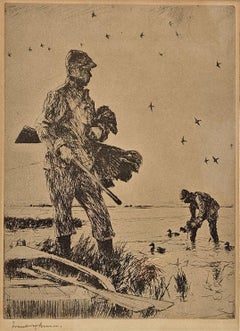
"Winter Wildfowling" Frank Weston Benson, Hunting Scene, Outdoors, Marshes

"Winter Wildfowling" Frank Weston Benson, Hunting Scene, Outdoors, Marshes

By Frank Weston Benson

Located in New York, NY

Frank Weston Benson Winter Wildfowling, 1927 Signed lower left Etching on paper Image 8 1/2 x 7 inches Born in Salem, Massachusetts, a descendant of a long line of sea captains, Benson first studied art at Boston’s Museum School where he became editor of the student magazine. In 1883, Benson enrolled at the Académie Julian in Paris where artists such as Bouguereau, Lefebvre, Constant, Doucet and Boulanger taught students from all over Europe and America. It was Boulanger who gave Benson his highest commendation. “Young man,” he said, “Your career is in your hands . . . you will do very well.” Benson’s parents gave him a present of one thousand dollars a twenty-first birthday and told him to return home when it ran out. The money lasted long enough to provide Benson with two years of schooling in Paris, a summer at the seaside village of Concarneau in Brittany and travel in England. Upon returning to America, Benson opened a studio on Salem’s Chestnut Street and began painting portraits of family and friends. An oil of his wife, Ellen Perry Peirson, dressed in her wedding gown is representative of this period. It demonstrates not only the academic techniques he learned at the Academie Julian but also his own growing emphasis on the effects of light. And yet, despite all the technical mastery displayed in the work, the painting exudes the warmth that existed between model and artist. More than a likeness, it is a study in serenity. Perhaps it was of a work such as this that Benson was thinking when he said, “The more a painter knows about his subject, the more he studies and understands it, the more the true nature of it is perceived by whoever looks at it, even though it is extremely subtle and not easy to see or understand. A painter must search deeply into the aspects of a subject, must know and understand it thoroughly before he can represent it well.” Following a brief stint as an instructor at the Portland, Maine, Society of Art, Benson was appointed as instructor of antique drawing at the Museum School in Boston in the spring of l889. Benson’s long association with the school was particularly fruitful. Under the leadership of Edmund Tarbell and Benson the Museum School became a national and internationally recognized institution. The students won numerous prizes, enrollment tripled, a new school building was erected and visiting delegations from other schools sought the secret of their success. Benson cherished his role as teacher and was held in high esteem by his students, many of whom called him “Cher Maitre.” Reminiscing about his long career with the school Benson once said, “I may have taught many students, but it was I who learned the most.” In 1890, Benson won the Hallgarten Prize at the National Academy in New York. It was the first of a long series of awards, that earning for him the sobriquet “America’s Most Medalled Painter.” In the early years of his career, Benson’s studio works were mostly portraits or paintings of figures set in richly appointed interiors. Young women in white stretch their hands out towards the glow of an unseen fire; girls converse on an antique settee in a room full of objets d’arts; his first daughter, Eleanor, poses with her cat. Works of this sort, together with a steady influx of portrait commissions, earned Benson both renown and financial rewards, yet it was in his outdoor works that gave Benson his greatest pleasure. In the latter half of the 1890s, Benson summered in Newcastle, on New Hampshire’s short stretch of seacoast. It was here, in 1899, that Benson made his first foray into impressionism with Children in the Woods and The Sisters, the latter a sun-dappled study of his two youngest daughters, Sylvia and Elisabeth. This painting was one of the first works that Benson hung at an exhibition with nine friends. The resignation of these ten illustrious artists rocked the American art establishment but, the catalogue for their first exhibition was titled, simply, “Ten American Painters.” When, in 1898, the three Bostonians and seven New Yorkers began to exhibit their best work in exquisitely arranged small shows, the group (dubbed by newspapers, “The Ten” ) quickly became known as the American Impressionists, a bow to the style of their French predecessors. The Ten’s annual shows soon became an eagerly awaited part of the annual exhibition calendar and were always well reviewed. Held annually in New York City, the group’s yearly exhibitions usually traveled to Boston and were occasionally seen in other cities. Benson’s association with other members of the group such as Childe Hassam, Thomas Dewing, William Merrit Chase and J. Alden Weir, only reinforced his growing emphasis on the tenets of Impressionism. As he later said to his daughter Eleanor, “I follow the light, where it comes from, where it goes.” The principles of Impressionism began to dominate Benson’s work by 1901, the year that the Bensons first summered on the island of North Haven in Maine’s Penobscot Bay. His summer home “Wooster Farm,” which they rented and finally bought in 1906, became the setting for some of Benson’s best known work and there, it seemed, he found endless inspiration. Benson’s sparkling plein-air paintings of his children–Eleanor, George, Elisabeth and Sylvia–capture the very essence of summer and have been widely reproduced: In The Hilltop, George and Eleanor watch the sailboat races from the headland near their house. As a boy, Benson dreamed of being an ornithological illustrator. In mid-life, he returned to the wildfowl and sporting subjects that had remained his lifelong passion. Using etching and lithography, watercolor, oil and wash, Benson portrayed the birds observed since childhood and captured scenes of his hunting and fishing expeditions. Together with his two brothers-in-law, Benson bought a small hunting retreat on a hill overlooking Cape Cod’s Nauset Marsh. Here, in the late 1890s, he began experimenting with black and white wash drawings. These paintings became so popular that Benson was not able to keep up with the demand. He turned to an art publishing company to have several made into it intaglio prints; twelve wash drawings are known to have been reproduced in this manner. At least two of them were given as gifts to associate members of the Boston Guild of artists, of which Benson was a founding member. Benson was also an avid fisherman and his salmon fishing expeditions to Canada’s Gaspé Peninsula where one of the high points of his summer. There, in 1921, he began the first in a series of watercolors that would eventually over 500 works. Benson’s watercolors conveyed the joy and beauty of a sportsman’s life whether in a painting of a hunter setting out decoys, a flock of ducks coming in for a landing or a grouse flushed from cover. The critics favorably compared Benson’s watercolors to those of Homer. “The love of the almost primitive wilderness which appears in many of Homer’s landscapes and the swift, sure touch with which he suggests rather than describes–these also characterize Benson’s work,” one critic wrote. “The solitude of the northern woods is very much like Homer’s.” Like the wash drawings before them, Benson’s watercolors proved...

Category

1920s Academic Hoi Lebadang Animal Prints
Materials

Paper, Etching

Black Cats Screen Print, 12-Color, Signed, 21st Century, Unframed

Black Cats Screen Print, 12-Color, Signed, 21st Century, Unframed

By David Shrigley

Located in Bristol, GB

12 Colour Screenprint with a Varnish Overlay on Somerset Tub Sized 410gsm Paper Edition of 125 Signed and numbered on the back Mint. Minor imperfections may appear due to the production process. Sold with COA from Jealous Gallery...

Category

21st Century and Contemporary Contemporary Hoi Lebadang Animal Prints

Materials

Screen

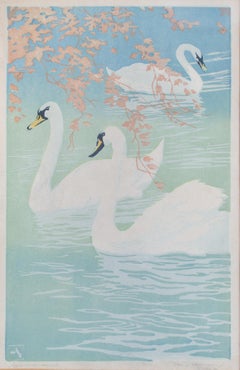
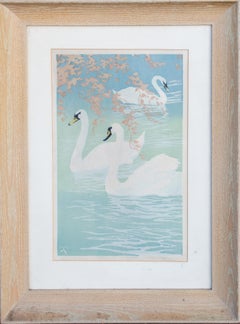
Swans Woodblock by Hans Neumann, 1913

Swans Woodblock by Hans Neumann, 1913

By Hans Neumann

Located in New York, NY

Hans Neumann (German, 1873 - 1957) Schwäne (Swans), 1913 Woodblock Sight: 17 x 11 in. Framed: 25 3/4 x 19 in. Signed & inscribed bottom, artist monogram lower left This outstanding ...

Category

1910s Academic Hoi Lebadang Animal Prints
Materials

Woodcut

Le Gôut du Bonheur: one plate

Le Gôut du Bonheur: one plate

By (after) Pablo Picasso

Located in Collonge Bellerive, Geneve, CH

Artist: Pablo Picasso (after) Medium: lithograph, Arches paper Portfolio: Le Goût de Bonheur Year: 1970 Edition: Total of 1998 copies (666 each in German, French and English) Sheet S...

Category

1970s Modern Hoi Lebadang Animal Prints

Materials

Lithograph

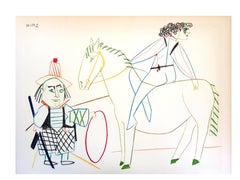
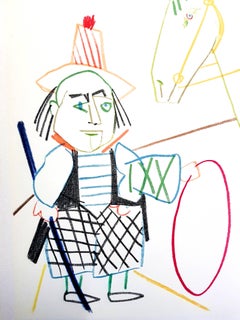
The Human Comedy - Lithograph

The Human Comedy - Lithograph

By (after) Pablo Picasso

Located in Collonge Bellerive, Geneve, CH

After Pablo Picasso The Human Comedy - Lithograph after an original drawing, as published in the journal "Verve" Printed signature and date Dimensions...

Category

1950s Modern Hoi Lebadang Animal Prints

Materials

Lithograph

Traveling animals - Original etching enhanced with watercolor

Traveling animals - Original etching enhanced with watercolor

By George Edwards

Located in Paris, IDF

George EDWARDS Traveling animals Original engraving enhanced with watercolor Signed in the plate and dated, 1746 28.6 x 23.5 cm From Volume II of the Natural History of Birds, plat...

Category

1740s Academic Hoi Lebadang Animal Prints
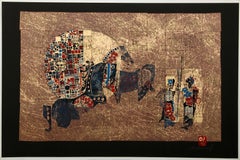
Materials

Engraving

Previously Available Items
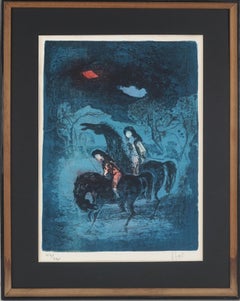
Untitled (landscape with horse and flowers)

Untitled (landscape with horse and flowers)

By Hoi Lebadang

Located in Fairlawn, OH

Untitled (landscape with horse and flowers) Color lithograph, c. 1958-1964 a very early and rare work by the artist Signed and numbered in pencil (see photos) Edition: 260 (47/260) Condition: Appropriate aging to the paper On reverse, small adhesive residue from a sticker Image size: 15 1/4 x 20 3/4 inches Sheet size: 19 1/2 x 25 1/2 inches Note: In 1958, in Paris, Lebadang discovered lithography in the Arts-Litho studio, and regularly attended the studios of Fernand Mourlot and Jacques Desjobert. In 1964, he achieved Eight horses, his first portfolio done in relief, without colours nor ink, on the poems and calligraphy of Chou Ling who initiated his early research on the materials and techniques of making prints. In the 1970s, he brought out several porfolios of prints with some new and innovative techniques: relief engravings, embossing, etching on an embossed background, lithographs on doubled Japanese paper, lithographs and reliefs, serigraphs using a « technique of gilding » that he developed in the studios of Circle Fine Art in the United States. Courtesy the artist's web site. Hoi Lebadang (1922-2015) Lebadang (Hoi) was born in Quang Tri, Vietnam in 1922. He moved to France in 1939 to pursue an art career at Ecole de Beaus Arts...

Category

1950s French School Hoi Lebadang Animal Prints
Materials

Lithograph

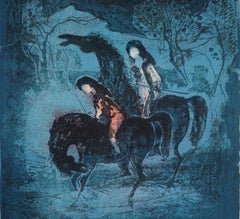
HOI LEBADANG - Framed Signed Limited Edition Lithograph of Horse. Hand Signed.

HOI LEBADANG - Framed Signed Limited Edition Lithograph of Horse. Hand Signed.

By Hoi Lebadang

Located in Chesterfield, MI

Limited Edition Lithograph, 304 / 375. Signed by the artist. Print with frame measures approximately 26 x 22.5 inches and is framed. The piece is in Good Condition.

Category

20th Century Hoi Lebadang Animal Prints
Materials

Lithograph

Horse
Horse

Hoi LebadangHorse, c.1970

Sold

H 27.5 in W 21.15 in D 0.75 in

Horse

By Hoi Lebadang

Located in San Francisco, CA

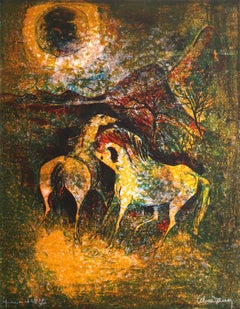
This artwork "Horse" c.1970 is an original color lithograph, with embossing by French/Vietnamese artist Hoi Lebadang, 1922-2015. It is hand signed and numbered 147/260 in pencil by t...

Category

Late 20th Century Modern Hoi Lebadang Animal Prints
Materials

Lithograph

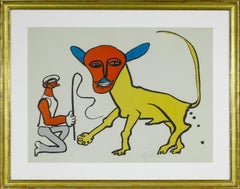
Green and Yellow Horse Lithograph Edition 93 of 120

Green and Yellow Horse Lithograph Edition 93 of 120

By Hoi Lebadang

Located in Houston, TX

Modern impressionist horse lithograph in yellow and green tones. The work is signed and editioned in pencil. The work is framed in a gold frame with an off white matte. Dimensions wi...

Category

20th Century Modern Hoi Lebadang Animal Prints

Materials

Lithograph

'Flight of Fancy', Modernist Lithograph, School of Paris, Ecole des Beaux Arts

'Flight of Fancy', Modernist Lithograph, School of Paris, Ecole des Beaux Arts

By Hoi Lebadang

Located in Santa Cruz, CA

Signed lower right, 'Lebadang' and with number and limitation, 12/260, lower left. A fine, unfaded example with good registration and crisp, fresh colors. This notable Vietnamese-...

Category

1960s Hoi Lebadang Animal Prints

Materials

Paper, Lithograph

Hoi Lebadang animal prints for sale on 1stDibs.
Find a wide variety of authentic Hoi Lebadang animal prints available for sale on 1stDibs. If you’re browsing the collection of animal prints to introduce a pop of color in a neutral corner of your living room or bedroom, you can find work that includes elements of orange and other colors. You can also browse by medium to find art by Hoi Lebadang in lithograph, screen print, paper and more. Much of the original work by this artist or collective was created during the 20th century and is mostly associated with the modern style. Not every interior allows for large Hoi Lebadang animal prints, so small editions measuring 20 inches across are available. Customers who are interested in this artist might also find the work of Pierre-Paul Jouve, Mario Avati, and Mino Maccari. Hoi Lebadang animal prints prices can differ depending upon medium, time period and other attributes. On 1stDibs, the price for these items starts at $600 and tops out at $1,500, while the average work can sell for $1,200.