Want more images or videos?
Request additional images or videos from the seller.

Antique Grape Botanical Chromolithographs, Wine & Table Grapes, Set of Six, 1854

$616.85per set
£459.21per set
€540per setVAT Included
CA$866.11per set
A$894.03per set
CHF 503.92per set
MX$11,566.62per set
NOK 5,749.14per set
SEK 6,065.09per set
DKK 4,116.88per set

About the Item

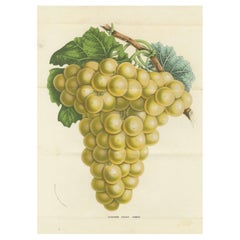
Antique Grape Botanical Chromolithographs, Wine & Table Grapes, Set of Six, 1854 This impressive set of six original mid-19th century botanical chromolithographs was published in Stuttgart in 1854 under the direction of Dr. Calwer. The plates focus on grape varieties, depicting wine and table grapes in different stages of development, with clusters, leaves, tendrils, and flowering details rendered with both scientific precision and decorative refinement. NOTE: We are selling these prints unframed. Each sheet presents a carefully balanced composition, showing grapes in varied colors and forms, from pale green and golden varieties to deep blue-black and reddish clusters. Leaves are shown with distinct veining and subtle color variation, while stems and tendrils add linear rhythm to the compositions. Together, the six plates form a visually rich and harmonious ensemble that reads clearly as a unified botanical series. Produced using early chromolithographic techniques, the prints display layered color application and gentle tonal modeling achieved through multiple stones. This results in a depth and softness that bridges natural history illustration and decorative wall art. The restrained backgrounds and generous margins allow the imagery to stand out and make the set particularly suitable for framing in both classic and contemporary interiors. The sheets show visible evidence of historical handling, including surface soiling and light dirt, most noticeable in the margins and lighter background areas. This wear is consistent with mid-19th century use and storage and has not been cleaned or restored. These traces contribute to the authentic patina and surface character of the prints, reinforcing their originality and period integrity. The grape imagery itself remains strong, clear, and visually engaging across the entire set. As a complete group, these plates offer exceptional decorative and thematic coherence. They are especially well suited for wine rooms, dining rooms, libraries, kitchens, hospitality interiors, or vineyard-related spaces. Complete 19th-century grape series of this quality are increasingly difficult to find intact, making this set appealing to collectors and interior designers alike. Condition report: Good antique condition. Visible handling dirt and surface soiling, primarily in the margins and lighter background areas, consistent with age and historical handling. Light age toning and scattered foxing. Minor edge wear. No major tears or losses; imagery remains well preserved and vibrant. Framing tips: Recommended in matching dark walnut or stained oak frames with generous ivory or warm off-white mats to unify the set visually and emphasize the rich grape tones. Museum or UV-filtering glass advised. When matted and framed, the handling wear largely recedes and reads as gentle toning. Technique: Chromolithography Maker: Dr. Calwer, Stuttgart, 1854 Additonal Info: These are original 1854 chromolithographs and show authentic surface wear from historical handling. The prints have not been cleaned or restored, preserving their original patina and period character. Please review images carefully or contact us with any questions prior to purchase.
  • Dimensions:
    Height: 10.44 in (26.5 cm)Width: 8.08 in (20.5 cm)Depth: 0.01 in (0.2 mm)
  • Sold As:
    Set of 6
  • Materials and Techniques:
  • Place of Origin:
  • Period:
  • Date of Manufacture:
    1854
  • Condition:
    Wear consistent with age and use. Good antique condition. Visible handling dirt and surface soiling, primarily in the margins and lighter background areas, consistent with age and historical handling. Light age toning and scattered foxing. Minor edge wear. No major tears or losses.
  • Seller Location:
    Langweer, NL
  • Reference Number:
    Seller: BG-14178-31, -32, 33, -34, -35, -361stDibs: LU3054348321922

More From This Seller

View All
Antique Grape Botanical Engraving, Vitis Vinifera, Hand Colored, c.1831

Antique Grape Botanical Engraving, Vitis Vinifera, Hand Colored, c.1831

Located in Langweer, NL

Antique Grape Botanical Engraving, Vitis vinifera, Hand Colored, 1830s This elegant botanical plate illustrates Vitis Vinifera, the common grapevine, presented with a single, well-b...

Category

Antique 1830s German Prints

Materials

Paper

Vineyard Treasures: Exquisite Hand-Colored 19th-Century Grapevine Engraving

Vineyard Treasures: Exquisite Hand-Colored 19th-Century Grapevine Engraving

Located in Langweer, NL

Title: "A Bountiful Vine: Hand-Colored 19th-Century Engraving of Grapes from Bertuch’s *Bilderbuch für Kinder*" Description: This captivating 19th-century botanical engraving featu...

Category

Antique Early 1800s Prints

Materials

Paper

Antique Grape Varieties Botanical Print, Vitis Vinifera Study, c.1831

Antique Grape Varieties Botanical Print, Vitis Vinifera Study, c.1831

Located in Langweer, NL

Antique Grape Varieties Botanical Print, Vitis Vinifera Study, Hand Colored This comparative botanical engraving presents multiple varieties of Vitis vinifera, offering a more analy...

Category

Antique 1830s German Prints

Materials

Paper

Stockwood Golden Hambro Grapes: Hand-Colored Lithograph by Louis van Houtte

Stockwood Golden Hambro Grapes: Hand-Colored Lithograph by Louis van Houtte

Located in Langweer, NL

This hand-colored lithograph showcases a cluster of Stockwood Golden Hambro grapes, a variety known for its plump, golden fruit. The print is part of Louis van Houtte’s *Flore des Se...

Category

Antique 1850s Prints

Materials

Paper

Set of three Antique Prints of Red Grape Varieties

Set of three Antique Prints of Red Grape Varieties

Located in Langweer, NL

Set of three original antique chromolithographs of various red grape varieties titled 'Forcalla - Mecle - Grappu'. These prints originate from 'Traité Général de Viticulture. Ampélog...

Category

Early 20th Century Prints

Materials

Paper

Set of Three Antique Prints of Various Green / White Grape Varieties, 1821

Set of Three Antique Prints of Various Green / White Grape Varieties, 1821

Located in Langweer, NL

Set of three antique engravings of various green / white grape varieties titled 'Le Gouais - Muscat d'Alexandrie - Mornain blanc'. These prints originate from 'Le Jardin fruitier, contenant l'histoire, la description, la culture et les usages...

Category

Antique Early 19th Century French Prints

Materials

Paper

You May Also Like

Brookshaw Botanical, Grapes, large folio, Natural Hisotry, Fruit Specimen

Brookshaw Botanical, Grapes, large folio, Natural Hisotry, Fruit Specimen

By George Brookshaw

Located in Fairlawn, OH

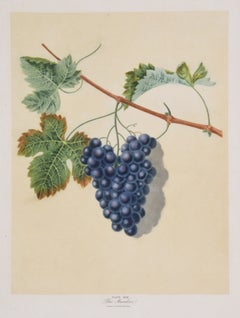
George Brookshaw (1751-1823) Plate XLIX Blue Muscadine Aquatint, engraving with some stipple, printed in colors with hand finishing on J Whatman 1809 paper 1804-1812 Signed in the plate lower center margin (see photo) From: Pomona Britannica or A Collection of the Most Esteemed Fruits (90 Plates) Published: White, Cochrane & Co., E. Lloyd and W. Lindsell, London: [1804-] 1812 Format: Folio size, 1st edition Printer: Thomas Bensley (active c. 1760-1935) Considered to be a msaterpice of natural history illustration Reference: Dunthrone 1938.50 Condition: Excellent Image size: 18 3/4 x 17 inches Sheet size: 21 1/4 x 17 inches Provenance: W. Russell Button Gallery, Chicago Notes: Publication legend lower center: “Painted & Published as the Act Directs by the Author G. Brookshaw” followed by date, varying from 1804 to 1812. Title page credits: “Printed for the author by T. Bensley, Bolt Court, Fleet Street. Published by White, Cochrane and Co. Fleet Street; E. Lloyd, Harley Street; and W. Linsell, Corner of Wigmore Street.” George Brookshaw (1751-1823) (after) from Pomona Britannica; Or, a collection of the most esteemed fruits at present cultivated in this country… selected principally from the Royal Gardens at Hampton Court T. Bensley, London (printer) White, Cochrane & Co., E. Lloyd and W. Lindsell, London: [1804-] 1812 Folio edition Stipple engravings, printed in color, finished by hand 17.5 x 14 inches, plate mark, average approximate 22 x 17 inches, overall, average approximate Pomona Britannica, or a Collection of the Most Esteemed Fruits at present cultivated in the country…selected principally from the royal gardens at Hampton Court…accurately drawn and coloured from nature, with full descriptions was published in London from 1804—1812. Comprising 90 aquatint engravings, including 256 depictions of British fruit, after paintings by George Brookshaw. Published in London and engraved by R. Brookshaw and H. Merke. George Brookshaw (1751—1823) was born in Birmingham, England where he was apprenticed to Samuel Troughton (d. 1783), a Birmingham painter and japanner. According to a recent blog post related to St. Philips Cathedral, Birmingham, England, entitled In Search of Sobieski Brookshaw, by Gill Partridge, he may have received some art training from his father, also named George Brookshaw, who is listed as an engraver in a document dated 1751. George Brookshaw’s brother, Richard Brookshaw (1736—c.1804) was a portrait painter and engraver well versed in mezzotint and copperplate engraving techniques, and may have instructed his brother. In 1777, Brookshaw moved from Birmingham to London and began a celebrated career building fine cabinets detailed with hand-painted botanical and pomological motifs. Shortly afterward, in 1778, he married Sobieski Grice (1749—1811), daughter of William Grice, a prosperous gunsmith.The Prince of Wales was the most distinguished of Brookshaw’s well-heeled patrons, and today examples of Brookshaw’s cabinetry may be seen at the Victoria & Albert Museum, London. According to church records noted in Gill Partridge’s post, both George Brookshaw and Sobieski Grice were baptized at the Birmingham Cathedral. In his cabinet-making shop, Brookshaw also offered lessons in flower painting to ‘Ladies of Taste and Fashion’. During the mid 1790s, it appears his furniture-making business went bankrupt, and he led his life under an assumed name, G. Brown. In 1991, Lucy Wood wrote two articles in which she drew the connection between G. Brown and George Brookshaw. During his years of anonymity, Brookshaw worked as an illustrator of botanical books and gave flower-painting lessons, which may have been his primary source of income. Apparently, the marriage dowry he enjoyed while married to Sobieski Grice was lost after their marriage dissolved. Brookshaw returned to public view as the earliest parts of Pomona Britannica were issued. In Flower and Print Books of the 18th and Early 19th Centuries, Gordon Dunthorne extolls the virtues of George Brookshaw’s large folio edition. “One of the eminent English artists of the early nineteenth century is George Brookshaw, who issued in 1812, Pomona Britannica. Ninety aquatint plates, printed in colour and on a scale comparable to Thornton’s Temple of Flora...

Category

Early 1800s Other Art Style Still-life Prints

Materials

Aquatint

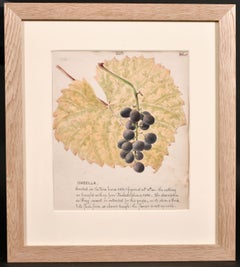
Fine 1860's Botannical Watercolour Drawing - Isabella Grapes on the Vine

Fine 1860's Botannical Watercolour Drawing - Isabella Grapes on the Vine

Located in Cirencester, Gloucestershire

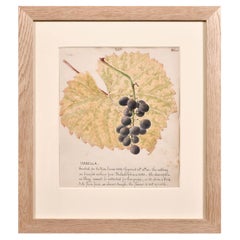
Artist/ School: English/ American School, 19th century, circa 1860's. Title: Isabella Grapes on the vine. Interesting inscription telling the history of the drawing and how the orig...

Category

Mid-19th Century Victorian Still-life Drawings and Watercolors

Materials

Acrylic

Muscadine, Muscat Variety Grapes, Color Lithograph c1891

Muscadine, Muscat Variety Grapes, Color Lithograph c1891

Located in Savannah, GA

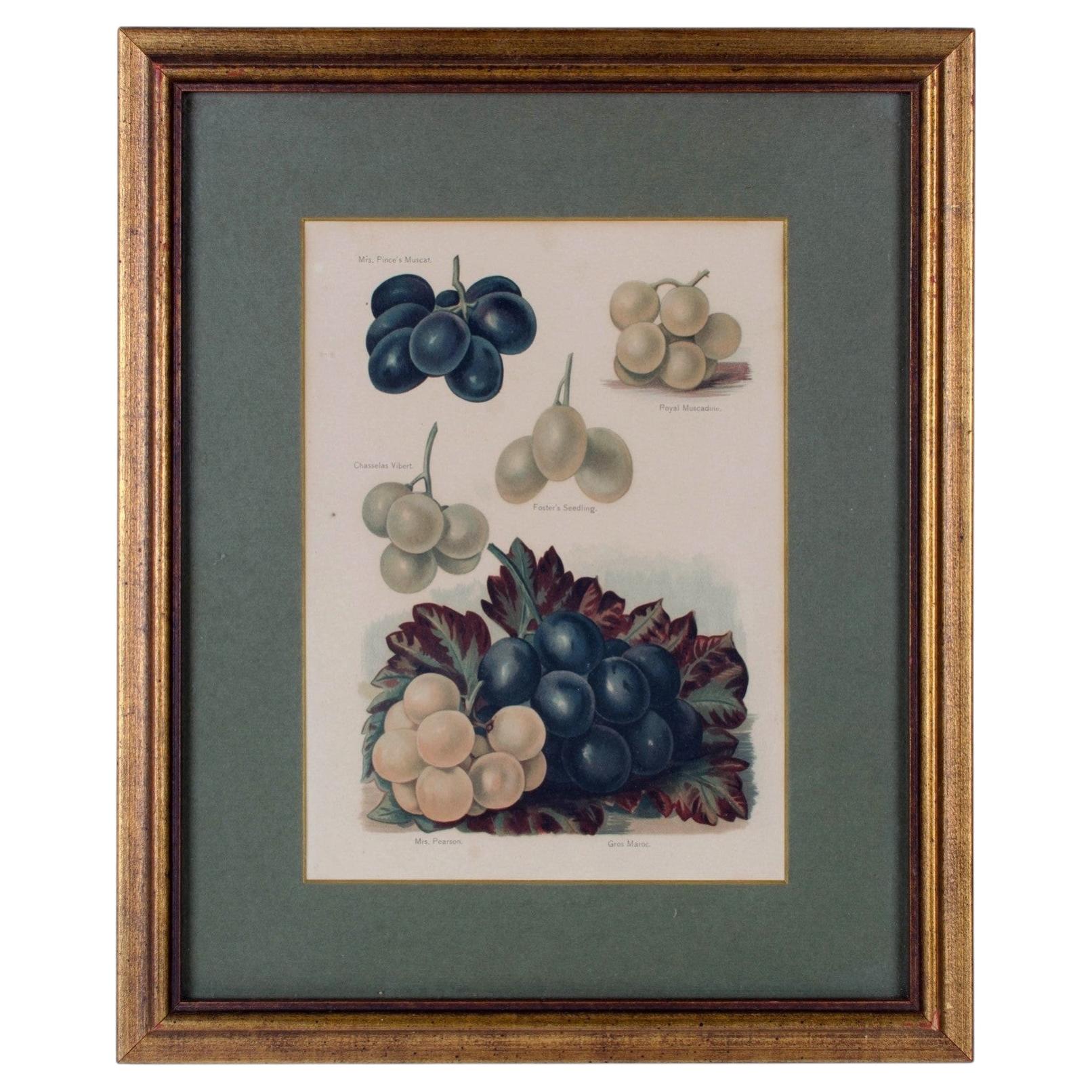
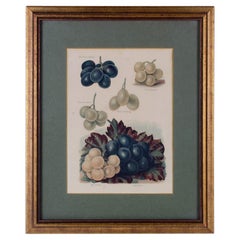
Offered is framed antique print featuring several varieties of grapes (Mrs. Pince’s Muscat, Royal Muscadine, Chasselas Vibert, Foster’s Seedling, Mrs. Pearson and Gros Marcoc). May ...

Category

Antique 1890s Prints

Materials

Wood, Paper

Brookshaw Botanical, Fruit, Grapes, Aquatint, 1st Edition, Natural History

Brookshaw Botanical, Fruit, Grapes, Aquatint, 1st Edition, Natural History

By George Brookshaw

Located in Fairlawn, OH

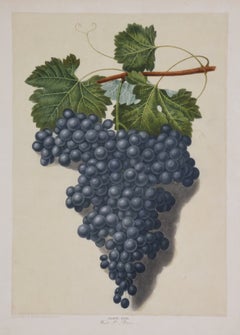
George Brookshaw (1751-1823) Plate LVIII West St. Peters Aquatint, engraving with some stipple, printed in colors with hand finishing, 1809 Signed in the plate Engraved signature on the bottom center margin From: Pomona Britannica or A Collection of the Most Esteemed Fruits (90 Plates) Published: White, Cochrane & Co., E. Lloyd and W. Lindsell, London: [1804-] 1812 Format: Folio size, 1st edition Printer: Thomas Bensley (active c. 1760-1935) Considered to be a msaterpice of natural history illustration Condition: Excellent Image size: 18 3/4 x 15 7/8 inches Sheet size: 21 1/4 x 17 inches Provenance: W. Russell Button Gallery, Chicago Reference: Dunthorne: 1938.050 Publication legend lower center: “Painted & Published as the Act Directs by the Author G. Brookshaw” followed by date, varying from 1804 to 1812. Title page credits: “Printed for the author by T. Bensley, Bolt Court, Fleet Street. Published by White, Cochrane and Co. Fleet Street; E. Lloyd, Harley Street; and W. Linsell, Corner of Wigmore Street.” George Brookshaw (1751-1823) (after) from Pomona Britannica; Or, a collection of the most esteemed fruits at present cultivated in this country… selected principally from the Royal Gardens at Hampton Court T. Bensley, London (printer) White, Cochrane & Co., E. Lloyd and W. Lindsell, London: [1804-] 1812 Folio edition Stipple engravings, printed in color, finished by hand 17.5 x 14 inches, plate mark, average approximate 22 x 17 inches, overall, average approximate Pomona Britannica, or a Collection of the Most Esteemed Fruits at present cultivated in the country…selected principally from the royal gardens at Hampton Court…accurately drawn and coloured from nature, with full descriptions was published in London from 1804—1812. Comprising 90 aquatint engravings, including 256 depictions of British fruit, after paintings by George Brookshaw. Published in London and engraved by R. Brookshaw and H. Merke. George Brookshaw (1751—1823) was born in Birmingham, England where he was apprenticed to Samuel Troughton (d. 1783), a Birmingham painter and japanner. According to a recent blog post related to St. Philips Cathedral, Birmingham, England, entitled In Search of Sobieski Brookshaw, by Gill Partridge, he may have received some art training from his father, also named George Brookshaw, who is listed as an engraver in a document dated 1751. George Brookshaw’s brother, Richard Brookshaw (1736—c.1804) was a portrait painter and engraver well versed in mezzotint and copperplate engraving techniques, and may have instructed his brother. In 1777, Brookshaw moved from Birmingham to London and began a celebrated career building fine cabinets detailed with hand-painted botanical and pomological motifs. Shortly afterward, in 1778, he married Sobieski Grice (1749—1811), daughter of William Grice, a prosperous gunsmith.The Prince of Wales was the most distinguished of Brookshaw’s well-heeled patrons, and today examples of Brookshaw’s cabinetry may be seen at the Victoria & Albert Museum, London. According to church records noted in Gill Partridge’s post, both George Brookshaw and Sobieski Grice were baptized at the Birmingham Cathedral. In his cabinet-making shop, Brookshaw also offered lessons in flower painting to ‘Ladies of Taste and Fashion’. During the mid 1790s, it appears his furniture-making business went bankrupt, and he led his life under an assumed name, G. Brown. In 1991, Lucy Wood wrote two articles in which she drew the connection between G. Brown and George Brookshaw. During his years of anonymity, Brookshaw worked as an illustrator of botanical books and gave flower-painting lessons, which may have been his primary source of income. Apparently, the marriage dowry he enjoyed while married to Sobieski Grice was lost after their marriage dissolved. Brookshaw returned to public view as the earliest parts of Pomona Britannica were issued. In Flower and Print Books of the 18th and Early 19th Centuries, Gordon Dunthorne extolls the virtues of George Brookshaw’s large folio edition. “One of the eminent English artists of the early nineteenth century is George Brookshaw, who issued in 1812, Pomona Britannica. Ninety aquatint plates, printed in colour and on a scale comparable to Thornton’s Temple of Flora...

Category

Early 1800s Other Art Style Still-life Prints

Materials

Aquatint

FINE 1860'S BOTANNICAL WATERCOLOUR DRAWING - ISABELLA GRAPES ON THE VINE

FINE 1860'S BOTANNICAL WATERCOLOUR DRAWING - ISABELLA GRAPES ON THE VINE

Located in Cirencester, Gloucestershire

Artist/ School: English/ American School, 19th century, circa 1860's. Title: Isabella Grapes on the vine. Interesting inscription telling the history of the drawing and how the orig...

Category

Mid-19th Century Victorian Still-life Paintings

Materials

Watercolor

Set of FOUR Prints of Grapes originally Circa 1817 in Rectangular Frames, New

Set of FOUR Prints of Grapes originally Circa 1817 in Rectangular Frames, New

Located in Lincoln, Lincolnshire

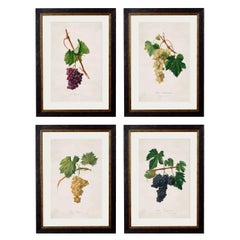
These are a set of FOUR digitally remastered prints of Grape studies, hand coloured and framed, originally from French drawings, Circa 1817. Prints of this style were originally pr...

Category

2010s British Georgian Prints

Materials

Glass, Wood, Paper