Want more images or videos?
Request additional images or videos from the seller.

Japanese Antique Karibari Board / Abstract Washi Paper Wall Art / Wabi-sabi

$2,200
£1,695.79
€2,028.52
CA$3,199.39
A$3,298.33
CHF 1,874.08
MX$41,750.84
NOK 21,460.89
SEK 22,482.94
DKK 15,164.43

About the Item

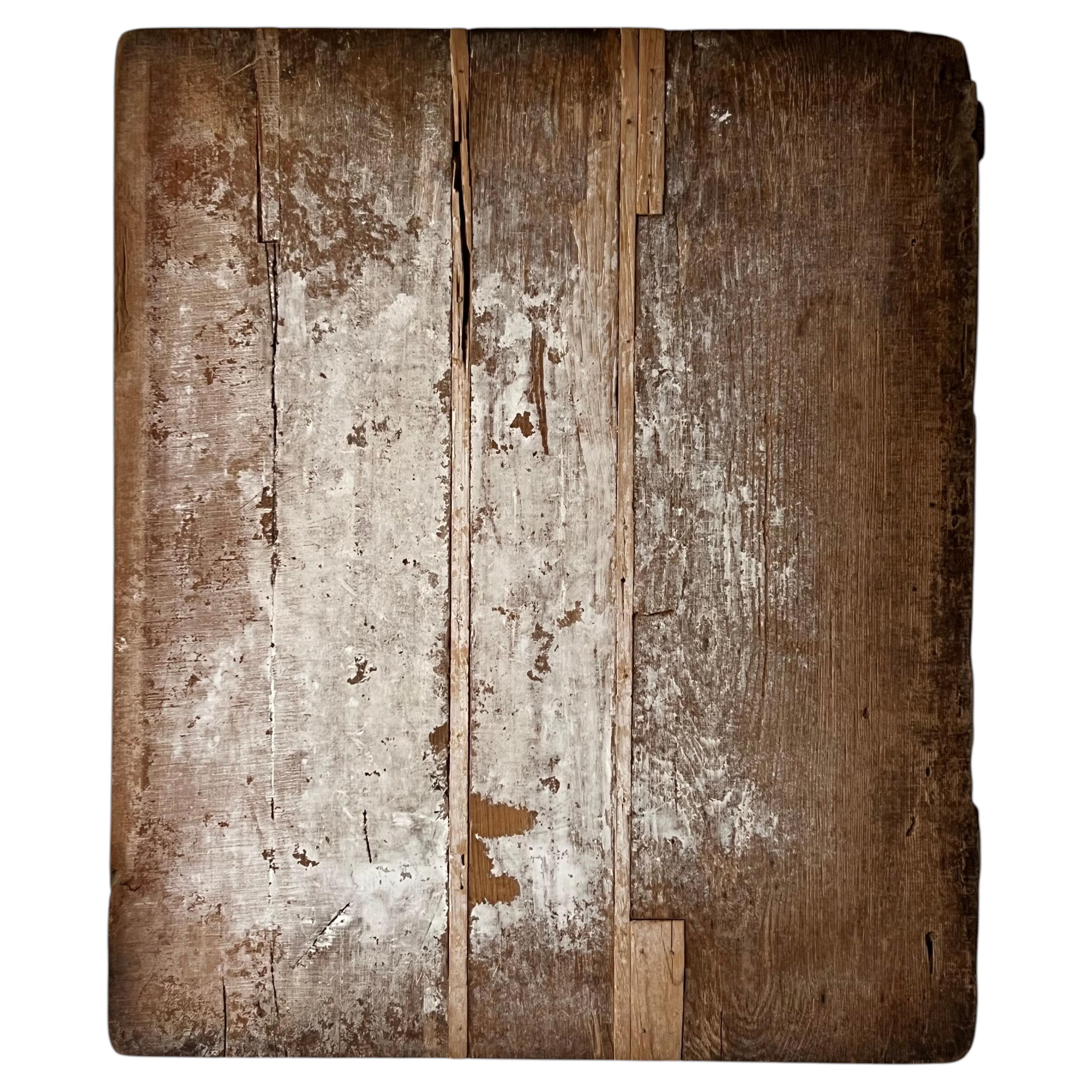
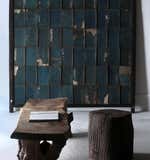
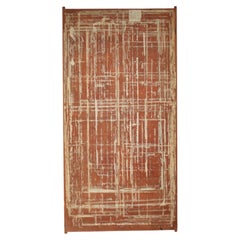
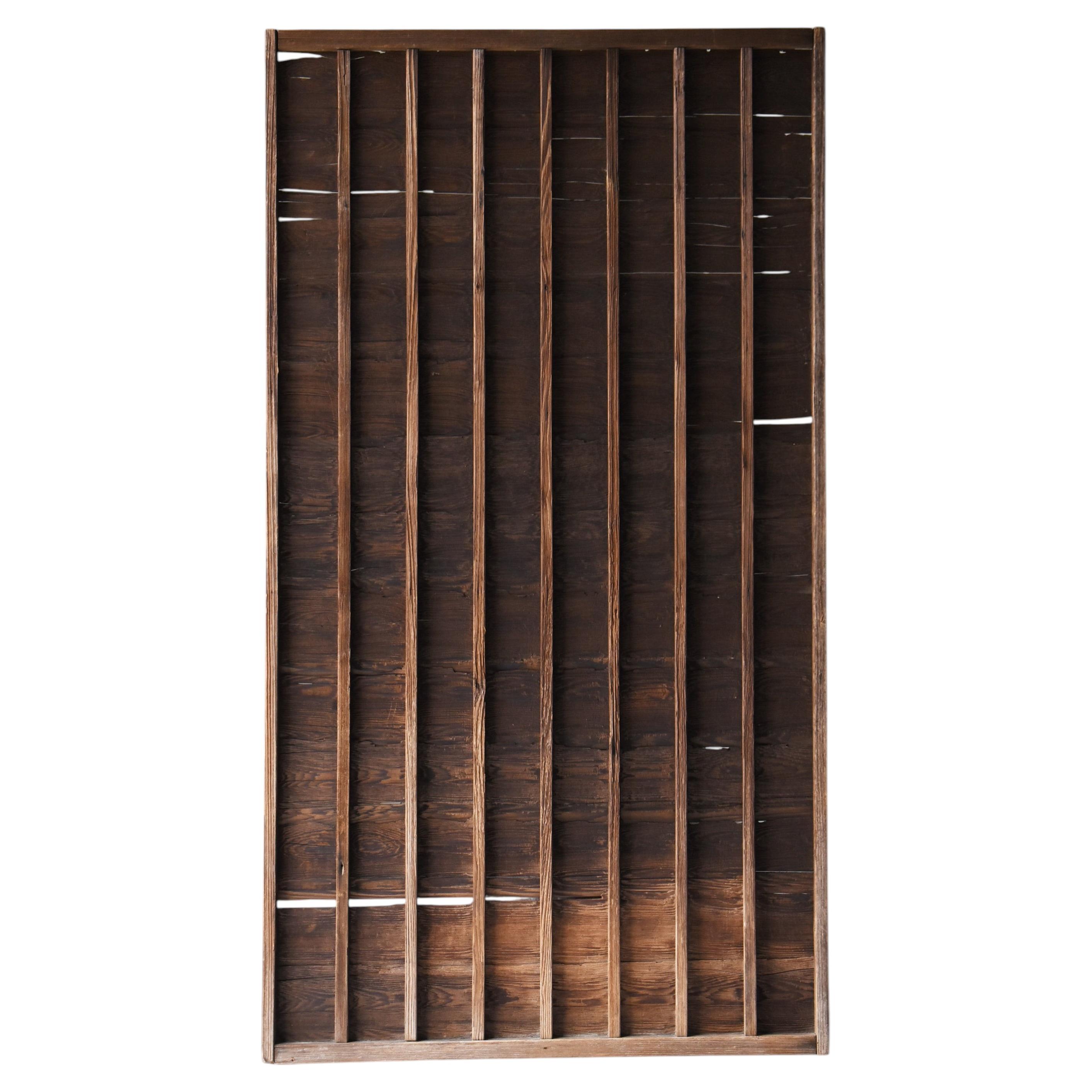
This is an old Japanese Karibari board, a traditional drying board used by Japanese craftsmen in the mounting and restoration of hanging scrolls, paintings, and calligraphy. Thought to date to around the Meiji period (1868–1912), this board carries beautiful traces of traditional Japanese craftsmanship. In the process of mounting and restoring artworks, craftsmen would apply starch paste around the edges of backing paper and attach it to the Karibari board, allowing the paper to dry slowly and evenly while maintaining its shape. The numerous pale rectangular marks visible across the surface are believed to be traces of these repeated processes. Over many years of use, overlapping marks, subtle discolorations, and remnants of paper have accumulated, creating a remarkable composition of geometric shapes and delicate tonal variations. What makes this piece particularly fascinating is that these patterns were never intended as artwork. They emerged naturally through the repetitive work of craftsmen, gradually transforming a practical tool into something resembling an abstract painting. The softly faded colors of the aged washi paper, the overlapping rectangular forms, and the subtle textures create a beautiful sense of depth and quiet movement. The dark wooden rails along the edges provide a striking contrast to the delicate paper surface, while their projecting ends reveal the board’s traditional construction. Every mark and variation in color reflects the passage of time and the history of the hands that once worked with this object. Although originally created as a functional tool, it can now be appreciated as a unique piece of Japanese abstract wall art. It can be displayed either vertically or horizontally, offering different visual expressions depending on its orientation. We recommend displaying it on a spacious wall, where its beautiful layers, subtle colors, and naturally formed geometric patterns can be fully appreciated. A remarkable example of how traditional Japanese craftsmanship and the passage of time can transform an everyday object into a work of art. Weight: 3.35kg
  • Dimensions:
    Height: 36.62 in (93 cm)Width: 73.23 in (186 cm)Depth: 1.38 in (3.5 cm)
  • Style:
    Meiji (Of the Period)
  • Materials and Techniques:
  • Place of Origin:
  • Period:
  • Date of Manufacture:
    1868-1912
  • Condition:
    Refinished. Wear consistent with age and use.
  • Seller Location:
    Shizukuishi-cho, Iwate-gun, JP
  • Reference Number:
    1stDibs: LU9601252969932

More From This Seller

View All
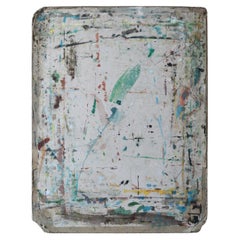
Japanese Old Artist's Drawing Board / Abstract Art Wall Decoration / Late 1900s

Japanese Old Artist's Drawing Board / Abstract Art Wall Decoration / Late 1900s

Located in Shizukuishi-cho, Iwate-gun, Iwate Prefecture

This is a drawing board used by a Japanese painter. It is made by gluing together pieces of cardboard, and it is thought that the artist repeatedly painted on it. The colorful water...

Category

Late 20th Century Japanese Other Decorative Art

Materials

Paper, Paint

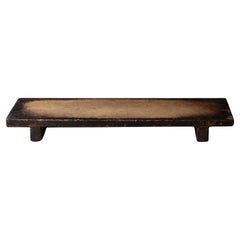
Japanese Antique Exhibition Table / Wall Decoration / 1868-1912s / Wabi-sabi

Japanese Antique Exhibition Table / Wall Decoration / 1868-1912s / Wabi-sabi

Located in Shizukuishi-cho, Iwate-gun, Iwate Prefecture

This is an old Japanese wooden work board. The wood is cedar, and due to long-term use, the black color around the edges remains, and the color has peeled off only in the middle. Th...

Category

Antique Late 19th Century Japanese Meiji Antiquities

Materials

Wood, Cedar

Japanese Antique Paper Pasted Large Open Showcase / Wabi-Sabi

Japanese Antique Paper Pasted Large Open Showcase / Wabi-Sabi

Located in Shizukuishi-cho, Iwate-gun, Iwate Prefecture

The original wooden showcase has had its glass removed and the entire piece covered in old Japanese paper to create an open display case. *Please note that glass is not included. Th...

Category

Early 20th Century Japanese Minimalist Cabinets

Materials

Hardwood, Oak, Cedar, Paper

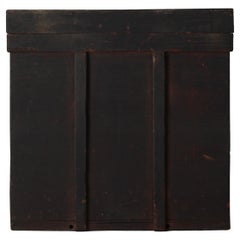
Japanese Antique Black Box / Side Table Exhibition Stand / 1868-1912s/ Wabi-sabi

Japanese Antique Black Box / Side Table Exhibition Stand / 1868-1912s/ Wabi-sabi

Located in Shizukuishi-cho, Iwate-gun, Iwate Prefecture

This is an old wooden storage box made in Japan. It is thought to date from around the Meiji period and is made of cedar. It has a simple design with no metal fittings. The overall m...

Category

Antique Late 19th Century Japanese Meiji Side Tables

Materials

Wood, Cedar

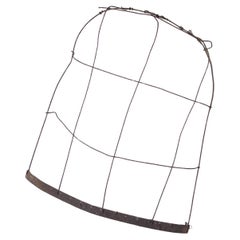
Japanese Old Iron Frame Of Winnow / Wall Decoration / Wabi-sabi Mingei

Japanese Old Iron Frame Of Winnow / Wall Decoration / Wabi-sabi Mingei

Located in Shizukuishi-cho, Iwate-gun, Iwate Prefecture

This is an old Japanese winnowing basket's iron frame. Winnowing basket is a single-mouthed or round-plate-shaped folk utensils used for sorting, transporting, and drying grains. I...

Category

Mid-20th Century Japanese Showa Decorative Art

Materials

Iron

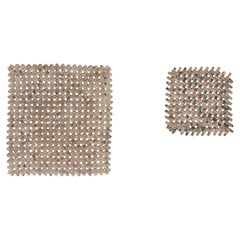
Japanese Folded Paper Mats, Set of Two, Sculptural Old Paper Wall Art / Mingei

Japanese Folded Paper Mats, Set of Two, Sculptural Old Paper Wall Art / Mingei

Located in Shizukuishi-cho, Iwate-gun, Iwate Prefecture

Japanese Folded Postcard Mats, Set of Two, Sculptural Wall Decoration A set of two Japanese paper mats, traditionally identified as zabuton, or seat cushions, crafted from folded an...

Category

Early 20th Century Japanese Meiji Wall-mounted Sculptures

Materials

Paper

You May Also Like

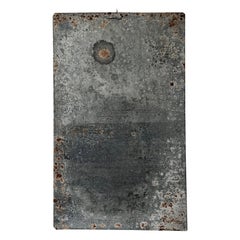
Japanese Antique Weathered Tin plate・19th Century Wabi-sabi Abstract Wall Art

Japanese Antique Weathered Tin plate・19th Century Wabi-sabi Abstract Wall Art

Located in 足利市, JP

An extraordinary found-object sculpture and wall art piece from 19th-century Japan: an authentic 19th-century galvanized tin plate (Buriki-ita), originally used as a protective heat liner beneath the ash bed of a traditional Hibachi (charcoal brazier). Over a century of exposure to hot ash, embers, and gradual oxidation has transformed this functional industrial sheet into a captivating piece of abstract art with a profound Wabi-sabi presence. The surface displays a rich tapestry of weathered gray patina, mottling, and organic rust formations. Most notably, a distinct circular burn mark near the upper section mirrors the ethereal form of a full moon emerging through mist—a serendipitous embodiment of the Japanese Mitate philosophy (reinterpreting everyday objects as fine art). Equipped with a discreet wire loop at the top for wall mounting, this piece can be hung vertically as a striking modern wall sculpture or utilized horizontally as a rustic display tray (Shikita) for ceramics, Ikebana, or incense burners. With its raw industrial tactile qualities and rich historical patina, this object bridges antique Japanese utilitarian craft with contemporary minimalist and industrial interior aesthetics. Object: Japanese Antique Hibachi...

Category

Antique Late 19th Century Japanese Meiji Decorative Art

Materials

Tin

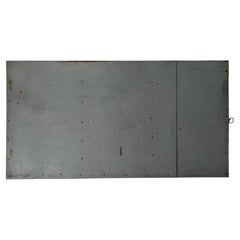
Japanese Anthique Minimalist Abstract Art Tin Panel・ 1900`s Wabi-sabi Wall Art

Japanese Anthique Minimalist Abstract Art Tin Panel・ 1900`s Wabi-sabi Wall Art

Located in 足利市, JP

A striking minimalist found-object wall panel from 20th-century Japan: an authentic vintage Amado (storm door) sheet metal panel, subtly reinterpreted through the Japanese art of Mit...

Category

Early 20th Century Japanese Minimalist Decorative Art

Materials

Tin

Antique Door "Wall Decoration"  from Japan 1860s-1900s / Abstract Art Wabi Sabi

Antique Door "Wall Decoration" from Japan 1860s-1900s / Abstract Art Wabi Sabi

Located in Sammu-shi, Chiba

This was a very old Japanese warehouse (kura) window sliding door. It was made during the Meiji period (1860s-1900s). The frame is made of cedar wood, and the base is hardened with s...

Category

Early 20th Century Japanese Meiji Decorative Art
Materials

Cedar

F35 Old japanese, a board used by a mounting artisan *hyōgushi* Abstract art

F35 Old japanese, a board used by a mounting artisan *hyōgushi* Abstract art

Located in Niiza, JP

Material: Paper, Cedar frame size: L2(Board thickness) × W88 × H176cm 5kg Estimate packing: Weight 19kg L7cm W92cm H180cm This is a board that was used by a mounting artisan (*hyō...

Category

20th Century Japanese Paintings and Screens

Materials

Cedar, Paper

Japanese Antique Wooden Board, "Abstract Sculptures", Wabi-Sabi, Mingei

Japanese Antique Wooden Board, "Abstract Sculptures", Wabi-Sabi, Mingei

Located in Katori-Shi, 12

This is a wooden antique board from the Meiji era. It is made of Japanese cedar wood. It has a beautiful appearance due to years of use and aging. It was used as a board for kneadi...

Category

Early 20th Century Meiji Antiquities

Materials

Wood

Japanese Antique Wabi-Sabi Abstract Panel・Layered Washi Kakishibu Tapestry/1870s

Japanese Antique Wabi-Sabi Abstract Panel・Layered Washi Kakishibu Tapestry/1870s

Located in 足利市, JP

An exceptionally rare and artistically profound piece of Japanese cultural history: a hand-crafted Yuton (oiled paper) textile panel, meticulously produced in Kyoto circa 1872 (Meiji...

Category

Antique Late 19th Century Meiji Contemporary Art

Materials

Paper, Natural Fiber