Want more images or videos?
Request additional images or videos from the seller.

Pierre Jeanneret Upholstered Daybed, Chandigarh, c.1957-58

$59,800
£45,408.35
€54,464.98
CA$85,643.57
A$88,404.25
CHF 49,828.91
MX$1,143,746.43
NOK 568,494.92
SEK 599,737.13
DKK 407,091.15

About the Item

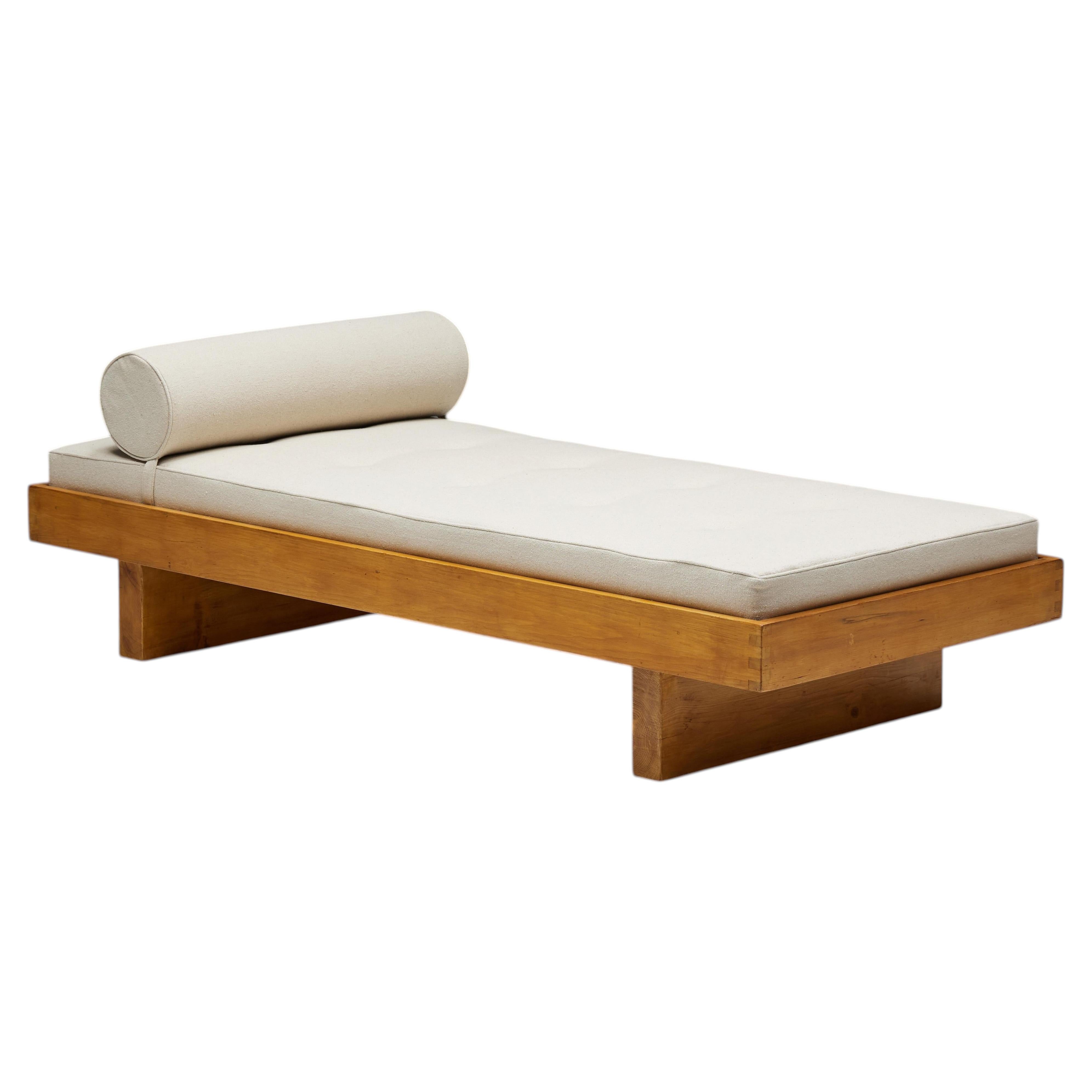
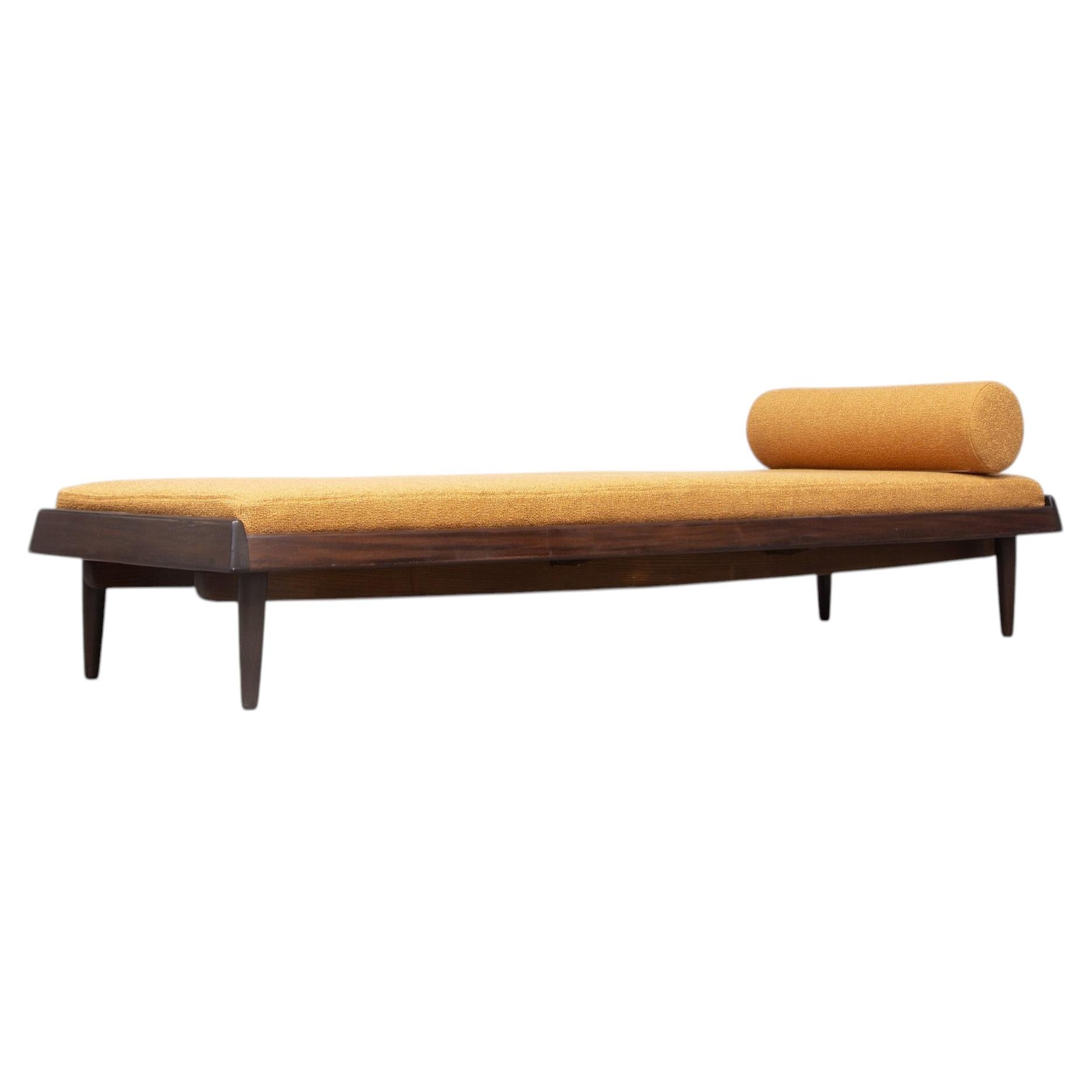
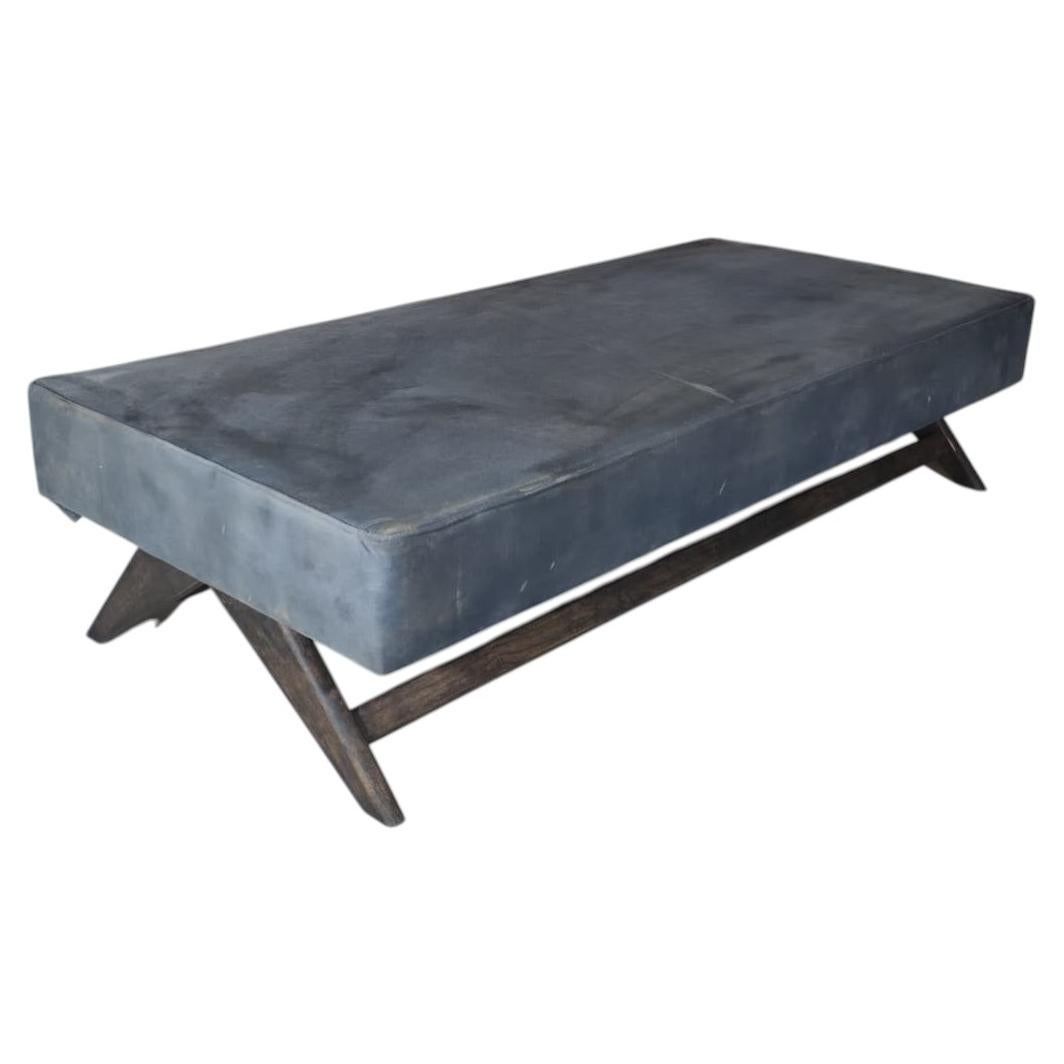
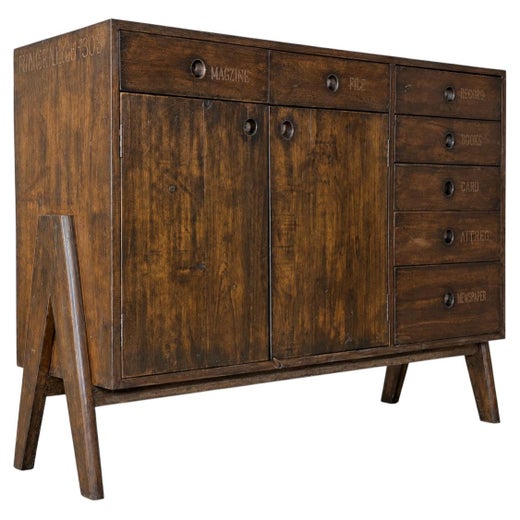
Low teak daybed by Pierre Jeanneret from the Chandigarh furniture program, circa 1957–1958, presented with contemporary green mohair upholstery and a matching cylindrical bolster. The long, narrow platform rests on open compass-form timber supports. Jeanneret’s furniture formed part of the larger architectural project of Chandigarh, the new city developed in post-independence India. Alongside desks, chairs and storage furniture, his daybeds addressed the quieter activities of rest and informal seating. Their generous horizontal surfaces were supported by a practical timber framework made with local craftsmen. The design gives an everyday furnishing the clarity of a small architectural structure, with its proportions, visible joints and open spaces establishing a close relationship between useful construction and sculptural form. At each end, the inclined legs spread outward beneath the rectangular seat rail. A low stretcher links the two ends, leaving the space below the platform open and emphasizing the daybed’s elongated silhouette. The soft mohair surface introduces a rich green tone against the brown teak without concealing the angular structure. Surviving paint on the side rail reads “CCS HAU/B. Hostel,” followed by inventory numerals. CCS HAU identifies Chaudhary Charan Singh Haryana Agricultural University in Hisar, Haryana; the hostel designation records an association with its residential inventory. The university adopted the Chaudhary Charan Singh name in 1991, so this wording represents a later chapter in the frame’s institutional life rather than the date of its design. The vintage teak retains variations in grain, color and surface wear, with softened edges and individual traces of use visible in the photographs. These details give the woodwork its material character and preserve the sense of a furnishing made for daily life in institutional or residential interiors. The present upholstery is a later treatment of the vintage structure. For a related Chandigarh daybed form, see Rago, Modern Design, September 2024, lot 194. Dimensions: approximately 78 inches wide, 31 inches deep, 17 inches high. Provenance: private collection, Chandigarh, India, as recorded by Studio Balestra. Accompanied by a Studio Balestra Certificate of Authenticity.
  • Creator:
    Pierre Jeanneret (Designer)
  • Dimensions:
    Height: 17 in (43.18 cm)Width: 78 in (198.12 cm)Depth: 31 in (78.74 cm)
  • Style:
    Mid-Century Modern (Of the Period)
  • Materials and Techniques:
    Mohair,Teak,Woodwork
  • Place of Origin:
  • Period:
  • Date of Manufacture:
    Circa 1958
  • Condition:
    Reupholstered. Wear consistent with age and use. Wear consistent with age and use. Period surfaces show age-appropriate wear, variation and patina. Upholstery is later or renewed as described in the listing.
  • Seller Location:
    Los Angeles, CA
  • Reference Number:
    Seller: SEA-248241stDibs: LU6959252208842

More From This Seller

View All
Pierre Jeanneret Upholstered Daybed, Chandigarh, c.1957-58

Pierre Jeanneret Upholstered Daybed, Chandigarh, c.1957-58

By Pierre Jeanneret

Located in Los Angeles, CA

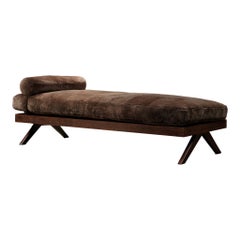
Upholstered teak daybed by Pierre Jeanneret from the Chandigarh furniture program, circa 1957–1958. A long, low platform and cylindrical bolster are presented in contemporary brown alpaca, whose soft surface contrasts with the angular timber base. Jeanneret’s furniture formed part of the larger architectural project of Chandigarh, the new city developed in post-independence India. Alongside desks, chairs and storage furniture, his daybeds addressed the quieter activities of rest and informal seating. Their generous horizontal surfaces were supported by a practical timber framework made with local craftsmen. The design gives an everyday furnishing the clarity of a small architectural structure, with its proportions, visible joints and open spaces establishing a close relationship between useful construction and sculptural form. The rectangular upholstered plane rests above a narrow exposed seat rail. At either end, inclined teak members spread outward toward the floor, giving the base its characteristic compass profile. A low longitudinal stretcher links the supports and keeps the understructure visually open. The bolster introduces a rounded element within this otherwise rectilinear composition. The generous length is balanced by a relatively narrow depth, preserving the daybed’s elongated proportions. Seen from the side, the continuous cushioned surface appears to float above the darker woodwork, while the end supports provide a strong visual anchor. Grain, worn edges and variations in the brown teak distinguish the vintage structure from the current covering. Faint painted inventory lettering survives toward one end of the long teak side rail, including “CCS HAU” and “B. HOSTEL”. Studio Balestra associates these markings with the boys’ hostel furniture at Chaudhary Charan Singh Haryana Agricultural University in Hisar, Haryana. The university adopted the Chaudhary Charan Singh name in 1991, so the inscription records a later chapter of institutional use of the earlier daybed design. The worn lettering remains on this frame beneath the contemporary alpaca pad, giving its patinated timber a particular history alongside the daybed’s clear structural geometry. The vintage teak retains variations in grain, color and surface wear, with softened edges and individual traces of use visible in the photographs. These details give the woodwork its material character and preserve the sense of a furnishing made for daily life in institutional or residential interiors. The present upholstery is a later treatment of the vintage structure. A related Chandigarh daybed...

Category

Vintage 1950s Indian Mid-Century Modern Daybeds

Materials

Alpaca, Teak

Pierre Jeanneret Upholstered Daybed, Chandigarh, c.1957-58

Pierre Jeanneret Upholstered Daybed, Chandigarh, c.1957-58

By Pierre Jeanneret

Located in Los Angeles, CA

Upholstered teak daybed by Pierre Jeanneret from the Chandigarh furniture program, circa 1957–1958, with a contemporary dark taupe shearling pad and cylindrical bolster. The long reclining plane is supported by a low frame with emphatic compass-form ends. Jeanneret’s furniture formed part of the larger architectural project of Chandigarh, the new city developed in post-independence India. Alongside desks, chairs and storage furniture, his daybeds addressed the quieter activities of rest and informal seating. Their generous horizontal surfaces were supported by a practical timber framework made with local craftsmen. The design gives an everyday furnishing the clarity of a small architectural structure, with its proportions, visible joints and open spaces establishing a close relationship between useful construction and sculptural form. Broad angled members spread toward the floor at each end, while a low longitudinal stretcher links the supports beneath the seat. The timber rail remains exposed below the padding, preserving the separation between the vintage base and the current soft furnishing. The rounded bolster rests above the otherwise uninterrupted horizontal plane. The side rail retains painted “PGIMER” lettering followed by inventory number “116” above a line, with “2” below. PGIMER identifies Chandigarh’s Postgraduate Institute of Medical Education and Research, established in 1962. The paint records later institutional use of the daybed and adds a particular medical-institute association to the history of this frame. The vintage teak retains variations in grain, color and surface wear, with softened edges and individual traces of use visible in the photographs. These details give the woodwork its material character and preserve the sense of a furnishing made for daily life in institutional or residential interiors. The present upholstery is a later treatment of the vintage structure. A related Chandigarh daybed...

Category

Vintage 1950s Indian Mid-Century Modern Daybeds

Materials

Teak, Lambskin

Pierre Jeanneret Upholstered Daybed, Chandigarh, c.1957-58

Pierre Jeanneret Upholstered Daybed, Chandigarh, c.1957-58

By Pierre Jeanneret

Located in Los Angeles, CA

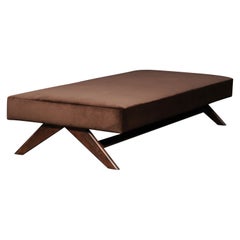
Low upholstered daybed by Pierre Jeanneret from the Chandigarh furniture program, circa 1957–1958. The broad rectangular platform is presented in contemporary brown velvet over a vin...

Category

Vintage 1950s Indian Mid-Century Modern Daybeds

Materials

Linen, Teak

Pierre Jeanneret Demountable Webbed Daybed, Chandigarh, c.1955-56

Pierre Jeanneret Demountable Webbed Daybed, Chandigarh, c.1955-56

By Pierre Jeanneret

Located in Los Angeles, CA

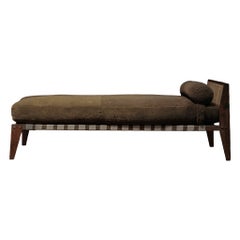
Demountable webbed daybed by Pierre Jeanneret from the Chandigarh furniture program, circa 1955–1956. The vintage teak frame combines a long reclining platform with a cane back at one end and contemporary green shearling padding with a matching bolster. Jeanneret’s furniture formed part of the larger architectural project of Chandigarh, the new city developed in post-independence India. Alongside desks, chairs and storage furniture, his daybeds addressed the quieter activities of rest and informal seating. Their generous horizontal surfaces were supported by a practical timber framework made with local craftsmen. The design gives an everyday furnishing the clarity of a small architectural structure, with its proportions, visible joints and open spaces establishing a close relationship between useful construction and sculptural form. The exposed support webbing runs around the timber rails beneath the removable pad. Broad tapered uprights at the head carry the rectangular cane back, while visible bolts articulate the demountable construction. The open frame allows the webbed support, timber joints and generous space beneath the platform to remain clearly legible. The cane back forms a light vertical screen above the upholstered plane. Its grid contrasts with the dense texture of the shearling and with the solid wooden members around it. The cylindrical bolster rests against this back, adding a rounded profile to the otherwise rectilinear structure. The sizeable 80-inch length gives the piece the scale of a full reclining daybed. The broad teak head upright retains a clearly visible painted inventory inscription, “PGI 315”. PGI refers to the Postgraduate Institute of Medical Education and Research in Chandigarh, established in 1962; 315 is the accompanying inventory number. The surviving lettering associates this particular frame with the institute and records its later institutional use, following the circa 1955–1956 design date. Painted directly onto the structural timber beside the cane back, the mark is an integral detail of the daybed’s history, complementing the worn edges, visible bolts and patinated woodwork. The vintage teak retains variations in grain, color and surface wear, with softened edges and individual traces of use visible in the photographs. These details give the woodwork its material character and preserve the sense of a furnishing made for daily life in institutional or residential interiors. The present upholstery is a later treatment of the vintage structure. For a related webbed Chandigarh daybed...

Category

Vintage 1950s Indian Mid-Century Modern Daybeds

Materials

Teak, Lambskin

Pierre Jeanneret Chandigarh Cane-Back Daybed in Shearling, circa 1955

Pierre Jeanneret Chandigarh Cane-Back Daybed in Shearling, circa 1955

By Pierre Jeanneret

Located in Los Angeles, CA

Webbed teak daybed by Pierre Jeanneret from the Chandigarh furniture program, circa 1955–1956. A long reclining platform, rectangular cane back and contemporary dark shearling pad with cylindrical bolster are combined in a visibly articulated timber frame. Jeanneret’s furniture formed part of the larger architectural project of Chandigarh, the new city developed in post-independence India. Alongside desks, chairs and storage furniture, his daybeds addressed the quieter activities of rest and informal seating. Their generous horizontal surfaces were supported by a practical timber framework made with local craftsmen. The design gives an everyday furnishing the clarity of a small architectural structure, with its proportions, visible joints and open spaces establishing a close relationship between useful construction and sculptural form. The head uprights carry the open cane back, while the webbed support remains exposed around the seat rails beneath the removable pad. Visible bolts connect the broad timber members, making the practical assembly legible. The cane grid forms a light vertical screen at one end of the otherwise continuous horizontal platform. A photographed head upright is painted “P.E.C/13(H).” P.E.C is consistent with Punjab Engineering College, whose campus moved to Chandigarh in 1953. The accompanying characters preserve an institutional inventory designation on the frame itself. This lettering gives the daybed a specific college association and remains visible beside the bolt heads and aged teak surface. The vintage teak retains variations in grain, color and surface wear, with softened edges and individual traces of use visible in the photographs. These details give the woodwork its material character and preserve the sense of a furnishing made for daily life in institutional or residential interiors. The timber has been refinished. The present upholstery is a later treatment of the vintage structure. For a related webbed Chandigarh daybed...

Category

Vintage 1950s Indian Daybeds

Materials

Sheepskin, Teak

Jean Prouvé Scal Daybed, Steel Frame, Fabric Upholstery, France, 1950s

Jean Prouvé Scal Daybed, Steel Frame, Fabric Upholstery, France, 1950s

By Jean Prouvé

Located in Los Angeles, CA

An iconic design by Jean Prouvé, the Scal Daybed pairs industrial precision with elegant simplicity. Featuring a sleek metal frame and minimalist profile, it embodies Prouvé’s signat...

Category

Vintage 1950s French Daybeds

Materials

Steel

You May Also Like

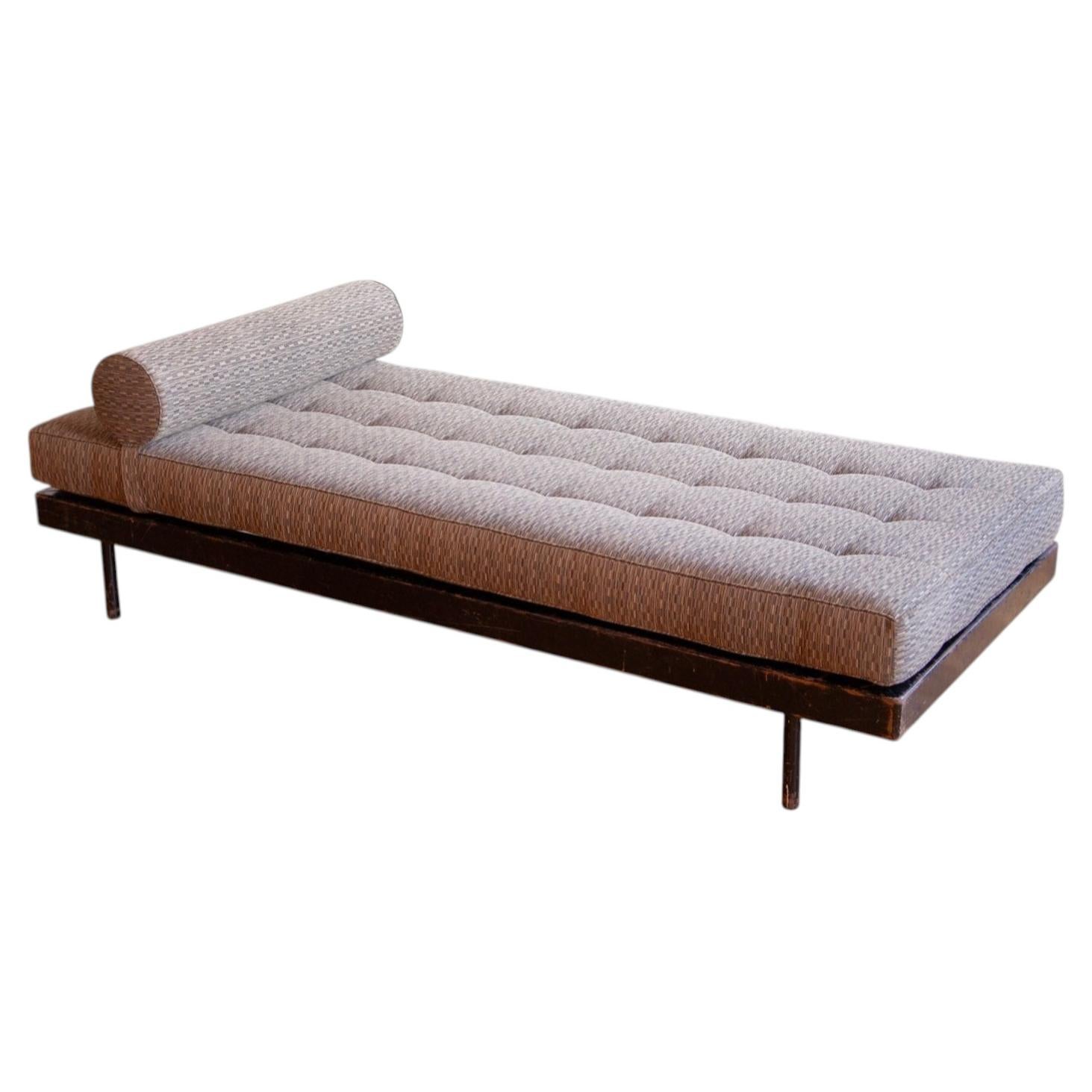
Pierre Jeanneret Daybed PJ-L-05-A, Chandigarh, 1950s

Pierre Jeanneret Daybed PJ-L-05-A, Chandigarh, 1950s

By Pierre Jeanneret

Located in Ghent, BE

Demountable daybed, model PJ‑L‑05‑A, designed by Pierre Jeanneret in the mid‑1950s as part of his extensive program of furniture for the newly planned city of Chandigarh, India. The ...

Category

Vintage 1950s Indian Mid-Century Modern Daybeds

Materials

Teak, Cotton

Fantastic 1950s Pierre Jeanneret Daybed

Fantastic 1950s Pierre Jeanneret Daybed

By Pierre Jeanneret

Located in Philadelphia, PA

We are pleased to present this fantastic daybed or Diwan by Pierre Jeanneret, circa late 1950s. The bed is documented as model PJ-L-11-A. Pierre Jeanneret first arrived in India ...

Category

20th Century Indian Modern Daybeds

Materials

Upholstery, Teak

Pierre Jeanneret Daybed

Pierre Jeanneret Daybed

By Pierre Jeanneret

Located in Toronto, Ontario

A very nice and rather rare daybed or diwan by Pierre Jeanneret for the Chandigarh Project, circa 1957. These daybeds were produced in small numbers for Punjab University Administ...

Category

Vintage 1950s Indian Mid-Century Modern Daybeds

Materials

Teak

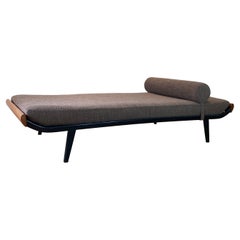
Upholstered A.R. Cordemeyer Auping Cleopatra Daybed 1950s Teak Metal Mid-Century

Upholstered A.R. Cordemeyer Auping Cleopatra Daybed 1950s Teak Metal Mid-Century

Located in London, England

A stunning Mid-century design from Auping that has just been upholstered in-house with brown pure wool fabric from a 200 year old independent Scottish manufacturer. Minimalist in de...

Category

Vintage 1950s Dutch Mid-Century Modern Daybeds

Materials

Metal

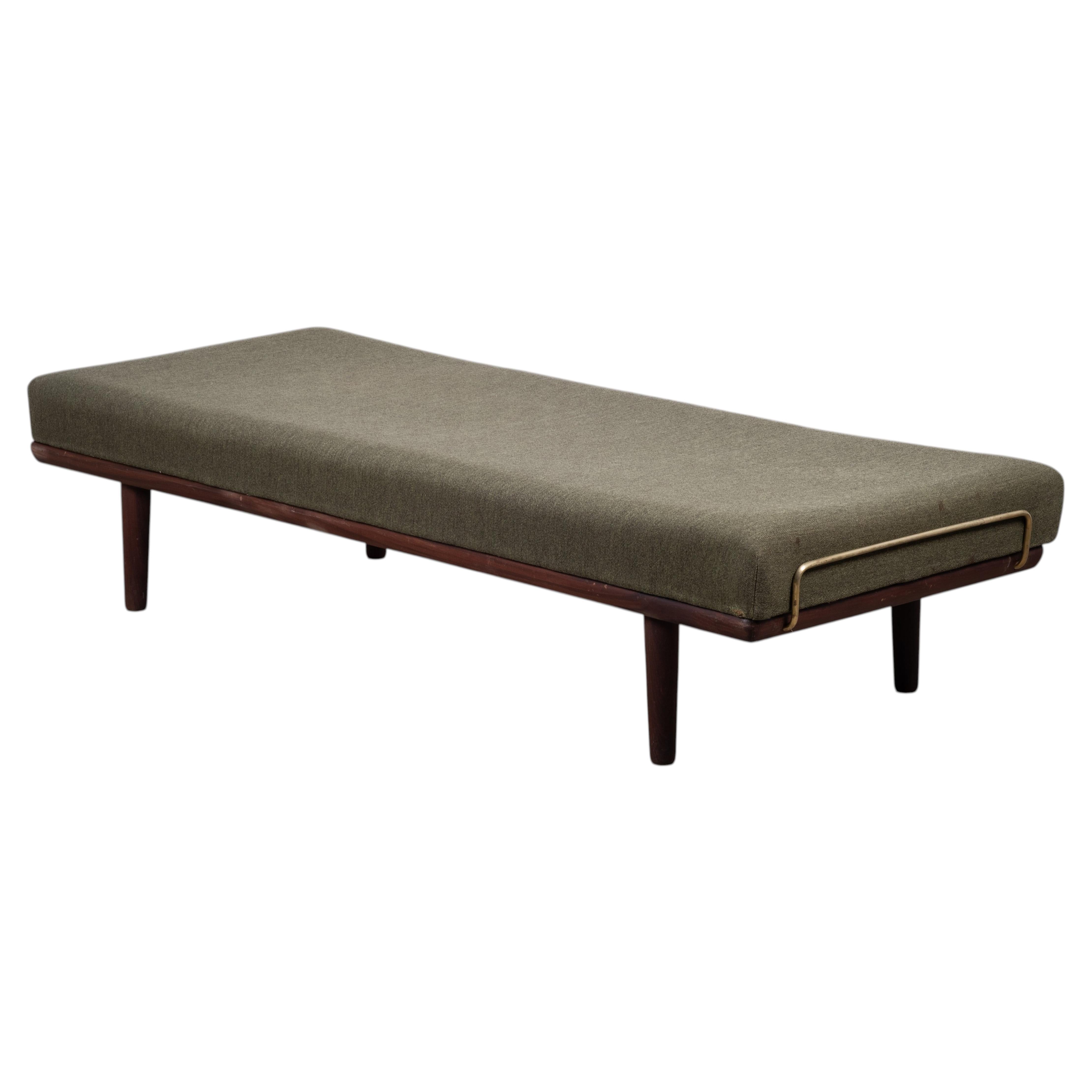
Mid-Century Danish Teak Daybed Model GE19 by Hans J. Wegner, 1960s

Mid-Century Danish Teak Daybed Model GE19 by Hans J. Wegner, 1960s

By GETAMA, Hans J. Wegner

Located in Nørre Aaby, DK

An elegant and lightweight teak daybed, model GE19, designed by Hans J. Wegner in the 1960s, exemplifying the refined simplicity and exceptional craftsmanship of Danish modern design...

Category

Vintage 1960s Danish Mid-Century Modern Daybeds

Materials

Teak

Sergio Rodrigues Rosewood Daybed in Taupe Boucle, Brazil, 1960s

Sergio Rodrigues Rosewood Daybed in Taupe Boucle, Brazil, 1960s

By Sergio Rodrigues

Located in New York, NY

Designed in the 1960s by Sergio Rodrigues (1927–2014), this rosewood daybed embodies the relaxed monumentality and material honesty that defined Brazilian modernism. Conceived as par...

Category

Mid-20th Century Brazilian Mid-Century Modern Daybeds

Materials

Bouclé, Hardwood