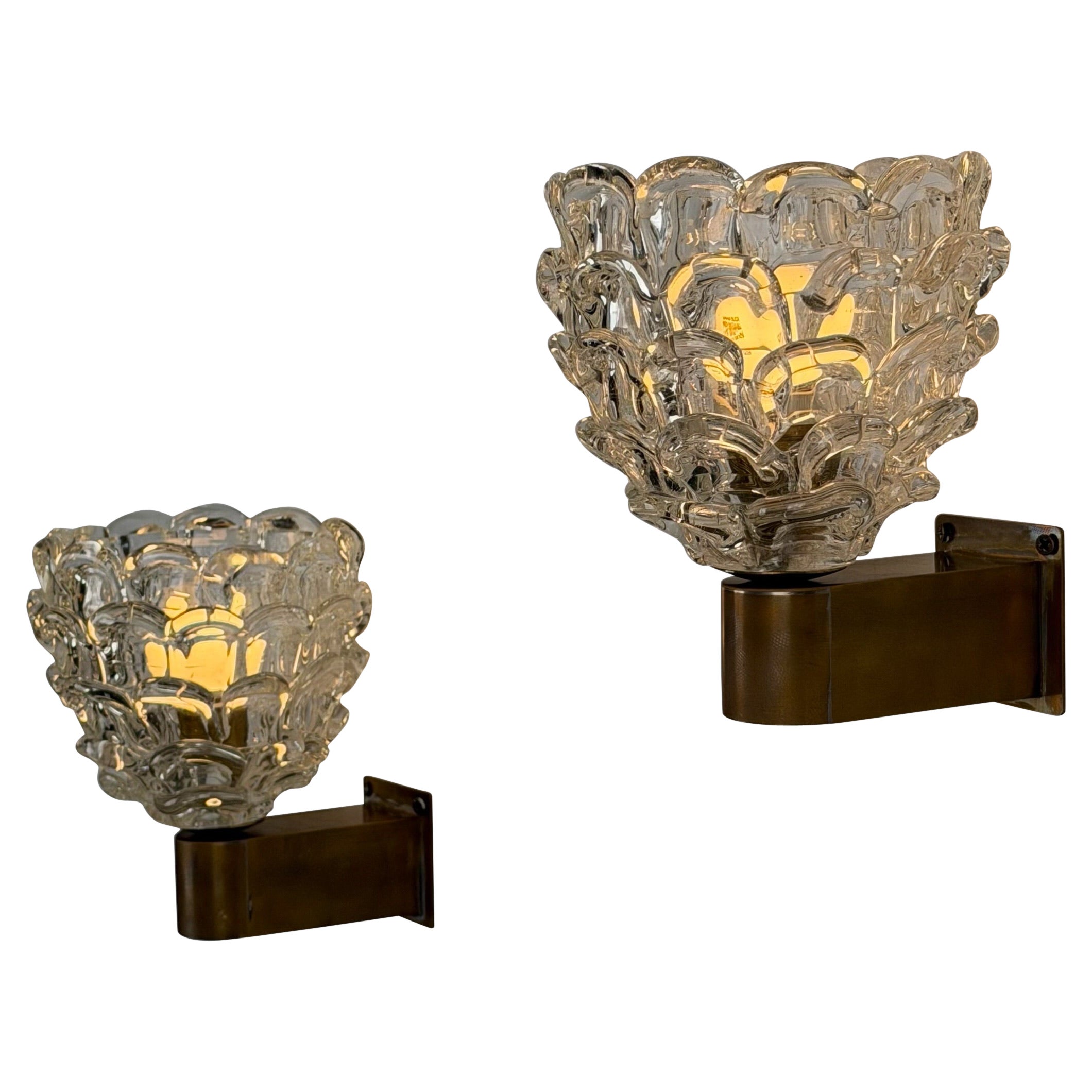
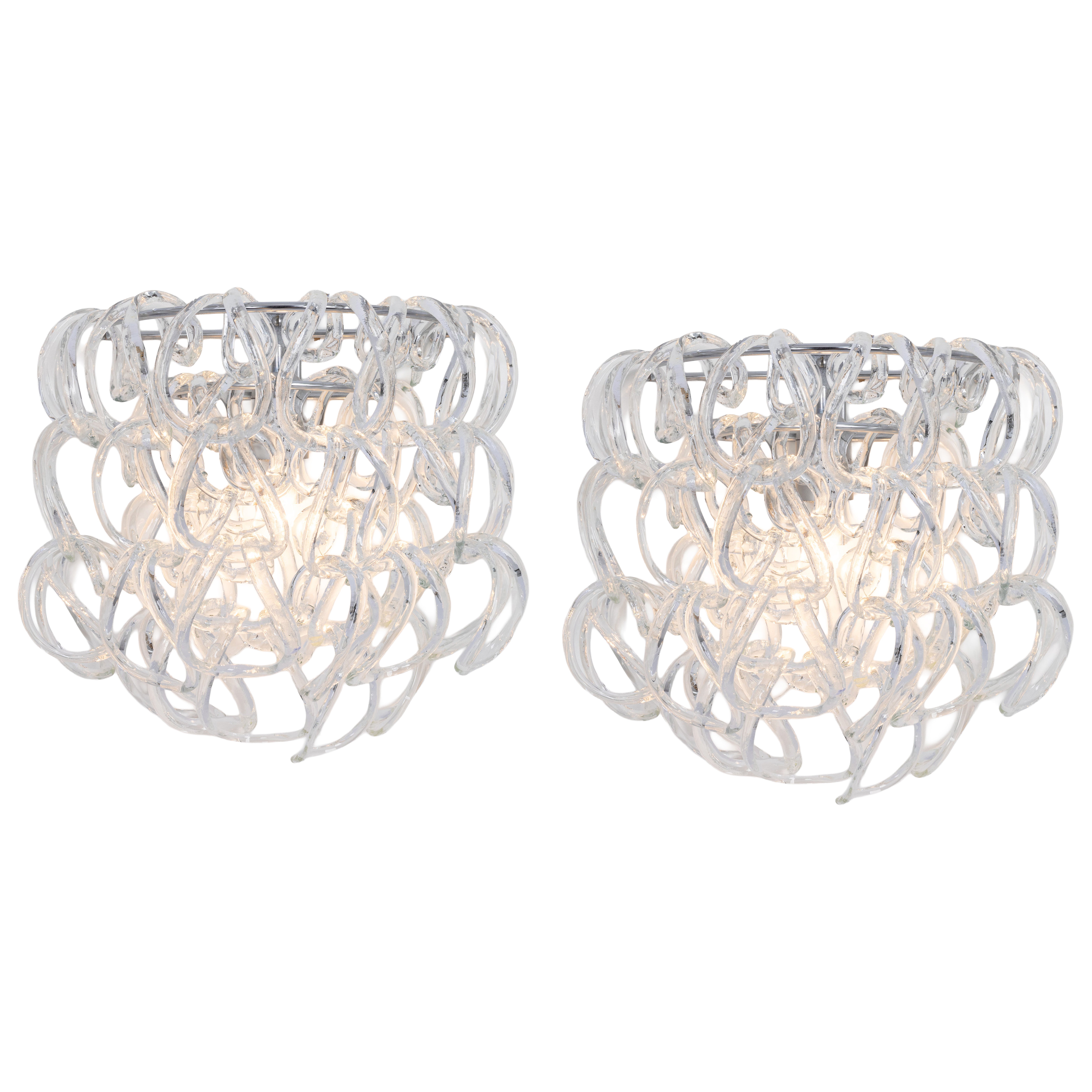
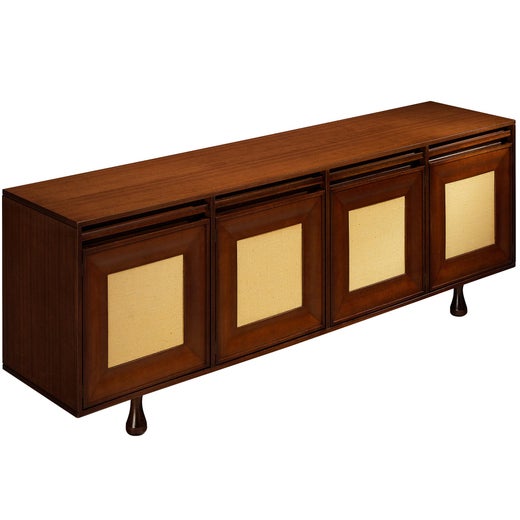
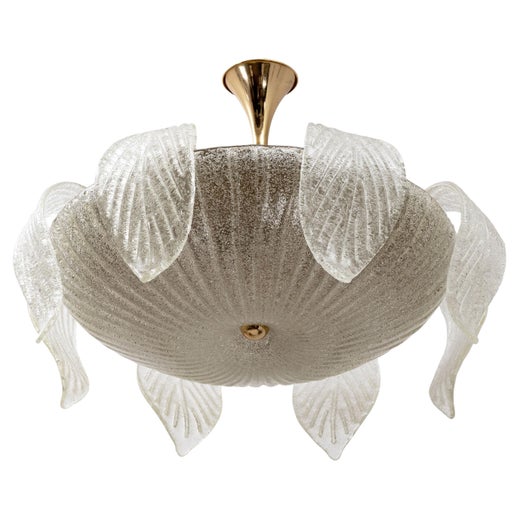
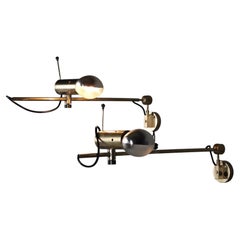
Two '194' Lamps by Tito Agnoli for Oluce 1950s-60s
By Tito Agnoli
Located in Milano, IT
Wall lamps with swiveling arms made of anodized aluminum, circular-shaped wall mount.
Vintage 1950s Italian Mid-Century Modern Wall Lights and Sconces
Aluminum
Italian architect, designer, teacher and urban planner Angelo Mangiarotti was a leading light in the international design community from the 1960s onward. While he was an adherent of the rationalist principles of purity of line and simplicity of construction, he sought to imbue his designs for coffee tables, dining chairs, sconces and other furnishings with a sense of character and lightness of spirit that was often lacking in late-20th-century modernist architecture and design.
Born in Milan, Mangiarotti studied architecture at Milan Polytechnic, graduating in 1948. Five years later, he won a visiting professorship at the Illinois Institute of Technology — beginning a peripatetic academic career that would see him teaching in numerous Italian institutions as well as in schools as far afield as Hawaii and Australia. He worked with Bauhaus eminences Ludwig Mies van der Rohe and met such greats as Frank Lloyd Wright and Walter Gropius. He returned to Italy in 1955 and would go on to work on numerous industrial, residential, commercial and civic projects in his home country, most notably a group of six railway stations in Milan.
As a designer, Mangiarotti and the development of his career embodies the evolution of modernism in the latter decades of the 20th century. In the late 1950s and early ’60s, after early experiments in plywood furniture and one-piece foam-core seating — including the 1110 lounge chair for Cassina — Mangiarotti began to design using more classic materials, from delicate, curvaceous blown-glass table lamps for Artemide to chandeliers with crystal links for Vistosi.
In 1971, Mangiarotti introduced what became his signature designs: a series of tables in marble and other stones that featured “gravity joints,” their legs held in place by the weight of the tabletop. Tables in his Eros collection have muscular proportions that anticipate the robust, overscaled lines of postmodern works that would appear 10 years later: His Eccentrico table, for example, is a striking assemblage in marble featuring a top that is cantilevered dramatically on a canted columnar base.
But simplicity and practicality were consistently the primary watchwords of Mangiarotti’s designs. The purity and elegance of the objects he created offer a graceful counterpoint to a traditional decor, yet they have a singular sculptural presence that allows them to stand out powerfully in a modern interior.
Find vintage Angelo Mangiarotti furniture on 1stDibs.
Demonstrative of a unique marriage between artistry and technical excellence, Vistosi lighting fixtures were born from a rich Italian glassmaking tradition. The prolific glass manufacturer came to prominence after World War II for its modernist lighting designs, and today Vistosi is known for opulent chandeliers, lamps and sconces.
The history of Vistosi reaches as far back as 1640, when the Gazzabin family of Murano opened a furnace for producing Murano glass art. "Vistoso," which was originally a nickname, became part of the family's surname and eventually the name “Vistosi” was used to refer to the family’s glass creations.
Vistosi would be recognized by the glassmakers’ guild in Murano during the late 18th century — with Gio-Batta Vistosi becoming head of the guild — but Napoleon dissolved the Venetian state and closed the region’s glass factories by 1807. The modern iteration of the Vistosi company was founded in Murano in 1945 by Guglielmo Vistosi, a Gazzabin family heir.
During the 1950s, Vistosi's grandchildren, Gino and Luciano Vistosi, began specializing in lighting. In the 1960s and ‘70s, the company worked with renowned Italian furniture designers like Adalberto Dal Lago, Ettore Sottsass and Gae Aulenti. One of Vistosi's most famous collaborations was with Italian architect and designer Angelo Mangiarotti. In 1967, Mangiarotti designed a modular crystal-hook lighting system called Giogali that has enjoyed popularity and acclaim to this day.
In 1989, Vistosi was taken over by businessman Giancarlo Moretti, who had an extensive background in the lighting industry. Moretti's son, Matteo Moretti, reinvigorated the business with a series of new design collaborations in 1993. Some of the most notable partnerships included Chiaramonte and Marin, Mauro Olivieri and Michele De Lucchi.
Vistosi has participated in every Euroluce showcase since the lighting exhibition began in 1976. In 2005, the company won the ADI Design Index award for Mangiarotti's Giogali system. In 2007, Vistosi won the Eurispes award and participated in a Compasso d'Oro competition.
Today, Vistosi is still a leader in the lighting industry, shifting to LED and creating new types of lead-free crystal glass for its stunning range of lighting fixtures.
Find a collection of vintage Vistosi lighting and decorative objects on 1stDibs.
Pair of 1970s wall sconces by Gianni Celada for Fontana Arte
By Fontana Arte, Gianni Celada
Located in Milano, IT
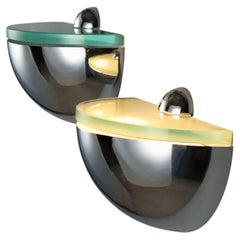
Two wall lamps designed by Gianni Celada for Fontana Arte in the 1970s. Made of chrome-plated metal, these wall sconces feature a sturdy, polished design that elegantly reflects ligh...
Metal

Five 'Knossos' Lamps Artemide 60s-70s Design by Angelo Mangiarotti
By Angelo Mangiarotti
Located in Milano, IT
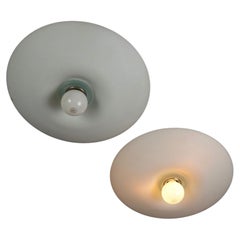
Set of five wall or ceiling lamps made of white and orange plastic material. In good overall condition, they have small cracks on the back that do not affect their use.
Plastic

Pair of Eight-Light Metal and Glass Chandeliers, Italy Early 20th Century.
Located in Milano, IT
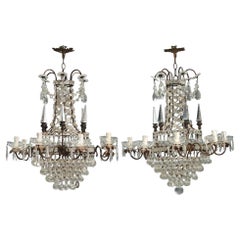
Pair of eight-light chandeliers. Burnished metal frame embellished with flowers, necklaces, pendants and glass tips. Glass bobeches with sheet metal leaves underneath. Some missing p...
Metal
1960s Stilnovo Wall Sconce
Located in Milano, IT
A wall lamp manufactured by Stilnovo in the 1960s, characterized by an elegant and functional design. The base is made of aluminum, while the diffuser is made of opal glass, which is...
Aluminum

Set of 2 Wall Lamps Giogali Design Mangiarotti for Ideal Lux - Italy
By Angelo Mangiarotti
Located in modena, Emilia-Romagna
Giogali AP is not simply a crystal wall lamp... is a decorative lighting system based on the modular pyrex hook element. Wall sconce composed of pyrex elements made entirely by hand ...
Steel

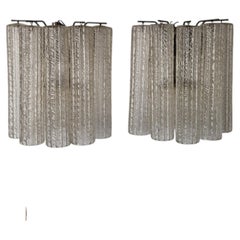
Pair of 1960s-style designer wall sconces made of iron with Murano glass pendants
Located in Milano, IT
Pair of 1960s-style designer wall sconces made of iron with hanging Murano-style hand-blown cylindrical glass shades
Iron

Large Pair of Angelo Mangiarotti Murano Sconce Wall Lights, Vistosi, Italy, 1960
By Vistosi, Angelo Mangiarotti
Located in Aachen, NRW
Fantastic large Murano pair of wall sconces designed by Angelo Mangiarotti, made by Vistosi, in Italy, manufactured, circa 1960-1969. Great shape. Series: MINIGIOGALI Each sconce nee...
Chrome

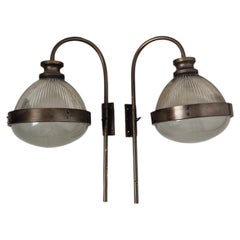
Pair of 1960s-style designer wall sconces in burnished brass, adjustable, with Fresnel glass
By Artemide, Sergio Mazza
Located in Milano, IT
Pair of 1960s-style designer wall sconces in burnished brass, adjustable, with enclosed Fresnel glass, in the style of Sergio Mazza for Artemide
Brass

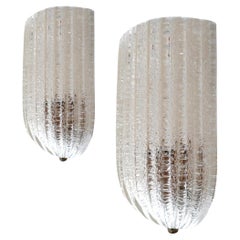
pair of wall lamps sconces barovier&toso 1950s - barovier & toso
By Barovier&Toso
Located in taranto, IT
pair of murano glass wall sconces in white color machined, 1950s Barovier&Toso production, with brass construction elements, brass wall bracket. Made with the "dew" technique, that ...
Brass
Coppia di Appliques in ottone, Anni '60
Located in Bastia Umbra, IT
Coppia di Appliques in ottone, Made in Italy, Anni '60. Questo meraviglioso set di appliques Italiane in ottone degli Anni '60 ha degli elementi di design classico ed un tipo di lavo...
Brass