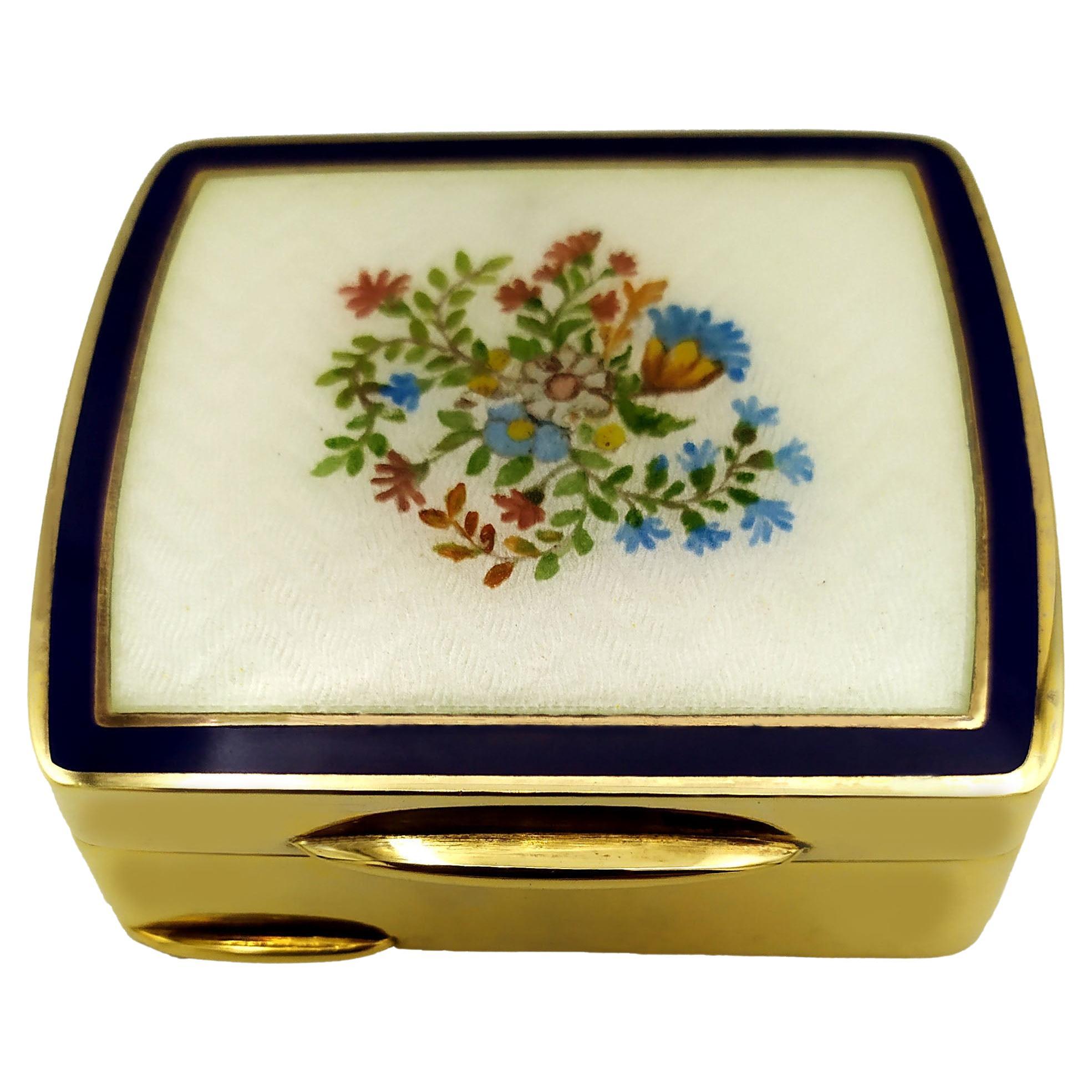
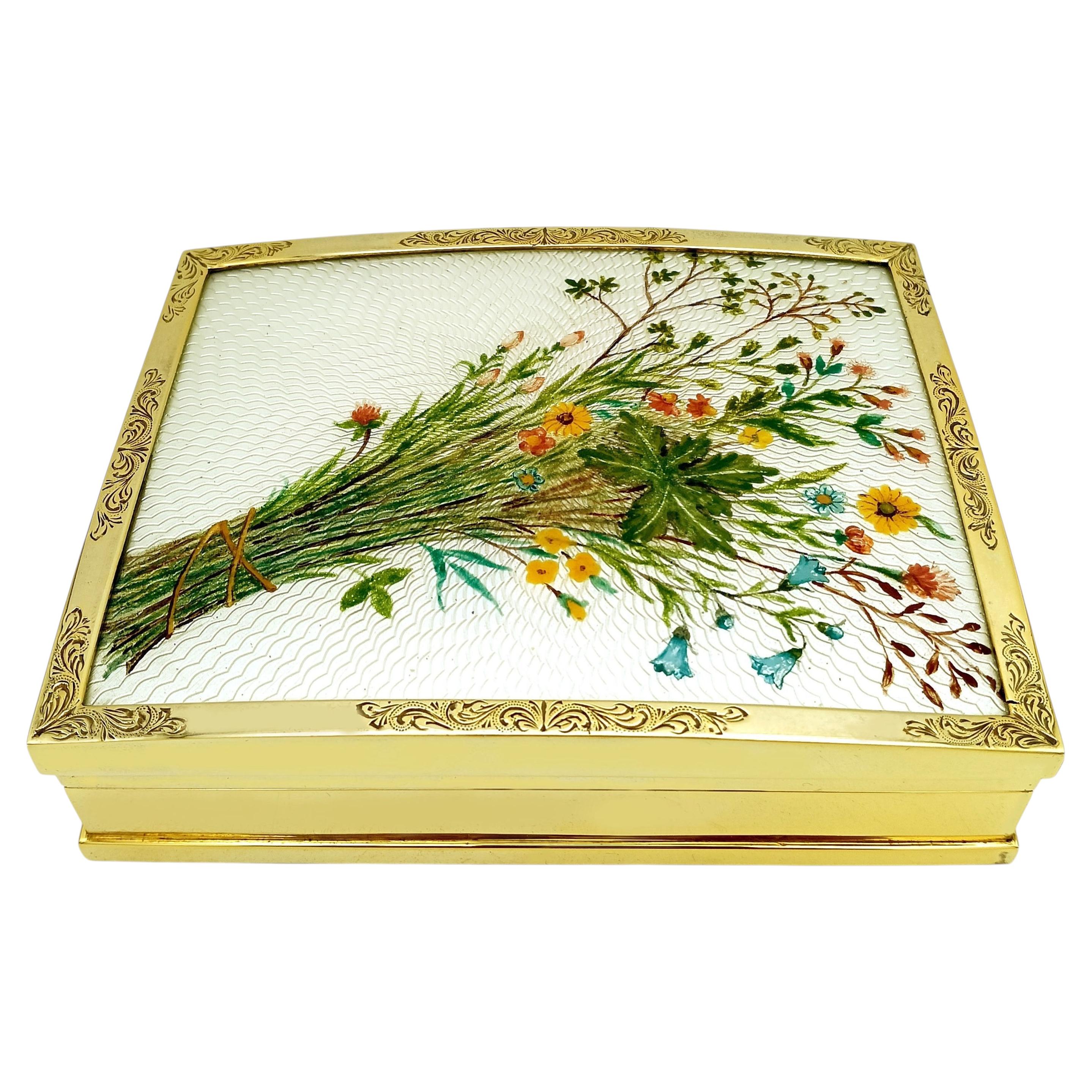
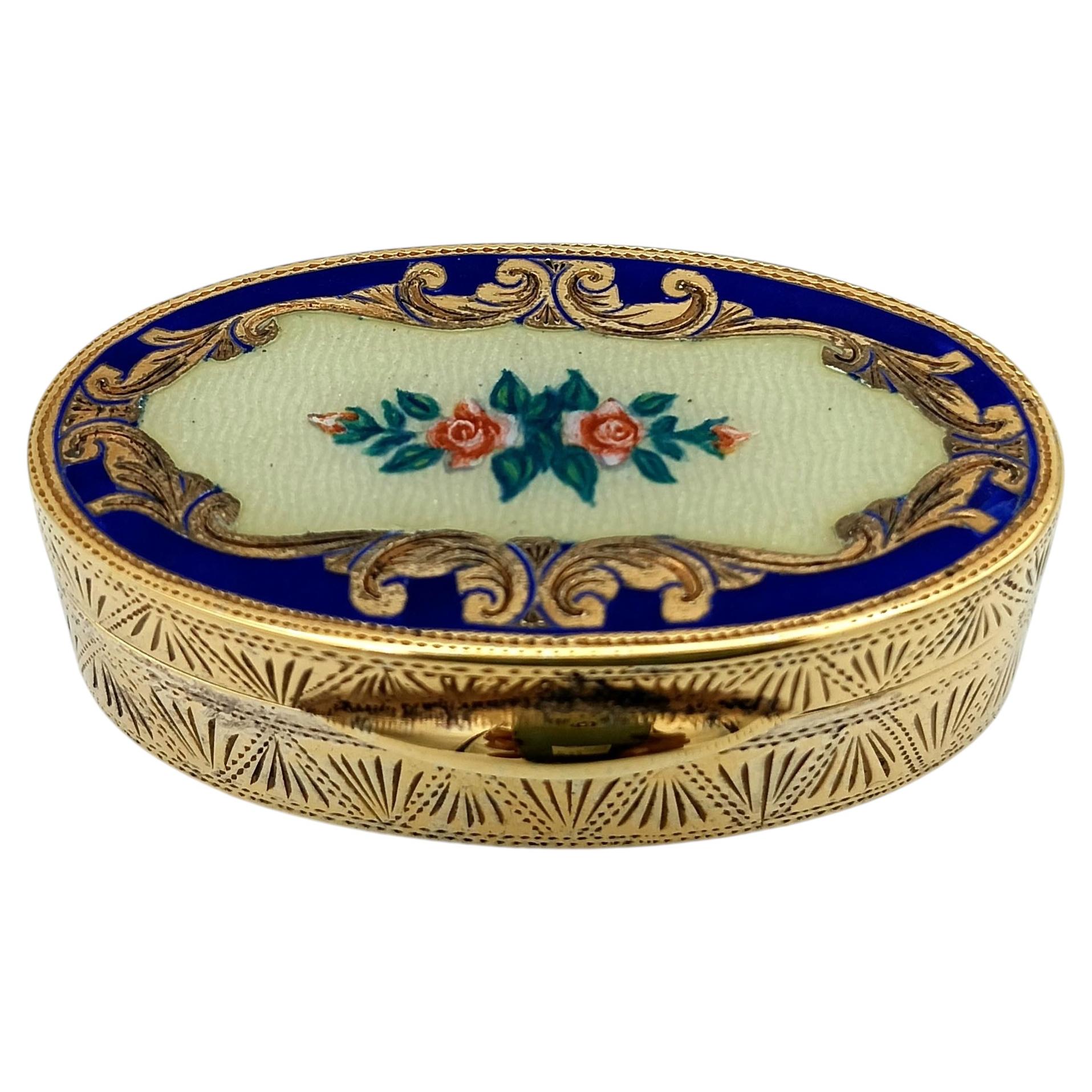
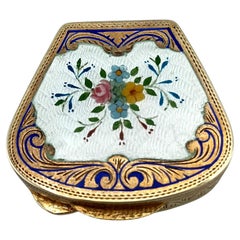
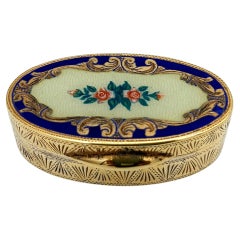
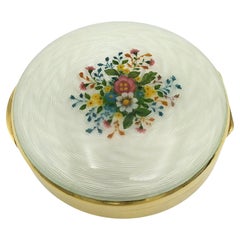
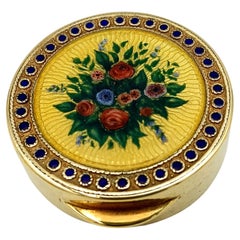
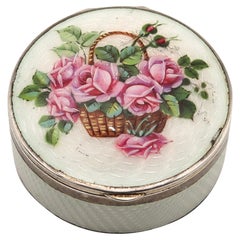
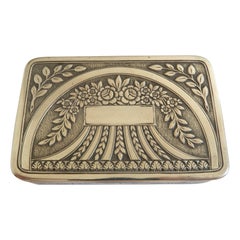
This is a rectangular, gold-plated sterling silver pill box, exquisitely decorated with translucent enamels over a guilloché (engine-turned) pattern and featuring a hand-painted floral miniature. While it is made in the Viennese Art Nouveau style of the late 19th century, it was actually designed and handcrafted in Florence, Italy, in 1968 by the renowned Salimbeni company.
The description highlights two key aspects:
Its aesthetic inspiration from a specific historical period and style.
Its modern creation using traditional, high-quality materials and masterful techniques.
Detailed Breakdown of the Description
1. Form and Function:
Object: Rectangular pill box.
Size: 4 x 5 cm, height 1.1 cm. This is a small, palm-sized object, typical for a pill box.
Weight: 60 g. This is a substantial weight for its size, indicating the use of thick, high-quality metal.
2. Materials and Base Construction:
Material: 925/1000 Sterling Silver, Gold-Plated.
925/1000 Sterling Silver: This means the metal is 92.5% pure silver and 7.5% other metals (like copper) for strength. This is the standard for quality silverware and jewelry.
Gold-Plated: The sterling silver base has been coated with a layer of gold, giving it a rich, luxurious appearance.
Construction: "Entirely handmade by artisan artists with a thick sheet suitable for withstanding numerous enamel firings." This is a critical point of quality. The metal is thick not just for heft, but to withstand the thermal stress of repeated high-temperature firing without warping.
3. Decorative Techniques and Artistry:
This is where the object's true value lies, involving multiple specialized artisan skills.
Guilloché Pattern: A base pattern mechanically engraved into the metal surface using a rose-engine lathe. This pattern (often waves, rays, or mosaics) creates a mesmerizing play of light and provides a key for the enamel to adhere to.
Translucent Fired Enamels: Enamel is powdered glass applied to the metal and fired in a kiln at around 800°C until it fuses. "Translucent" enamel allows the underlying guilloché pattern to show through, creating incredible depth and vibrancy. The phrase "numerous enamel firings" indicates a complex process where different colors are applied and fired separately to build up the design without the colors bleeding into each other.
Hand-Painted Floral Miniature: A tiny, detailed painting executed by hand by a specific artist, the painter Romano Buccioni. This elevates the piece from a mere craft object to a miniature work of art. It signifies a collaboration between a master painter and master silversmiths/enamellers.
Viennese Art Nouveau Style: This describes the artistic style.
Art Nouveau: A style (c. 1890-1910) characterized by organic, flowing lines, often inspired by plants and flowers.
Viennese: Specifically refers to the iteration from Vienna, associated with the Wiener Werkstätte, which often featured geometric yet elegant designs. The floral miniature is perfectly in keeping with this style.
4. Provenance and Date:
Designer: Renato Salimbeni.
Manufacturer: Salimbeni company.
Location: Produced at the company headquarters in Florence, Italy.
Date: 1968.
This is the most crucial piece of information that clarifies the entire description. The box is not from the 19th century; it is a mid-20th century piece made in a historicist style.
Appraisal and Context
This object is a prime example of 20th-century revivalist craftsmanship. The Salimbeni company, still operating today, is famous for producing extremely high-quality objects that replicate and pay homage to historical styles (like Fabergé, Art Nouveau, etc.) using the same meticulous, handcrafted techniques.
Key Value Points:
Salimbeni Name: The Salimbeni brand is highly collectible.
Artisan Quality: The combination of guilloché, multi-fire translucent enamel, and a hand-painted miniature represents the pinnacle of the enameler's art.
Attribution: Having the name of the miniature painter (Romano Buccioni) and the designer (Renato Salimbeni) adds significant provenance.
Condition: The description implies the box is in excellent condition, having survived the delicate enameling process.
In conclusion, this is not an antique from the 19th century but a high-quality, mid-century collectible that masterfully captures the spirit and beauty of Viennese Art Nouveau. It was a luxury item when made and remains a desirable object for collectors of 20th-century decorative arts, fine enamels, and Salimbeni works.
The hallmarks struck to the underside of this fine box include:
manufacturer's mark: 391FI
metal mark fineness: 925
The hallmarks struck to the underside of this fine box include:
manufacturer's mark: 391FI
metal mark fineness: 925
manufacturer's mark: 391FI
metal mark fineness: 925