

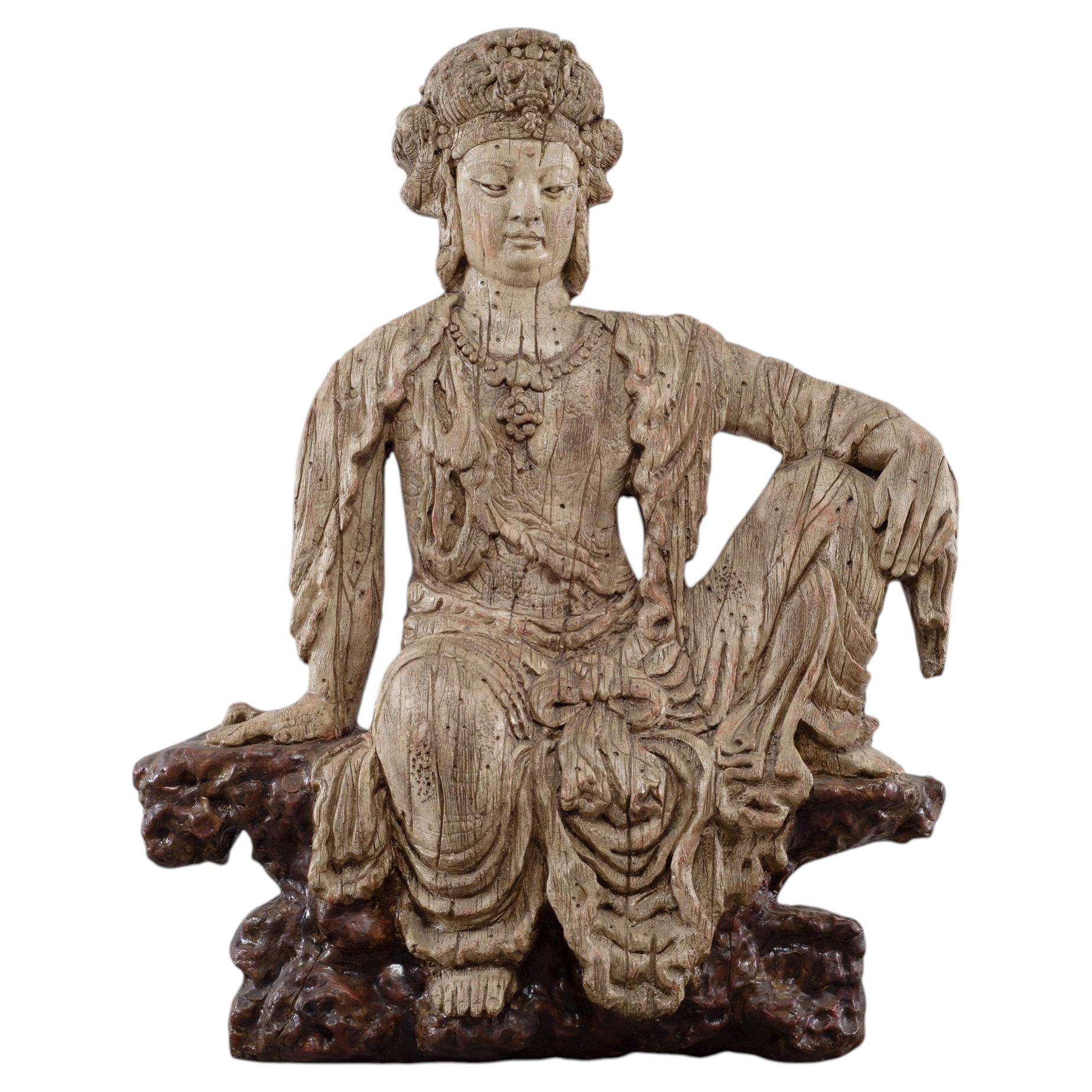
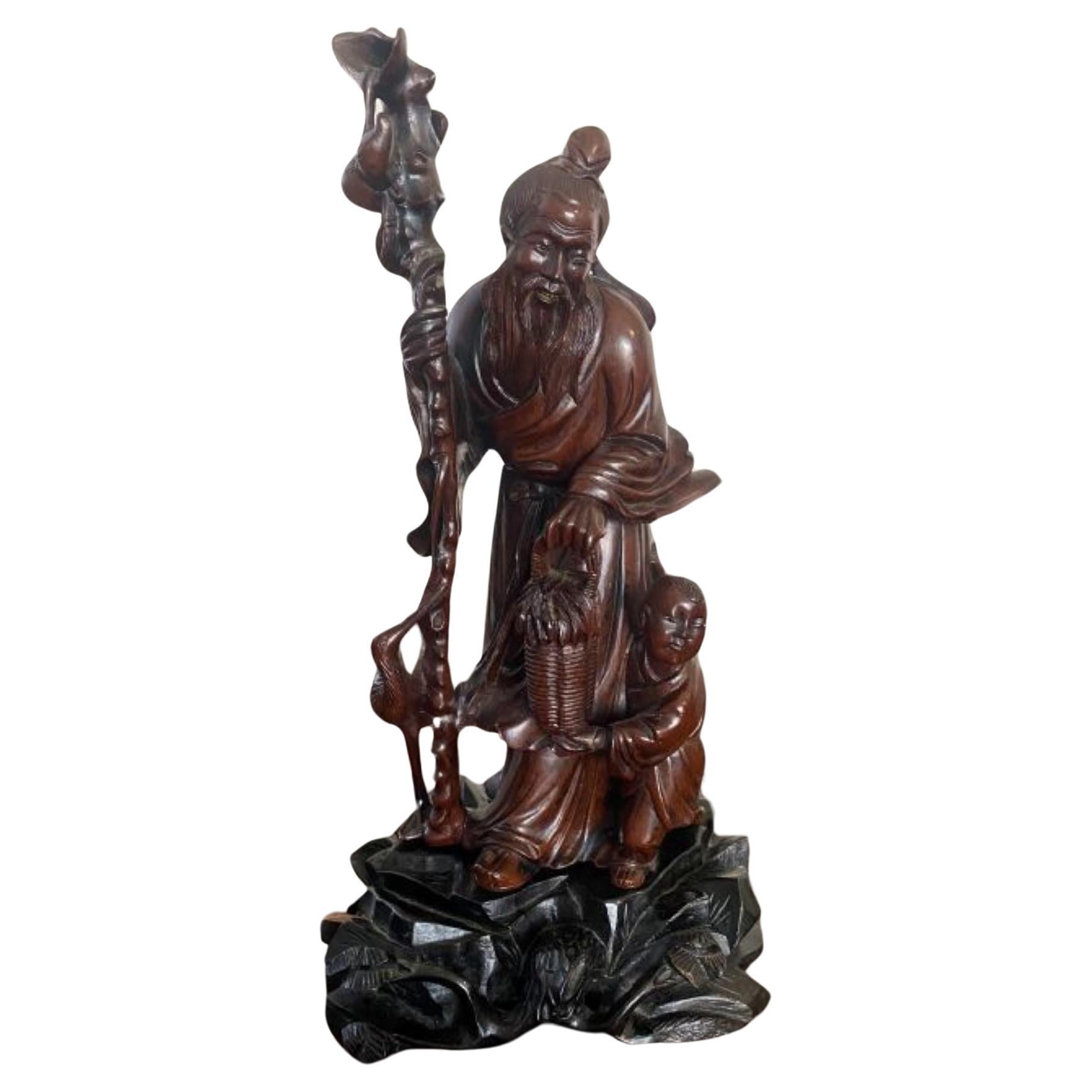
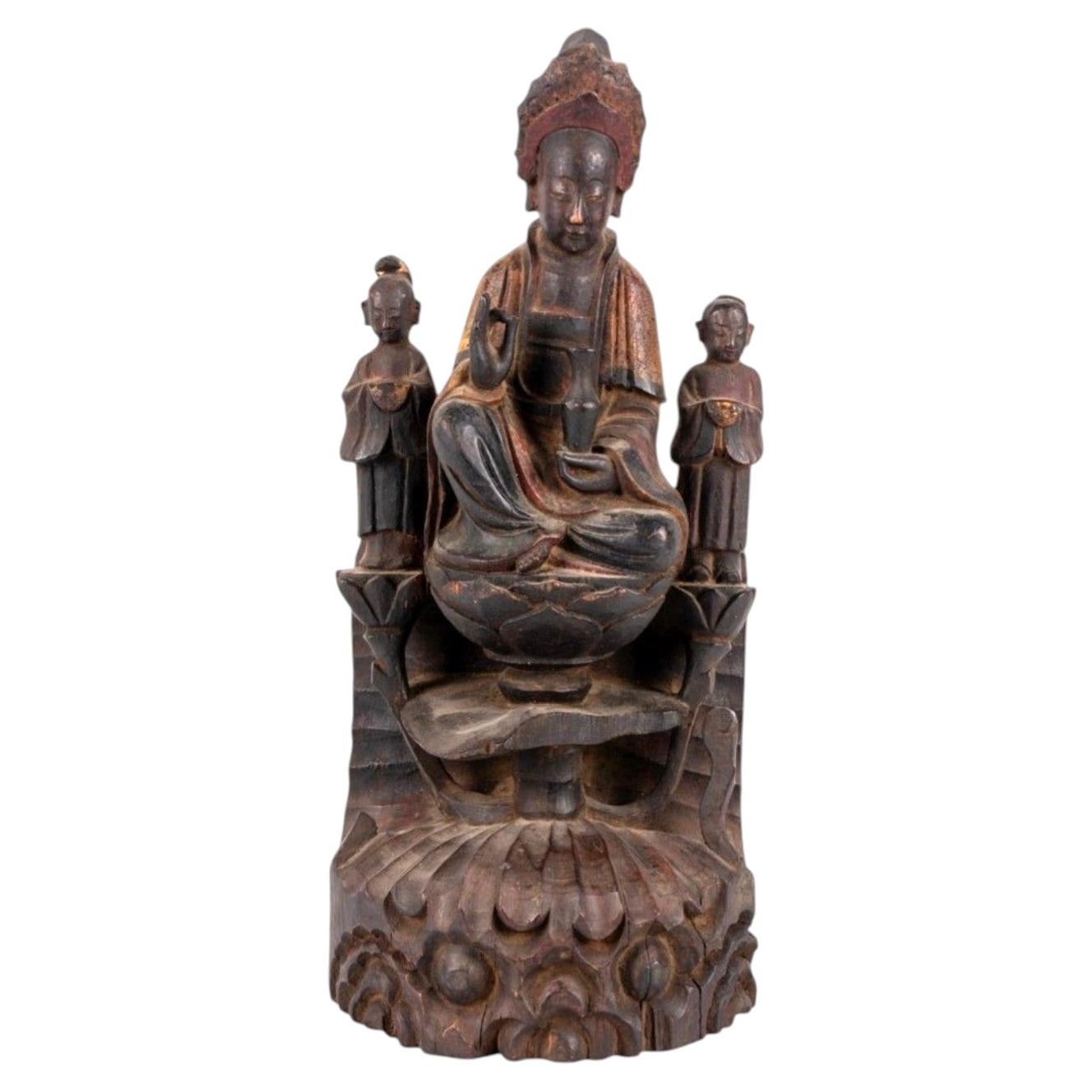


Chinese Rosewood Sculpture of Daoist Deity
Located in New York, NY
Chinese carved rosewood sculpture of a Daoist deity measuring 36 inches tall.
Category
Antique Late 19th Century Chinese Sculptures and Carvings
Materials
Rosewood
Chinese Rosewood Sculpture of Daoist Deity
Located in New York, NY
Chinese carved rosewood sculpture of a Daoist deity measuring 36 inches tall.
Rosewood
Large Black Stone Statue of Standing Bodhisattva Guanyin / Buddha
Located in New York, NY
Massive Avalokiteshvara, Bodhisattva Guanyin of compassion carved from charcoal colored stone, holding the pure water vase (elixir of immortality) and necklace of prayer beads, measu...
Stone

Pair Monumental Chinese Carved Wooden Eagle Statues
Located in New York, NY
Pair of monumental carved wood statues of exceptional quality, depicting eagles standing on top of tree trunks.
Wood
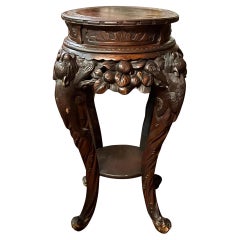
Antique Chinese Carved Rosewood Side Table or Plant Stand
Located in New York, NY
Finely carved antique side table or plant stand depicting monkeys climbing among vines of fruit.
Rosewood

Pair Monumental Polychrome Terracotta Buddhist Guardian Lions
Located in New York, NY
Pair of monumental Chinese polychrome glazed terracotta guardian lions each measuring 39 1/2 by 21 3/4 by 18 inches.
Terracotta

Monumental Japanese Eagle Statue in Teak with Burlwood Pedestal
Located in New York, NY
Very large Japanese Meiji period and finely sculpted figure of an eagle carved from teak with burlwood stand. In excellent condition. Apparently unsig...
Teak
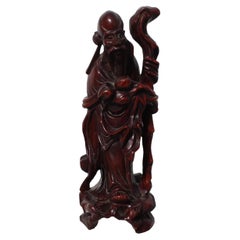
Long-Life Carved Wood Buddha
Located in Norton, MA
A Long-Life carved wood Buddha.
Wood
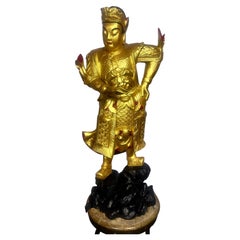
20th-Century Chinese Carved Wood Wei Tuo Bodhisattva Statue
Located in Buffalo, NY
The statue in the image is a depiction of Wei Tuo Bodhisattva (also known as Skanda), a major protective deity and dharma protector in Chinese Buddhism. Wei Tuo is considered a devot...
Wood
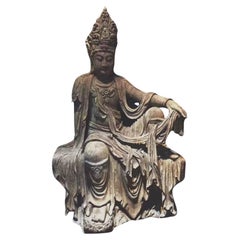
A Large Chinese Carved Wood Figure of Guanyin, Late Qing Dynasty
Located in ARMADALE, VIC
Description: A fine depiction of Guanyin, possessing the regal tranquillity that the Chinese Bodhisattva of compassion has come to be visually associated with. Marked by an urna signifying her spiritual enlightenment and crowned with a diadem depicting the Buddha Amitabha, the figure is immediately recognisable as Guanyin. Her androgynous figure is gracefully poised in the Lalit asana or “royal ease”, the pose classical in representations of the deity. The figure is asymmetric, with the weight of her supple form falling upon her left hand placed against the base, her right knee raised and left pendant. Her right hand rests upon her raised knee, delicately pinching at her draped attire. At first unassuming, this gesture may be suggestive of the Apana Mudra, the seal of purification. This Mudra is associated with physical wellbeing, fecundity and the cleansing of the body. Though she is adorned in the princely garb of dhoti, she bears features of idealised feminine beauty as prescribed in Asian art. With plump cheeks and near pouted lips, her full face gazes down upon the viewer with an empathetic and half-lidded gaze, upholding her title as ‘One who hears the cries of the world.’ Notes on the item: Guanyin is the Chinese interpretation of Avalokiteshvara, the Indian Bodhisattva of compassion. The term “Bodhisattva” is derived from the Sanskrit “Bodhi”, meaning ‘awakening’ or ‘enlightenment’, combined with “Sattva”, meaning ‘spirit’ or ‘being’, referring to one on the path to achieving enlightenment. Bodhisattvas in Mayahana Buddhism are recognised as figures who have effectively achieved enlightenment yet relinquish their accension to nirvana in order to remain amongst mankind in the ultimate act of compassion to aid as spiritual guides. As such, the Bodhisattva inhabit a liminal space between samsara and nirvana; enlightened beings that maintain a relationship with humanity that buddhas cannot, as attaining Buddhahood necessitates the abandonment of all worldly attachments, including mankind. Guanyin’s very name, ‘One who hears the cries of the world’ highlights this role as a compassionate figure who acknowledges the suffering and strife of man. Along with Mahāsthāmaprāpta, a fellow bodhisattva, Guanyin serves as an attendant to Buddha Amitabha, with these three deities recognised as the Three Sages of Western Pure Land Buddhism, a sect of Mayahana Buddhism popular in East Asia. Avalokiteshvara is commonly posited to have been adopted from Indian Buddhism into China as Guanyin around 200-400 CE, however it was the Tang dynasty (618-907) which saw the popularisation of the deity. By the Ming (1358–1644) and Qing (1644–1911) dynasties, Guanyin held the position as the most popular female deity in China. The unique state of religion in China held no monolithic canon regarding Buddhism and saw the assimilation of several belief systems, primarily Daoism, Buddhism and Confucianism. Consequently, Guanyin became a deity to be revered beyond Buddhism alone, appointed as both an official imperial deity and Daoist deity in the 12th century. Guanyin may also be seen to fulfil the role of idealised femininity as prescribed by Confucianism, with the scarcity of female Chinese deities perhaps accounting for the gradual gender shift Guanyin underwent. The Indian Avalokiteshvara is unequivocally recognised as male, whilst the supposed gender of Guanyin remains contentious. Although there is a clear shift from the masculine Avalokiteshvara towards a more feminine representation, it is unclear if Guanyin is understood to be entirely feminine, to inhabit qualities of both genders or to be elevated beyond gender entirely, embodying neither. Depictions of Guanyin are highly androgynous, which some believe lends credence towards Guanyin symbolising the unity of dualistic forces as recognised in Daoism, displaying the anthropomorphism of yin and yang. Comparative Analysis: Market comparisons of similar Qing Dynasty polychrome figures of Guanyin include lot 767 (no.2) From Christies ‘Important Chinese Ceramics and Works of Art,’ New York, 25 March 2022, with the price realised USD 52,920 (Estimate USD 20,000 – USD 30,000). Christies also auctioned a comparable polychrome Guanyin...
Hardwood
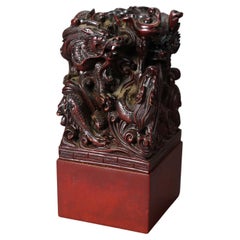
Antique Chinese Carved Hardwood Figural Group with Dragons, circa 1920
Located in Big Flats, NY
An antique Chinese figural group offers carved hardwood sculpture of intertwined dragons, circa 1920. Measures - 5.5"h x 2.75"w x 2.75"d A finely carved hardwood figural group depict...
Hardwood
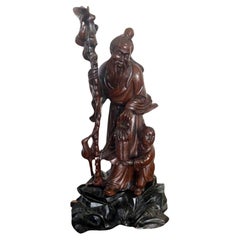
Quality antique Chinese carved hardwood figure
Located in Ipswich, GB
Quality antique Chinese carved hardwood figure of a shoulou with a staff, attendant child and a stork standing on a carved base
Hardwood
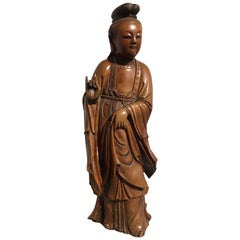
Chinese Carved Boxwood Figure of Guanyin, Mid-Qing Dynasty
Located in Austin, TX
A sublime Chinese carved boxwood figure of the Bodhisattva of Compassion, Avalokiteshvara, called Guanyin in Chinese, mid-Qing dynasty. The an...
Boxwood