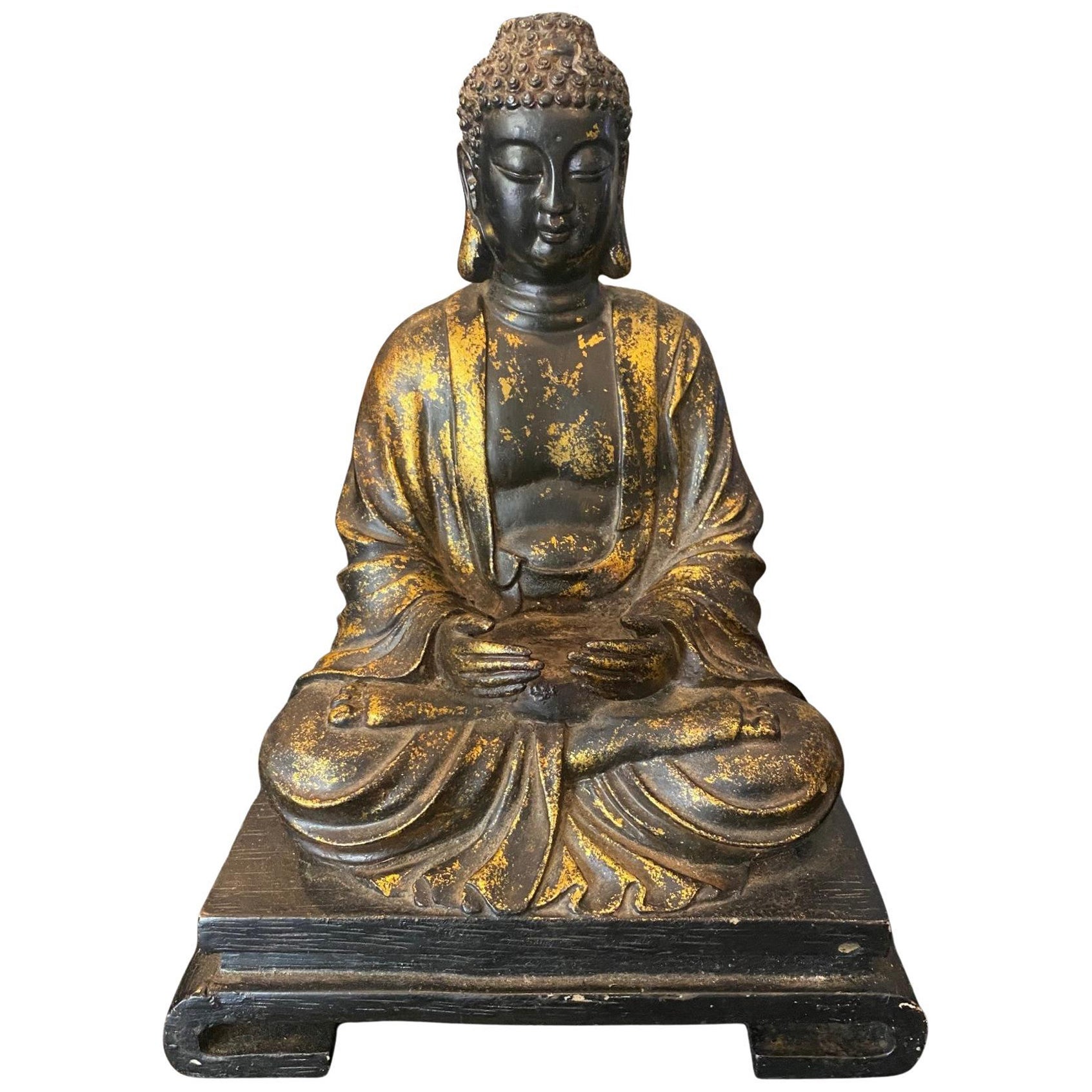
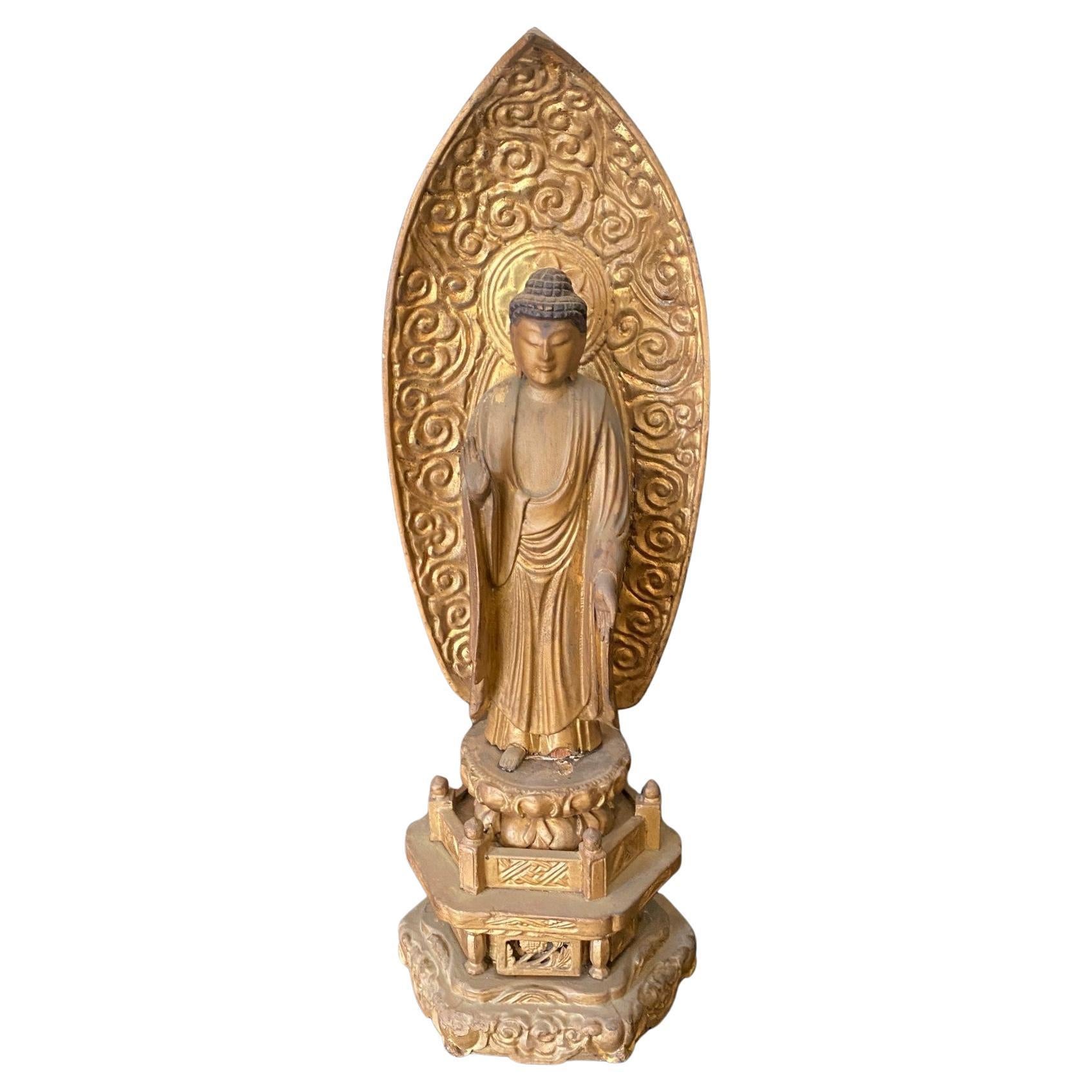
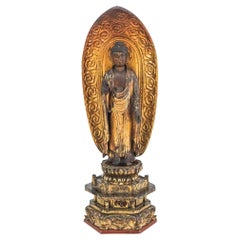
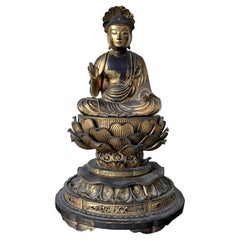
A Japanese carved wood Amitabha (Amida) Buddha statue with residual gold leafed surface circa 19th century (late Edo period). The buddha is seated in the padmasana position on an elevated double lotus throne, under a small lotus halo canopy. His right hand is held in abhaya mudra which means fearlessness in Sanskrit. The mudra symbolizes protection, peace, and fearless. His left hand gently resting on his thigh. Dressed in a flowing robe with open chest, the statue showcases a classic iconography found prominently in Japanese Buddhism art during Edo to Meiji period, characterized by the double lotus throne and a particularly serene meditative facial expression, highlighted by inset gemstones...
Category
Antique 19th Century Japanese Edo Sculptures and Carvings