Want more images or videos?
Request additional images or videos from the seller
1 of 13

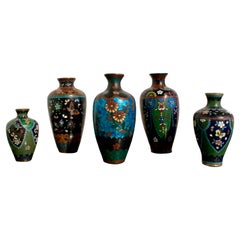
Group of Five Small Japanese Cloisonne Vases, Meiji Period, Early 20th C, Japan

$1,050List Price

You May Also Like

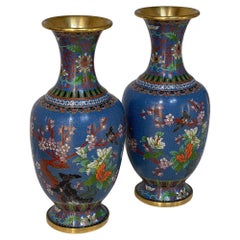
Japanese Cloisonné Vases, Meiji Style Metalwork, 19th Century, Pair

Japanese Cloisonné Vases, Meiji Style Metalwork, 19th Century, Pair

$600Sale Price / set|20% Off

H 7.88 in Dm 3.15 in

Japanese Cloisonné Vases, Meiji Style Metalwork, 19th Century, Pair

Located in ARMADALE, VIC

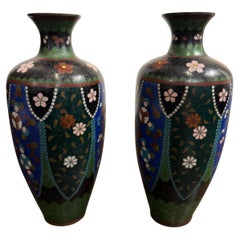
A Pair of Japanese Cloisonné Vases, 19th Century With enameled flowers. Provenance: Private Australian Collection. Dimensions: Height: 20cm. Diameter: 8cm.

Category

Antique 19th Century Japanese Meiji Metalwork

Materials

Metal
Antique 2 Japanese Cloisonné Meiji Period Vases, Signed

Antique 2 Japanese Cloisonné Meiji Period Vases, Signed

Located in Norton, MA

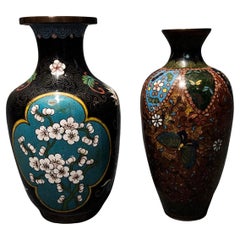
Quality work, Antique 2 Japanese Cloisonné Meiji Period Vases, Signed opm one vase. Dimensions; Larger: 4" Dia x 4.25" H with imperfect shape but no enamel lost Smaller: 3" Dia x 6" H

Category

Antique 19th Century Chinese Metalwork

Materials

Bronze, Copper

19th Century Cloisonné Vases, Brass and Enamel, Meiji Style, France

19th Century Cloisonné Vases, Brass and Enamel, Meiji Style, France

Located in Dallas, TX

Pair 19th Century Cloissone vases is an extraordinary example of the breed, displaying its well-preserved, rich coloration and exhibiting a large format design theme celebrating the ...

Category

Antique 1890s French Meiji Vases

Materials

Brass, Enamel

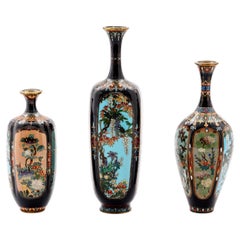
Important Set of Three Meiji Japanese Cloisonné Enamel Vases Signed by Ota

Important Set of Three Meiji Japanese Cloisonné Enamel Vases Signed by Ota

Located in Long Island City, NY, NY

An exceptional and highly important set of three Japanese cloisonné enamel vases from the Meiji period (1868–1912), each signed by members of the distinguished Ota family workshop—re...

Category

Antique 19th Century Japanese Meiji Vases

Materials

Copper, Enamel

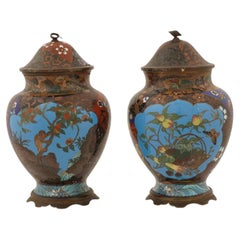
Antique Japanese Meiji Cloisonne Enamel Covered Jars

Antique Japanese Meiji Cloisonne Enamel Covered Jars

Located in Long Island City, NY

A pair of antique Japanese cloisonne enamel covered jars dating to the Meiji period, each featuring a dark brocade ground decorated with scrolling foliage, stylized flowers, and geom...

Category

Antique Late 19th Century Japanese Meiji Jars

Materials

Enamel

Antique Meiji Era Japanese Cloisonne Enamel Vases

Antique Meiji Era Japanese Cloisonne Enamel Vases

Located in Long Island City, NY

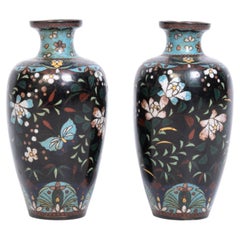
A pair of matching Japanese cast metal and cloisonne enamel vases richly decorated with polychrome floral ornaments on a black ground. Unmarked. Dated circa the late 19th century, Me...

Category

Antique Late 19th Century Japanese Meiji Vases

Materials

Enamel

Set of 6 Chinese Manufacturing Process Colorfull Vase CLoisonne Enamel, 20th Cen

Set of 6 Chinese Manufacturing Process Colorfull Vase CLoisonne Enamel, 20th Cen

Located in Amsterdam, Noord Holland

Very interesting set of 6 vases in a box where the manufacturing process of making such a vase is displayed. Really cool! Box includedGreat piece of cloisonne. Additional informati...

Category

20th Century Japanese Vases

Materials

Bronze

Fine Pair of Meiji Cloisonné Enamel Vases, Attributed to The Ando Jubei Company

Fine Pair of Meiji Cloisonné Enamel Vases, Attributed to The Ando Jubei Company

By Ando Jubei

Located in Long Island City, NY, NY

An exceptional and highly decorative pair of Japanese cloisonné enamel vases from the Meiji period, attributed to the Ando Jubei Company—among the most important and technically acco...

Category

Antique 19th Century Japanese Meiji Vases

Materials

Copper, Enamel

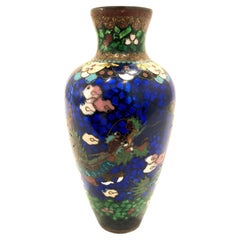
Late 19th-century Japanese Cloisonné Dragon Cabinet Vase

Late 19th-century Japanese Cloisonné Dragon Cabinet Vase

Located in San Francisco, CA

On offer is an antique Japanese cloisonné-on-brass cabinet vase, dating back to the late Meiji Period (circa 1870s–1890s) in Japanese decorative arts. It was likely made in early production centers such as Nagoya or Kyoto. DESIGN: The central figure in this piece is a flying dragon. In Japanese mythology, the dragon is a benevolent, water-dwelling guardian associated with wisdom, good fortune, prosperity and rain. This dragon’s Japanese pedigree is confirmed by its three-clawed feet; traditional Chinese imperial dragons typically feature five claws. COLORS: The dragon winds through stylized ruyi-shaped clouds and stylized floral blooms against a deep blue sky, representing its celestial flight. The deep cobalt blue evokes the night sky or the deep waters from which the dragon rules. Green and earth tones symbolize the natural, organic elements matching the grounding tree-bark motifs. Lastly, the white clouds emphasize purity and the spiritual realm. TECHNIQUE: This piece is created using the traditional wire cloisonné technique on a solid brass base. The entire vessel was beaten or cast from a sheet of brass. The exposed, raw golden-brown metal on the flat underside of the base and the circular inner rim of the neck confirms its purely metallic construction. An artisan then used fine brass ribbon wires (the “Cloisons”) meticulously shaping and soldering or gluing them directly to the outer brass walls to form distinct structural compartments. These partitioned brass cells were packed with layers of colored vitreous glass powder paste. The entire brass vessel was then repeatedly fired in a kiln at high temperatures, melting the paste into a glassy finish. Next came the mosaic-like, fractured layout of the deep cobalt blue field, which mimics precious inlay work. This complex style was popularized by master Meiji enamellers like Gonda Hirosuke, who regularly produced specialized 6" x 3" dragon cabinet...

Category

Antique Late 19th Century Japanese Meiji Vases

Materials

Brass

Pair of Antique Japanese Meiji Period Cloisonné Vases, C.1870

Pair of Antique Japanese Meiji Period Cloisonné Vases, C.1870

Located in London, GB

Pair of Antique Japanese Meiji Period Cloisonné Vases, C.1870 A well-matched pair of Japanese cloisonné enamel vases of classic Meiji form. Ovoid baluster profile rising to a waist...

Category

Antique 19th Century Japanese Meiji Metalwork

Materials

Brass, Copper, Enamel

More From This Seller

View All
Group of 5 Small Japanese Cloisonne and Ginbari Vases, Early 20th Century, Japan

Group of 5 Small Japanese Cloisonne and Ginbari Vases, Early 20th Century, Japan

Located in Austin, TX

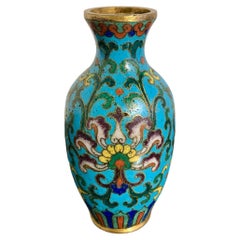
A charming group of five Japanese cloisonné and ginbari foiled vases, Meiji period, early 20th century, Japan. The group consists of one vase with cloisonné chrysanthemum blossoms against bold and bright turquoise ginbari foil background, two similar vases of primarily black and burgundy cloisonné - one with a butterfly motif, the other with a floral motif, and two similar vases of primarily dark blue and green cloisonné, both with floral and butterfly motifs. Turquoise ginbari vase...

Category

Early 20th Century Japanese Meiji Metalwork

Materials

Copper, Enamel, Foil, Wire

Tokuda Yasokichi I Kutani "Poppies" Vase, Meiji or Taisho Period, Japan

Tokuda Yasokichi I Kutani "Poppies" Vase, Meiji or Taisho Period, Japan

Located in Austin, TX

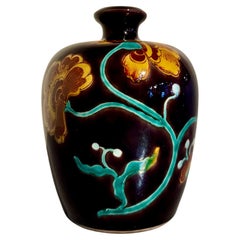
A striking Japanese Kutani ware "Poppies" bottle vase by Tokuda Yasokichi I (1873 - 1956), Meiji to Taisho Period, circa 1915, Japan. The attractive vase is decorated with a bold d...

Category

Vintage 1910s Japanese Showa Ceramics

Materials

Porcelain

Japanese Art Nouveau Cloisonne and Ginbari Amphora Vase, Meiji Period, Japan

Japanese Art Nouveau Cloisonne and Ginbari Amphora Vase, Meiji Period, Japan

Located in Austin, TX

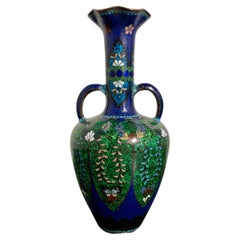
An unusual and elegant Japanese Art Nouveau amphora shaped cloisonne and ginbari foiled vase, Meiji Period, circa 1900, Japan. The vase of amphora form, with a tapering body resti...

Category

Antique Early 1900s Japanese Art Nouveau Metalwork

Materials

Copper, Enamel, Foil, Wire

Chinese Cloisonne Incense Tool Vase, Qing Dynasty, 18th/19th Century, China

Chinese Cloisonne Incense Tool Vase, Qing Dynasty, 18th/19th Century, China

Located in Austin, TX

A small and elegant Chinese cloisonné vase for incense tools, Qing Dynasty, 18th/19th century, China. Made for the scholar's studio, this small refined vase, was used to hold incense tools, including a small pair of tongs or chopsticks and spoon. The tools no longer present. Of miniature baluster vase form, the vase beautify proportioned and decorated in the cloisonné enamel technique, with gilt wires forming the cloisons, or partitions. Within the cloisons, colorful enamels have been expertly laid. The small incense tool vase...

Category

Antique Early 1800s Chinese Qing Scholar's Objects

Materials

Copper, Enamel

Japanese Imari Baluster Vase, Meiji Period, Late 19th Century, Japan

Japanese Imari Baluster Vase, Meiji Period, Late 19th Century, Japan

Located in Austin, TX

A lovely tall Japanese Imari porcelain baluster vase with images of Chinese boys, Meiji Period, late 19th century, Japan. The tall vase of baluster form, with a short, slightly spla...

Category

Antique Late 19th Century Japanese Meiji Vases

Materials

Porcelain

Large Japanese Satsuma Covered Vase, Showa Period, Mid 20th Century, Japan

Large Japanese Satsuma Covered Vase, Showa Period, Mid 20th Century, Japan

Located in Austin, TX

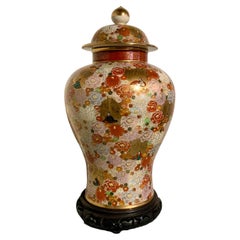
A very large and exuberantly decorated Japanese Satsuma millefleur covered vase, marked Satsuma, Showa period, mid 20th century, Japan. The large vase of attractive baluster form, with a slightly splayed foot, narrow waist, and tapered body with high shoulders and short neck. The vase topped by a domed cover with a large finial shaped like a hoju, the wish fulfilling jewel. The vase decorated all over in a dense field of flowering blossoms - peony, lotus, and chrysanthemum - in a design known as millefleur, or a thousand flowers. The flowers freely and cheerfully painted in various colors of red, white, orange, green, blue and yellow, with raised white enamels...

Category

Mid-20th Century Japanese Showa Ceramics

Materials

Stoneware