Want more images or videos?
Request additional images or videos from the seller.

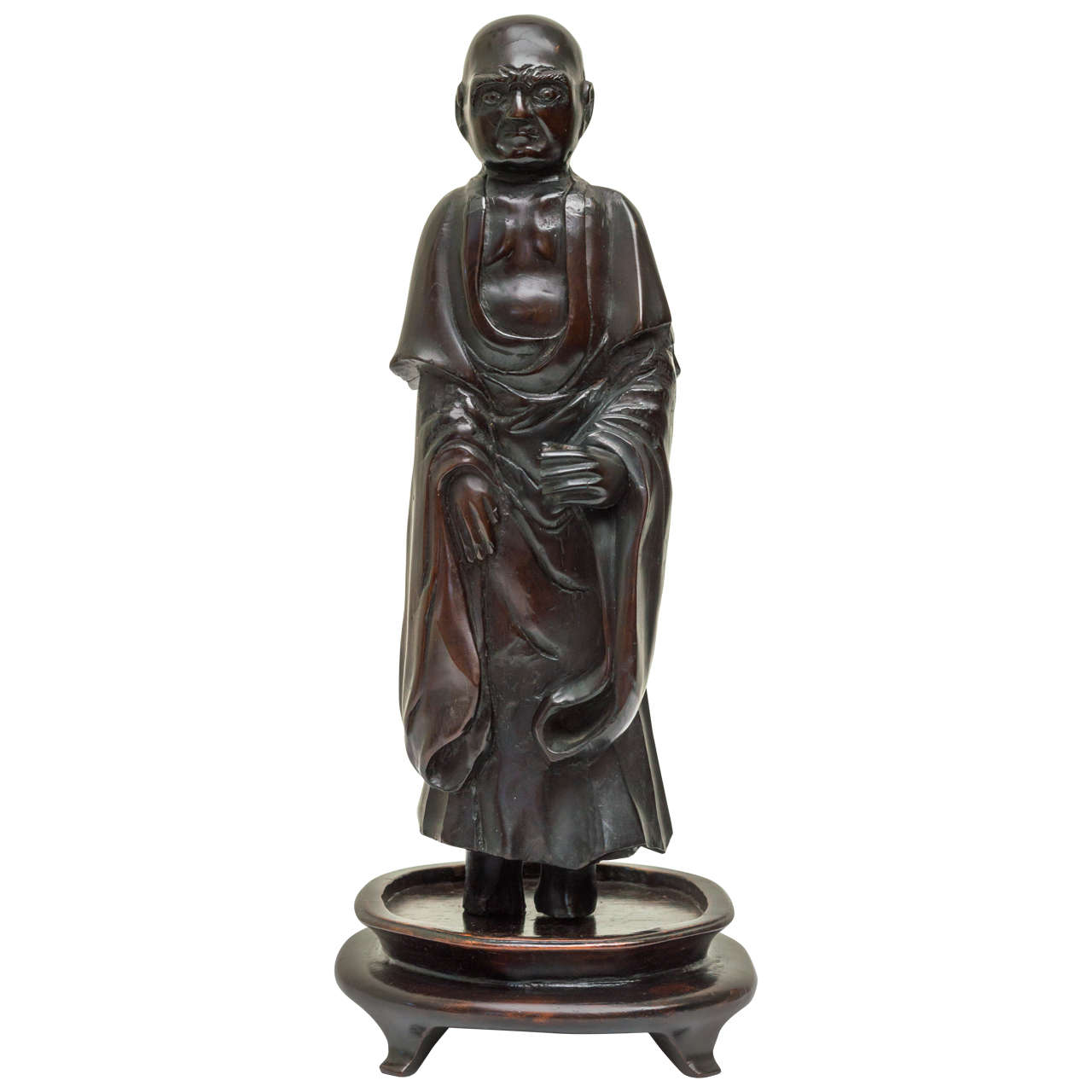
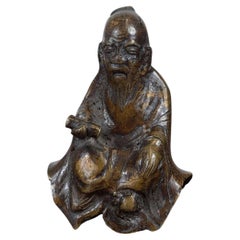
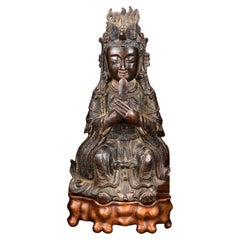
16th Century Chinese Standing Bronze Figure of a Nobleman

$6,500
£5,010.30
€5,993.36
CA$9,452.76
A$9,745.07
CHF 5,537.06
MX$123,354.76
NOK 63,407.17
SEK 66,426.86
DKK 44,803.99

About the Item

Hongzhi Period (1487 - 1505) sculpture of an important man, possibly Confucius. Comes with box.
  • Dimensions:
    Height: 9.5 in (24.13 cm)Width: 3.25 in (8.26 cm)Depth: 3.5 in (8.89 cm)
  • Materials and Techniques:
  • Place of Origin:
  • Period:
  • Date of Manufacture:
    circa 1500
  • Condition:
    Condition report upon request.
  • Seller Location:
    Hudson, NY
  • Reference Number:
    Seller: A44541stDibs: LU855129528372

More From This Seller

View All
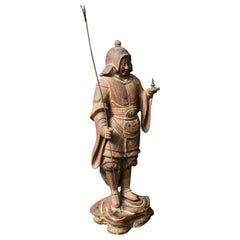
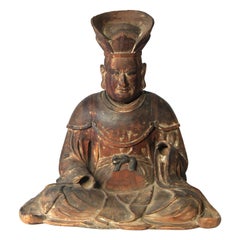
16th Century Japanese Sculpture of a Buddhist Tenbu

16th Century Japanese Sculpture of a Buddhist Tenbu

Located in Hudson, NY

16th century Japanese sculpture of a Buddhist Tenbu, Late Momoyama period (1333-1598) sculpture dated "Bunroku 3", or 1594, in ink on the back. T...

Category

Antique 16th Century Japanese Sculptures and Carvings

Materials

Metal, Gold Leaf

Early Japanese Hinoki Wood Sculpture of Bishamon

Early Japanese Hinoki Wood Sculpture of Bishamon

Located in Hudson, NY

Early Japanese Hinoki wood sculpture of Bishamon. Kamakura period (1185 - 1333) sculpture made from hinoki wood. Bishamon is also known as Tamonten, meanin...

Category

Antique 15th Century and Earlier Japanese Sculptures and Carvings

Materials

Wood

Early Shinto Carving of Figure Referred to as Father Japan

Early Shinto Carving of Figure Referred to as Father Japan

Located in Hudson, NY

Shinto carving of figure referred to as Father Japan. Heian period (794 to 1185) sculpture made of hinoki wood in single piece construction called ichiboku...

Category

Antique 15th Century and Earlier Japanese Sculptures and Carvings

Materials

Wood

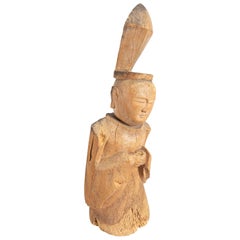
Kamakura Period Japanese Shinzu Sculpture

Kamakura Period Japanese Shinzu Sculpture

Located in Hudson, NY

Kamakura Period Japanese Shinzu sculpture. Shinzo is a representational figure of a god or spirit in the Shinto religion. This sculpture was carved fro...

Category

Antique 15th Century and Earlier Japanese Antiquities

Materials

Wood

Chinese Bronze FuXing

Chinese Bronze FuXing

Located in Hudson, NY

One of three divinities known as Fu-Shou-Lu (Happiness, prosperity and longevity).  

Category

Antique 19th Century Chinese Sculptures and Carvings

Materials

Bronze

18th Century Bronze Censer of a Boy Riding a Bull

18th Century Bronze Censer of a Boy Riding a Bull

Located in Hudson, NY

An incense burner in the shape of a boy playing a flute while riding a bull. The boy is the removable top to the incense receptacle located inside the bull's body.

Category

Antique Late 18th Century Japanese Metalwork

Materials

Bronze

You May Also Like

Gilt Bronze Figure of Xi-Wang-Mu, Qing Dynasty, Qianlong Kingdom

Gilt Bronze Figure of Xi-Wang-Mu, Qing Dynasty, Qianlong Kingdom

Located in Torino, IT

The queen mother of the west is cast in a seated position with her hands held before her chest holding a "gui". She is dressed in long-sleeved robes. Her face is framed by an elabora...

Category

Antique 1790s Chinese Qing Sculptures and Carvings

Materials

Bronze

17th Century Chinese Ming Bronze Figure of a Boy

17th Century Chinese Ming Bronze Figure of a Boy

Located in Chicago, IL

Fine cast bronze figures created over 400 years ago during China's Ming dynasty are rare and highly appreciated. In this exceptional example, a spirited young boy stands on a lotus b...

Category

Antique Early 17th Century Chinese Ming Metalwork

Materials

Bronze

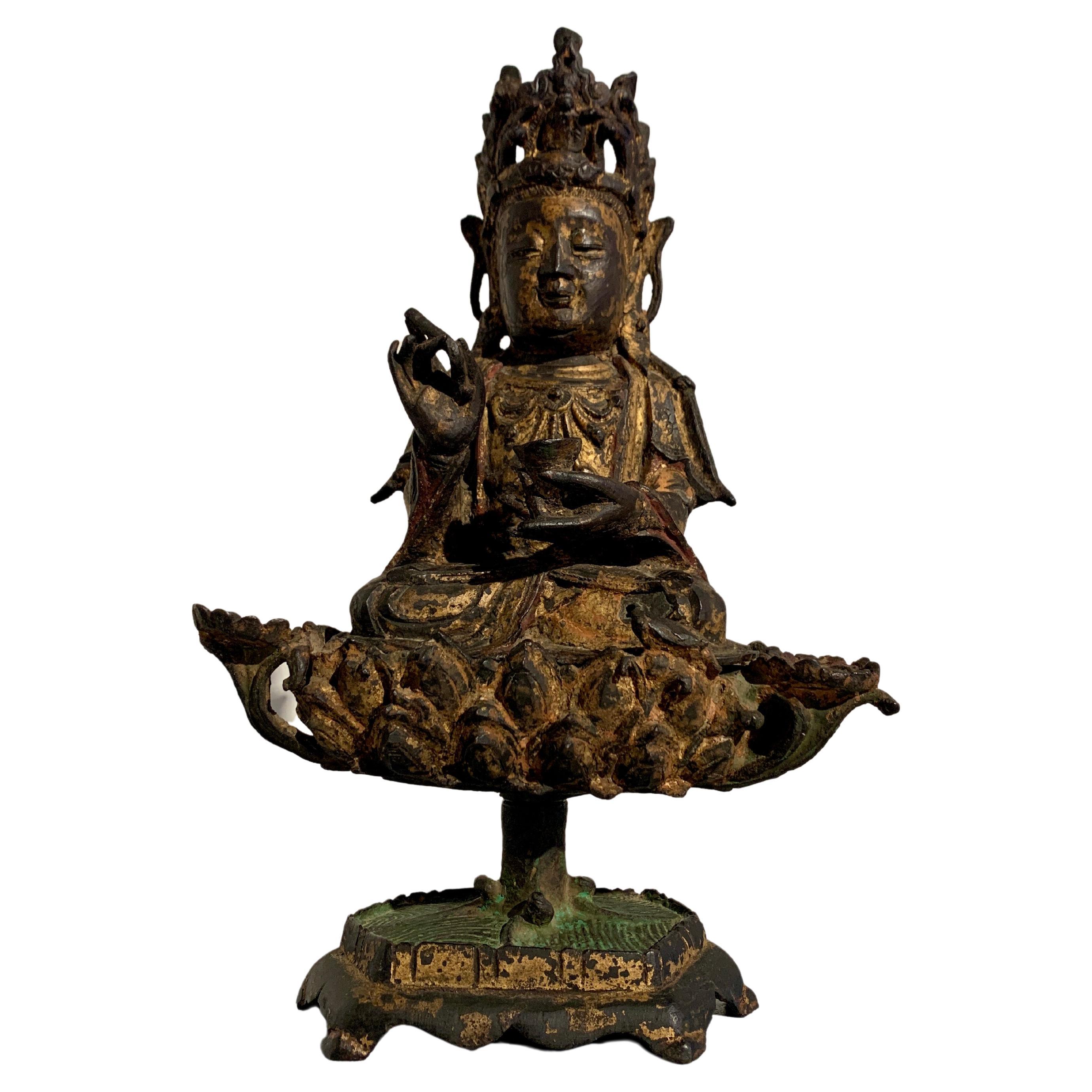
Rare Chinese Parcel-Gilt Bronze Figure of Lu Dongbin, Ming ca. 1600

Rare Chinese Parcel-Gilt Bronze Figure of Lu Dongbin, Ming ca. 1600

Located in Nottingham, GB

From the Ming dynasty onwards, bronze figures of Daoist deities and immortals occupied an important place within the domestic interior. They appeared on household altars, scholar's desks, incense burners and ritual stands, serving both devotional and decorative purposes. Parcel gilding was frequently applied to emphasise significant details, creating a striking interplay between brilliant gold highlights and the darker bronze beneath. Among the most revered subjects were the Eight Immortals, whose distinctive attributes made them immediately recognisable and whose presence conveyed blessings of longevity, protection and prosperity. This finely cast figure represents Lu Dongbin, the scholar-swordsman and perhaps the most celebrated of the Eight Immortals. Associated with wisdom, self-cultivation and the triumph of virtue over temptation, Lu Dongbin remains one of the most enduring figures in Daoist tradition. He is depicted seated in a contemplative pose, his ample robes gathered around him in deeply modelled folds that pool gracefully at the front of the composition. The torso leans slightly forward, lending the figure an engaging sense of immediacy and introspection. His hair is arranged in a high topknot, while a long flowing beard, articulated with finely incised striations, frames a dignified and authoritative expression. Held delicately in his left hand is a rolled scroll, an attribute that reflects his scholarly nature and distinguishes him within the Daoist pantheon. His right hand is concealed within the sleeve of his robe in a gesture of restraint and quiet composure. Despite its compact scale, the figure possesses a remarkable sense of weight and presence, with refined modelling evident in the facial features, hands and drapery. Traces of the original parcel gilding survive across the chest, sleeves and folds of the garment, providing flashes of luminosity against the rich brown patina acquired over centuries. To the reverse, an oval aperture and unfinished attachment points indicate that the figure was originally mounted to a larger object, most likely an incense burner, altar fitting or ritual stand. The open underside and visible casting pits are entirely consistent with workshop practices of the late Ming and early Qing periods, offering an appealing insight into the methods of manufacture. Combining devotional significance, sculptural refinement and the atmospheric beauty of age, this early bronze is a compelling example of Chinese Daoist art...

Category

Antique Early 1600s Sculptures and Carvings
Materials

Bronze

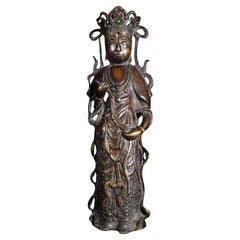
Korean Cast Bronze Buddhist Figure, Late Joseon Period, 18th–19th Century

Korean Cast Bronze Buddhist Figure, Late Joseon Period, 18th–19th Century

Located in Ukiah, CA

An exceptional and highly unusual Korean bronze Buddhist figure, dating to the late Joseon period, 18th–19th century, and possibly earlier. This finely cast sculpture stands as a rar...

Category

Antique 18th Century Korean Sculptures and Carvings
Materials

Bronze

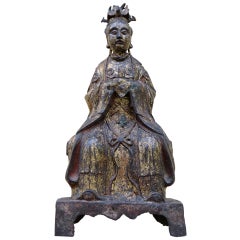
Bixia Yuanjun Figure of Bronze Dated Ming Dynasty, 1368-1644

Bixia Yuanjun Figure of Bronze Dated Ming Dynasty, 1368-1644

Located in London, GB

Bixia Yuanjun figure of bronze dated Ming Dynasty 1368-1644. Base of hardwood. Height excluding base 26cm; Heigh including base 31cm. Goddess of fertility. Condition: Corrosion ...

Category

Antique 15th Century and Earlier Chinese Ming Antiquities

Materials

Bronze