William Steig (b.1907) Art

to
6
6
4
4
2
2
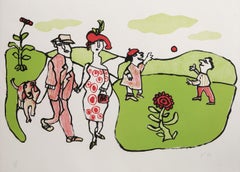
Dog Walk in Park, Pop Art Lithograph by William Steig

Dog Walk in Park, Pop Art Lithograph by William Steig

By William Steig (b.1907)

Located in Long Island City, NY

William Steig, American (1907 - 2003) - Dog Walk in Park, Year: circa 1982, Medium: Lithograph on BFK Rives, signed and numbered in pencil, Edition: 28/80, Image Size: 17.5 x 28...

Category

1980s Pop Art William Steig (b.1907) Art

Materials

Lithograph

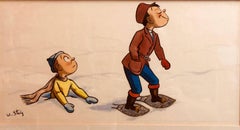
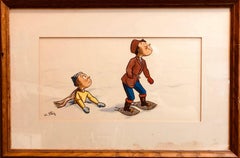
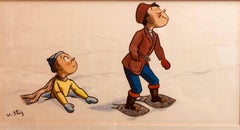
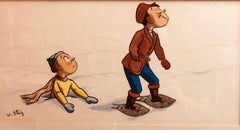
Whimsical Illustration "Snow" Cartoon, 1938 Mt Tremblant Ski Lodge William Steig

Whimsical Illustration "Snow" Cartoon, 1938 Mt Tremblant Ski Lodge William Steig

By William Steig (b.1907)

Located in Surfside, FL

Lighthearted Illustration of Outdoor Pursuits This one being cross country Snow Shoes signed "W. Steig" Provenance: from Mrs. Joseph B. Ryan, Commissioned by Joe Ryan for the bar at...

Category

1930s American Modern William Steig (b.1907) Art

Materials

India Ink, Watercolor, Illustration Board

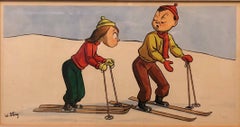
Whimsical Illustration Skiing Cartoon, 1938 Mt Tremblant Ski Lodge William Steig

Whimsical Illustration Skiing Cartoon, 1938 Mt Tremblant Ski Lodge William Steig

By William Steig (b.1907)

Located in Surfside, FL

Lighthearted Illustration of Outdoor Pursuits This one being a Skiing scene, a boy and a girl on skis. signed W. Steig Provenance: from Mrs. Joseph B. Ryan, Commissioned by Joe Ryan ...

Category

1930s Naturalistic William Steig (b.1907) Art

Materials

Archival Ink, Watercolor, Illustration Board
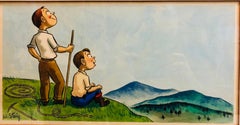
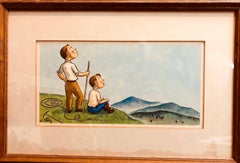
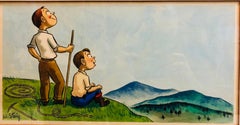
Whimsical Illustration Hiking Cartoon, 1938 Mt Tremblant Ski Lodge William Steig

Whimsical Illustration Hiking Cartoon, 1938 Mt Tremblant Ski Lodge William Steig

By William Steig (b.1907)

Located in Surfside, FL

Lighthearted Illustration of Outdoor Pursuits This one being cross country hiking signed "W. Steig" Provenance: from Mrs. Joseph B. Ryan, Commissioned by Joe Ryan for the bar at his...

Category

1930s Naturalistic William Steig (b.1907) Art

Materials

Archival Ink, Watercolor, Illustration Board

Family Reunion, Signed Lithograph by William Steig

Family Reunion, Signed Lithograph by William Steig

By William Steig (b.1907)

Located in Long Island City, NY

William Steig was a brilliant cartoonist for The New Yorker and an award-winning, beloved author of children’s books, including Shrek! and Sylvester and the Magic Pebble. Artist: Wi...

Category

1980s Pop Art William Steig (b.1907) Art

Materials

Screen

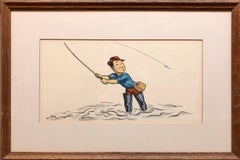
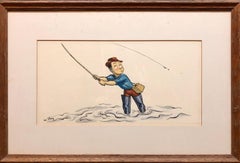
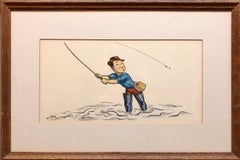
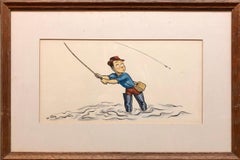
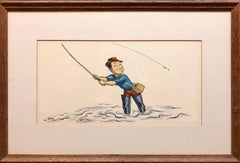
Whimsical Fishing Illustration Cartoon 1938 Mt Tremblant Ski Lodge William Steig

Whimsical Fishing Illustration Cartoon 1938 Mt Tremblant Ski Lodge William Steig

By William Steig (b.1907)

Located in Surfside, FL

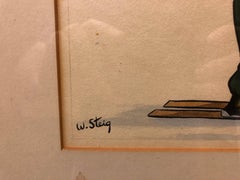
Lighthearted Illustration of Outdoor Pursuits This one of a fisherman signed "W. Steig" Provenance: from Mrs. Joseph B. Ryan, Commissioned by Joe Ryan for the bar at his ski resort,...

Category

1930s American Modern William Steig (b.1907) Art

Materials

India Ink, Watercolor, Illustration Board

Related Items
Handsome Couple in Sailboat - Collier's Magazine Illustration

Handsome Couple in Sailboat - Collier's Magazine Illustration

By Earl Oliver Hurst

Located in Miami, FL

Collier's Magazine Illustration Signed lower left Watercolor on board From the Estate of Charles Martignette. Work is framed in a period wood frame Framed under glass Framed to an...

Category

1940s American Modern William Steig (b.1907) Art

Materials

Watercolor, Board

Yes You Can Can
Yes You Can Can

Amy GardnerYes You Can Can, 2021

$252

H 19.69 in W 19.69 in D 0.04 in

Yes You Can Can

Located in Deddington, GB

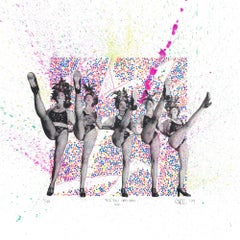
Yes You Can Can (Splats Edition) by Amy Gardner [2020] limited_edition Screen Print, Watercolour Edition number 40 Image size: H:50 cm x W:50 cm Sold Unframed Please note that insitu images are purely an indication of how a piece may look Only AP works left in this edition. This print is about women supporting women. 'YES YOU CAN CAN' splats edition limited edition of 40 Archival Bread & Butter bright white paper 270gsm 50x 50cms 5 screen...

Category

21st Century and Contemporary Pop Art William Steig (b.1907) Art

Materials

Paper, Watercolor, Screen

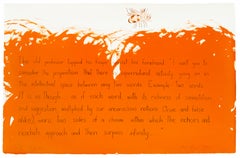
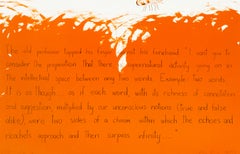
The Old Professor (Oo La La) Jim Dine lithograph and Ron Padgett poetry

The Old Professor (Oo La La) Jim Dine lithograph and Ron Padgett poetry

By Jim Dine

Located in New York, NY

Bright orange leaps up like flames, or swaying grass, over which hovers a large-eyed bee sketched in black and orange. Over the fire-red in neat handwriting Ron Padgett...

Category

1970s Pop Art William Steig (b.1907) Art

Materials

Lithograph

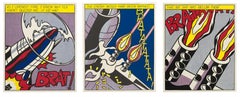
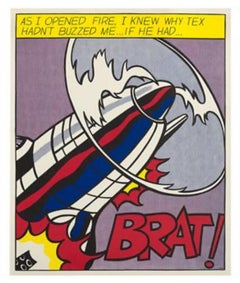
Museum-Published Lt'd Ed. 60's Litho Set of 'As I Opened Fire'

Museum-Published Lt'd Ed. 60's Litho Set of 'As I Opened Fire'

By (after) Roy Lichtenstein

Located in New Orleans, LA

This is a lithographically printed reproduction of a sensationally fun Lichtenstein triptych he painted in 1964, produced by the Stedelijk Museum...

Category

1960s Pop Art William Steig (b.1907) Art

Materials

Archival Paper, Lithograph

Heart & Soul
Heart & Soul

Mr. BrainwashHeart & Soul, 2020

$8,500

H 30 in W 22 in

Heart & Soul

By Mr. Brainwash

Located in New York, NY

Heart & Soul, 2020 Signed, dated, numbered in pencil with thumbprint in verso Screenprint on paper 30 x 22 inches Edition 84 of 85

Category

2010s Pop Art William Steig (b.1907) Art

Materials

Screen

Original Andy Warhol Brillo Pasadena Art Museum serigraph vintage poster

Original Andy Warhol Brillo Pasadena Art Museum serigraph vintage poster

By Andy Warhol

Located in Spokane, WA

Original serigraph: Andy Warhol Brillo soap pads. Artist: Andy Warhol. Size 26" x 30" Year: 1970. Archival linen-backed original serigraph ready to frame. Warhol's Billo ...

Category

1970s Pop Art William Steig (b.1907) Art

Materials

Screen

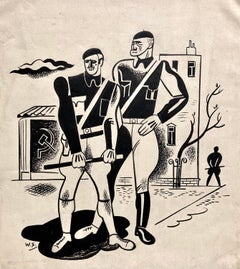
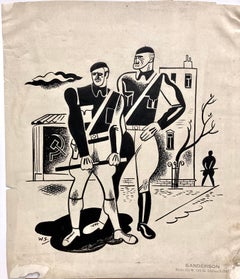
William Sanderson, Fascists

William SandersonWilliam Sanderson, Fascists, 1940, about

$960Sale Price|20% Off

H 9.75 in W 9.25 in

William Sanderson, Fascists

By William Sanderson

Located in New York, NY

Latvia-born William Sanderson became a contributor to the New Yorker and New Masses magazines during the 1930s. He was drafted into the Army during World Wa...

Category

1940s American Modern William Steig (b.1907) Art

Materials

India Ink

Large Bus by Allen Jones classic British 1960s pop art in bright primary colors

Large Bus by Allen Jones classic British 1960s pop art in bright primary colors

By Allen Jones

Located in New York, NY

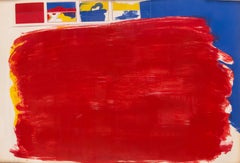
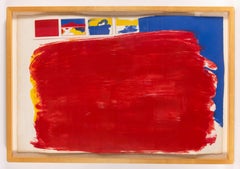
This large Allen Jones lithograph is printed exuberantly in primary colors. A swath of bright red brushstrokes represents the side of a bus. In the upper left, small windows reveal the passengers: a woman’s face is cut off above her vampy red lips, and a blue-haired man’s face is hidden. Royal blue fills the upper right corner of the composition, giving the impression of looking up at a passing bus against the cloudless sky. One can imagine Jones was thinking of the iconic red double decker bus the AEC Routemaster, first introduced in London in 1954. In the 1960s buses were a living symbol of familiar and new technology coexisting: as David Bucken put it, “In and around London a midpoint change on a journey might involve alighting from an RT bus, of which production had started just prior to World War II, and getting on one of the sexy new Routemasters.” In the artist’s words: “The whole problem as a figurative artist was that it was going against the main march of modernism, which was towards abstraction. But here was a way of making the subject you were painting the same as the object you were painting on. By making the canvas a rhomboid, and putting little wheels on it, you have a schematic version of a vehicle, in this case a London bus.” Jones plays with the space between abstraction and figuration: windowed passengers, elaborated with just a few lines and placed adjacent to a weighty red ground of brushstrokes, easily convey the form of a bus, yet the print also conveys Jones’ visceral, painterly delight in color play. Four color lithograph on wove paper Paper 28.5 x 42.5 / 72.4 X 108 cm Wood frame 31 x 46 x 2 in. / 78.75 x 117 x 5 cm with 1 in. moulding Signed by the artist lower right in pencil, labeled Trial Proof lower left in pencil. Edition 20. Printed at Tamarind Los Angeles with Clifford Smith...

Category

1960s Pop Art William Steig (b.1907) Art

Materials

Lithograph

Tumbleweed, James Rosenquist neon blue barbed wire sculptural lithograph drawing

Tumbleweed, James Rosenquist neon blue barbed wire sculptural lithograph drawing

By James Rosenquist

Located in New York, NY

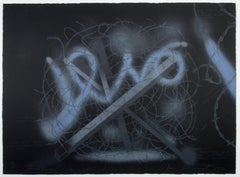
This print depicts the tangle of barbed wire encircling curling and twisting neon, with lengths of wood at the center. The dark paper sets off the electric blue, and captures the ori...

Category

Late 20th Century Pop Art William Steig (b.1907) Art

Materials

Lithograph

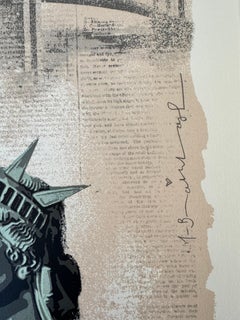
“The Missing Suitors” by SHAG aka Josh Agle

Josh Agle“The Missing Suitors” by SHAG aka Josh Agle, 2003

$1,080Sale Price|20% Off

H 29.5 in W 12 in D 0.03 in

“The Missing Suitors” by SHAG aka Josh Agle

By Josh Agle

Located in Hudson, NY

The Missing Suitors is a limited edition 13 color hand-pulled Serigraph by artist Josh Agle aka SHAG. Hand signed and numbered 214/300 by the artist. Comes with a Certificate of authenticity (C.O.A.). Shag is an American born painter, designer and illustrator working in Southern California. His distinctive artistic style draws from commercial illustration and has an attitude and sly sense of humor which is unmistakably of our time. His paintings celebrate consumerism and consumption on vividly colored sharply rendered panels; the characters drink, smoke and eat in lavish, stylish surroundings. Shag's work is categorized as lowbrow art...

Category

Early 2000s Pop Art William Steig (b.1907) Art

Materials

Screen

Previously Available Items
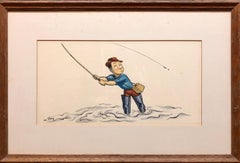
Whimsical Fishing Illustration Cartoon 1938 Mt Tremblant Ski Lodge William Steig

Whimsical Fishing Illustration Cartoon 1938 Mt Tremblant Ski Lodge William Steig

By William Steig (b.1907)

Located in Surfside, FL

Lighthearted Illustration of Outdoor Pursuits This one of a fisherman signed "W. Steig" Provenance: from Mrs. Joseph B. Ryan, Commissioned by Joe Ryan for the bar at his ski resort, Mount Tremblant Lodge, in 1938. Mont Tremblant, P.Q., Canada Watercolor and ink on illustration board, sights sizes 8 1/2 x 16 1/2 in., framed. In 1938 Joe Ryan, described as a millionaire from Philadelphia, bushwhacked his way to the summit of Mont Tremblant and was inspired to create a world class ski resort at the site. In 1939 he opened the Mont Tremblant Lodge, which remains part of the Pedestrian Village today. This original illustration is on Whatman Illustration board. the board measures 14 X 22 inches. label from McClees Galleries, Philadelphia, on the frame backing paper. William Steig, 1907 – 2003 was an American cartoonist, sculptor, and, in his later life, an illustrator and writer of children's books. Best known for the picture books Sylvester and the Magic Pebble, Abel's Island, and Doctor De Soto, he was also the creator of Shrek!, which inspired the film series of the same name. He was the U.S. nominee for both of the biennial, international Hans Christian Andersen Awards, as a children's book illustrator in 1982 and a writer in 1988. Steig was born in Brooklyn, New York in 1907, and grew up in the Bronx. His parents were Polish-Jewish immigrants from Austria, both socialists. His father, Joseph Steig, was a house painter, and his mother, Laura Ebel Steig, was a seamstress who encouraged his artistic leanings. As a child, he dabbled in painting and was an avid reader of literature. Among other works, he was said to have been especially fascinated by Pinocchio.He graduated from Townsend Harris High School at 15 but never completed college, though he attended three, spending two years at City College of New York, three years at the National Academy of Design and a mere five days at the Yale School of Fine Arts before dropping out of each. Hailed as the "King of Cartoons" Steig began drawing illustrations and cartoons for The New Yorker in 1930, producing more than 2,600 drawings and 117 covers for the magazine. Steig, later, when he was 61, began writing children's books. In 1968, he wrote his first children's book. He excelled here as well, and his third book, Sylvester and the Magic Pebble (1969), won the Caldecott Medal. He went on to write more than 30 children's books, including the Doctor DeSoto series, and he continued to write into his nineties. Among his other well-known works, the picture book Shrek! (1990) formed the basis for the DreamWorks Animation film Shrek (2001). After the release of Shrek 2 in 2004, Steig became the first sole-creator of an animated movie franchise that went on to generate over $1 billion from theatrical and ancillary markets after only one sequel. Along with Maurice Sendak, Saul Steinberg, Ludwig Bemelmans and Laurent de Brunhofff his is one of those rare cartoonist whose works form part of our collective cultural heritage. In 1984, Steig's film adaptation of Doctor DeSoto directed by Michael Sporn was nominated for the Academy Award for Best Animated Short Film. As one of the most admired cartoonists of all time, Steig spent seven decades drawing for the New Yorker magazine. He touched generations of readers with his tongue–in–cheek pen–and–ink drawings, which often expressed states of mind like shame, embarrassment or anger. Later in life, Steig turned to children's books, working as both a writer and illustrator. Steig's children's books were also wildly popular because of the crazy, complicated language he used—words like lunatic, palsied, sequestration, and cleave. Kids love the sound of those words even if they do not quite understand the meaning. Steig's descriptions were also clever. He once described a beached whale as "breaded with sand." Throughout the course of his career, Steig compiled his cartoons and drawings into books. Some of them were published first in the New Yorker. Others were deemed too dark to be printed there. Most of these collections centered on the cold, dark psychoanalytical truth about relationships. They featured husbands and wives fighting and parents snapping at their kids. His first adult book, Man About Town, was published in 1932, followed by About People, published in 1939, which focused on social outsiders. Sick of Each Other, published in 2000, included a drawing depicting a wife holding her husband at gunpoint, saying, "Say you adore me." According to the Los Angeles Times, fellow New Yorker artist...

Category

1930s American Modern William Steig (b.1907) Art

Materials

India Ink, Watercolor, Illustration Board

Whimsical Illustration Skiing Cartoon, 1938 Mt Tremblant Ski Lodge William Steig

Whimsical Illustration Skiing Cartoon, 1938 Mt Tremblant Ski Lodge William Steig

By William Steig (b.1907)

Located in Surfside, FL

Lighthearted Illustration of Outdoor Pursuits This one being a Skiing scene, a boy and a girl on skis. signed W. Steig Provenance: from Mrs. Joseph B. Ryan, Commissioned by Joe Ryan for the bar at his ski resort, Mount Tremblant Lodge, in 1938. Mont Tremblant, P.Q., Canada Watercolor and ink on illustration board, sights sizes 8 1/2 x 16 1/2 in., framed. In 1938 Joe Ryan, described as a millionaire from Philadelphia, bushwhacked his way to the summit of Mont Tremblant and was inspired to create a world class ski resort at the site. In 1939 he opened the Mont Tremblant Lodge, which remains part of the Pedestrian Village today. This original illustration is on Whatman Illustration board. the board measures 14 X 22 inches. label from McClees Galleries, Philadelphia, on the frame backing paper. William Steig, 1907 – 2003 was an American cartoonist, sculptor, and, in his later life, an illustrator and writer of children's books. Best known for the picture books Sylvester and the Magic Pebble, Abel's Island, and Doctor De Soto, he was also the creator of Shrek!, which inspired the film series of the same name. He was the U.S. nominee for both of the biennial, international Hans Christian Andersen Awards, as a children's book illustrator in 1982 and a writer in 1988. Steig was born in Brooklyn, New York in 1907, and grew up in the Bronx. His parents were Polish-Jewish immigrants from Austria, both socialists. His father, Joseph Steig, was a house painter, and his mother, Laura Ebel Steig, was a seamstress who encouraged his artistic leanings. As a child, he dabbled in painting and was an avid reader of literature. Among other works, he was said to have been especially fascinated by Pinocchio.He graduated from Townsend Harris High School at 15 but never completed college, though he attended three, spending two years at City College of New York, three years at the National Academy of Design and a mere five days at the Yale School of Fine Arts before dropping out of each. Hailed as the "King of Cartoons" Steig began drawing illustrations and cartoons for The New Yorker in 1930, producing more than 2,600 drawings and 117 covers for the magazine. Steig, later, when he was 61, began writing children's books. In 1968, he wrote his first children's book. He excelled here as well, and his third book, Sylvester and the Magic Pebble (1969), won the Caldecott Medal. He went on to write more than 30 children's books, including the Doctor DeSoto series, and he continued to write into his nineties. Among his other well-known works, the picture book Shrek! (1990) formed the basis for the DreamWorks Animation film Shrek (2001). After the release of Shrek 2 in 2004, Steig became the first sole-creator of an animated movie franchise that went on to generate over $1 billion from theatrical and ancillary markets after only one sequel. Along with Maurice Sendak, Saul Steinberg, Ludwig Bemelmans and Laurent de Brunhofff his is one of those rare cartoonist whose works form part of our collective cultural heritage. In 1984, Steig's film adaptation of Doctor DeSoto directed by Michael Sporn was nominated for the Academy Award for Best Animated Short Film. As one of the most admired cartoonists of all time, Steig spent seven decades drawing for the New Yorker magazine. He touched generations of readers with his tongue–in–cheek pen–and–ink drawings, which often expressed states of mind like shame, embarrassment or anger. Later in life, Steig turned to children's books, working as both a writer and illustrator. Steig's children's books were also wildly popular because of the crazy, complicated language he used—words like lunatic, palsied, sequestration, and cleave. Kids love the sound of those words even if they do not quite understand the meaning. Steig's descriptions were also clever. He once described a beached whale as "breaded with sand." Throughout the course of his career, Steig compiled his cartoons and drawings into books. Some of them were published first in the New Yorker. Others were deemed too dark to be printed there. Most of these collections centered on the cold, dark psychoanalytical truth about relationships. They featured husbands and wives fighting and parents snapping at their kids. His first adult book, Man About Town, was published in 1932, followed by About People, published in 1939, which focused on social outsiders. Sick of Each Other, published in 2000, included a drawing depicting a wife holding her husband at gunpoint, saying, "Say you adore me." According to the Los Angeles Times, fellow New Yorker artist Edward Sorel...

Category

1930s Naturalistic William Steig (b.1907) Art

Materials

Archival Ink, Watercolor, Illustration Board
Whimsical Illustration Hiking Cartoon, 1938 Mt Tremblant Ski Lodge William Steig

Whimsical Illustration Hiking Cartoon, 1938 Mt Tremblant Ski Lodge William Steig

By William Steig (b.1907)

Located in Surfside, FL

Lighthearted Illustration of Outdoor Pursuits This one being cross country hiking signed "W. Steig" Provenance: from Mrs. Joseph B. Ryan, Commissioned by Joe Ryan for the bar at his ski resort, Mount Tremblant Lodge, in 1938. Mont Tremblant, P.Q., Canada Watercolor and ink on illustration board, sights sizes 8 1/2 x 16 1/2 in., framed. In 1938 Joe Ryan, described as a millionaire from Philadelphia, bushwhacked his way to the summit of Mont Tremblant and was inspired to create a world class ski resort at the site. In 1939 he opened the Mont Tremblant Lodge, which remains part of the Pedestrian Village today. This original illustration is on Whatman Illustration board. the board measures 14 X 22 inches. label from McClees Galleries, Philadelphia, on the frame backing paper. William Steig, 1907 – 2003 was an American cartoonist, sculptor, and, in his later life, an illustrator and writer of children's books. Best known for the picture books Sylvester and the Magic Pebble, Abel's Island, and Doctor De Soto, he was also the creator of Shrek!, which inspired the film series of the same name. He was the U.S. nominee for both of the biennial, international Hans Christian Andersen Awards, as a children's book illustrator in 1982 and a writer in 1988. Steig was born in Brooklyn, New York in 1907, and grew up in the Bronx. His parents were Polish-Jewish immigrants from Austria, both socialists. His father, Joseph Steig, was a house painter, and his mother, Laura Ebel Steig, was a seamstress who encouraged his artistic leanings. As a child, he dabbled in painting and was an avid reader of literature. Among other works, he was said to have been especially fascinated by Pinocchio.He graduated from Townsend Harris High School at 15 but never completed college, though he attended three, spending two years at City College of New York, three years at the National Academy of Design and a mere five days at the Yale School of Fine Arts before dropping out of each. Hailed as the "King of Cartoons" Steig began drawing illustrations and cartoons for The New Yorker in 1930, producing more than 2,600 drawings and 117 covers for the magazine. Steig, later, when he was 61, began writing children's books. In 1968, he wrote his first children's book. He excelled here as well, and his third book, Sylvester and the Magic Pebble (1969), won the Caldecott Medal. He went on to write more than 30 children's books, including the Doctor DeSoto series, and he continued to write into his nineties. Among his other well-known works, the picture book Shrek! (1990) formed the basis for the DreamWorks Animation film Shrek (2001). After the release of Shrek 2 in 2004, Steig became the first sole-creator of an animated movie franchise that went on to generate over $1 billion from theatrical and ancillary markets after only one sequel. Along with Maurice Sendak, Saul Steinberg, Ludwig Bemelmans and Laurent de Brunhofff his is one of those rare cartoonist whose works form part of our collective cultural heritage. In 1984, Steig's film adaptation of Doctor DeSoto directed by Michael Sporn was nominated for the Academy Award for Best Animated Short Film. As one of the most admired cartoonists of all time, Steig spent seven decades drawing for the New Yorker magazine. He touched generations of readers with his tongue–in–cheek pen–and–ink drawings, which often expressed states of mind like shame, embarrassment or anger. Later in life, Steig turned to children's books, working as both a writer and illustrator. Steig's children's books were also wildly popular because of the crazy, complicated language he used—words like lunatic, palsied, sequestration, and cleave. Kids love the sound of those words even if they do not quite understand the meaning. Steig's descriptions were also clever. He once described a beached whale as "breaded with sand." Throughout the course of his career, Steig compiled his cartoons and drawings into books. Some of them were published first in the New Yorker. Others were deemed too dark to be printed there. Most of these collections centered on the cold, dark psychoanalytical truth about relationships. They featured husbands and wives fighting and parents snapping at their kids. His first adult book, Man About Town, was published in 1932, followed by About People, published in 1939, which focused on social outsiders. Sick of Each Other, published in 2000, included a drawing depicting a wife holding her husband at gunpoint, saying, "Say you adore me." According to the Los Angeles Times, fellow New Yorker artist Edward Sorel...

Category

1930s Naturalistic William Steig (b.1907) Art

Materials

Archival Ink, Watercolor, Illustration Board
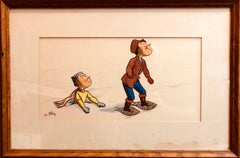
Whimsical Illustration "Snow" Cartoon, 1938 Mt Tremblant Ski Lodge William Steig

Whimsical Illustration "Snow" Cartoon, 1938 Mt Tremblant Ski Lodge William Steig

By William Steig (b.1907)

Located in Surfside, FL

Lighthearted Illustration of Outdoor Pursuits This one being cross country Snow Shoes signed "W. Steig" Provenance: from Mrs. Joseph B. Ryan, Commissioned by ...

Category

1930s American Modern William Steig (b.1907) Art

Materials

India Ink, Watercolor, Illustration Board
Whimsical Fishing Illustration Cartoon 1938 Mt Tremblant Ski Lodge William Steig

Whimsical Fishing Illustration Cartoon 1938 Mt Tremblant Ski Lodge William Steig

By William Steig (b.1907)

Located in Surfside, FL

Lighthearted Illustration of Outdoor Pursuits This one of a fisherman signed "W. Steig" Provenance: from Mrs. Joseph B. Ryan, Commissioned by Joe Ryan for the bar at his ski resort, Mount Tremblant Lodge, in 1938. Mont Tremblant, P.Q., Canada Watercolor and ink on illustration board, sights sizes 8 1/2 x 16 1/2 in., framed. In 1938 Joe Ryan, described as a millionaire from Philadelphia, bushwhacked his way to the summit of Mont Tremblant and was inspired to create a world class ski resort at the site. In 1939 he opened the Mont Tremblant Lodge, which remains part of the Pedestrian Village today. This original illustration is on Whatman Illustration board. the board measures 14 X 22 inches. label from McClees Galleries, Philadelphia, on the frame backing paper. William Steig, 1907 – 2003 was an American cartoonist, sculptor, and, in his later life, an illustrator and writer of children's books. Best known for the picture books Sylvester and the Magic Pebble, Abel's Island, and Doctor De Soto, he was also the creator of Shrek!, which inspired the film series of the same name. He was the U.S. nominee for both of the biennial, international Hans Christian Andersen Awards, as a children's book illustrator in 1982 and a writer in 1988. Steig was born in Brooklyn, New York in 1907, and grew up in the Bronx. His parents were Polish-Jewish immigrants from Austria, both socialists. His father, Joseph Steig, was a house painter, and his mother, Laura Ebel Steig, was a seamstress who encouraged his artistic leanings. As a child, he dabbled in painting and was an avid reader of literature. Among other works, he was said to have been especially fascinated by Pinocchio.He graduated from Townsend Harris High School at 15 but never completed college, though he attended three, spending two years at City College of New York, three years at the National Academy of Design and a mere five days at the Yale School of Fine Arts before dropping out of each. Hailed as the "King of Cartoons" Steig began drawing illustrations and cartoons for The New Yorker in 1930, producing more than 2,600 drawings and 117 covers for the magazine. Steig, later, when he was 61, began writing children's books. In 1968, he wrote his first children's book. He excelled here as well, and his third book, Sylvester and the Magic Pebble (1969), won the Caldecott Medal. He went on to write more than 30 children's books, including the Doctor DeSoto series, and he continued to write into his nineties. Among his other well-known works, the picture book Shrek! (1990) formed the basis for the DreamWorks Animation film Shrek (2001). After the release of Shrek 2 in 2004, Steig became the first sole-creator of an animated movie franchise that went on to generate over $1 billion from theatrical and ancillary markets after only one sequel. Along with Maurice Sendak, Saul Steinberg, Ludwig Bemelmans and Laurent de Brunhofff his is one of those rare cartoonist whose works form part of our collective cultural heritage. In 1984, Steig's film adaptation of Doctor DeSoto directed by Michael Sporn was nominated for the Academy Award for Best Animated Short Film. As one of the most admired cartoonists of all time, Steig spent seven decades drawing for the New Yorker magazine. He touched generations of readers with his tongue–in–cheek pen–and–ink drawings, which often expressed states of mind like shame, embarrassment or anger. Later in life, Steig turned to children's books, working as both a writer and illustrator. Steig's children's books were also wildly popular because of the crazy, complicated language he used—words like lunatic, palsied, sequestration, and cleave. Kids love the sound of those words even if they do not quite understand the meaning. Steig's descriptions were also clever. He once described a beached whale as "breaded with sand." Throughout the course of his career, Steig compiled his cartoons and drawings into books. Some of them were published first in the New Yorker. Others were deemed too dark to be printed there. Most of these collections centered on the cold, dark psychoanalytical truth about relationships. They featured husbands and wives fighting and parents snapping at their kids. His first adult book, Man About Town, was published in 1932, followed by About People, published in 1939, which focused on social outsiders. Sick of Each Other, published in 2000, included a drawing depicting a wife holding her husband at gunpoint, saying, "Say you adore me." According to the Los Angeles Times, fellow New Yorker artist Edward Sorel...

Category

1930s American Modern William Steig (b.1907) Art

Materials

India Ink, Watercolor, Illustration Board
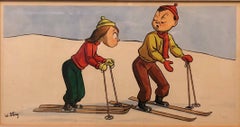
Whimsical Illustration Skiing Cartoon, 1938 Mt Tremblant Ski Lodge William Steig

Whimsical Illustration Skiing Cartoon, 1938 Mt Tremblant Ski Lodge William Steig

By William Steig (b.1907)

Located in Surfside, FL

Lighthearted Illustration of Outdoor Pursuits This one being a Skiing scene, a boy and a girl on skis. signed W. Steig Provenance: from Mrs. Joseph B. Ryan, Commissioned by Joe Ryan for the bar at his ski resort, Mount Tremblant Lodge, in 1938. Mont Tremblant, P.Q., Canada Watercolor and ink on illustration board, sights sizes 8 1/2 x 16 1/2 in., framed. In 1938 Joe Ryan, described as a millionaire from Philadelphia, bushwhacked his way to the summit of Mont Tremblant and was inspired to create a world class ski resort at the site. In 1939 he opened the Mont Tremblant Lodge, which remains part of the Pedestrian Village today. This original illustration is on Whatman Illustration board. the board measures 14 X 22 inches. label from McClees Galleries, Philadelphia, on the frame backing paper. William Steig, 1907 – 2003 was an American cartoonist, sculptor, and, in his later life, an illustrator and writer of children's books. Best known for the picture books Sylvester and the Magic Pebble, Abel's Island, and Doctor De Soto, he was also the creator of Shrek!, which inspired the film series of the same name. He was the U.S. nominee for both of the biennial, international Hans Christian Andersen Awards, as a children's book illustrator in 1982 and a writer in 1988. Steig was born in Brooklyn, New York in 1907, and grew up in the Bronx. His parents were Polish-Jewish immigrants from Austria, both socialists. His father, Joseph Steig, was a house painter, and his mother, Laura Ebel Steig, was a seamstress who encouraged his artistic leanings. As a child, he dabbled in painting and was an avid reader of literature. Among other works, he was said to have been especially fascinated by Pinocchio.He graduated from Townsend Harris High School at 15 but never completed college, though he attended three, spending two years at City College of New York, three years at the National Academy of Design and a mere five days at the Yale School of Fine Arts before dropping out of each. Hailed as the "King of Cartoons" Steig began drawing illustrations and cartoons for The New Yorker in 1930, producing more than 2,600 drawings and 117 covers for the magazine. Steig, later, when he was 61, began writing children's books. In 1968, he wrote his first children's book. He excelled here as well, and his third book, Sylvester and the Magic Pebble (1969), won the Caldecott Medal. He went on to write more than 30 children's books, including the Doctor DeSoto series, and he continued to write into his nineties. Among his other well-known works, the picture book Shrek! (1990) formed the basis for the DreamWorks Animation film Shrek (2001). After the release of Shrek 2 in 2004, Steig became the first sole-creator of an animated movie franchise that went on to generate over $1 billion from theatrical and ancillary markets after only one sequel. Along with Maurice Sendak, Saul Steinberg, Ludwig Bemelmans and Laurent de Brunhofff his is one of those rare cartoonist whose works form part of our collective cultural heritage. In 1984, Steig's film adaptation of Doctor DeSoto directed by Michael Sporn was nominated for the Academy Award for Best Animated Short Film. As one of the most admired cartoonists of all time, Steig spent seven decades drawing for the New Yorker magazine. He touched generations of readers with his tongue–in–cheek pen–and–ink drawings, which often expressed states of mind like shame, embarrassment or anger. Later in life, Steig turned to children's books, working as both a writer and illustrator. Steig's children's books were also wildly popular because of the crazy, complicated language he used—words like lunatic, palsied, sequestration, and cleave. Kids love the sound of those words even if they do not quite understand the meaning. Steig's descriptions were also clever. He once described a beached whale as "breaded with sand." Throughout the course of his career, Steig compiled his cartoons and drawings into books. Some of them were published first in the New Yorker. Others were deemed too dark to be printed there. Most of these collections centered on the cold, dark psychoanalytical truth about relationships. They featured husbands and wives fighting and parents snapping at their kids. His first adult book, Man About Town, was published in 1932, followed by About People, published in 1939, which focused on social outsiders. Sick of Each Other, published in 2000, included a drawing depicting a wife holding her husband at gunpoint, saying, "Say you adore me...

Category

1930s Naturalistic William Steig (b.1907) Art

Materials

Archival Ink, Watercolor, Illustration Board
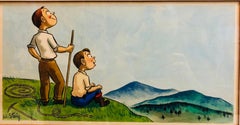
Whimsical Illustration "Snow" Cartoon, 1938 Mt Tremblant Ski Lodge William Steig

Whimsical Illustration "Snow" Cartoon, 1938 Mt Tremblant Ski Lodge William Steig

By William Steig (b.1907)

Located in Surfside, FL

Lighthearted Illustration of Outdoor Pursuits This one being cross country Snow Shoes signed "W. Steig" Provenance: from Mrs. Joseph B. Ryan, Commissioned by ...

Category

1930s American Modern William Steig (b.1907) Art

Materials

India Ink, Watercolor, Illustration Board
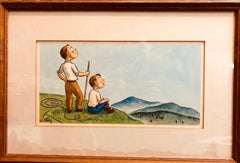
Whimsical Illustration Hiking Cartoon, 1938 Mt Tremblant Ski Lodge William Steig

Whimsical Illustration Hiking Cartoon, 1938 Mt Tremblant Ski Lodge William Steig

By William Steig (b.1907)

Located in Surfside, FL

Lighthearted Illustration of Outdoor Pursuits This one being cross country hiking signed "W. Steig" Provenance: from Mrs. Joseph B. Ryan, Commissioned by Joe Ryan for the bar at his ski resort, Mount Tremblant Lodge, in 1938. Mont Tremblant, P.Q., Canada Watercolor and ink on illustration board, sights sizes 8 1/2 x 16 1/2 in., framed. In 1938 Joe Ryan, described as a millionaire from Philadelphia, bushwhacked his way to the summit of Mont Tremblant and was inspired to create a world class ski resort at the site. In 1939 he opened the Mont Tremblant Lodge, which remains part of the Pedestrian Village today. This original illustration is on Whatman Illustration board. the board measures 14 X 22 inches. label from McClees Galleries, Philadelphia, on the frame backing paper. William Steig, 1907 – 2003 was an American cartoonist, sculptor, and, in his later life, an illustrator and writer of children's books. Best known for the picture books Sylvester and the Magic Pebble, Abel's Island, and Doctor De Soto, he was also the creator of Shrek!, which inspired the film series of the same name. He was the U.S. nominee for both of the biennial, international Hans Christian Andersen Awards, as a children's book illustrator in 1982 and a writer in 1988. Steig was born in Brooklyn, New York in 1907, and grew up in the Bronx. His parents were Polish-Jewish immigrants from Austria, both socialists. His father, Joseph Steig, was a house painter, and his mother, Laura Ebel Steig, was a seamstress who encouraged his artistic leanings. As a child, he dabbled in painting and was an avid reader of literature. Among other works, he was said to have been especially fascinated by Pinocchio.He graduated from Townsend Harris High School at 15 but never completed college, though he attended three, spending two years at City College of New York, three years at the National Academy of Design and a mere five days at the Yale School of Fine Arts before dropping out of each. Hailed as the "King of Cartoons" Steig began drawing illustrations and cartoons for The New Yorker in 1930, producing more than 2,600 drawings and 117 covers for the magazine. Steig, later, when he was 61, began writing children's books. In 1968, he wrote his first children's book. He excelled here as well, and his third book, Sylvester and the Magic Pebble (1969), won the Caldecott Medal. He went on to write more than 30 children's books, including the Doctor DeSoto series, and he continued to write into his nineties. Among his other well-known works, the picture book Shrek! (1990) formed the basis for the DreamWorks Animation film Shrek (2001). After the release of Shrek 2 in 2004, Steig became the first sole-creator of an animated movie franchise that went on to generate over $1 billion from theatrical and ancillary markets after only one sequel. Along with Maurice Sendak, Saul Steinberg, Ludwig Bemelmans and Laurent de Brunhofff his is one of those rare cartoonist whose works form part of our collective cultural heritage. In 1984, Steig's film adaptation of Doctor DeSoto directed by Michael Sporn was nominated for the Academy Award for Best Animated Short Film. As one of the most admired cartoonists of all time, Steig spent seven decades drawing for the New Yorker magazine. He touched generations of readers with his tongue–in–cheek pen–and–ink drawings, which often expressed states of mind like shame, embarrassment or anger. Later in life, Steig turned to children's books, working as both a writer and illustrator. Steig's children's books were also wildly popular because of the crazy, complicated language he used—words like lunatic, palsied, sequestration, and cleave. Kids love the sound of those words even if they do not quite understand the meaning. Steig's descriptions were also clever. He once described a beached whale as "breaded with sand." Throughout the course of his career, Steig compiled his cartoons and drawings into books. Some of them were published first in the New Yorker. Others were deemed too dark to be printed there. Most of these collections centered on the cold, dark psychoanalytical truth about relationships. They featured husbands and wives fighting and parents snapping at their kids. His first adult book, Man About Town, was published in 1932, followed by About People, published in 1939, which focused on social outsiders. Sick of Each Other, published in 2000, included a drawing depicting a wife holding her husband at gunpoint, saying, "Say you adore me...

Category

1930s Naturalistic William Steig (b.1907) Art

Materials

Archival Ink, Watercolor, Illustration Board
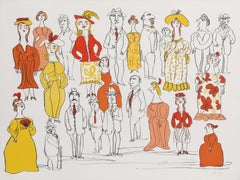
William Steig (b.1907) art for sale on 1stDibs.

Find a wide variety of authentic William Steig (b.1907) art available for sale on 1stDibs. You can also browse by medium to find art by William Steig (b.1907) in board, illustration board, ink and more. Much of the original work by this artist or collective was created during the 1930s and is mostly associated with the modern style. Not every interior allows for large William Steig (b.1907) art, so small editions measuring 24 inches across are available. Customers who are interested in this artist might also find the work of Florence E. Nosworthy, Jackson Lee Nesbitt, and George G. Adomeit. William Steig (b.1907) art prices can differ depending upon medium, time period and other attributes. On 1stDibs, the price for these items starts at $3,500 and tops out at $3,500, while the average work can sell for $3,500.
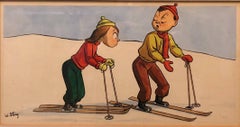
Artists Similar to William Steig (b.1907)