George Romney Art

English, 1734-1802

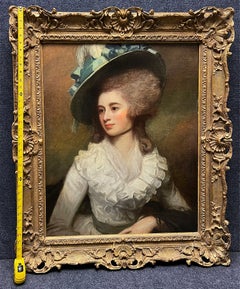
George Romney is best known as one of British society’s foremost portrait painters of the 18th century, rivaling other widely acknowledged portraitists such as Thomas Gainsborough and Joshua Reynolds.

Born in 1734 in Dalton-on-Furness, Romney was the son of a cabinetmaker. In 1755, he began his artistic career as an apprentice to portrait painter Christopher Steele before traveling to northern England to establish a painting studio in Kendal. Romney’s talent in portraiture proved fruitful. By 1762, he had made enough money to set up a studio in London, where he became renowned for an “ability to paint flattering images regardless of personality.” 

During the 1760s, Romney had hoped to become a history painter but was unsuccessful. To refine and improve his technique, he traveled to Rome in 1773, where he spent two years studying the Old Masters, including Titian, Correggio and Raphael. While there, he was also influenced by the works of Swiss painter Henry Fuseli.  

Upon his return to London, in 1775, and with his newly honed painting style, Romney became even more popular among the British aristocracy and nobility. Although his primary aspiration was to make a living as a historical painter, Romney was in demand as a portraitist. His favorite subjects were children and women, particularly his muse, Emma Hart — who later became Lady Hamilton and mistress of Admiral Lord Nelson. Romney painted several Romantic portraits and drew many sketches of Lady Hamilton, whom he considered to represent the ideal of feminine beauty.

In his later years, Romney produced several portraits and drawings of Shakespearean subjects for John Boydell’s Shakespeare Gallery in 1790. 

Romney’s figurative works, portraits and prints are held in collections of numerous major museums and galleries, including the National Portrait Gallery in London, the National Gallery of Canada in Ottawa, the Metropolitan Museum of Art and the Frick Collection in New York. In 2002, an exhibition commemorating the bicentenary of Romney’s death was organized by the National Museums Liverpool in partnership with the National Portrait Gallery and the Huntington Library, Art Collections and Gardens in San Marino, California. 

On 1stDibs, find a range of original George Romney drawings, paintings and prints.

to
3
7
3
7
7
4
3
2
1
1
1
1
1
1
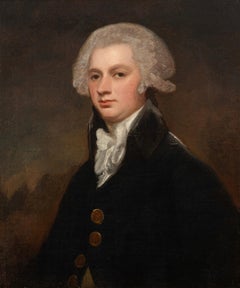
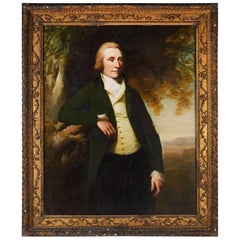
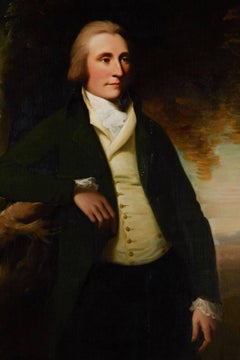
Portrait of a Gentleman, traditionally identified as Edward Addison, Esq., 1780s

Portrait of a Gentleman, traditionally identified as Edward Addison, Esq., 1780s

By George Romney

Located in Edinburgh, Scotland

George Romney (1734-1802) Portrait of a Gentleman, traditionally identified as Edward Addison, Esq., c.1780s Oil on canvas In a period carved and gilded swept frame 76.3 x 63.2 cm.; ...

Category

1780s Old Masters George Romney Art

Materials

Oil

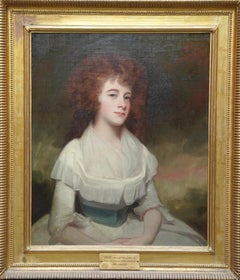
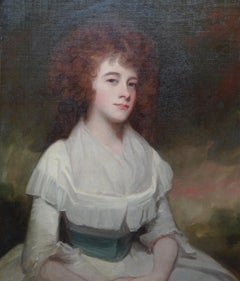
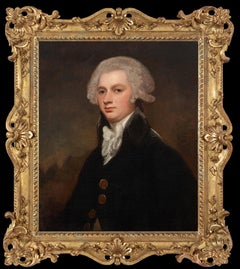
Portrait of Anne Evelyn - British 18thC Old master oil painting excellent prov.

Portrait of Anne Evelyn - British 18thC Old master oil painting excellent prov.

By George Romney

Located in Hagley, England

This stunning British 18th century Old Master portrait oil painting, with exceptional provenance, is by noted artist George Romney. It was painted in 1788, commissioned by James Evelyn of Felbridge as it is of his younger daughter Anne, aged 20 years old. James was a Doctor of Law and Anne's mother was his second wife, Jane. Felbridge house, Anne's home, was in the village of Godstone in Surrey. This superb oil painting is a seated portrait of Anne, wearing a white dress with a green sash, her forearms exposed and her hands in her lap. Anne is blessed with the most wonderful long auburn curly hair and is visually stunning. Her body is partly turned away from the artist/viewer and she is slightly gazing down at us with confident, clear eyes. Anne is pictured in a landscape with a dramatic sky behind her. Romney's brushwork on her dress, hair and the background is superb. The delicate detailing of her facial features is also stunning. Sometimes Old Master portraits can be a little staid, but this one of Anne with her wild auburn hair and bold look is just magnificent. This is a fantastic example of George Romney's work and of an 18th century British Old Master with exceptional detailed provenance. Name plate states: Anne, younger daughter of James Evelyn of Fellbridge Esq. 1788, aged 20. Romney. Provenance. With Charles Cecil Cope Jenkinson, 3rd Earl of Liverpool (1784-1851) With The Hon. Henry Berkeley Portman (1860-1923), Later 3rd Viscount Portman; with Emma, Viscountess Portman (1862-1929) By 1926; with her daughter Lady Moyra Dawson-Damer (1897-1962) Thence by family descent. Painted in 1788. There are various labels verso. Mentioned in Lord Hawkesbury's Catalogues of Portraits at Compton Place and at Buxted Park, in Sussex, 1903, p.18, no. 3, at Buxted Park, as in the 'Dining Room, South Wall'. Further Bibliography: Gower (R. S.) Romney, London, 1904, p. 175 Kidson (Alex) George Romney, A Complete Catalogue of his Paintings, New Haven and London: Yale University Press, 2015, I, p. 205, no. 422 (illus).Ward (Humphrey) and Roberts (William) Romney: A Biographical and Critical Essay, London: T Agnew & Sons, 1904, p. 51 Condition. Oil on canvas. Image size 30 inches by 24 inches and in good condition. Frame. Housed in an ornate gilt frame with name plate, 37 inches by 31 inches and in good condition. George Romney (1734-1802) was born in Dalton-on-Furness, Lancashire, on 15 December 1734, the third of the eleven children of John Romney and Anne Simpson. Leaving school at the age of eleven, he worked for eight years in his father's cabinetmaking workshop before being apprenticed to a local painter, Christopher Steele, with whom he served for two years, from 1755 to 1757, in Kendal, York, and Lancaster. He married a Kendal girl, Mary Abbot...

Category

1780s Old Masters George Romney Art
Materials

Oil

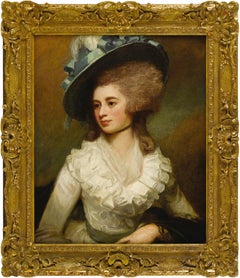
Portrait of Lady Caroline Price

Portrait of Lady Caroline Price

By George Romney

Located in Miami, FL

DESCRIPTION: Perhaps the best Romney in private hands. If Vogue Magazine existed in the late 18th century, this image of Lady Caroline Price would be ...

Category

1970s Old Masters George Romney Art

Materials

Oil, Canvas

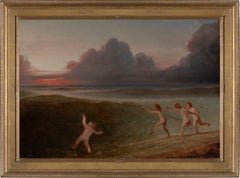
The Wave
The Wave

The Wave

By George Romney

Located in London, GB

Oil on canvas 33 x 48 ½ inches; 840 x 1235 mm Painted c. 1793 Collections: George Romney; By descent to Elizabeth Romney (1832-1893), the artist’s granddaughter; Romney sale, Chris...

Category

1790s Old Masters George Romney Art

Materials

Canvas, Oil

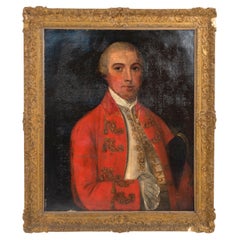
Georgian Oil Painting Portrait of Man in Red Coat, Gilt Frame, 36x30

Georgian Oil Painting Portrait of Man in Red Coat, Gilt Frame, 36x30

By George Romney

Located in Queens, NY

English Georgian gilt framed oil painting portrait of man in red coat with vest (att: Geo. Romney)

Category

20th Century British Georgian George Romney Art

Materials

Paint

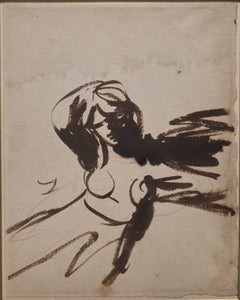
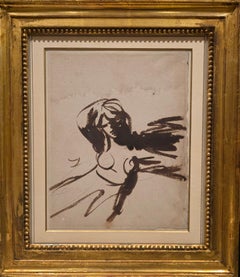
Reclining nude, possibly Emma Hart

Reclining nude, possibly Emma Hart

By George Romney

Located in Stamford, GB

This beautifully fluid ink and brush drawing was made by George Romney in the 1780s and may well relate to the powerful sequence of portraits of Emma Hamilton, in various mythologica...

Category

18th Century George Romney Art

Materials

Ink, Pencil

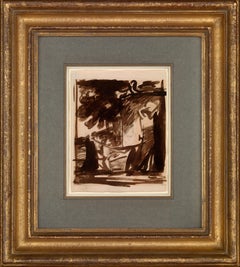
18th century ink study for the Leveson-Gower Children

18th century ink study for the Leveson-Gower Children

By George Romney

Located in London, GB

Collections: J. Goodfriend, USA. Brown wash and pencil on laid paper Framed dimensions: 13.25 x 11.75 inches This powerful drawing was made at the time that Romney was painting the famous group portrait of the Gower Children now in Abbot Hall Art Gallery, Kendal. Romney was a bold and incisive draughtsman who made numerous rich brown ink studies, principally for historical compositions; by contrast, comparatively few studies linked directly to his portraits survive. The existence of a group of studies for the Gower Children underscores its importance to Romney. The sitters were the five youngest of the eight children of Granville, 2nd Earl Gower who, at the time the portrait was commissioned, was President of the Council in Lord North’s government and one of the best-connected and most influential people in England. The present drawing which is a large scale treatment of the composition in its final form perfectly distils Romney’s conceit: the younger children dancing whilst their elder sister, in the guise of a Bacchante plays the tambourine. The bold and dramatic study underlines both the artistic confidence and classical grandeur Romney gained during his trip to Italy between 1773 and 1775. The commission from Granville, 2nd Earl Gower to paint five of his children came shortly after Romney’s Continental tour. The initial idea, as represented by the present drawing, seems to have been to paint Lady Anne, the figure on the right of the composition playing the tambourine, who was the youngest of Gower’s first four children by his second wife Lady Louisa Egerton and who married the Rev. Edward Vernon Harcourt, later Archbishop of York, with three of her younger half-siblings by Gower’s third wife, Lady Susanna Stewart: at the left Lady Georgina, who became Countess of St Germans following her marriage to the Hon. William Eliot; at the right Lady Charlotte Sophia, later Duchess of Beaufort and in the centre Lady Susanna, later Countess of Harrowby. Romney added a fifth child to the finished portrait, Gower’s son: Lord Granville, later created Viscount Granville and Earl Granville. In Italy Romney had produced a large number of studies of classical antiquities and old master paintings. The commission from Gower offered Romney the opportunity to explore a complex multi-figural group, putting into practice the kind of ambitious classical quotations that Reynolds was currently exploiting. In 1773 Reynolds had completed the remarkable group portrait of the Montgomery Sisters, now in the Tate Gallery, London, which showed them adorning a herm of the Roman god Hymen; the composition used a garland to link the three figures who were shown in classical costume dancing at the foot of a Roman sculpture. Scholars have long pointed to a similar sources for the two compositions: the works of Nicolas Poussin. Whilst the Montgomery Sisters is based, in part, on a Bacchanal now in the Musée des Beaux-Arts, the Gower Children has always been associated with Poussin’s Dance to the Music of Time, now in the Wallace Collection, London. It seems more likely that Romney was looking to an antique source in the form of the Borghese Dancers, a Roman relief, then in Palazzo Borghese in Rome. Romney would have seen the relief of interlocking, dancing maidens and would also have known Guido Reni’s Aurora...

Category

18th Century Old Masters George Romney Art

Materials

Ink, Pencil

Expulsion of Adam and Eve, Circa 1770, Signed Pen and Ink Drawing

Expulsion of Adam and Eve, Circa 1770, Signed Pen and Ink Drawing

By George Romney

Located in New York, NY

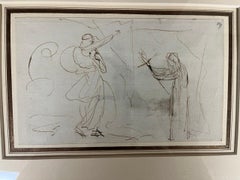
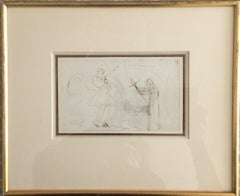
Pen and ink drawing on laid paper by British master George Romney (1734–1802), depicting the Expulsion of Adam and Eve from the Garden of Eden, circa 1770. Sheet measures 4.75 x 7.25...

Category

Early 1800s Old Masters George Romney Art

Materials

Ink, Laid Paper, Pen

18th century portrait drawing of the Rev. William Atkinson

18th century portrait drawing of the Rev. William Atkinson

By George Romney

Located in London, GB

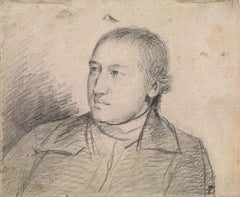
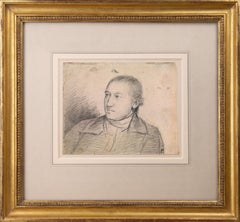
Collections: Henry Scipio Reitlinger (1882-1950); Private collection, UK to 2019 Framed dimensions: 14.50 x 15.38 inches This drawing is one of only two known portrait drawings by Romney (as opposed to preliminary studies for portraits) and is dated by Alex Kidson as being executed no later than 1769. It is likely that the present drawing was originally part of a sketchbook, now largely dismembered (Abbot Hall Art Gallery, Kendal), which Kidson notes, contained some of Romney’s most beautiful early drawings. This drawing, and a second sheet formerly with Andrew Wyld, have been identifying as depicting the Rev. William Atkinson...

Category

18th Century Old Masters George Romney Art

Materials

Pencil

Related Items
Portrait of a Man
Portrait of a Man

Quentin MassysPortrait of a Man

$52,500

H 11 in W 9 in

Portrait of a Man

Located in New York, NY

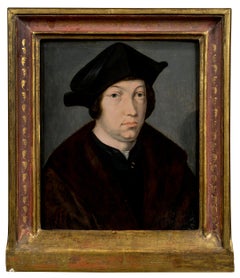
Provenance: with Leo Blumenreich and Julius Böhler, Munich, 1924 Dr. Frederic Goldstein Oppenheimer (1881-1963), San Antonio, Texas; by whom given to: Abraham M. Adler, New York, until 1985; thence by descent to the present owners While old inscriptions on the verso of this panel propose its author to be Hans Holbein and the sitter Sir John More—a lawyer, judge, and the father of Sir Thomas More—this fine portrait has long been recognized to be by a Flemish hand. Max Friedländer gave the painting to Bernard van Orley (1487/1491 – 1541) in 1924, but did not include it in the volume dedicated to the artist in his Early Netherlandish Paintings...

Category

16th Century Old Masters George Romney Art

Materials

Oil, Panel

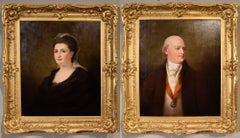
Male and female portrait, both in silk kimono, possibly textile dealers

Male and female portrait, both in silk kimono, possibly textile dealers

By Christoffel Lubieniecki

Located in Amsterdam, NL

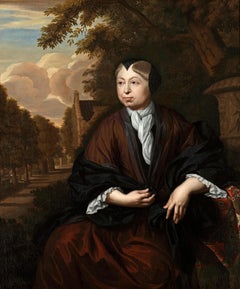
CHRISTOFFEL LUBIENIECKI (1659-1729) Pair of portraits of a gentleman and a lady, both in silk kimono, before a country house (circa 1680) Indistinctly signed “C.......” on a box under the man’s left hand Oil on canvas, 79.5 x 67 cm each Both sitters are portrayed wearing a silk “Japanese” coat. During the second half of the seventeenth the Japanese silk coat, an adapted Japanese kimono, became a real vogue in the Dutch elite. The exclusive Dutch trade contacts with Japan can explain the popularity of the kimono-style silk coats in the Netherlands. Everybody who could afford one, dressed in such a fashionable and comfortable coat and, like the present sitters, some proud owners had themselves portrayed in a “Japanese” coat often together with an oriental carpet to underline their standing and international connections. These portraits are the work of the Polish-born portraitist Christoffel Lubieniecki (also known as Lubienitski, Lubinitski or Lubiniecki) Lubieniecki was first trained in Hamburg under Julian Stuhr and after 1675 in Amsterdam under Adriaen Backer and Gerard de Lairesse. He specialized in landscapes, generally of an Italianate character, and in portraits. The loving execution of these contented burghers, enjoying the garden vistas of their country house, places him alongside Amsterdam portraitists such as Constantijn Netscher and Michiel van Musscher...

Category

1680s Old Masters George Romney Art
Materials

Canvas, Oil

18th Century Oil on Canvas Portrait, Major Alexander Brown in Military Uniform.

18th Century Oil on Canvas Portrait, Major Alexander Brown in Military Uniform.

By Sir David Wilkie

Located in Cotignac, FR

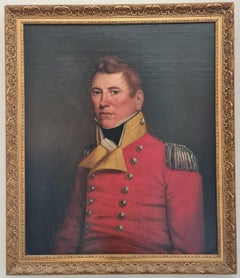
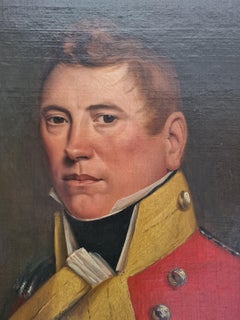
18th Century Military portrait of a young officer in Napoleonic period military dress. The painting is not signed but the subject is Major Alexander Brown. The work is oil on canvas later mounted on board and presented in a fine 'Regence style' carved gilt frame. There are labels to the back referring to the subject, 'Major Brown of Trinity' and a framers trade label from Edinburgh. A magnificent and imposing portrait of a young military officer in the prime of his life. His red uniform adorned with fine buttons, fringed epaulettes and high gilt collar. His ruddy complexion offset by his stylish hair, a quiff and swept forward to the sides as was the fashion at the time. Sir David Wilkie RA (18 November 1785 – 1 June 1841) was a Scottish painter, especially known for his portraits, including formal royal ones, and scenes from his travels to Europe and the Middle East. He painted successfully in a wide variety of genres, including historical scenes. His main base was in London, but he died and was buried at sea, off Gibraltar, returning from his first trip to the Middle East. He was sometimes known as the "people's painter". He was Principal Painter in Ordinary to King William IV and Queen Victoria. Apart from royal portraits, his best-known painting today is probably The Chelsea Pensioners Reading the Waterloo Dispatch of 1822 in Apsley House. Sir David Wilkie was actually admitted in 1799 (despite only being 14) through the influence of the Earl of Leven...

Category

Late 18th Century Old Masters George Romney Art

Materials

Canvas, Oil, Board

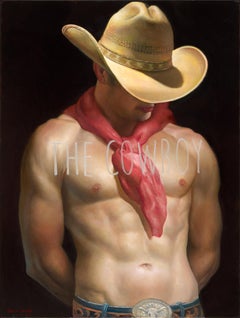
Rebel - Oil on Canvas Figurative Painting, 40h x 30w in, Signed, 2026

Rebel - Oil on Canvas Figurative Painting, 40h x 30w in, Signed, 2026

By Bruno Surdo

Located in Chicago, IL

A contemporary cowboy is rendered with the gravity of a classical male nude. Surdo treats the body with the care of an Old Master while layering in the mythology of American masculin...

Category

2010s Old Masters George Romney Art
Materials

Canvas, Oil

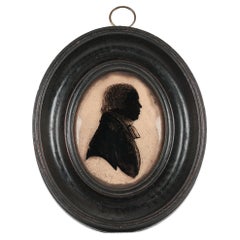
Georgian Original Framed Silhouette Portrait of a Gentleman

Georgian Original Framed Silhouette Portrait of a Gentleman

Located in Bishop's Stortford, Hertfordshire

A stunning and very finely produced antique Georgian original framed silhouette portrait of a gentleman dating from the 18th century. The portrait mounted in a thick carved wooden fr...

Category

18th Century British Georgian Antique George Romney Art

Materials

Glass, Hardwood

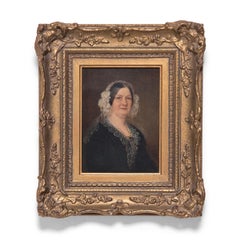
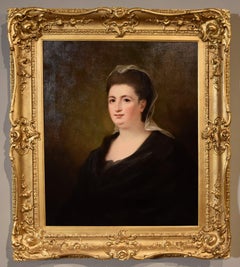
Oil Portrait of a Victorian Lady, c. 1850

Oil Portrait of a Victorian Lady, c. 1850, c. 1850

$1,480

H 13.75 in W 11.5 in D 1.75 in

Oil Portrait of a Victorian Lady, c. 1850

Located in Chicago, IL

Painted in the 19th century, this exquisite miniature portrait wonderfully exemplifies realism in traditional oil painting. The small artwork is painted in the conventional portraiture style of the Old Masters, and achieves soft realism with fine brushwork and a subdued, neutral palette. The half length portrait depicts a fine Victorian woman dressed in all black with a delicate lace collar and bonnet. She wears a ruby broach...

Category

Mid-19th Century Old Masters George Romney Art

Materials

Oil

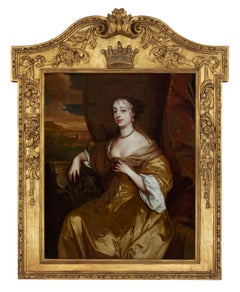
Portrait of Sarah Bodvile, Countess of Radnor in a Russet Dress, Manor House

Portrait of Sarah Bodvile, Countess of Radnor in a Russet Dress, Manor House

By Sir Peter Lely

Located in London, GB

Portrait of Sarah Bodvile (c.1640–1720), later Countess of Radnor, c.1660 Studio of Sir Peter Lely (1618–1680) Oil on canvas Few Restoration portraits combine beauty, biography and ...

Category

17th Century Old Masters George Romney Art

Materials

Canvas, Oil

The Grape Seller - Workshop of Jacob Ochtervelt

The Grape Seller - Workshop of Jacob Ochtervelt

Located in Stockholm, SE

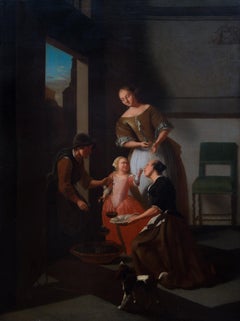
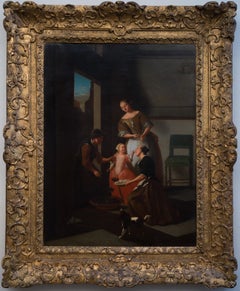
Jacob Ochtervelt (Workshop) The Grape Seller oil on canvas unframed: 80.7 x 61 cm.; 31 ¾ x 24 in. framed: 109.5 x 89 cm.; 43 1/8 x 35 in. Essay: This captivating piece, originating from the studio of the revered Dutch artist Jacob Ochtervelt, mirrors the composition of a signed and dated 1669 canvas by Ochtervelt that is presently housed in the Hermitage museum. Its subject, "The Grape Seller" immerses us in a typical 17th-century interior, replete with characters from various strata of society. At the center, a fruit vendor is depicted bending over to weigh grapes for the buyer. A child hands some of the grapes to her mother to taste, their attentive maid standing by. The backdrop showcases typical Ochtervelt details: a hint of the city visible through the doorway, light filtering in through an overhead window, and a playful dog at their side. The exquisite quality of the piece is evident in the minutiae, such as the intricate detailing of the mother's earring, which in reality spans only a few millimeters yet boasts impressive attention to detail. Initially, Sotheby's considered this work to be an autograph piece by Ochtervelt. But due to some uncertainty, it was auctioned as Workshop of Jacob Ochtervelt. On the other hand, the esteemed Cabinet Turquin in Paris leans toward attributing the piece directly to Jacob Ochtervelt himself. The painting is framed in an authentic period frame, which has been delicately restored by Stockholm's Förgyllning och Bildhuggeri. The frame retains its age-old patina and, while in used condition, has minor imperfections adding to its charm. Another interesting thing worth to mention is the painting's provenance. It was once owned by the 1st Viscount Rothermere (1868-1940), the founder of the Daily Mail and Daily Mirror...

Category

17th Century Old Masters George Romney Art

Materials

Canvas, Oil

Two royal portraits (the Duc d'Angoulême and the Duc de Berry) by H.P. Danloux

Two royal portraits (the Duc d'Angoulême and the Duc de Berry) by H.P. Danloux

Located in PARIS, FR

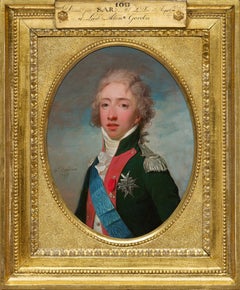
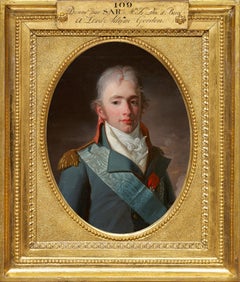
These two royal portraits are a major historical testimony to the stay of the Comte d'Artois (the future Charles X) and his family in Edinburgh in 1796-1797. Given by the sitters to Lord Adam Gordon, the Governor of Edinburgh, and kept by family descent to this day, these two portraits provide us with a vivid and spontaneous image of the Duc d’Angoulême and his brother the Duc de Berry. Danloux, who had emigrated to London a few years before, demonstrate his full assimilation of the art of British portrait painters in the brilliant execution of these portraits. 1. Henri-Pierre Danloux, a portraitist in the revolutionary turmoil Born in Paris in 1753, Henri-Pierre Danloux was first a pupil of the painter Nicolas-Bernard Lépicié (1735 - 1784) and then, in 1773, of Joseph-Marie Vien (1716 - 1809), whom he followed to Rome when, at the end of 1775, Vien became Director of the Académie de France. In Rome he became friends with the painter Jacques-Louis David (1748 - 1825). Returning to France around 1782, he settled in Lyon for a few years before returning to Paris in 1785. One of his first portraits was commissioned by the Baroness d'Etigny, the widow of the former Intendant of the Provinces of Gascony, Bearn and Navarre Antoine Mégret d'Etigny (1719 – 1767). He then became close to his two sons, Mégret de Sérilly and Mégret d'Etigny, who in turn became his patrons. In 1787, this close relationship with the d'Etigny family was further strengthened by his marriage to Antoinette de Saint-Redan, a relative of Madame d'Etigny. After his marriage, he left for Rome and did not return to France until 1789. It was during the winter of 1790-1791 that he painted one of his masterpieces, the portrait of Baron de Besenval. Set in a twilight atmosphere, this portrait of an aristocrat who knows that his death is imminent symbolizes the disappearance of an erudite and refined society which would be swept away by the French Revolution. The Jacobin excesses led Danloux to emigrate to England in 1792; many members of his family-in-law who remained in France were guillotined on 10 May 1794. Danloux enjoyed great success as a portrait painter in England before returning to France in 1801. During his stay in England, Danloux was deeply under the influence of English portraitists: his colors became warmer (as shown by the portrait of the Duc d'Angoulême that we are presenting), and his execution broader. 2. Description of the two portraits and biographical details of the sitters The Duc d'Angoulême (1775-1844) was the eldest son of the Comte d'Artois, the younger brother of King Louis XVI (the future King Charles X), and his wife Marie-Thérèse of Savoie. He is shown here, in the freshness of his youth, wearing the uniform of colonel-general of the "Angoulême-Dragons" regiment. He is wearing the blue cordon of the Order of the Holy Spirit, which was awarded to him in 1787, and two decorations: the Cross of Saint-Louis and the Maltese Cross, as he was also Grand Prior of the Order of Malta. Born on 16 August 1775 in Versailles, Louis-Antoine d'Artois followed his parents into emigration on 16 July 1789. In 1792, he joined the émigrés’ army led by the Prince de Condé. After his stay in Edinburgh (which will be further discussed), he went to the court of the future King Louis XVIII, who was in exile at the time, and in 1799 married his first cousin Marie-Thérèse Charlotte of France, the daughter of Louis XVI and the sole survivor of the royal family. The couple had no descendants. He became Dauphin of France in 1824, upon the accession to the throne of his father but played only a minor political role, preferring his military position as Grand Admiral. Enlisted in Spain on the side of Ferdinand VII, he returned home crowned with glory after his victory at Trocadero in 1823. He reigned for a very short time at the abdication of Charles X in 1830, before relinquishing his rights in favor of his nephew Henri d'Artois, the Duc de Bordeaux. He then followed his father into exile and died on 3 June 1844 in Gorizia (now in Italy). His younger brother, the Duc de Berry, is shown in the uniform of the noble cavalry of the émigrés’ Army. He is wearing the blue cordon of the Order of the Holy Spirit, awarded to him in May 1789, and the Cross of Saint-Louis (partly hidden by his blue cordon). Born on 24 January 1778 in Versailles, Charles-Ferdinand d'Artois also followed his parents into emigration and joined the émigrés’ army in 1792. After his stay in Edinburgh, he remained in Great Britain, where he had an affair with Amy Brown...

Category

1790s Old Masters George Romney Art
Materials

Canvas, Oil, Wood Panel

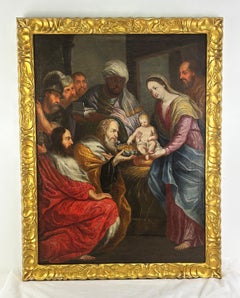
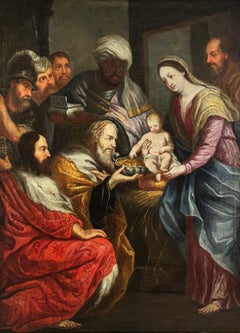
17th Century Flemish School Adoration of the Magi Oil on Canvas

17th Century Flemish School Adoration of the Magi Oil on Canvas

Located in Sant Celoni, ES

"17th Century Flemish School Old Master Adoration of the Magi." Oil on canvas. Previously relined. Unsigned. Artwork: 81 × 61 cm (31.9 × 24 in.). 88 × 69 cm (34.6 × 27.2 in.). (Fra...

Category

17th Century Old Masters George Romney Art
Materials

Oil, Canvas

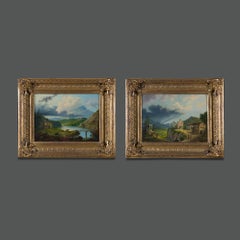
Pair of 19th-Century Italian Alpine Oil Paintings Attributed to Giovan Battista

Pair of 19th-Century Italian Alpine Oil Paintings Attributed to Giovan Battista

Located in Roma, IT

Pair of Northern Italian landscape paintings from the second half of the 19th century, attributed to the Milanese painter Giovan Battista Lelli (1827–1887). The two compositions depi...

Category

Mid-19th Century Old Masters George Romney Art
Materials

Canvas, Oil

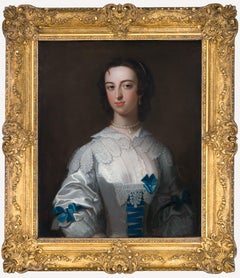
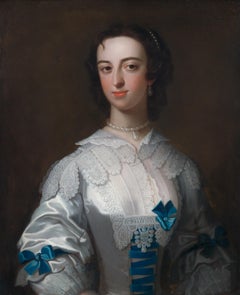
Portrait of a Lady in a White Silk Dress with Blue Ribbon Bows c.1745–1755

Portrait of a Lady in a White Silk Dress with Blue Ribbon Bows c.1745–1755

By Henry Pickering

Located in London, GB

In this captivating mid 18th century portrait, presented by Titan Fine Art, a young English lady is presented in a luminous white satin gown trimmed with intricate lace and blue ribb...

Category

17th Century Old Masters George Romney Art
Materials

Canvas, Oil

Previously Available Items
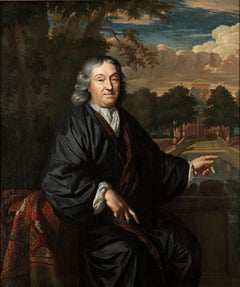
18th Century, English Portrait

18th Century, English Portrait

By George Romney

Located in Los Angeles, CA

Large, softly painted, oil-on-canvas portrait of a British nobleman from the circle of important English artist, George Romney (1734-1802). The piece ...

Category

Late 18th Century George Romney Art
Materials

Canvas, Oil

George Romney art for sale on 1stDibs.

Find a wide variety of authentic George Romney art available for sale on 1stDibs. You can also browse by medium to find art by George Romney in oil paint, paint, canvas and more. Much of the original work by this artist or collective was created during the 18th century and is mostly associated with the Old Masters style. Not every interior allows for large George Romney art, so small editions measuring 5 inches across are available. Customers who are interested in this artist might also find the work of George Morland, Sir Godfrey Kneller, and Studio of Sir Peter Lely. George Romney art prices can differ depending upon medium, time period and other attributes. On 1stDibs, the price for these items starts at $150 and tops out at $1,495,000, while the average work can sell for $12,178.

Artists Similar to George Romney

Questions About George Romney Art
  • 1stDibs ExpertApril 5, 2022
    George Romney studied under Christopher Steel from 1755-1757. Romney then went on to become one of the most fashionable portrait artists of his day. You can shop a selection of George Romney’s pieces from some of the world’s top art dealers on 1stDibs.