Clive Barker Prints and Multiples

to
6
Overall Width
to
Overall Height
to
6
6
6
6
5
3
2
2
1
1
1
1
1
1
1
1
6

Use search to find more

9
1,661
1,142
936
731

Use search to find more

Artist: Clive Barker
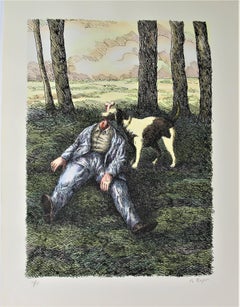
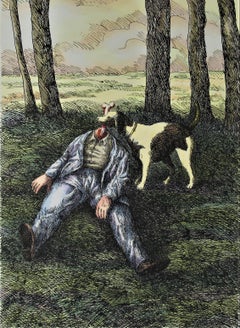
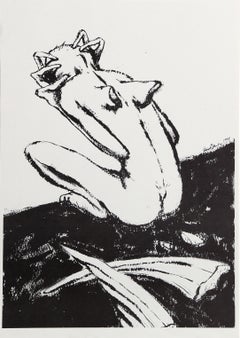
Fecundity from The Illusions Suite, Signed Surrealist Lithograph by Clive Barker

Fecundity from The Illusions Suite, Signed Surrealist Lithograph by Clive Barker

By Clive Barker

Located in Long Island City, NY

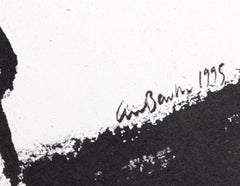
Fecundity from The Illusions Suite by Clive Barker, (1952 - ) Portfolio Name: The Illusions Suite Date: 1995 Medium: Lithograph, signed in the plate Edition: 14/500 Image Size: 19 x ...

Category

1990s Surrealist Clive Barker Prints and Multiples

Materials

Lithograph

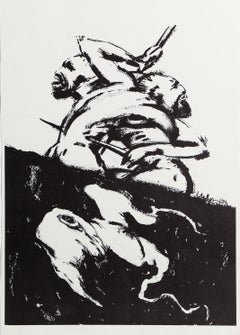
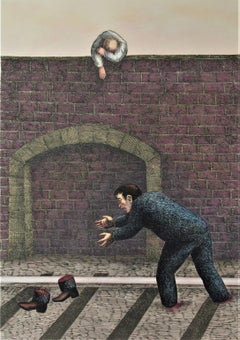
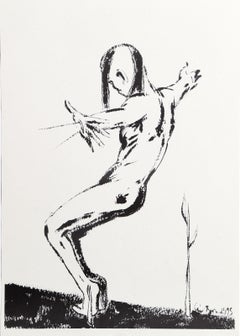
Above All Things from The Illusions Suite, Signed Lithograph by Clive Barker

Above All Things from The Illusions Suite, Signed Lithograph by Clive Barker

By Clive Barker

Located in Long Island City, NY

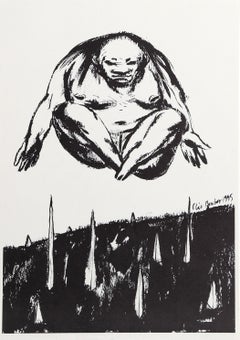
Above All Things from The Illusions Suite by Clive Barker, (1952 - ) Portfolio Name: The Illusions Suite Date: 1995 Medium: Lithograph, signed in the plate Edition: 14/500 Image Size...

Category

1990s Surrealist Clive Barker Prints and Multiples

Materials

Lithograph

Inside Out from The Illusions Suite, Signed Lithograph by Clive Barker

Inside Out from The Illusions Suite, Signed Lithograph by Clive Barker

By Clive Barker

Located in Long Island City, NY

Inside Out from The Illusions Suite by Clive Barker, (1952 - ) Portfolio Name: The Illusions Suite Date: 1995 Medium: Lithograph, signed in the plate Edition: 14/500 Image Size: 19 x...

Category

1990s Surrealist Clive Barker Prints and Multiples

Materials

Lithograph

Killing For The Root from The Illusions Suite, Signed Lithograph by Clive Barker

Killing For The Root from The Illusions Suite, Signed Lithograph by Clive Barker

By Clive Barker

Located in Long Island City, NY

Killing For The Root from The Illusions Suite by Clive Barker, (1952 - ) Portfolio Name: The Illusions Suite Date: 1995 Medium: Lithograph, signed in the plate Edition: 14/500 Image ...

Category

1990s Surrealist Clive Barker Prints and Multiples

Materials

Lithograph

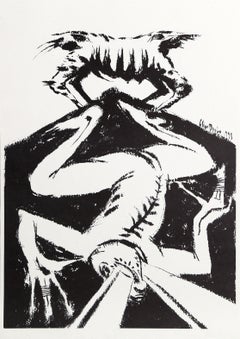
The Summit from The Illusions Suite, Signed Lithograph by Clive Barker

The Summit from The Illusions Suite, Signed Lithograph by Clive Barker

By Clive Barker

Located in Long Island City, NY

The Summit from The Illusions Suite by Clive Barker, (1952 - ) Portfolio Name: The Illusions Suite Date: 1995 Medium: Lithograph, signed in the plate Edition: 14/500 Image Size: 19 x...

Category

1990s Surrealist Clive Barker Prints and Multiples

Materials

Lithograph

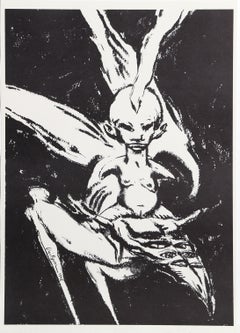
The Infanta from The Illusions Suite, Signed Lithograph by Clive Barker

The Infanta from The Illusions Suite, Signed Lithograph by Clive Barker

By Clive Barker

Located in Long Island City, NY

The Infanta from The Illusions Suite by Clive Barker, (1952 - ) Portfolio Name: The Illusions Suite Date: 1995 Medium: Lithograph, signed in the plate Edition: 14/500 Image Size: 19 ...

Category

1990s Surrealist Clive Barker Prints and Multiples

Materials

Lithograph

Related Items
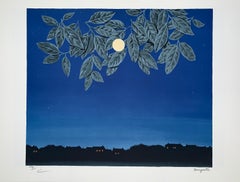
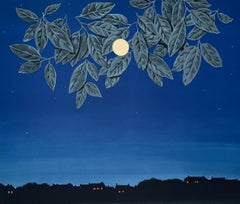
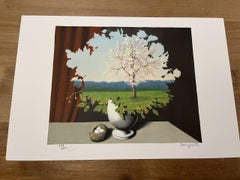
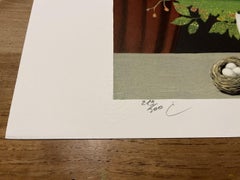
La Page Blanche - 20th Century, Surrealist, Lithograph, Figurative Print

La Page Blanche - 20th Century, Surrealist, Lithograph, Figurative Print

By (after) René Magritte

Located in Sint-Truiden, BE

Numbered: 138/275 Color lithograph after the 1967 oil on canvas by René Magritte, printed signature of Magritte and numbered from the edition of 275. The lithograph features the dry...

Category

20th Century Surrealist Clive Barker Prints and Multiples

Materials

Lithograph

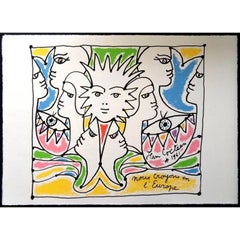
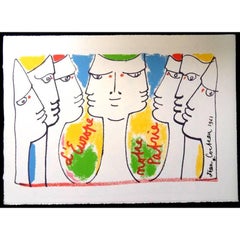
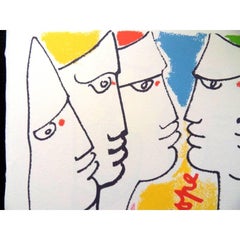
Jean Cocteau (after) - Europe's Colors - Lithograph

Jean Cocteau (after) - Europe's Colors - Lithograph

By Jean Cocteau

Located in Collonge Bellerive, Geneve, CH

Lithograph after a drawing by Jean Cocteau Title: Profil Signed in the plate Dimensions: 33 x 46 cm Edition: 600 Luxury print edition from the portfolio of Sciaky 1961

Category

1960s Surrealist Clive Barker Prints and Multiples

Materials

Lithograph

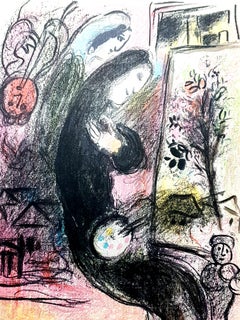
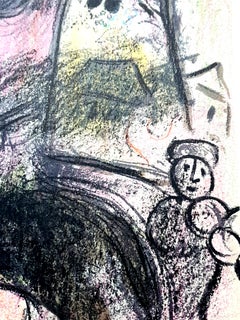
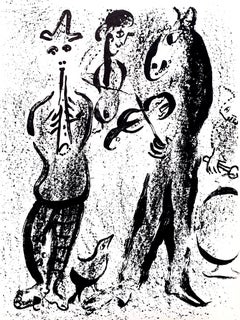
Marc Chagall - Inspiration - Original Lithograph from "Chagall Lithographe" v. 2

Marc Chagall - Inspiration - Original Lithograph from "Chagall Lithographe" v. 2

By Marc Chagall

Located in Collonge Bellerive, Geneve, CH

Marc Chagall Original Lithograph from Chagall Lithographe 1957-1962. VOLUME II. 1963 Dimensions: 32 x 24 cm From the unsigned edition of 10000 copies without margins Reference: Mourlot 398 Condition : Excellent Marc Chagall (born in 1887) Marc Chagall was born in Belarus in 1887 and developed an early interest in art. After studying painting, in 1907 he left Russia for Paris, where he lived in an artist colony on the city’s outskirts. Fusing his own personal, dreamlike imagery with hints of the fauvism and cubism popular in France at the time, Chagall created his most lasting work—including I and the Village (1911)—some of which would be featured in the Salon des Indépendants exhibitions. After returning to Vitebsk for a visit in 1914, the outbreak of WWI trapped Chagall in Russia. He returned to France in 1923 but was forced to flee the country and Nazi persecution during WWII. Finding asylum in the U.S., Chagall became involved in set and costume design before returning to France in 1948. In his later years, he experimented with new art forms and was commissioned to produce numerous large-scale works. Chagall died in St.-Paul-de-Vence in 1985. The Village Marc Chagall was born in a small Hassidic community on the outskirts of Vitebsk, Belarus, on July 7, 1887. His father was a fishmonger, and his mother ran a small sundries shop in the village. As a child, Chagall attended the Jewish elementary school, where he studied Hebrew and the Bible, before later attending the Russian public school. He began to learn the fundamentals of drawing during this time, but perhaps more importantly, he absorbed the world around him, storing away the imagery and themes that would feature largely in most of his later work. At age 19 Chagall enrolled at a private, all-Jewish art school and began his formal education in painting, studying briefly with portrait artist Yehuda Pen. However, he left the school after several months, moving to St. Petersburg in 1907 to study at the Imperial Society for the Protection of Fine Arts. The following year, he enrolled at the Svanseva School, studying with set designer Léon Bakst, whose work had been featured in Sergei Diaghilev's Ballets Russes. This early experience would prove important to Chagall’s later career as well. Despite this formal instruction, and the widespread popularity of realism in Russia at the time, Chagall was already establishing his own personal style, which featured a more dreamlike unreality and the people, places and imagery that were close to his heart. Some examples from this period are his Window Vitebsk (1908) and My Fianceé with Black Gloves (1909), which pictured Bella Rosenfeld, to whom he had recently become engaged. The Beehive Despite his romance with Bella, in 1911 an allowance from Russian parliament member and art patron Maxim Binaver enabled Chagall to move to Paris, France. After settling briefly in the Montparnasse neighborhood, Chagall moved further afield to an artist colony known as La Ruche (“The Beehive”), where he began to work side by side with abstract painters such as Amedeo Modigliani and Fernand Léger as well as the avant-garde poet Guillaume Apollinaire. At their urging, and under the influence of the wildly popular fauvism and cubism, Chagall lightened his palette and pushed his style ever further from reality. I and the Village (1911) and Homage to Apollinaire (1912) are among his early Parisian works, widely considered to be his most successful and representative period. Though his work stood stylistically apart from his cubist contemporaries, from 1912 to 1914 Chagall exhibited several paintings at the annual Salon des Indépendants exhibition, where works by the likes of Juan Gris, Marcel Duchamp and Robert Delaunay were causing a stir in the Paris art world. Chagall’s popularity began to spread beyond La Ruche, and in May 1914 he traveled to Berlin to help organize his first solo exhibition, at Der Sturm Gallery. Chagall remained in the city until the highly acclaimed show opened that June. He then returned to Vitebsk, unaware of the fateful events to come. War, Peace and Revolution In August 1914 the outbreak of World War I precluded Chagall’s plans to return to Paris. The conflict did little to stem the flow of his creative output, however, instead merely giving him direct access to the childhood scenes so essential to his work, as seen in paintings such as Jew in Green (1914) and Over Vitebsk (1914). His paintings from this period also occasionally featured images of the war’s impact on the region, as with Wounded Soldier (1914) and Marching (1915). But despite the hardships of life during wartime, this would also prove to be a joyful period for Chagall. In July 1915 he married Bella, and she gave birth to a daughter, Ida, the following year. Their appearance in works such as Birthday (1915), Bella and Ida by the Window (1917) and several of his “Lovers” paintings give a glimpse of the island of domestic bliss that was Chagall’s amidst the chaos. To avoid military service and stay with his new family, Chagall took a position as a clerk in the Ministry of War Economy in St. Petersburg. While there he began work on his autobiography and also immersed himself in the local art scene, befriending novelist Boris Pasternak, among others. He also exhibited his work in the city and soon gained considerable recognition. That notoriety would prove important in the aftermath of the 1917 Russian Revolution when he was appointed as the Commissar of Fine Arts in Vitebsk. In his new post, Chagall undertook various projects in the region, including the 1919 founding of the Academy of the Arts. Despite these endeavors, differences among his colleagues eventually disillusioned Chagall. In 1920 he relinquished his position and moved his family to Moscow, the post-revolution capital of Russia. In Moscow, Chagall was soon commissioned to create sets and costumes for various productions at the Moscow State Yiddish Theater...

Category

1960s Surrealist Clive Barker Prints and Multiples

Materials

Lithograph

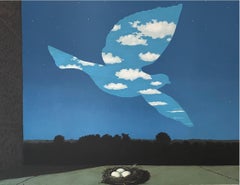
Le Retour - 20th Century, Surrealist, Lithograph, Figurative Print

Le Retour - 20th Century, Surrealist, Lithograph, Figurative Print

By (after) René Magritte

Located in Sint-Truiden, BE

Color lithograph after the 1940 oil on canvas by René Magritte, printed signature of Magritte and numbered from the edition of 300. The lithograph features the dry stamps of the Mag...

Category

20th Century Surrealist Clive Barker Prints and Multiples

Materials

Lithograph

Souvenir de Voyage - 20th Century, Surrealist, Lithograph, Figurative Print

Souvenir de Voyage - 20th Century, Surrealist, Lithograph, Figurative Print

By (after) René Magritte

Located in Sint-Truiden, BE

Color lithograph after the 1961 gouache on paper by René Magritte, printed signature of Magritte and numbered from the edition of 275. The lithograph features the dry stamps of the ...

Category

20th Century Surrealist Clive Barker Prints and Multiples

Materials

Lithograph

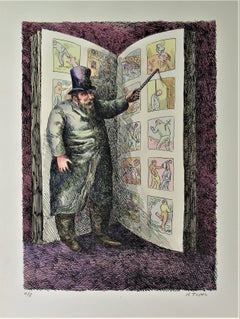
Nouvelles En Trois Lignes I

Roland ToporNouvelles En Trois Lignes I, 1975

$600

H 25.5 in W 19.5 in D 0.91 in

Nouvelles En Trois Lignes I

By Roland Topor

Located in San Francisco, CA

Artist: Roland Topor (French, 1938-1997) Title: Nouvelles En Trois Lignes I Year: 1975 Medium: Lithograph with pochoir hand coloring Edition: Inscribed A.P (Artist Proof) Paper: Wove Image size: 21 x 15 inches paper size: 25.5 x 19.5 inches Signature: Hand signed in pencil by the artist Publisher: Editions Sauret, Paris, Monaco Condition: Excellent Description: From the suite"Nouvelles En Trois Lignes" About the artist. Roland Topor (January 7, 1938 – April 16, 1997), was a French illustrator, painter, writer, filmmaker and actor, known for the surreal nature of his work. He attended the School of Fine Arts in Paris (1955-1964). He publishes his first drawings in the review « Bizarre », his first short stories appear in the review « Fiction » in 1958. His corrosive humor leads him to collaborate with the satirical newspaper « Hari-Kiri » (1961-1965). « Masochists » his first book is edited by Losfeld in 1961. Totally tragic, absurd and grotesque , the humor he disseminates evokes more the one of Central Europe. All his creations from the beginning till the end remain provocative and bizarre. He is mainly known as an illustrator and graphic artist and famous for combining surrealism with black humor. Abram Topor, father of the artist came to settle in Paris in 1930 thanks to a grant from the Warsow Arts Academy. In his young age during the war, he and his family will stay for a while in Savoie trying to escape Nazis. In 1962 he created the Panic Movement (mouvement panique), together with Alejandro Jodorowsky and Fernando Arrabal. Topor wrote the novel "The Tenant" (1964), which was filmed by Roman Polanski as The Tenant Topor was responsible for the odd visual style of the Czech/French animated sci-fi feature La Planete Sauvage (Fantastic Planet...

Category

Late 20th Century Surrealist Clive Barker Prints and Multiples

Materials

Lithograph

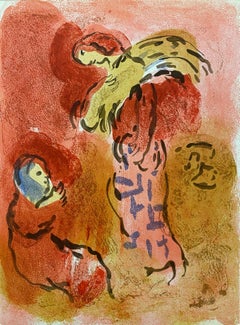
Ruth glaneuse

Marc ChagallRuth glaneuse, 1960

$669

H 13.78 in W 10.24 in

Ruth glaneuse

By Marc Chagall

Located in Paris, FR

Original lithograph by Marc Chagall from The Bible of 1960 Ruth glaneuse Unsigned 35 x 26 cm Excellent condition

Category

1960s Surrealist Clive Barker Prints and Multiples

Materials

Lithograph

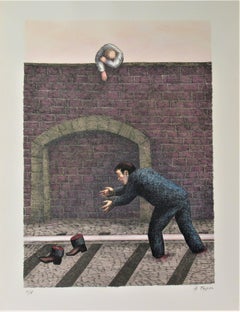
Nouvelles En Trois Lignes IV

Roland ToporNouvelles En Trois Lignes IV, 1975

$600

H 25.5 in W 19.5 in D 0.91 in

Nouvelles En Trois Lignes IV

By Roland Topor

Located in San Francisco, CA

Artist: Roland Topor (French, 1938-1997) Title: Nouvelles En Trois Lignes IV Year: 1975 Medium: Lithograph with pochoir hand coloring Edition: Inscribed A.P (Artist Proof) Paper: Wove Image size: 21 x 15 inches paper size: 25.5 x 19.5 inches Signature: Hand signed in pencil by the artist Publisher: Editions Sauret, Paris, Monaco Condition: Excellent Description: From the suite"Nouvelles En Trois Lignes" About the artist. Roland Topor (January 7, 1938 – April 16, 1997), was a French illustrator, painter, writer, filmmaker and actor, known for the surreal nature of his work. He attended the School of Fine Arts in Paris (1955-1964). He publishes his first drawings in the review « Bizarre », his first short stories appear in the review « Fiction » in 1958. His corrosive humor leads him to collaborate with the satirical newspaper « Hari-Kiri » (1961-1965). « Masochists » his first book is edited by Losfeld in 1961. Totally tragic, absurd and grotesque , the humor he disseminates evokes more the one of Central Europe. All his creations from the beginning till the end remain provocative and bizarre. He is mainly known as an illustrator and graphic artist and famous for combining surrealism with black humor. Abram Topor, father of the artist came to settle in Paris in 1930 thanks to a grant from the Warsow Arts Academy. In his young age during the war, he and his family will stay for a while in Savoie trying to escape Nazis. In 1962 he created the Panic Movement (mouvement panique), together with Alejandro Jodorowsky and Fernando Arrabal. Topor wrote the novel "The Tenant" (1964), which was filmed by Roman Polanski as The Tenant Topor was responsible for the odd visual style of the Czech/French animated sci-fi feature La Planete Sauvage (Fantastic Planet...

Category

Late 20th Century Surrealist Clive Barker Prints and Multiples

Materials

Lithograph

Nouvelles En Trois Lignes III

Roland ToporNouvelles En Trois Lignes III, 1975

$600

H 25.5 in W 19.5 in D 0.91 in

Nouvelles En Trois Lignes III

By Roland Topor

Located in San Francisco, CA

Artist: Roland Topor (French, 1938-1997) Title: Nouvelles En Trois Lignes III Year: 1975 Medium: Lithograph with pochoir hand coloring Edition: Inscribed A.P (Artist Proof) Paper: Wove Image size: 21 x 15 inches paper size: 25.5 x 19.5 inches Signature: Hand signed in pencil by the artist Publisher: Editions Sauret, Paris, Monaco Condition: Excellent Description: From the suite"Nouvelles En Trois Lignes" About the artist. Roland Topor (January 7, 1938 – April 16, 1997), was a French illustrator, painter, writer, filmmaker and actor, known for the surreal nature of his work. He attended the School of Fine Arts in Paris (1955-1964). He publishes his first drawings in the review « Bizarre », his first short stories appear in the review « Fiction » in 1958. His corrosive humor leads him to collaborate with the satirical newspaper « Hari-Kiri » (1961-1965). « Masochists » his first book is edited by Losfeld in 1961. Totally tragic, absurd and grotesque , the humor he disseminates evokes more the one of Central Europe. All his creations from the beginning till the end remain provocative and bizarre. He is mainly known as an illustrator and graphic artist and famous for combining surrealism with black humor. Abram Topor, father of the artist came to settle in Paris in 1930 thanks to a grant from the Warsow Arts Academy. In his young age during the war, he and his family will stay for a while in Savoie trying to escape Nazis. In 1962 he created the Panic Movement (mouvement panique), together with Alejandro Jodorowsky and Fernando Arrabal. Topor wrote the novel "The Tenant" (1964), which was filmed by Roman Polanski as The Tenant Topor was responsible for the odd visual style of the Czech/French animated sci-fi feature La Planete Sauvage (Fantastic Planet...

Category

Late 20th Century Surrealist Clive Barker Prints and Multiples

Materials

Lithograph

Untitled 3
Untitled 3

Roger Chapelain MidyUntitled 3, Circa 1975

$525

H 20.5 in W 28.5 in D 0.01 in

Untitled 3

By Roger Chapelain Midy

Located in San Francisco, CA

Artist: Roger Chapelain Midy (French, 1904-1992) Title: Untitled 3 Year : Circa 1975 Medium: Color lithograph Edition: Unknown Paper: Silk paper Image size: 18 x 25.25 inche...

Category

Late 20th Century Surrealist Clive Barker Prints and Multiples

Materials

Lithograph

Original Paris le 14 Juillet Bastille Day vintage travel poster, linen-backed

Original Paris le 14 Juillet Bastille Day vintage travel poster, linen-backed

By Marcel Gromaire

Located in Spokane, WA

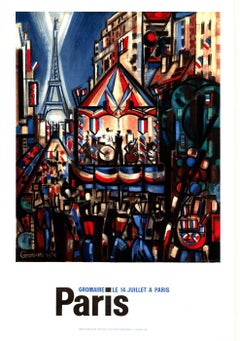
Original "Le 14 Juillet à Paris" Poster by Gromaire, Linen-Backed, 1956, Excellent Condition. First edition lithograph poster, an after of a 1956 painting by Marcel Gromaire, spons...

Category

1960s Surrealist Clive Barker Prints and Multiples

Materials

Lithograph

Marc Chagall - Original Lithograph

Marc ChagallMarc Chagall - Original Lithograph, 1963

$1,395

H 9.45 in W 12.6 in D 0.04 in

Marc Chagall - Original Lithograph

By Marc Chagall

Located in Collonge Bellerive, Geneve, CH

Marc Chagall Original Lithograph 1963 Dimensions: 32 x 24 cm Reference: Chagall Lithographe 1957-1962. VOLUME II. Unsigned edition of over 5,000 Condition : Excellent Marc Chagall (born in 1887) Marc Chagall was born in Belarus in 1887 and developed an early interest in art. After studying painting, in 1907 he left Russia for Paris, where he lived in an artist colony on the city’s outskirts. Fusing his own personal, dreamlike imagery with hints of the fauvism and cubism popular in France at the time, Chagall created his most lasting work—including I and the Village (1911)—some of which would be featured in the Salon des Indépendants exhibitions. After returning to Vitebsk for a visit in 1914, the outbreak of WWI trapped Chagall in Russia. He returned to France in 1923 but was forced to flee the country and Nazi persecution during WWII. Finding asylum in the U.S., Chagall became involved in set and costume design before returning to France in 1948. In his later years, he experimented with new art forms and was commissioned to produce numerous large-scale works. Chagall died in St.-Paul-de-Vence in 1985. The Village Marc Chagall was born in a small Hassidic community on the outskirts of Vitebsk, Belarus, on July 7, 1887. His father was a fishmonger, and his mother ran a small sundries shop in the village. As a child, Chagall attended the Jewish elementary school, where he studied Hebrew and the Bible, before later attending the Russian public school. He began to learn the fundamentals of drawing during this time, but perhaps more importantly, he absorbed the world around him, storing away the imagery and themes that would feature largely in most of his later work. At age 19 Chagall enrolled at a private, all-Jewish art school and began his formal education in painting, studying briefly with portrait artist Yehuda Pen. However, he left the school after several months, moving to St. Petersburg in 1907 to study at the Imperial Society for the Protection of Fine Arts. The following year, he enrolled at the Svanseva School, studying with set designer Léon Bakst, whose work had been featured in Sergei Diaghilev's Ballets Russes. This early experience would prove important to Chagall’s later career as well. Despite this formal instruction, and the widespread popularity of realism in Russia at the time, Chagall was already establishing his own personal style, which featured a more dreamlike unreality and the people, places and imagery that were close to his heart. Some examples from this period are his Window Vitebsk (1908) and My Fianceé with Black Gloves (1909), which pictured Bella Rosenfeld, to whom he had recently become engaged. The Beehive Despite his romance with Bella, in 1911 an allowance from Russian parliament member and art patron Maxim Binaver enabled Chagall to move to Paris, France. After settling briefly in the Montparnasse neighborhood, Chagall moved further afield to an artist colony known as La Ruche (“The Beehive”), where he began to work side by side with abstract painters such as Amedeo Modigliani and Fernand Léger as well as the avant-garde poet Guillaume Apollinaire. At their urging, and under the influence of the wildly popular fauvism and cubism, Chagall lightened his palette and pushed his style ever further from reality. I and the Village (1911) and Homage to Apollinaire (1912) are among his early Parisian works, widely considered to be his most successful and representative period. Though his work stood stylistically apart from his cubist contemporaries, from 1912 to 1914 Chagall exhibited several paintings at the annual Salon des Indépendants exhibition, where works by the likes of Juan Gris, Marcel Duchamp and Robert Delaunay were causing a stir in the Paris art world. Chagall’s popularity began to spread beyond La Ruche, and in May 1914 he traveled to Berlin to help organize his first solo exhibition, at Der Sturm Gallery. Chagall remained in the city until the highly acclaimed show opened that June. He then returned to Vitebsk, unaware of the fateful events to come. War, Peace and Revolution In August 1914 the outbreak of World War I precluded Chagall’s plans to return to Paris. The conflict did little to stem the flow of his creative output, however, instead merely giving him direct access to the childhood scenes so essential to his work, as seen in paintings such as Jew in Green (1914) and Over Vitebsk (1914). His paintings from this period also occasionally featured images of the war’s impact on the region, as with Wounded Soldier (1914) and Marching (1915). But despite the hardships of life during wartime, this would also prove to be a joyful period for Chagall. In July 1915 he married Bella, and she gave birth to a daughter, Ida, the following year. Their appearance in works such as Birthday (1915), Bella and Ida by the Window (1917) and several of his “Lovers” paintings give a glimpse of the island of domestic bliss that was Chagall’s amidst the chaos. To avoid military service and stay with his new family, Chagall took a position as a clerk in the Ministry of War Economy in St. Petersburg. While there he began work on his autobiography and also immersed himself in the local art scene, befriending novelist Boris Pasternak, among others. He also exhibited his work in the city and soon gained considerable recognition. That notoriety would prove important in the aftermath of the 1917 Russian Revolution when he was appointed as the Commissar of Fine Arts in Vitebsk. In his new post, Chagall undertook various projects in the region, including the 1919 founding of the Academy of the Arts. Despite these endeavors, differences among his colleagues eventually disillusioned Chagall. In 1920 he relinquished his position and moved his family to Moscow, the post-revolution capital of Russia. In Moscow, Chagall was soon commissioned to create sets and costumes for various productions at the Moscow State Yiddish...

Category

1960s Surrealist Clive Barker Prints and Multiples
Materials

Lithograph

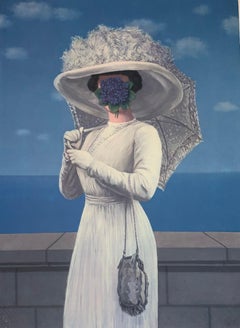
La Grande Guerre - 20th Century, Surrealist, Lithograph, Figurative Print

La Grande Guerre - 20th Century, Surrealist, Lithograph, Figurative Print

By René Magritte

Located in Sint-Truiden, BE

Color lithograph after the 1954 oil on canvas by René Magritte, plate-signed by Magritte and numbered from the edition of 300. The lithograph features the dry stamps of the Magritte...

Category

20th Century Surrealist Clive Barker Prints and Multiples
Materials

Lithograph

Le Plagiat - 20th Century, Surrealist, Lithograph, Figurative Print

Le Plagiat - 20th Century, Surrealist, Lithograph, Figurative Print

By (after) René Magritte

Located in Sint-Truiden, BE

Color lithograph after the 1940 oil on canvas by René Magritte, printed signature of Magritte and numbered from the edition of 300. The lithograph features the dry stamps of the Magritte Foundation & ADAGP and is countersigned in pencil by Mr. Charly Herscovici, President of the Magritte Foundation, Chairman of the Magritte Museum and unique representative of the Magritte Succession. A proof of edition is printed on the back of the lithograph, guaranteeing its authenticity. Magritte was a Belgian surrealist artist whose witty and thought-provoking images challenged observers? preconditioned perceptions of reality. Magritte's work frequently displays a juxtaposition of ordinary objects in an unusual context, giving new meanings to familiar things.Magritte grew up in a simple and somewhat tragic household. His father was a modest tailor. His mother, who was mentally unsound, committed suicide in the year 1912. Magritte started drawing at a young age, and his first paintings, produced c. 1915, were Impressionistic in style.Magritte first worked as a draughtsman in a wallpaper factory and, in the year 1922, fell in love with and married Georgette Berger. In 1926, Magritte signed...

Category

20th Century Surrealist Clive Barker Prints and Multiples
Materials

Lithograph

Jean Cocteau - Europe's Construction - Original Lithograph

Jean Cocteau - Europe's Construction - Original Lithograph

By Jean Cocteau

Located in Collonge Bellerive, Geneve, CH

Original Lithograph by Jean Cocteau Title: Europe's Construction Printed signature in the stone Dimensions: 33 x 46 cm Edition: 200 Luxury print edition from the portfolio of Sciaky ...

Category

1960s Surrealist Clive Barker Prints and Multiples
Materials

Lithograph

Previously Available Items
Fallen Demon from The Illusions Suite, Signed Lithograph by Clive Barker

Fallen Demon from The Illusions Suite, Signed Lithograph by Clive Barker

By Clive Barker

Located in Long Island City, NY

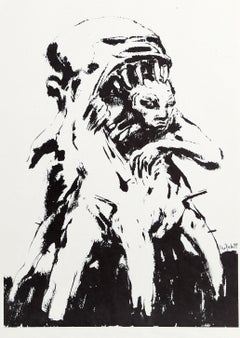
Fallen Demon from The Illusions Suite by Clive Barker, (1952 - ) Portfolio Name: The Illusions Suite Date: 1995 Medium: Lithograph, signed in the plate Edition: 14/500 Image Size: 19...

Category

1990s Surrealist Clive Barker Prints and Multiples
Materials

Lithograph

Clive Barker prints and multiples for sale on 1stDibs.
Find a wide variety of authentic Clive Barker prints and multiples available for sale on 1stDibs.