Vintage Drip Coffee Maker

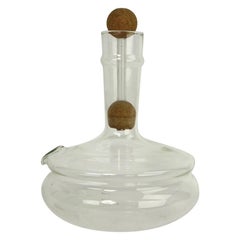
Dr. Peter Schlumbohm for Chemex Glass Water Kettle with Cork Balls Stopper

Dr. Peter Schlumbohm for Chemex Glass Water Kettle with Cork Balls Stopper

By Chemex, Peter Schlumbohm

Located in Chicago, IL

It's the perfect companion piece to the Chemex drip coffee maker. The glass-stemmed stopper has a cork ball on each end.

Category

1950s American Industrial Vintage Drip Coffee Maker

Materials

Cork, Glass

Recent Sales

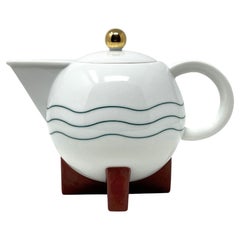
Little Dripper Ceramic Coffee Pot by Michael Graves for Swid Powell

Little Dripper Ceramic Coffee Pot by Michael Graves for Swid Powell

By Swid Powell, Michael Graves (b.1934)

Located in Brooklyn, NY

Perhaps Michael Graves' (1934-2015) most well-known design for Swid Powell, The Little Dripper (1986) is a 10 cup coffee pot born from Graves' preference for drip coffee and a lack o...

Category

Late 20th Century Post-Modern Vintage Drip Coffee Maker

Materials

Ceramic

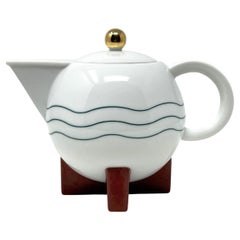
Little Dripper Ceramic Coffee Pot by Michael Graves for Swid Powell

Little Dripper Ceramic Coffee Pot by Michael Graves for Swid Powell

By Michael Graves (b.1934), Swid Powell

Located in Brooklyn, NY

Perhaps Michael Graves' (1934-2015) most well-known design for Swid Powell, The Little Dripper (1986) is a 10 cup coffee pot born from Graves' preference for drip coffee and a lack o...

Category

Late 20th Century Post-Modern Vintage Drip Coffee Maker

Materials

Ceramic

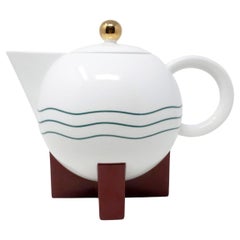
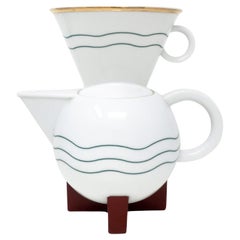
Big Dripper Ceramic Coffee Pot by Michael Graves for Swid Powell

Big Dripper Ceramic Coffee Pot by Michael Graves for Swid Powell

By Michael Graves (b.1934), Swid Powell

Located in Brooklyn, NY

Perhaps Michael Graves' (1934-2015) most well-known design for Swid Powell, The Big Dripper (1986) is a 14 cup coffee pot born from Graves' preference for drip coffee and a lack of a...

Category

Late 20th Century Post-Modern Vintage Drip Coffee Maker

Materials

Ceramic

Big Dripper Ceramic Coffee Pot by Michael Graves for Swid Powell

Big Dripper Ceramic Coffee Pot by Michael Graves for Swid Powell

By Michael Graves (b.1934), Swid Powell

Located in Brooklyn, NY

Perhaps Michael Graves’ (1934-2015) most well-known design for Swid Powell, The Big Dripper (1986) is a 14 cup coffee pot born from Graves’ preference for drip coffee and a lack of a...

Category

Late 20th Century Post-Modern Vintage Drip Coffee Maker

Materials

Ceramic

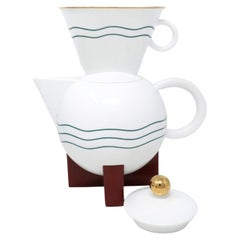
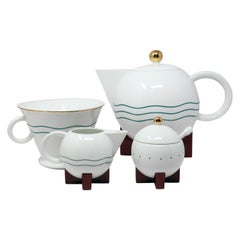
Big Dripper Ceramic Coffee Set by Michael Graves for Swid Powell

Big Dripper Ceramic Coffee Set by Michael Graves for Swid Powell

By Michael Graves (b.1934), Swid Powell

Located in Brooklyn, NY

Perhaps Michael Graves' (1934-2015) most well-known design for Swid Powell, The Big Dripper (1986) is a 14 cup coffee pot born from Graves' preference for drip coffee and a lack of a...

Category

Late 20th Century Post-Modern Vintage Drip Coffee Maker

Materials

Ceramic

Little Dripper Ceramic Coffee Pot by Michael Graves for Swid Powell

Little Dripper Ceramic Coffee Pot by Michael Graves for Swid Powell

By Michael Graves (b.1934), Swid Powell

Located in Brooklyn, NY

Perhaps Michael Graves’ (1934-2015) most well-known design for Swid Powell, The Little Dripper (1986) is a 10 cup coffee pot born from Graves’ preference for drip coffee and a lack o...

Category

Late 20th Century Post-Modern Vintage Drip Coffee Maker

Materials

Ceramic

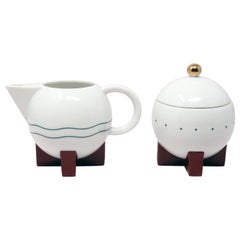
Dripper Ceramic Creamer and Sugar Pot by Michael Graves for Swid Powell

Dripper Ceramic Creamer and Sugar Pot by Michael Graves for Swid Powell

By Michael Graves (b.1934), Swid Powell

Located in Brooklyn, NY

Perhaps Michael Graves' (1934-2015) most well-known design for Swid Powell, the Dripper series (1986) produced two sizes of a coffee pot born from Graves' preference for drip coffee ...

Category

Late 20th Century Unknown Post-Modern Vintage Drip Coffee Maker

Materials

Ceramic

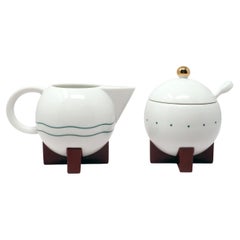
Dripper Ceramic Creamer and Sugar Pot by Michael Graves for Swid Powell

Dripper Ceramic Creamer and Sugar Pot by Michael Graves for Swid Powell

By Swid Powell, Michael Graves (b.1934)

Located in Brooklyn, NY

Perhaps Michael Graves' (1934-2015) most well-known design for Swid Powell, the Dripper series (1986) produced two sizes of a coffee pot born from Graves' preference for drip coffee ...

Category

Late 20th Century Post-Modern Vintage Drip Coffee Maker

Materials

Ceramic

You May Also Like

Tulip Glass Decanter by Aldo Cibic

Tulip Glass Decanter by Aldo Cibic

$158 / item

H 10.04 in Dm 7.09 in

Tulip Glass Decanter by Aldo Cibic

By Aldo Cibic

Located in Milan, IT

Decanter made in blown in a mold glass. The Tulip collection is a glassware family by Aldo Cibic, who designed these pieces walking the line between classical and Postmodern design. ...

Category

Early 2000s Italian Modern Vintage Drip Coffee Maker

Materials

Glass

Glass Decanter, Completely Handcrafted in Chicago

Glass Decanter, Completely Handcrafted in Chicago

By Christopher Gentner

Located in Chicago, IL

A place to ready the tastes and hidden intoxication offerings of your libation to the evening.      

Category

2010s American Modern Vintage Drip Coffee Maker

Materials

Stainless Steel

Wine carafe of hand-blown borosilicate glass from the SoShiro Pok collection

Wine carafe of hand-blown borosilicate glass from the SoShiro Pok collection

By SoShiro

Located in London, GB

The wine decanter is an organically shaped hand-blown borosilicate glass carafe. The Pok collection celebrates the artistry of hand-crafted beadwork made by the Pokot women in Nort...

Category

2010s Kenyan International Style Vintage Drip Coffee Maker

Materials

Blown Glass

Orrefors Crystal Drinks Decanters by Nils Landberg 'Individually Priced'

Orrefors Crystal Drinks Decanters by Nils Landberg 'Individually Priced'

By Nils Landberg, Orrefors

Located in Austin, TX

A fine pair of large crystal drinks decanters or ship's decanters for wine, whiskey, and spirits, designed by Nils Landberg for Orrefors, Sweden, who worked for the firm from 1927-19...

Category

20th Century Swedish Mid-Century Modern Vintage Drip Coffee Maker

Materials

Crystal

Lotty Mouth Blown Glass Decanter/Vase Designed by Aldo Cibic

Lotty Mouth Blown Glass Decanter/Vase Designed by Aldo Cibic

By Aldo Cibic

Located in Milan, IT

Lotty is a mouth blown borosilicate glass decanter characterized by sinuous and soft shape, a little masterpiece where the Paola C.’s craftsmen ability meets the design by Aldo Cibic...

Category

Early 2000s Italian Modern Vintage Drip Coffee Maker

Materials

Blown Glass

Mid-Century Transparent Glass Decanter with Stopper, Europe, 1960s

Mid-Century Transparent Glass Decanter with Stopper, Europe, 1960s

Located in 05-080 Hornowek, PL

A stunning crystal transparent decanter with geometric design, made by one of the many glass manufacturers based in the region of Empoli, Italy. Would make a great addition to any co...

Category

Mid-20th Century Italian Mid-Century Modern Vintage Drip Coffee Maker

Materials

Glass

Danish Modern Teak Capped Carafe by Jens Quistgaard for Dansk

Danish Modern Teak Capped Carafe by Jens Quistgaard for Dansk

By Dansk, Jens Quistgaard

Located in San Diego, CA

Danish modern teak capped carafe by Jens Quistgaard for Dansk, circa 1970s.

Category

Mid-20th Century Thai Scandinavian Modern Vintage Drip Coffee Maker

Materials

Teak

Mid-Century Modernist Sculptural Crystal Decanter with Basin Form Stopper

Mid-Century Modernist Sculptural Crystal Decanter with Basin Form Stopper

Located in New York, NY

This Mid-Century Modernist sculptural crystal decanter, created circa 1960, showcases the clean lines and elegant minimalism that defined the era’s design sensibilities. Made of clea...

Category

1960s American Mid-Century Modern Vintage Drip Coffee Maker

Materials

Crystal

Clear Glass Decanter and Stopper with Polished Bottom

Clear Glass Decanter and Stopper with Polished Bottom

$360Sale Price|20% Off

H 8.75 in Dm 7 in

Clear Glass Decanter and Stopper with Polished Bottom

Located in Ferndale, MI

Elegant clear glass decanter with original stopper. 6.5" tall add 2.25" for stopper.

Category

Mid-20th Century American Mid-Century Modern Vintage Drip Coffee Maker

Materials

Glass

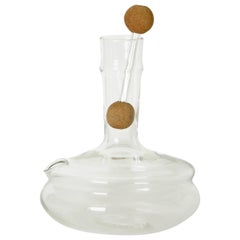
Glass Decanter with Cork Barbell Stopper Possibly Pyrex or Schott

Glass Decanter with Cork Barbell Stopper Possibly Pyrex or Schott

By Heinrich Loffelhardt, Pyrex

Located in New York, NY

Stylish crystal decanter with cork barbell stopper. The decanter has an open top for filling the bottle, and a side mouth spout for pouring, the barbell form stopper has a glass tube...

Category

Mid-20th Century American Mid-Century Modern Vintage Drip Coffee Maker

Materials

Glass, Cork

Mid-Century Modernist Villeroy & Boch Crystal Decanter w/ Spherical Stopper

Mid-Century Modernist Villeroy & Boch Crystal Decanter w/ Spherical Stopper

By Villeroy & Boch

Located in New York, NY

This Mid-Century Modern crystal decanter, crafted by Villeroy & Boch, exemplifies the sleek and refined design aesthetic of the 1960s. Featuring a minimalist form paired with a strik...

Category

1960s German Mid-Century Modern Vintage Drip Coffee Maker

Materials

Crystal

Handblown Krosno Glass Decanter with Stopper, Mid-20th Century

Handblown Krosno Glass Decanter with Stopper, Mid-20th Century

By Krosno, Rosenthal

Located in San Diego, CA

Elegant handblown glass decanter featuring a sculptural, tapered silhouette and substantial weighted base. The clear glass body is beautifully proportioned, showcasing exceptional cl...

Category

1970s Vintage Drip Coffee Maker

Materials

Crystal

Mid-Century Clear Glass Decanter Signed Eugene Von Boch for Villeroy & Boch

Mid-Century Clear Glass Decanter Signed Eugene Von Boch for Villeroy & Boch

Located in New York, NY

This elegant and minimal decanter in transparent glass originates from Germany during the 20th Century signed Eugene Von Boch for Villeroy and Boch. The body of the piece is well bal...

Category

Late 20th Century German Mid-Century Modern Vintage Drip Coffee Maker

Materials

Glass

Mid-Century Modern Glass Jug from Spain, 1930, 20cm Height

Mid-Century Modern Glass Jug from Spain, 1930, 20cm Height

$508Sale Price|20% Off

H 7.88 in W 6.3 in D 3.55 in

Mid-Century Modern Glass Jug from Spain, 1930, 20cm Height

Located in Barcelona, ES

Glass jug, circa 1930 Manufactured in Spain. In original condition, with minor wear consistent of age and use, preserving a beautiful patina. Material: Glass Dimensions: D 9 cm ...

Category

1930s French Mid-Century Modern Vintage Drip Coffee Maker

Materials

Glass

Small Glass Carafe for Liquere from 1930s, in Cabana Style

Small Glass Carafe for Liquere from 1930s, in Cabana Style

Located in Vienna, Austria

The glass of the corpus is satined, with hand painted dots in gold and golden stripes on the neck and the bottom.  You can use it for liquor or as a creative alternative for oils an...

Category

1930s Slovak Modern Vintage Drip Coffee Maker

Materials

Glass

Carl Aubock Rare Barware Decanter

Carl Aubock Rare Barware Decanter

$3,600Sale Price|20% Off

H 7 in Dm 8.5 in

Carl Aubock Rare Barware Decanter

By Werkstätte Carl Auböck

Located in Chicago, IL

Carl Auböck Rare Barewear Decanter, cork top, mahogany wood with leather embossed clock face image. Werkstätte Carl Auböck Austria, c. 1950 glass, embossed leather with gilding, cork...

Category

1950s Austrian Mid-Century Modern Vintage Drip Coffee Maker

Materials

Glass, Mahogany, Cork

People Also Browsed

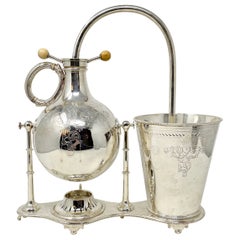
Antique English Silver-Plated Siphon Coffee Maker, Circa 1870.

Antique English Silver-Plated Siphon Coffee Maker, Circa 1870.

Located in New Orleans, LA

Antique English Silver-Plated Siphon Coffee Maker, Circa 1870.

Category

Late 19th Century English Vintage Drip Coffee Maker

Materials

Silver Plate

1950s Vintage Mel Bogart Daybed for Felmore Sofa Daybed

1950s Vintage Mel Bogart Daybed for Felmore Sofa Daybed

By Mel Bogart

Located in Monrovia, CA

FELMORE low slung sofa daybed 1950s Designed by Mel Bogart. Vintage 1950s Daybed Designed by Mel Bogart for FELMORE Daybed. Classic Mel Bogart Design. Sleek Clean Lines. Origi...

Category

Mid-20th Century Mid-Century Modern Vintage Drip Coffee Maker

Materials

Metal

Get Updated with New Arrivals
Save "Vintage Drip Coffee Maker", and we’ll notify you when there are new listings in this category.

Swid Powell for sale on 1stDibs

The New York City–based tableware company Swid Powell produced some of the most distinctive china and silver of the 1980s in collaboration with international architects and designers. It enjoyed renewed attention in 2007, when the Yale University Art Gallery mounted the exhibition “The Architect’s Table: Swid Powell and Postmodern Design,” celebrating the donation to its collection of the company’s papers.

Swid Powell was established in 1982 by Nan Swid and Addie Powell, who met while working at the modernist furniture company Knoll. Their idea was to translate the aesthetics of postmodern design from the skyscraper to the dining table, and they brought into their preliminary discussions nine prominent architects. Among these were Philip Johnson, Stanley Tigerman and Richard Meier, all of whom expressed enthusiasm about making their designs accessible beyond the small group with the funds to commission buildings from them.

The first Swid Powell collection was launched in 1984, accompanied by a bold, graphic print campaign in keeping with the era’s advertising trends. The company’s best-known collaboration was with Robert Venturi’s Philadelphia-based firm, Venturi, Scott Brown and Associates, whose patterns — particularly the floral design Grandmother inspired by a tablecloth Venturi saw at the home of a colleague's grandmother — adorned Swid Powell porcelain as well as furniture and clothing.

The firm also partnered with architect Richard Meier, whose geometric designs were inspired in part by those of Josef Hoffmann and Charles Rennie Mackintosh. Swid Powell also worked with Arata Isosaki, Ettore Sottsass, Zaha Hadid and George Sowden, creating products that incorporated the bright, saturated colors and popular and historical references, like Classical columns, that animated postmodern design in the 1980s. The Chicago Blue china pattern designed for Swid Powell by the firm Gwathmey Siegel references the distinctive patterns of Frank Lloyd Wright’s leaded glass windows. As you will see in the examples below, Swid Powell continued to produce fine, fashionable homewares throughout the decade and beyond.

A Close Look at Post-modern Furniture

Postmodern design was a short-lived movement that manifested itself chiefly in Italy and the United States in the early 1980s. The characteristics of vintage postmodern furniture and other postmodern objects and decor for the home included loud-patterned, usually plastic surfaces; strange proportions, vibrant colors and weird angles; and a vague-at-best relationship between form and function.

ORIGINS OF POSTMODERN FURNITURE DESIGN

  • Emerges during the 1960s; popularity explodes during the ’80s
  • A reaction to prevailing conventions of modernism by mainly American architects
  • Architect Robert Venturi critiques modern architecture in his Complexity and Contradiction in Architecture (1966)
  • Theorist Charles Jencks, who championed architecture filled with allusions and cultural references, writes The Language of Post-Modern Architecture (1977)
  • Italian design collective the Memphis Group, also known as Memphis Milano, meets for the first time (1980) 
  • Memphis collective debuts more than 50 objects and furnishings at Salone del Milano (1981)
  • Interest in style declines, minimalism gains steam

CHARACTERISTICS OF POSTMODERN FURNITURE DESIGN

  • Dizzying graphic patterns and an emphasis on loud, off-the-wall colors
  • Use of plastic and laminates, glass, metal and marble; lacquered and painted wood 
  • Unconventional proportions and abundant ornamentation
  • Playful nods to Art Deco and Pop art

POSTMODERN FURNITURE DESIGNERS TO KNOW

VINTAGE POSTMODERN FURNITURE ON 1STDIBS

Critics derided postmodern design as a grandstanding bid for attention and nothing of consequence. Decades later, the fact that postmodernism still has the power to provoke thoughts, along with other reactions, proves they were not entirely correct.

Postmodern design began as an architectural critique. Starting in the 1960s, a small cadre of mainly American architects began to argue that modernism, once high-minded and even noble in its goals, had become stale, stagnant and blandly corporate. Later, in Milan, a cohort of creators led by Ettore Sottsass and Alessandro Mendini — a onetime mentor to Sottsass and a key figure in the Italian Radical movement — brought the discussion to bear on design.

Sottsass, an industrial designer, philosopher and provocateur, gathered a core group of young designers into a collective in 1980 they called Memphis. Members of the Memphis Group,  which would come to include Martine Bedin, Michael Graves, Marco Zanini, Shiro Kuramata, Michele de Lucchi and Matteo Thun, saw design as a means of communication, and they wanted it to shout. That it did: The first Memphis collection appeared in 1981 in Milan and broke all the modernist taboos, embracing irony, kitsch, wild ornamentation and bad taste.

Memphis works remain icons of postmodernism: the Sottsass Casablanca bookcase, with its leopard-print plastic veneer; de Lucchi’s First chair, which has been described as having the look of an electronics component; Martine Bedin’s Super lamp: a pull-toy puppy on a power-cord leash. Even though it preceded the Memphis Group’s formal launch, Sottsass’s iconic Ultrafragola mirror — in its conspicuously curved plastic shell with radical pops of pink neon — proves striking in any space and embodies many of the collective’s postmodern ideals. 

After the initial Memphis show caused an uproar, the postmodern movement within furniture and interior design quickly took off in America. (Memphis fell out of fashion when the Reagan era gave way to cool 1990’s minimalism.) The architect Robert Venturi had by then already begun a series of plywood chairs for Knoll Inc., with beefy, exaggerated silhouettes of traditional styles such as Queen Anne and Chippendale. In 1982, the new firm Swid Powell enlisted a group of top American architects, including Frank Gehry, Richard Meier, Stanley Tigerman and Venturi to create postmodern tableware in silver, ceramic and glass.

On 1stDibs, the vintage postmodern furniture collection includes chairs, coffee tables, sofas, decorative objects, table lamps and more.

Finding the Right Dining-entertaining for You

Your dining room table is a place where stories are shared and personalities shine — why not treat yourself and your guests to the finest antique and vintage glass, silver, ceramics and serveware for your meals?

Just like the people who sit around your table, your serveware has its own stories and will help you create new memories with your friends and loved ones. From ceramic pottery to glass vases, set your table with serving pieces that add even more personality, color and texture to your dining experience.

Invite serveware from around the world to join your table settings. For special occasions, dress up your plates with a striking Imari charger from 19th-century Japan or incorporate Richard Ginori’s Italian porcelain plates into your dining experience. Celebrate the English ritual of afternoon tea with a Japanese tea set and an antique Victorian kettle. No matter how big or small your dining area is, there is room for the stories of many cultures and varied histories, and there are plenty of ways to add pizzazz to your meals.

Add different textures and colors to your table with dinner plates and pitchers of ceramic and silver or a porcelain lidded tureen, a serving dish with side handles that is often used for soups. Although porcelain and ceramic are both made in a kiln, porcelain is made with more refined clay and is more durable than ceramic because it is denser. The latter is ideal for statement pieces — your tall mid-century modern ceramic vase is a guaranteed conversation starter. And while your earthenware or stoneware is maybe better suited to everyday lunches as opposed to the fine bone china you’ve reserved for a holiday meal, handcrafted studio pottery coffee mugs can still be a rich expression of your personal style.

“My motto is ‘Have fun with it,’” says author and celebrated hostess Stephanie Booth Shafran. “It’s yin and yang, high and low, Crate & Barrel with Christofle silver. I like to mix it up — sometimes in the dining room, sometimes on the kitchen banquette, sometimes in the loggia. It transports your guests and makes them feel more comfortable and relaxed.”

Introduce elegance at supper with silver, such as a platter from celebrated Massachusetts silversmith manufacturer Reed and Barton or a regal copper-finish flatware set designed by International Silver Company, another New England company that was incorporated in Meriden, Connecticut, in 1898. By then, Meriden had already earned the nickname “Silver City” for its position as a major hub of silver manufacturing.

At the bar, try a vintage wine cooler to keep bottles cool before serving or an Art Deco decanter and whiskey set for after-dinner drinks — there are many possibilities and no wrong answers for tableware, barware and serveware. Explore an expansive collection of antique and vintage glass, ceramics, silver and serveware today on 1stDibs.
Questions About Swid Powell

  • 1stDibs ExpertNovember 13, 2024
    To identify old plates, flip them over and examine their maker's marks. You can research these markings using trusted online resources to find out who produced your plates. Some pieces may also feature production years, model or style numbers, patent numbers and other information that can be useful when making an identification. If your plates are unmarked or you encounter any problems with your research, consider consulting a certified appraiser or knowledgeable antique dealer. Explore a diverse assortment of antique and vintage plates on 1stDibs.