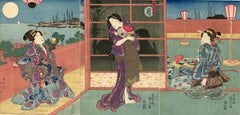
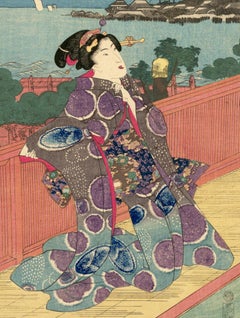
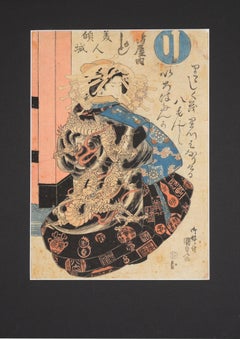
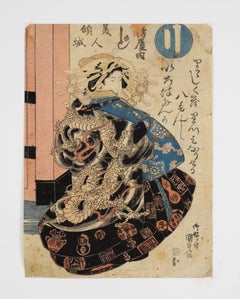
Surely you’ll find the exact utagawa kunisada (toyokuni iii) on sale you’re seeking on 1stDibs — we’ve got a vast assortment for sale. On 1stDibs, the right utagawa kunisada (toyokuni iii) on sale is waiting for you and the choices span a range of colors that includes
beige,
brown,
gray and
orange. Artworks like these of any era or style can make for thoughtful decor in any space, but a selection from our variety of those made in
woodcut print,
ink and
paper can add an especially memorable touch. A large utagawa kunisada (toyokuni iii) on sale can prove too dominant for some spaces — a smaller utagawa kunisada (toyokuni iii) on sale, measuring 9.26 high and 6.3 wide, may better suit your needs.
The price for an artwork of this kind can differ depending upon size, time period and other attributes — a utagawa kunisada (toyokuni iii) on sale in our inventory may begin at $160 and can go as high as $3,000, while the average can fetch as much as $462.
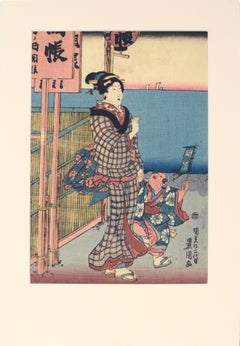
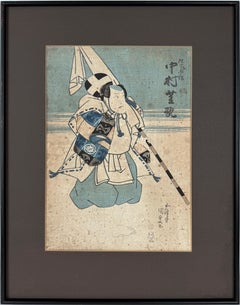
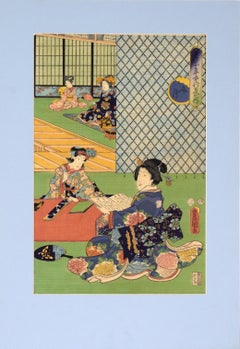
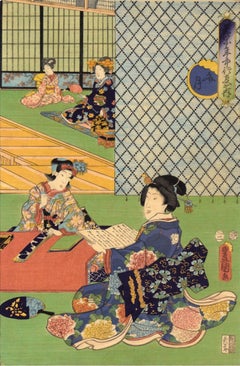
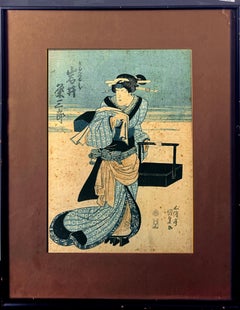
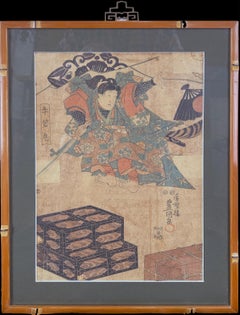
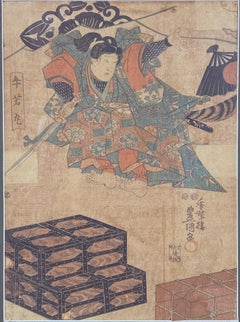
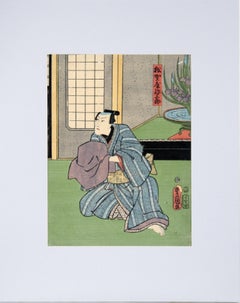
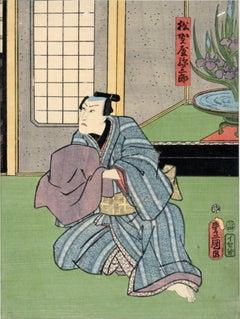
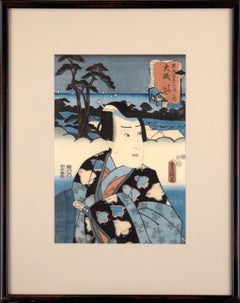
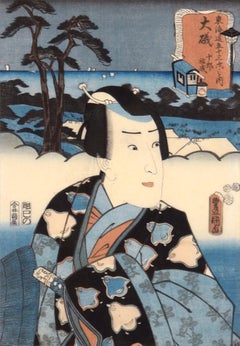
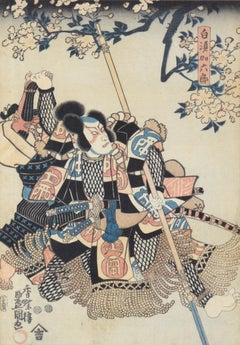
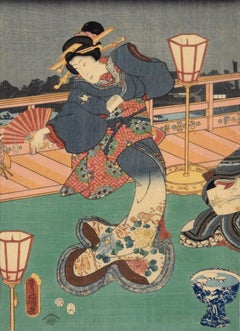
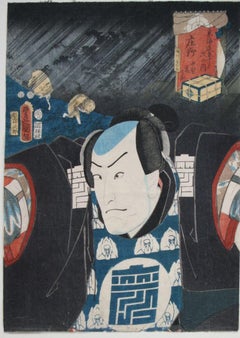
Born in the Honjo district of Edo as Kunisada Tsunoda, Kunisada’s family owned a small hereditary ferryboat service. Though his father, an amateur poet, died when Kunisada was a child, the family business provided some financial security. During his childhood, he showed considerable promise in painting and drawing. Due to strong familial ties with literary and theatrical circles, he spent time studying actor portraits. At age 14, he was admitted to study under Toyokuni, head of the Utagawa school. Kunisada's work embodies the characteristics of the Utagawa school, focusing on traditional subjects such as kabuki, bijin (beautiful women), shunga (erotic prints), and historical prints. His first known print dates to 1807, his first illustrated book to 1808. Kunisada’s career took off from the beginning. Many of his works became overnight successes and he was considered the “star attraction†of the Utagawa school. He signed his works “Kunisada,†sometimes with the studio names of Gototei and Kochoro affixed.
In 1844, he adopted the name of his teacher and became Toyokuni III. Kunisada passed away in 1864 in the same neighborhood that he was born. He was 70 years old. Kunis
Bring energy and an array of welcome colors and textures into your space by decorating with figurative fine-art prints and works on paper.
Figurative art stands in contrast to abstract art, which is more expressive than representational. The oldest-known work of figurative art is a figurative painting — specifically, a rock painting of an animal made over 40,000 years ago in Borneo. This remnant of a remote past has long faded, but its depiction of a cattle-like creature in elegant ocher markings endures.
Since then, figurative art has evolved significantly as it continues to represent the world, including a breadth of works on paper, including printmaking. This includes woodcuts, which are a type of relief print with perennial popularity among collectors. The artist carves into a block and applies ink to the raised surface, which is then pressed onto paper. There are also planographic prints, which use metal plates, stones or other flat surfaces as their base. The artist will often draw on the surface with grease crayon and then apply ink to those markings. Lithographs are a common version of planographic prints.
Figurative art printmaking was especially popular during the height of the Pop art movement, and this kind of work can be seen in artist Andy Warhol’s extensive use of photographic silkscreen printing. Everyday objects, logos and scenes were given a unique twist, whether in the style of a comic strip or in the use of neon colors.
Explore an impressive collection of figurative art prints for sale on 1stDibs and read about how to arrange your wall art.