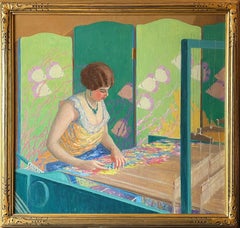
Natalia Makarova For Sale on 1stDibs
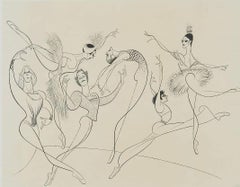
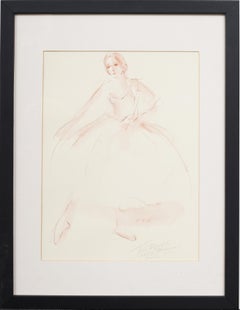
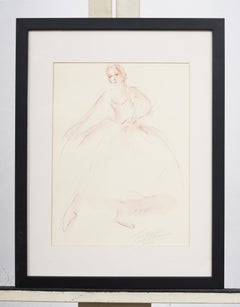
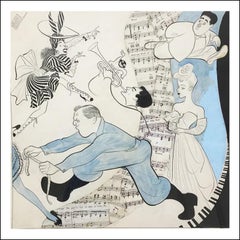
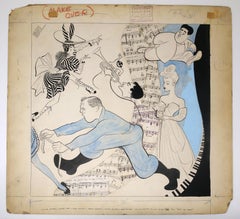
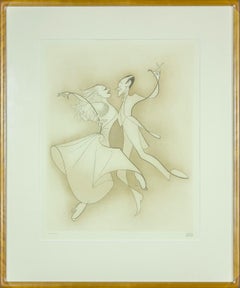
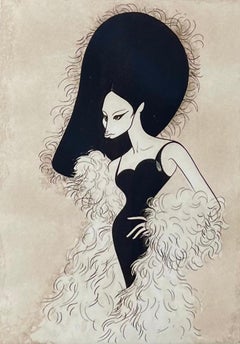
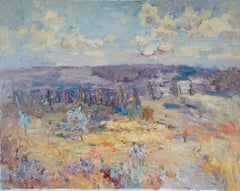
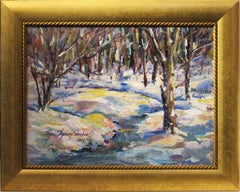
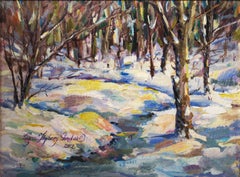
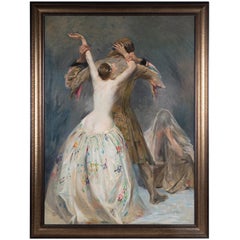
On 1stDibs, there are several options of natalia makarova available for sale. Today, if you’re looking for
Pop Art editions of these works and are unable to find the perfect match for your home, our selection also includes
modern. Adding a colorful piece of art to a room that is mostly decorated in warm neutral tones can yield a welcome change — see the natalia makarova on 1stDibs that include elements of
black,
brown,
gray and more. These artworks have been a part of the life’s work for many artists, but the versions made by
Irina Belotelkin Roublon and
Jack Mitchell are consistently popular. The range of these distinct pieces — often created in
oil paint,
paint and
silver gelatin print — can elevate any room of your home. Large natalia makarova can be an attractive addition to some spaces, while the smaller iterations available — each spanning 1 inches in width — may make for a better choice for a more modest living area.
How Much are Natalia Makarova?
Prices for pieces in our collection of natalia makarova start at $650 and top out at $2,400 with the average selling for $1,150.
Irina Belotelkin Roublon for sale on 1stDibs
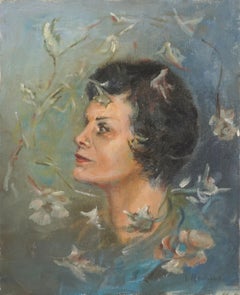
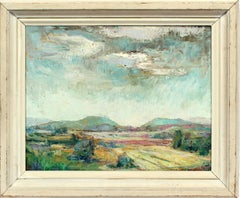
Irina Belotelkin Roublon, née Roudakoff, was born in Elisavetgrad, Ukraine to the Russian noblesse ancienne, descendant of Catherine the Great, she was a student at the Mariinsky Noble Ladies' Institute , Novocherkassk, Russia. She was orphaned at the time of the Russian Civil War after her father, General Paul Roudakoff, was fatally wounded in battle; 5 days later her mother died of typhus. Still unaware of her parents' death, and after witnessing her two sisters' deaths from starvation, the young Irina, then 8 years old, made her way over 1,000 kilometers, alone and through many privations to Moscow and the Estonian embassy there, with whom her Estonian uncle Volodya Blonsky had made arrangements.
After a year in Moscow, and appeals to the Estonian consul, Irina was aided in a dramatic escape from the Soviet Union, to her aunt Anna Blonsky Lassburg (1882–1940) and her husband Doctor Genrick Lassburg in Tallinn, Estonia. Eventually, after in 1929, traveling through Ellis Island and admitted as a student, of voice studies, she joined her brother who had settled, in 1923, in the United States.
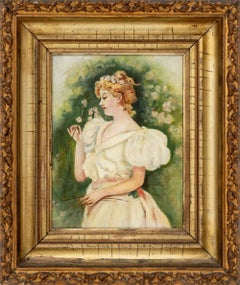
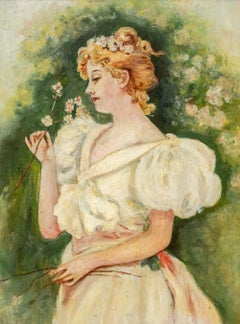
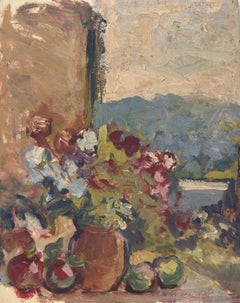
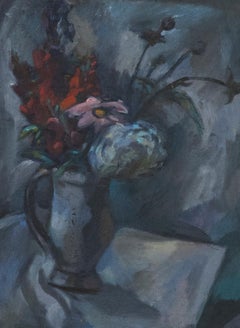
Irina came to San Francisco during the Second World War, Among Irina's devotions were ballet and opera. She often entertained friends Rudolf Nureyev, Mikhail Baryshnikov, and Sergei Leiferkus when they were in town. Natalia Makarova and Yuri Possokhov were often guests at Irina's Russian Christmas and Easter parties. From the early 1960s through the late 1980s, Irina studied and prolifically created still life and portrait paintings in oil and water color, excelling in flower compositions. She held studio and feature exhibitions; she competed and won prizes. Her work is in holdings throughout the San Francisco Bay area, Europe and Russia.
In 1965 she undertook private study with two prominent Russian painters, including Serge Ivanoff; she executed a portrait of her two masters. She cherished her portrait as executed by Serge Ivanoff.
Among her most accomplished pieces are those of iris and the large white Matilija poppy, which she grew and attended in her own garden. One rare instance of foregoing her famed Easter parties was 1988 when she was preparing for her April 30, 1988, show at Mae Woo's William Gallery in St. Helena. She painted portraits of several prominent San Franciscans. One portrait, a charcoal, of a young Gordon Getty, who'd frequented her studio as a young lad, remained in her personal collection for 3 decades. She presented it to Gordon at his 2005 birthday celebration.
She continued her artistic endeavors, including a foray into sculpture, until she lost her facility to a crippling mastectomy. She died at home on January 21, 2009, at the age of 96.
A Close Look at Impressionist Art
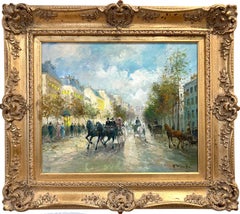
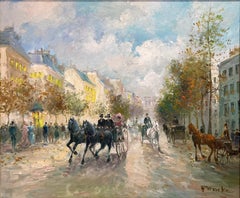
Emerging in 19th-century France, Impressionist art embraced loose brushwork and plein-air painting to respond to the movement of daily life. Although the pioneers of the Impressionist movement — Claude Monet, Edgar Degas, Paul Cézanne, Berthe Morisot, Camille Pissarro, and Pierre-Auguste Renoir — are now household names, their work was a radical break with an art scene led and shaped by academic traditions for around two centuries. These academies had oversight of a curriculum that emphasized formal drawing, painting and sculpting techniques and historical themes.
The French Impressionists were influenced by a group of artists known as the Barbizon School, who painted what they witnessed in nature. The rejection of pieces by these artists and the later Impressionists from the salons culminated in a watershed 1874 exhibition in Paris that was staged outside of the juried systems. After a work of Monet’s was derided by a critic as an unfinished “impression,” the term was taken as a celebration of their shared interest in capturing fleeting moments as subject matter, whether the shifting weather on rural landscapes or the frenzy of an urban crowd. Rather than the exacting realism of the academic tradition, Impressionist paintings, sculptures, prints and drawings represented how an artist saw a world in motion.
Many Impressionist painters were inspired by the perspectives in imported Japanese prints alongside these shifts in European painting — Édouard Manet drew on ukiyo-e woodblock prints and depicted Japanese design in his Portrait of Émile Zola, for example. American artists such as Mary Cassatt and William Merritt Chase, who studied abroad, were impacted by the work of the French artists, and by the late 19th century American Impressionism had its own distinct aesthetics with painters responding to the rapid modernization of cities through quickly created works that were vivid with color and light.
Find a collection of authentic Impressionist art on 1stDibs.
Finding the Right Figurative-paintings for You
Figurative art, as opposed to abstract art, retains features from the observable world in its representational depictions of subject matter. Most commonly, figurative paintings reference and explore the human body, but they can also include landscapes, architecture, plants and animals — all portrayed with realism.
While the oldest figurative art dates back tens of thousands of years to cave wall paintings, figurative works made from observation became especially prominent in the early Renaissance. Artists like Michelangelo, Leonardo da Vinci and other Renaissance masters created naturalistic representations of their subjects.
Pablo Picasso is lauded for laying the foundation for modern figurative art in the 1920s. Although abstracted, this work held a strong connection to representing people and other subjects. Other famous figurative artists include Francis Bacon and Lucian Freud. Figurative art in the 20th century would span such diverse genres as Expressionism, Pop art and Surrealism.
Today, a number of figural artists — such as Sedrick Huckaby, Daisy Patton and Eileen Cooper — are making art that uses the human body as its subject.
Because figurative art represents subjects from the real world, natural colors are common in these paintings. A piece of figurative art can be an exciting starting point for setting a tone and creating a color palette in a room.
Browse an extensive collection of figurative paintings on 1stDibs.