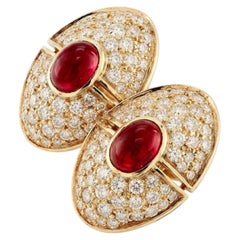
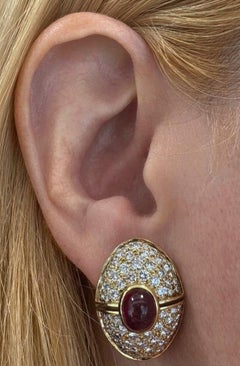
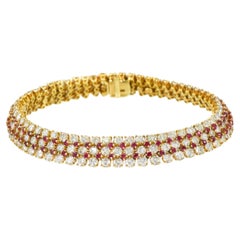
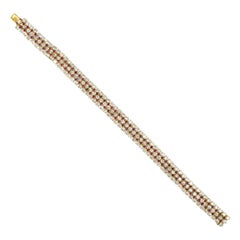
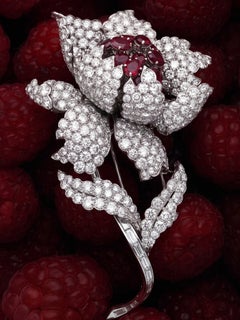
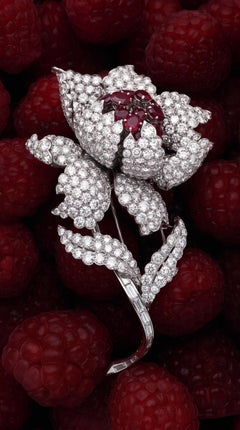
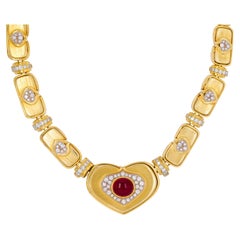
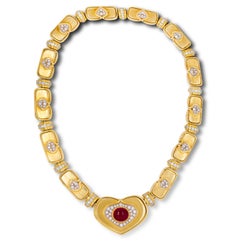
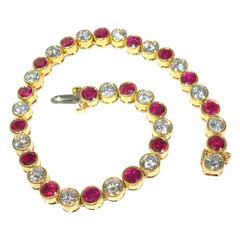
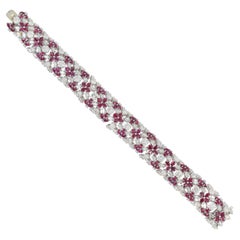
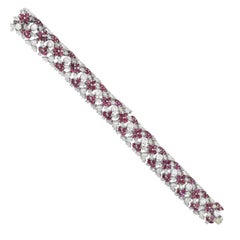
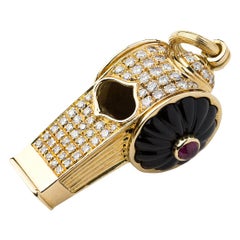
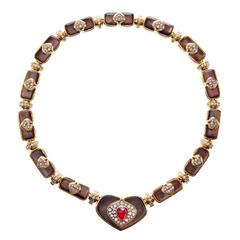
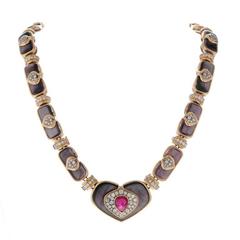
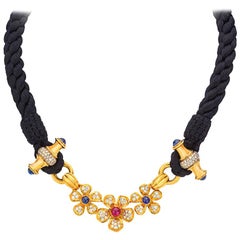
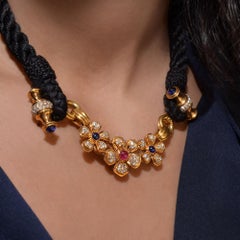
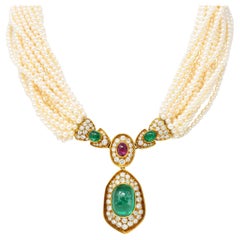
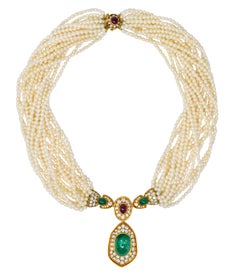
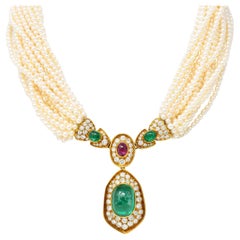
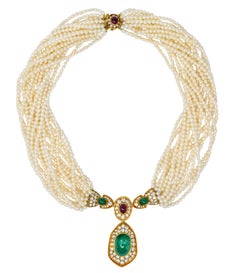
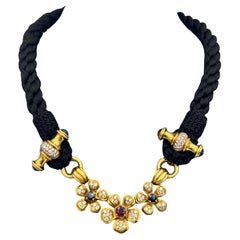
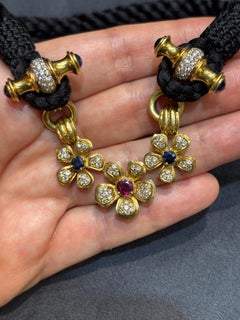
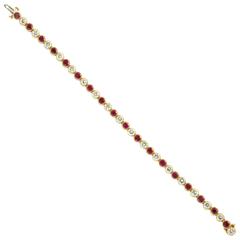
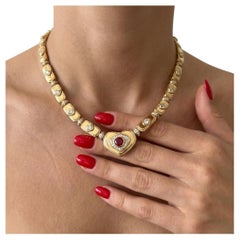
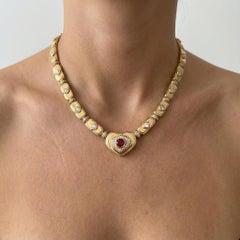
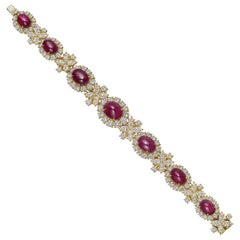
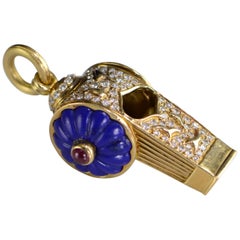
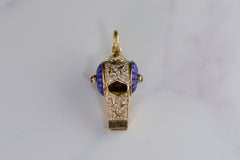
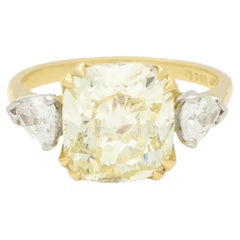
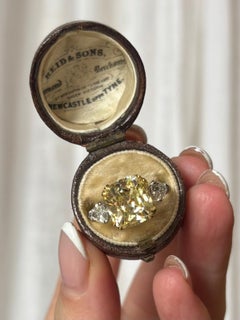
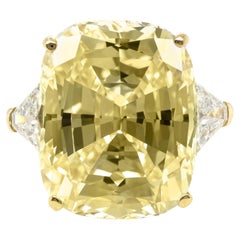
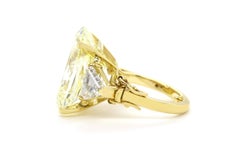
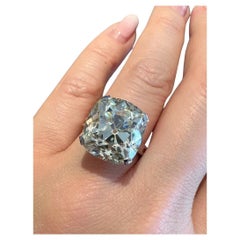
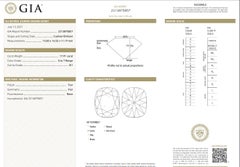
Find the exact harry winston ruby you’re shopping for in the variety available on 1stDibs. Each design created in this style — which was crafted with great care and often made from
18k Gold,
Gold and
Platinum — can elevate any look. In our selection of items, you can find a vintage example as well as a contemporary version. If you’re looking for a harry winston ruby from a specific time period, our collection is diverse and broad-ranging, and you’ll find at least one that dates back to the 20th Century while another version may have been produced as recently as the 21st Century. As it relates to this specific piece, our collection includes designs that are universally popular, but carat weights, specifically, are sought with frequency. See these pages for a
round cut iteration of this accessory, while there are also
cabochon cut and
oval cut cut versions available here, too. There aren’t many items for
men if you’re seeking a harry winston ruby, as most of the options available are for
women and unisex.
Among the famed gemstones that Harry Winston (1896–1978) encountered over the course of his career was the Hope diamond, which he donated to the Smithsonian Institution in 1958. Today, Winston is regarded as the “King of Diamonds” and the “Jeweler to the Stars” as one of the first to recognize the branding power of lending glitzy earrings, necklaces and other fine jewelry for red-carpet events.
Winston’s father had immigrated to New York from Ukraine and ran a small jewelry shop where a young Harry learned about precious stones, enough, the story goes, to identify a real emerald in a heap of pawnshop jewelry at the age of 12. His early success involved turning that eye to estate sale collections that he transformed by freeing gemstones from dated ornamentation, giving them new cuts and modern settings. He opened Harry Winston Inc. in 1932, where he influenced 20th-century-jewelry trends by always elevating the stones rather than adding the lavish decorations that had pervaded jewelry in the 19th century.
The first of the celebrated diamonds to be purchased by Winston was the 726-carat uncut Jonker, acquired in 1935. Many others followed, including the 726.60-carat Vargas from Brazil which, in 1938, he tracked down across multiple continents after he read a brief newspaper notice about its discovery. The rarity and beauty of the gemstones he pursued and presented in his boutiques made the Winston brand synonymous with excellence.
Winston was also a pioneer of marketing as the first jeweler to dress an Academy Awards nominee when he loaned some diamond jewelry to Jennifer Jones for the 1944 Oscar ceremony. Winston was renowned for his eye for the finest of gemstones and the ability to design pieces in order to best flaunt their natural dazzle. He regularly showed off his collection in touring exhibitions, such as the 1949 “Court of Jewels,” which featured the Hope diamond. His storied past and long legacy is continued by the House of Harry Winston and its salons in Japan, the United Kingdom and elsewhere.
On 1stDibs, find a stunning collection of Harry Winston jewelry that includes bracelets, wedding rings, engagement rings and other accessories.
This deep red gem is the color of heat and passion — vintage and antique ruby jewelry is perfect for those born in the middle of summer.
Rubies are one of the few gemstones that can give diamonds a run for their money. Just consider the Van Cleef & Arpels “scarf” necklace the Duke of Windsor presented to the Duchess on her 40th birthday, in 1936 — set with diamonds and dripping with rubies, a testament to the deep-red gemstone’s power — or the slippers encrusted with 4,600 rubies that Harry Winston made to commemorate The Wizard of Oz’s golden anniversary. July babies have permission to adorn themselves with this beautiful red stone even when it’s not their birthday.
Rubies are considered precious stones — along with diamonds, sapphires and emeralds — and have a hardness of 9.0 on the Mohs Scale, surpassed only by Moissanite and diamonds. They are composed of corundum, a colorless mineral that is also the basic material of sapphires. In the July birthstone, the red of the gemstone — and the various hues seen in sapphires — are produced by the presence of trace elements. In the case of a ruby, this element is chromium. Rubies range in color from vermilion to a violet red. They are also pleochroic, which means that a stone’s hue can vary depending on the direction of viewing. The most sought-after color is pigeon’s blood: pure red with a hint of blue.
Rubies that are hosted in dolomite marble are the most prized: Because the marble is low in iron, so are the rubies, resulting in a more intense color. Rubies found in basalt, which has a higher iron content, are generally darker and less intense.
When shopping for antique and vintage ruby jewelry, remember that the 4Cs of selecting the perfect diamond — color, clarity, cut and carat — also apply to rubies.
According to the Gemological Institute of America, the color of the July birthstone should be a vibrant to slightly purplish red, and the stone should be clear and inclusion-free. Accordingly, the cut should show off its color and clarity. As for the last criterion, fine rubies more than a carat in weight are rare. Often, large rubies are more expensive than diamonds of comparable weights.
Find a collection of ruby necklaces, ruby rings and other accessories on 1stDibs.