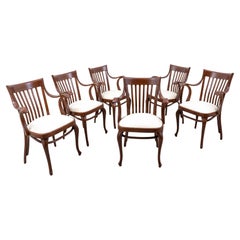
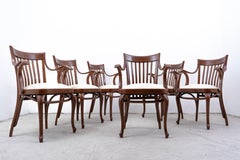
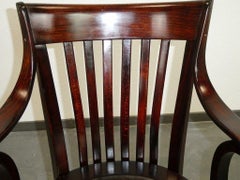
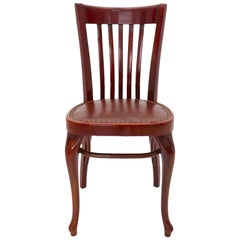
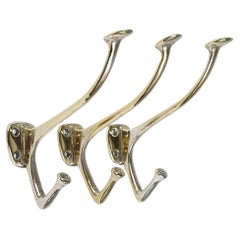
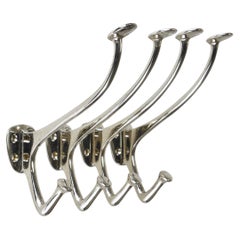
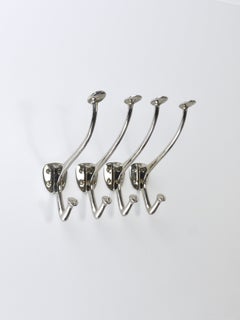
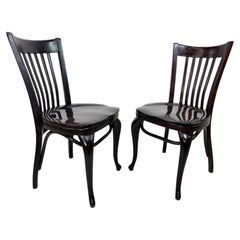
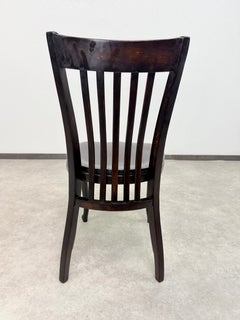
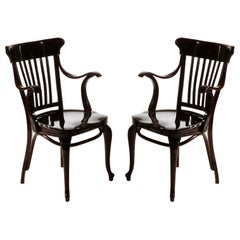
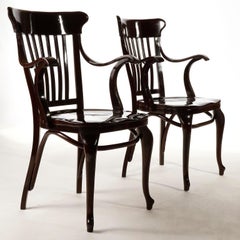
Find many varieties of an authentic cafe capua available at 1stDibs. Each cafe capua for sale was constructed with extraordinary care, often using
wood,
metal and
hardwood. If you’re shopping for a cafe capua, we have 9 options in-stock, while there are 1 modern editions to choose from as well. There are many kinds of the cafe capua you’re looking for, from those produced as long ago as the 20th Century to those made as recently as the 21st Century. Each cafe capua bearing
Art Nouveau or
Art Deco hallmarks is very popular. Many designers have produced at least one well-made cafe capua over the years, but those crafted by
Adolf Loos,
Thonet and
Gebrüder Thonet Vienna GmbH are often thought to be among the most beautiful.
A cafe capua can differ in price owing to various characteristics — the average selling price 1stDibs is $5,129, while the lowest priced sells for $825 and the highest can go for as much as $11,960.
Essentially dubbed the Frank Llyoyd Wright of Europe by Wright himself, Adolf Loos possessed a talent for architecture and interior design as potent as his outspoken criticism of Art Nouveau and excessive ornamentation. A forerunner of the International Style, Loos exercised immense restraint in his building projects as well as his designs for chairs, tables, storage pieces and other furniture, and wrote prolifically on his disdain for taking a decorative approach to architecture.
The son of a stonemason and sculptor, Loos was born in 1870 in what is now Brno in the Czech Republic. He studied architecture in Dresden in 1889, completed a year of military service and moved to the United States by 1893. He visited the World’s Columbian Exposition in Chicago and came to appreciate the American approach to design over his three-year stay before returning to Vienna.
An avid proponent of simplicity, Loos hated fluff above all else. In his best known essay, “Ornament and Crime,” he states “the evolution of culture is synonymous with the removal of ornamentation from objects of everyday use” — a principle evident in both his architectural work and furniture. His writing was profoundly influential for practitioners of the International Style that would emerge later as well as the likes of prolific Swiss-born French architect and modernist prophet Le Corbusier.
Loos challenged the prevailing architecture and decorating styles of his time, and disliked the ornate work associated with the Vienna Secession and Gesamtkunstwerk — the concept of a house as total work of art — an ideal pursued by a collective born from the Secession called the Wiener Werkstätte. To Loos, design should prioritize function, and any ornamentation devoid of a structural purpose was childish and unnecessary.
Loos’s furniture — alongside the work of fellow Austrian architect Josef Hoffman — was the subject of an exhibition at the Museum of Applied Arts in 2014. His architecture projects, including the Viennese Goldman and Salatsch building, the Austrian Steiner House and the Villa Müller in Prague, are celebrated by design enthusiasts all over the world.
Find vintage Adolf Loos seating, lighting and other furniture on 1stDibs.