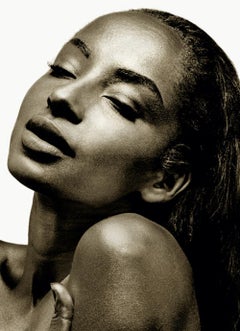
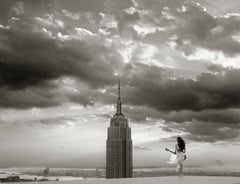
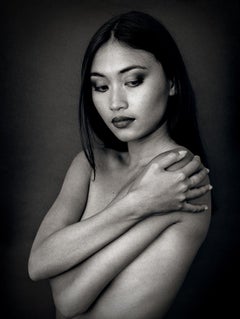
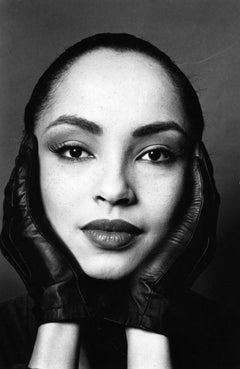
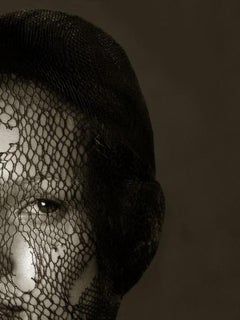
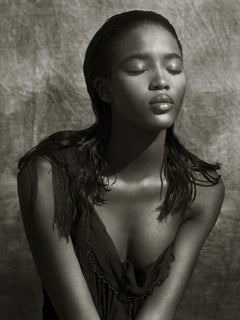
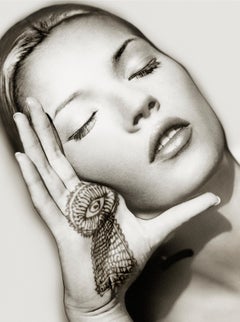
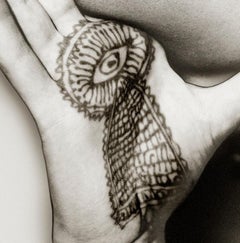
Find the exact albert watson sade you’re shopping for in the variety available on 1stDibs. You’re likely to find the perfect albert watson sade among the distinctive items we have available, which includes versions made as long ago as the 20th Century as well as those made as recently as the 20th Century. Adding a albert watson sade to a room that is mostly decorated in warm neutral tones can yield a welcome change — find a piece on 1stDibs that incorporates elements of
black,
beige,
gray and more. These artworks were handmade with extraordinary care, with artists most often working in
archival pigment print and
pigment print.
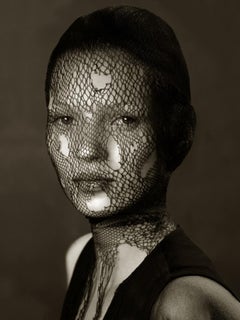
Albert Watson studied graphic design before becoming a photographer. His manipulation of contrast and superior sense of composition distinguish his portraits of celebrities and models. With an emphasis on the formal and sculptural properties of his sitters' bodies, Watson's images have not only appeared in numerous American and European fashion magazines but also in museum and gallery exhibitions.
In Watson’s famous nude photographs of Kate Moss taken on her 18th birthday in 1993, the model's spine pokes through the skin of her curved back, like the scales of a dinosaur, while the right side of her body is entirely shaded. In a 1989 portrait, Naomi Campbell's head is silhouetted against a grey surface, while her bare shoulders and the arch of her back are illuminated. In 2010, he was awarded the Royal Photographic Society's Centenary Medal and Honorary Fellowship.
Find original Albert Watson photography on 1stDibs.
There’s a lot to love about black and white photography.
The unique and timeless quality of a black and white photograph accentuates any room. Some might argue that we’re naturally drawn to color photography because it’s the world we know best. This is a shared belief, particularly in the era of camera-phone photography, editing apps and the frenetic immediacy of sharing photos on social media. But when we look at black and white photography, we experience deep, rich shadows and tonal properties in a way that transfixes us. Composition and textures are crisp and engaging. We’re immediately drawn to the subjects of vintage street photography and continue to feel the emotional impact of decades-old photojournalism. The silhouettes of mountains in black and white landscape photography are particularly pronounced, while portrait photography and the skylines of urban cityscapes come to life in monochrome prints.
When decorating with fine photography, keep in mind that some color photographs may not be suitable for every space. However, you can be more daring with black and white photos. The gray tones are classic, sophisticated and generally introduce elegance to any corner of your home, which renders black and white prints amazingly versatile.
Black and white photography adapts to its surroundings like a chameleon might. A single large-scale black and white photograph above the sofa in your living room is going to work with any furniture style, and as some homeowners and designers today are working to introduce more muted tones and neutral palettes to dining rooms and bedrooms, the integration of black and white photography — a hallmark of minimalist decor — is a particularly natural choice for such a setting.
Another advantage to bringing black and white photography into your home is that you can style walls and add depth and character without worrying about disrupting an existing color scheme. Black and white photographs actually harmonize well with accent colors such as yellow, red and green. Your provocative Memphis Group lighting and bold Pierre Paulin seating will pair nicely with the black and white fine nude photography you’ve curated over the years.
Black and white photography also complements a variety of other art. Black and white photos pair well with drawings and etchings in monochromatic hues. They can also form part of specific color schemes. For example, you can place black and white prints in colored picture frames for a pop of color. And while there are no hard and fast rules, it’s best to keep black and white prints separate from color photographs. Color prints stand out in a room more than black and white prints do. Pairing them may detract attention from your black and white photography. Instead, dedicate separate walls or spaces to each.
Once you’ve selected the photography that best fits your space, you’ll need to decide how to hang the images. If you want to hang multiple photos, it’s essential to know how to arrange wall art. A proper arrangement can significantly enhance a living space.
On 1stDibs, explore a vast collection of compelling black and white photography by artists such as Mark Shaw, Jack Mitchell (a photographer you should know), Berenice Abbott and David Yarrow.