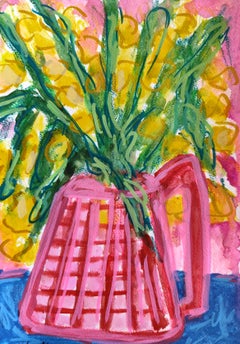
Artist: Ian Hornak (1944–2002)
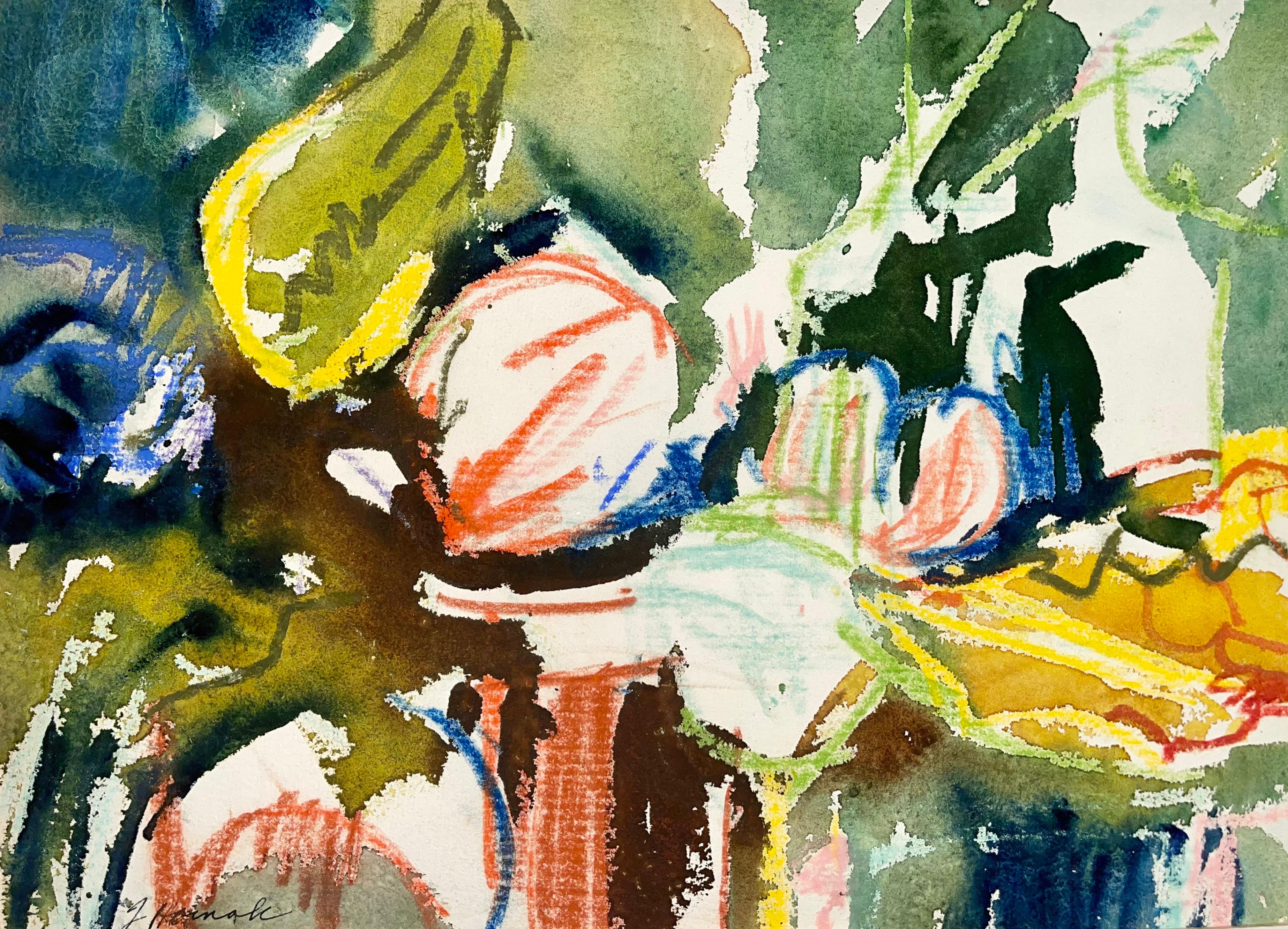
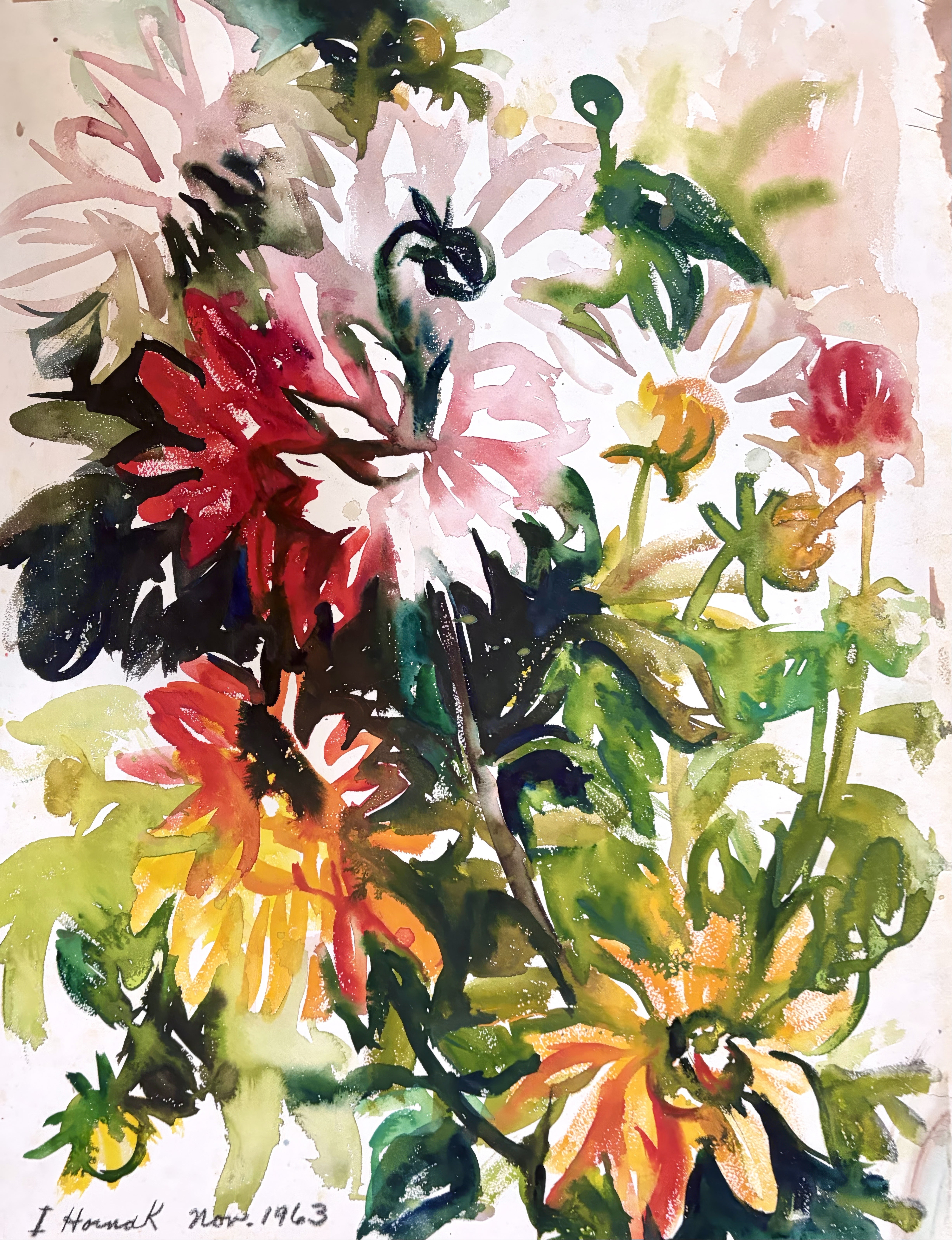
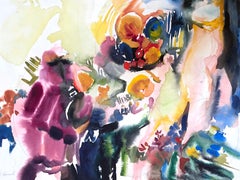
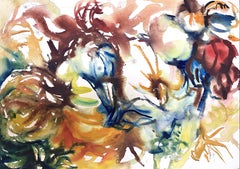
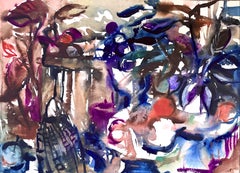
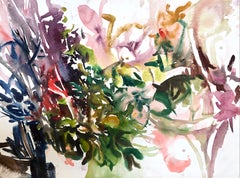
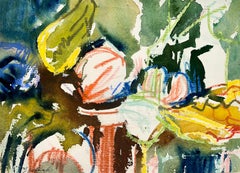
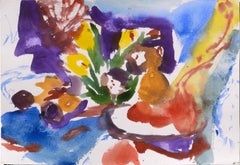
Title: Abstract Floral Still Life in Crimson and Blue
Year: circa 1963
Medium: Watercolor on wove paper
Paper size: 21 x 29.5 inches (53.34 x 74.93 cm)
Condition: Well preserved, consistent with age and medium
Inscription: Unsigned; estate stamped, verso
Provenance: Estate of Ian Hornak, East Hampton, New York
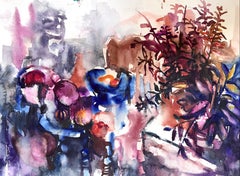
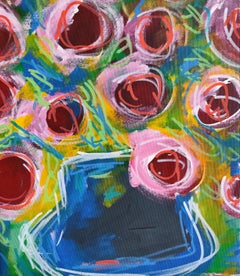
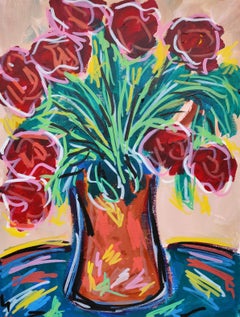
Notes: This exquisite watercolor by Ian Hornak (1944–2002), titled Abstract Floral Still Life in Crimson and Blue, was executed circa 1963 during the artist’s undergraduate studies. Created during the formative years of Hornak’s artistic development, the composition provides a compelling glimpse into the emerging vision of an artist who would later become one of the pioneering figures of American Photorealism and Hyperrealism. Depicting an atmospheric arrangement of blossoms, vessels, and organic forms rendered in luminous washes of color, the watercolor reveals Hornak’s early fascination with still life subjects and the expressive possibilities of watercolor. Rich passages of crimson, magenta, blue, violet, orange, and earth tones combine with fluid brushwork and transparent layers to create a composition that balances abstraction with observation. The work demonstrates the confidence and spontaneity characteristic of Hornak’s student years, when he explored color relationships and compositional structure through increasingly ambitious watercolor studies. Although created decades before the highly detailed paintings that brought him international recognition, the watercolor already reveals his sensitivity to atmosphere, his ability to orchestrate complex arrangements, and his lifelong interest in transforming familiar subjects into emotionally resonant images. As a rare surviving example from his undergraduate years, the work offers valuable insight into the artistic foundations that ultimately led to the symbolic still lifes and botanical masterpieces of his mature career.
IAN HORNAK (1944–2002) was an American painter, draughtsman, printmaker, and pioneering force in Photorealism and Hyperrealism whose extraordinary technical mastery, visionary imagination, and innovative approach to realism established him as one of the most distinctive and original artists of the late twentieth century. Widely recognized as a founding member of both the Photorealist and Hyperrealist movements, Hornak helped redefine the possibilities of contemporary realism by combining photographic precision with symbolism, romanticism, mythology, environmental awareness, art historical references, and metaphysical inquiry, creating a body of work that stands apart within postwar American art for both its visual brilliance and intellectual ambition. Born in Philadelphia and raised in Michigan before establishing his career in New York and East Hampton, Hornak emerged during one of the most transformative periods in modern art and developed a highly individual visual language that transcended conventional artistic categories. While many of his contemporaries focused on strict photographic transcription, urban imagery, or detached observation, Hornak utilized realism as a foundation for exploring profound themes of memory, beauty, mortality, spirituality, environmental fragility, and humanity’s relationship with nature, producing works that operate simultaneously as visual spectacles and philosophical meditations. His artistic vision reflects an awareness of the revolutionary innovations introduced by Pablo Picasso, Alexander Calder, Alberto Giacometti, Salvador Dali, Joan Miro, Wassily Kandinsky, Marcel Duchamp, and Man Ray, while simultaneously drawing inspiration from the Hudson River School, particularly Frederic Edwin Church, Martin Johnson Heade, Thomas Cole, and Albert Bierstadt, as well as the spiritual landscapes of Caspar David Friedrich and the botanical precision of Dutch Golden Age masters. Through this extraordinary synthesis of influences, Hornak created a visual language that united scientific observation, photographic realism, romantic grandeur, allegorical symbolism, and philosophical reflection into a form entirely his own. His highest recorded sale was achieved in 2017, when Large Orchid Bouquet (1988) was sold in a private transaction conducted in association with the heir of the Ian Hornak estate to the Van Andel family, co-owners of Amway, for US$165,000 ($219,168.11 USD, calculated for inflation in 2025).
Ian Hornak watercolor, Ian Hornak student work, Ian Hornak undergraduate studies, abstract floral watercolor, still life composition, American modern watercolor, Photorealism, Hyperrealism, East Hampton estate, museum quality realism.