Want more images or videos?
Request additional images or videos from the seller.

After Georges Braque
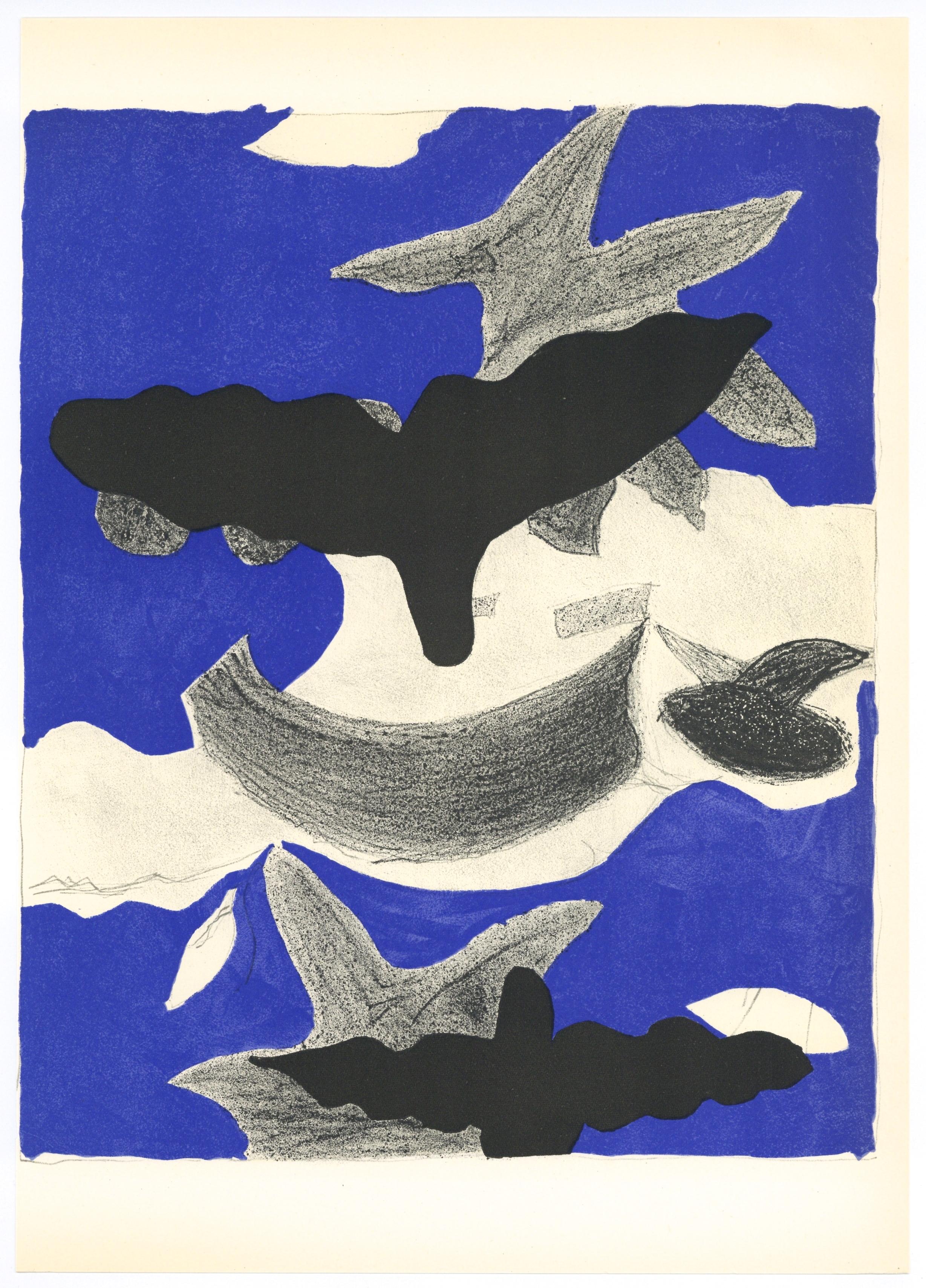
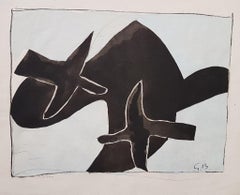
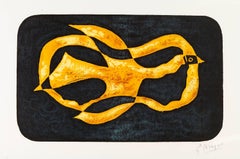
Marine Noire - Lithograph After Georges Braque - 1956

1956

$3,872.22
£2,900.76
€3,400VAT Included
CA$5,498.44
A$5,629.67
CHF 3,197.49
MX$71,995.94
NOK 36,781.76
SEK 38,221.12
DKK 25,923.68

About the Item

"Marine Noire" is a lithograph after the work of Georges Braque in 1956. The print is hand signed and numbered. This is an edition of 400 prints. Bibliography: D. Vallier, Braque. L'oeuvre gravé, Flammarion, Paris 1982, n. 1044, p. 296. Good conditions except for very light foxings and little folds on the corner. Georges Braque (1882-1963) was a French Fauve painter who began to rethink his own painting style after admiring Picasso’s Les Demoiselles. Using the painting’s revolutionary elements as a point of departure, together Braque and Picasso invented Cubism around 1908 in the belief the art of painting had to move far beyond the depiction of visual reality. Most scholars call the first phase of Cubism, developed cooperatively by Picasso and Braque, Analytic Cubism because essentially it is a painterly study of the structure of the form.
  • Creator:
    After Georges Braque
  • Creation Year:
    1956
  • Dimensions:
    Height: 25.6 in (65 cm)Width: 35.44 in (90 cm)Depth: 0.04 in (1 mm)
  • Medium:
  • Movement & Style:
  • Period:
  • Condition:
    Insurance may be requested by customers as additional service, contact us for more information.
  • Gallery Location:
    Roma, IT
  • Reference Number:
    Seller: M-1094991stDibs: LU65036907752

More From This Seller

View All
Marine Noire - Lithograph after Georges Braque - 1956

Marine Noire - Lithograph after Georges Braque - 1956

Located in Roma, IT

Signed and numbered. Editions of 400 prints. published by Maeght, Paris Literature Reference: D. Vallier, Braque. L'oeuvre gravé, Flammarion, Paris 1982, n. 1044, p.296. Image Dimensions :50 x 72...

Category

1950s Post-Impressionist Landscape Prints

Materials

Lithograph

Frontispiece from Braque Lithographe - Lithograph 1961

Frontispiece from Braque Lithographe - Lithograph 1961

By Georges Braque

Located in Roma, IT

Hand signed and numbered. Edition of 125 prints. Ref.: Catalogue D.Vallier pag.284 Passepartout included : 69 x 49 cm Very good conditions. Georges Braque (Argenteuil, 1882 – Paris...

Category

1960s Modern Figurative Prints

Materials

Lithograph

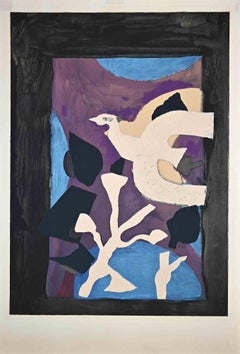
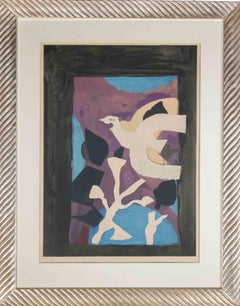
The Black Birds - Lithograph After Georges Braque - 1958

The Black Birds - Lithograph After Georges Braque - 1958

By Georges Braque

Located in Roma, IT

The Black Birds is a lithograph published by Maeght after an original composition by Georges Braque in 1958. Braque authorized and selected certain works to be reproduced by his tru...

Category

1950s Contemporary Abstract Prints

Materials

Lithograph

Oiseau et Lotus - Lithograph by Georges Braque - 1963

Oiseau et Lotus - Lithograph by Georges Braque - 1963

By Georges Braque

Located in Roma, IT

Oiseau et Lotus is a color lithograph on paper, realized by the French Cubist artist, Georges Braque (1882-1963). Printed by ARTE in 1963 by order of Galerie Maeght in Paris in a ci...

Category

1960s Modern Abstract Prints

Materials

Lithograph

You May Also Like

"Marine noire" lithograph

"Marine noire" lithograph

By Georges Braque

Located in Henderson, NV

Medium: lithograph (after the painting). Printed in 1968 by L'Imprimerie Arte and published by the atelier Maeght for the Varengeville portfolio. Size: 9 5/8 x 13 3/4 inches (244 x 3...

Category

1960s Prints and Multiples

Materials

Lithograph

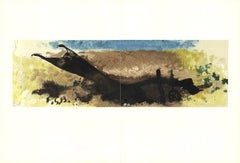
Bord de Mer Lithograph by Georges Braque, 1960, Unframed, Excellent

Bord de Mer Lithograph by Georges Braque, 1960, Unframed, Excellent

By Georges Braque

Located in Brooklyn, NY

This original lithograph by Georges Braque, titled Bord de Mer (Seashore), was published by Maeght in 1960 as part of the Derriere le Miroir series. The double page lithograph featur...

Category

1960s Modern Prints and Multiples

Materials

Lithograph

After Georges Braque - Antiborée - Lithograph

After Georges Braque - Antiborée - Lithograph

Located in Collonge Bellerive, Geneve, CH

Lithograph after Georges Braque. Signed in the plate Edition of 150 Dimensions: 76 x 117 cm Bibliography: « Les Métamorphoses de Braque» of Heger de Loewenfeld and Raphaël de Cuttoli , Editions FAC, Paris, 1989. In 1961 Georges Braque decided with his laidary friend Heger de Loewenfeld to pick up certain of his works to in order to create artworks, this beautiful litograph is one of them. Héméra in the Mythology: In Greek mythology Hemera was the personification of day and one of the Greek primordial deities. She is the goddess of the daytime and, according to Hesiod, the daughter of Erebus and Nyx (the goddess of night). Hemera is remarked upon in Cicero's De Natura Deorum, where it is logically determined that Dies (Hemera) must be a god, if Uranus is a god. The poet Bacchylides states that Nyx and Chronos are the parents, but Hyginus in his preface to the Fabulae mentions Chaos as the mother/father and Nyx as her sister. She was the female counterpart of her brother and consort, Aether (Light), but neither of them figured actively in myth or cult. Hyginus lists their children as Uranus, Gaia, and Thalassa (the primordial sea goddess), while Hesiod only lists Thalassa as their child. The father of Cubism Three Cubist that distinguishes art historian periods were initiated and developed by Georges Braque: The Cubist Cézanne (1907-1909), Executive (1909-1912) and synthetic (1912-1922). Post-Impressionist and fawn, Braque no longer adheres to the contingency of a decorative way or the other. Cézanne’s paintings exhibited at the Grand Palais during the retrospective of 1907 are a revelation: Cézanne sought and invented a pictorial language. In his footsteps, Braque went to the South with the reasons of the Master. He returned with Estaque landscapes and surprising Ciotat it keeps Cezanne geometric model and retains the “passages” continuity from one surface to another to create the sensation of “turning around” of the object represented. But he wants to go after the consequences of the vision of Cezanne. In his paintings Houses in L’Estaque (1908) it simplifies the volumes of houses, neglects detail by removing doors and windows: the plastic rhythm that builds the table. Large Nude , a masterpiece of the period, can be considered the first work of Cézanne cubism . Systematizing and deepening Braque discoveries open the door analytical cubism. In 1909, his painting became more cerebral than sensual. The pattern is recreated in the two-dimensionality of the canvas, leaving aside any illusionistic perspective. In Still Life with Violin, objects are analyzed facets according to their characteristic elements, each facet referring to a particular view of the object. There are so many facets of points selected view: Table reflects the knowledge of the object and the ubiquity of the eye. Moreover, Braque is looking for the essence of the objects in the world rather than their contingency, which explains the absence of light source and use of muted colors (gray, ocher), contingent aspects of the object . But formal logic has stepped facets, erased any anecdote to the object and ultimately led to his painting a hermetic more marked on the edge of abstraction (see the series of Castle Roche-Guyon ). Braque, anxious to keep the concrete and refusing at all costs that the logic of Cubism takes the paintings to abstract, reintroduced signs of reality in his paintings in 1912 marks the beginning of Synthetic Cubism. Historians speak of “signs of real” rather than reality because what interests Braque, this is not to put reality into a table, but to create a painting which, by its language, refers to the real. To do this, he invented two major techniques XX th century inclusions and contributions. The inclusions consist of painting objects that have no real depth, materials (wallpaper in Nature morte aux playing cards faux wood is a pictorial inclusion) or letters (calligraphic inclusion in Portuguese ), made first brush and a few months later stencil. Contributions are defined in contrast with the collage on canvas of foreign materials: glued or sand paper, sawdust, etc.. Regarding the collages, Braque used for the first time in September 1912 a piece of adhesive paper imitating faux wood Compote...

Category

1950s Cubist Animal Prints

Materials

Lithograph

"Marine" lithograph

"Marine" lithograph

By Georges Braque

Located in Henderson, NV

Medium: lithograph (after the painting). Printed in 1968 by L'Imprimerie Arte and published by the atelier Maeght for the Varengeville portfolio. Size: 5 3/4 x 13 3/4 inches (145 x 3...

Category

1960s Prints and Multiples

Materials

Lithograph

Braque Varengeville No 2 Lithograph, Modern Landscape, Mid-20th Century

Braque Varengeville No 2 Lithograph, Modern Landscape, Mid-20th Century

By Georges Braque

Located in Brooklyn, NY

This lithograph titled Varengeville No. 2 by Georges Braque, published by Arte in Paris, France, is a serene depiction of a wooden plow resting in the middle of a field. Varengeville...

Category

Mid-20th Century Modern Landscape Prints

Materials

Lithograph

Georges Braque - Original Lithograph

Georges Braque - Original Lithograph

By Georges Braque

Located in Collonge Bellerive, Geneve, CH

Georges Braque - Original Lithograph 1963 Dimensions: 32 x 24 cm Andre Sauret, Monte Carlo The father of Cubism Three Cubist that distinguishes art historian periods were initiated and developed by Georges Braque: The Cubist Cézanne (1907-1909), Executive (1909-1912) and synthetic (1912-1922). Post-Impressionist and fawn, Braque no longer adheres to the contingency of a decorative way or the other. Cézanne’s paintings exhibited at the Grand Palais during the retrospective of 1907 are a revelation: Cézanne sought and invented a pictorial language. In his footsteps, Braque went to the South with the reasons of the Master. He returned with Estaque landscapes and surprising Ciotat it keeps Cezanne geometric model and retains the “passages” continuity from one surface to another to create the sensation of “turning around” of the object represented. But he wants to go after the consequences of the vision of Cezanne. In his paintings Houses in L’Estaque (1908) it simplifies the volumes of houses, neglects detail by removing doors and windows: the plastic rhythm that builds the table. Large Nude , a masterpiece of the period, can be considered the first work of Cézanne cubism . Systematizing and deepening Braque discoveries open the door analytical cubism. In 1909, his painting became more cerebral than sensual. The pattern is recreated in the two-dimensionality of the canvas, leaving aside any illusionistic perspective. In Still Life with Violin, objects are analyzed facets according to their characteristic elements, each facet referring to a particular view of the object. There are so many facets of points selected view: Table reflects the knowledge of the object and the ubiquity of the eye. Moreover, Braque is looking for the essence of the objects in the world rather than their contingency, which explains the absence of light source and use of muted colors (gray, ocher), contingent aspects of the object . But formal logic has stepped facets, erased any anecdote to the object and ultimately led to his painting a hermetic more marked on the edge of abstraction (see the series of Castle Roche-Guyon ). Braque, anxious to keep the concrete and refusing at all costs that the logic of Cubism takes the paintings to abstract, reintroduced signs of reality in his paintings in 1912 marks the beginning of Synthetic Cubism. Historians speak of “signs of real” rather than reality because what interests Braque, this is not to put reality into a table, but to create a painting which, by its language, refers to the real. To do this, he invented two major techniques XX th century inclusions and contributions. The inclusions consist of painting objects that have no real depth, materials (wallpaper in Nature morte aux playing cards faux wood is a pictorial inclusion) or letters (calligraphic inclusion in Portuguese ), made first brush and a few months later stencil. Contributions are defined in contrast with the collage on canvas of foreign materials: glued or sand paper, sawdust, etc.. Regarding the collages, Braque used for the first time in September 1912 a piece of adhesive paper imitating faux wood Compote and Glass , then the packet envelope of tobacco Bock in 1912-1913, or an advertisement in Damier , 1913). Inputs and inclusions refer to an external object in the table, without “emulate” this object. Away from their appearances, objects are represented in closest essence of the objects in the real world sense. This is also the time of Synthetic Cubism that Braque invented paper sculpture. There are, unfortunately, and no one is living proof of a photograph makes it possible to realize: Paper and paperboard. Métamorphoses period(1961-1963). In 1961, Georges Braque worked on a Greek head for the Louvre, which obsesses him, and he wishes to free his mind. He tried several times to bring out the paint and the result was unsatisfactory. He thinks the ultimate metamorphosis its Greek head projected in three dimensions. He calls in his studio of Baron Heger Loewenfeld, master lapidary, and he communicates his enthusiasm during the “fateful encounter.” Nine months later, in honor of the eighty years of Georges Braque, Heger Loewenfeld offers the Master of the ring Circe: the famous Greek head finally exorcised, carved in an onyx. Braque Loewenfeld then asked to identify other issues that haunt him. From dated and signed by Georges Braque, Heger gouaches Loewenfeld shapes works in the fields of jewelery, lapidary art...

Category

1960s Modern Figurative Prints

Materials

Lithograph