Early 20th Century Interior Prints

83 Results
to
16
52
19
8
4
2
Overall Width
to
Overall Height
to
103
263
1,070
810
9
10
21
53
38
60
74
209
237
104
86
36
7
2
1
73
42
33
24
21
20
12
10
8
6
6
5
4
4
3
3
3
3
3
2
61
26

Use search to find more

5
3
2
2
2

Use search to find more

Period: Early 20th Century
HAMBURGER KNIEPPE
HAMBURGER KNIEPPE

HAMBURGER KNIEPPE

By Käthe Kollwitz

Located in Santa Monica, CA

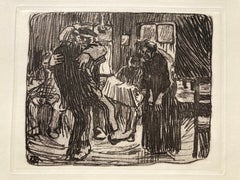
KATHE KOLLWITZ (1867-1945) HAMBURGER KNIEPPE, 1901) (K.58 IIIb) Soft Ground Etching, Plate 9 ¾ x 8 ¼ sheet 10 ½ x 13 ¾. With the von de Becke blind stamp in the lower right. Prin...

Category

Expressionist Early 20th Century Interior Prints

Materials

Etching

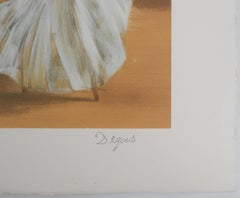
The Dance Center at the Paris Opera - Lithograph Signed

The Dance Center at the Paris Opera - Lithograph Signed

By Edgar Degas

Located in Paris, IDF

Edgar DEGAS (1834-1917) (after) The Dance Center at the Paris Opera Lithograph after a painting by the artist Signed in the plate On vellum, 56 x 76 cm (c. 22 x 29.9 in) Very good ...

Category

Impressionist Early 20th Century Interior Prints

Materials

Lithograph

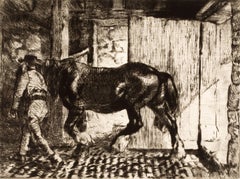
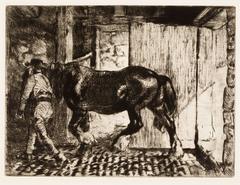
Returning to the Stable.

Returning to the Stable.

By Edmund Blampied

Located in Plano, TX

Returning to the Stable. 1920. Drypoint. Appleby 64. 8 3/4 x 12 1/4 (sheet 11 7/16 x 16 1/8). Edition 100. A rich impression printed on cream laid paper wi...

Category

Modern Early 20th Century Interior Prints

Materials

Drypoint, Etching

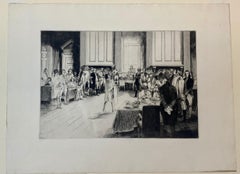
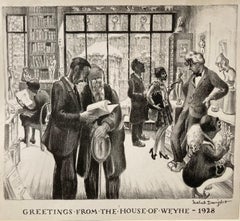
GREETINGS FROM THE HOUSE OF WEYHE. Many Known Artists Inside the Gallery

GREETINGS FROM THE HOUSE OF WEYHE. Many Known Artists Inside the Gallery

Located in Santa Monica, CA

MAYBEL DWIGHT (1875 - 1955) GREETINGS FROM THE HOUSE OF WEYHE, 1928 Lithograph, signed in the plate. Image 7 1/8 x 8 3/8” + printed title. Sheet 8 ¼ x 9” as issued. Xmas card iss...

Category

American Modern Early 20th Century Interior Prints

Materials

Lithograph

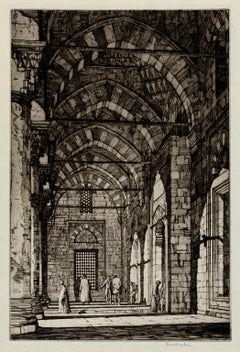
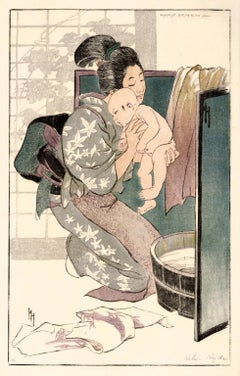
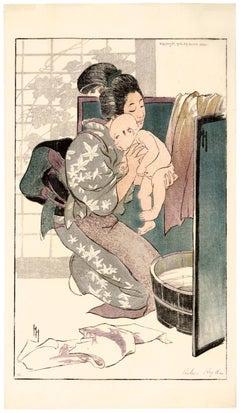
'The Bath' — Meji Era Cross-Cultural Woman Artist

'The Bath' — Meji Era Cross-Cultural Woman Artist

By Helen Hyde

Located in Myrtle Beach, SC

Helen Hyde, 'The Bath', color woodblock print, edition not stated, 1905, Mason & Mason 59. Signed in pencil in the image, lower right. Numbered '96' in pencil in the image, lower left. The artist's monogram in the block, lower left, and 'Copyright, 1905, by Helen Hyde.' upper right. A superb impression with fresh colors on tissue-thin cream Japanese paper; the full sheet with margins (7/16 to 1 5/8 inches), in excellent condition. Matted to museum standards, unframed. Image size 16 1⁄4 x 10 1⁄8 in. (413 x 260 mm); sheet size: 19 1⁄4 x 11 1⁄8 in. (489 x 283 mm). Literature and Exhibition: Back cover illustration of the catalog of the artist’s prints, 'Helen Hyde', Smithsonian Institution Press, 1990; 'The International Block Print Renaissance, Then And Now, Block Prints In Wichita, Kansas, A Centennial Celebration — 1922-2022', Barbara J. Thompson, Wichita Art Museum, 2022 (back cover). Impressions of this work are held in the following collections: Achenbach Foundation for Graphic Arts, Art Institute of Chicago, Fine Arts Museums of San Francisco (De Young), Harvard Art Museums, Library of Congress, Metropolitan Museum of Art, New York Public Library, Smithsonian American Art Museum, Terra Foundation for American Art, University of Oregon Museum of Art. ABOUT THE ARTIST Helen Hyde (1868-1919) was a pioneer American artist best known for advancing Japanese woodblock printmaking in the United States and for bridging Western and Japanese artistic traditions. Hyde was born in Lima, New York, but after her father died in 1872, her family relocated to Oakland, California, where she spent much of her youth. Hyde pursued formal art education in the United States and Europe. She enrolled in the San Francisco School of Design, where she took classes from the Impressionist painter Emil Carlsen; two years later, she transferred to the Art Students League in New York, studying there with Kenyon Cox. Eager to expand her artistic repertoire, Hyde traveled to Europe, studying under Franz Skarbina in Berlin and Raphael Collin in Paris. While in Paris, she first encountered Japanese ukiyo-e prints, sparking a lifelong fascination with Japanese aesthetics. After ten years of study, Hyde returned to San Francisco, where she continued to paint and began to exhibit her work. Hyde learned to etch from her friend Josephine Hyde in about 1885. Her first plates, which she etched herself but had professionally printed, represented children. On sketching expeditions, she sought out quaint subjects for her etchings and watercolors. In 1897, Hyde made her first color etchings—inked á la poupée (applying different ink colors to a single printing plate)—which became the basis for her early reputation. She also enjoyed success as a book illustrator, and her images sometimes depicted the children of Chinatown. After her mother died in 1899, Hyde sailed to Japan, accompanied by her friend Josephine, where she would reside, with only brief interruptions, until 1914. For over three years, she studied classical Japanese ink painting with the ninth and last master of the great Kano school of painters, Kano Tomonobu. She also studied with Emil Orlik, an Austrian artist working in Tokyo. Orlik sought to renew the old ukiyo-e tradition in what became the shin hanga “new woodcut prints” art movement. She immersed herself in the study of traditional Japanese printmaking techniques, apprenticing with master printer Kanō Tomonobu. Hyde adopted Japanese tools, materials, and techniques, choosing to employ the traditional Japanese system of using craftsmen to cut the multiple blocks and execute the exacting color printing of the images she created. Her lyrical works often depicted scenes of family domesticity, particularly focusing on women and children, rendered in delicate lines and muted colors. Through her distinctive fusion of East and West, Hyde’s contributions to Western printmaking were groundbreaking. At a time when few Western women ventured to Japan, she mastered its artistic traditions and emerged as a significant figure in the international art scene. Suffering from poor health, she returned to the United States in 1914, moving to Chicago. Having found restored health and new inspiration during an extended trip to Mexico in 1911, Hyde continued to seek out warmer climates and new subject matter. During the winter of 1916, Hyde was a houseguest at Chicora Wood, the Georgetown, South Carolina, plantation illustrated by Alice Ravenel Huger Smith in Elizabeth Allston Pringle’s 1914 book A Woman Rice Planter. The Lowcountry was a revelation for Hyde. She temporarily put aside her woodcuts and began creating sketches and intaglio etchings of Southern genre scenes and African Americans at work. During her stay, Hyde encouraged Smith’s burgeoning interest in Japanese printmaking and later helped facilitate an exhibition of Smith’s prints at the Art Institute of Chicago. During World War I, Hyde designed posters for the Red Cross and produced color prints extolling the virtues of home-front diligence. In ill health, Hyde traveled to be near her sister in Pasadena a few weeks before her death on May 13, 1919. She was buried in the family plot near Oakland, California. Throughout her career, Hyde enjoyed substantial support from galleries and collectors in the States and in London. She exhibited works at the St. Louis Exposition in 1897, the Pan-American Exhibition in Buffalo in 1901, the Tokyo Exhibition for Native Art (where she won first prize for an ink drawing) in 1901, the Alaska-Yukon-Pacific Exhibition in Seattle in 1909 (received a gold medal for a print), the Newark Museum in 1913, a solo show at the Chicago Art Institute in 1916, and a memorial exhibition in 1920, Detroit Institute of Arts, Color Woodcut Exhibition in 1919, New York Public Library, American Woodblock Prints...

Category

Showa Early 20th Century Interior Prints
Materials

Woodcut

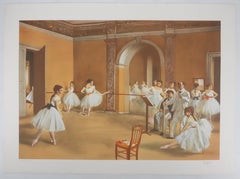
Visit our Toy Department original vintage chromolithograph poster

Visit our Toy Department original vintage chromolithograph poster

Located in Spokane, WA

Original vintage poster: TOY DEPARTMENT. Chromolithographed illustration of a mother and four young children surrounded by a ball, blocks, and dolls, and with two young girls reading a book. No publishing information, but with a Shirley Temple doll...

Category

Art Nouveau Early 20th Century Interior Prints
Materials

Lithograph

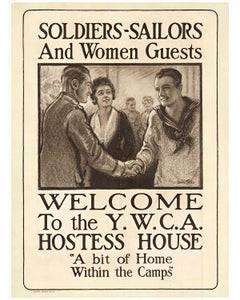
Original 'Soldiers - Sailors and Women Guests' Welcome to the YWCA Hostess House

Original 'Soldiers - Sailors and Women Guests' Welcome to the YWCA Hostess House

By Walter Tittle

Located in Spokane, WA

Original poster: SOLDIERS-SAILOR AND WOMEN GUESTS welcome to the Y.W.C.A. hostess house "A bit of home within the camps". A sailor shakes the hand of a man while a woman is standing and smiling at them. Linen-backed original WW1 poster...

Category

American Realist Early 20th Century Interior Prints
Materials

Lithograph

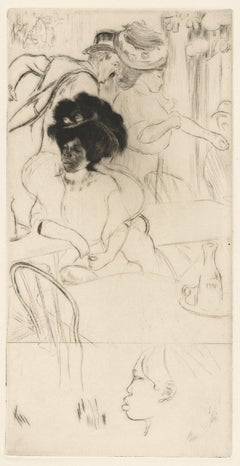
La Negresse (The Negress)

La Negresse (The Negress)

By Louis Legrand

Located in Fairlawn, OH

La Negresse (The Negress) Etching & drypoint, 1909 Unsigned (as issued in the portfolio) From the album "Les Bars" (8 plates plus cover illustration) Editi...

Category

Art Nouveau Early 20th Century Interior Prints
Materials

Etching

The Woman and the Street

The Woman and the Street

By Marc Chagall

Located in Fairlawn, OH

The Woman and the Street Etching, 1927-1930 Signed in the plate lower right corner (see photo) From: The Fables of La Fontaine, Plate 84 From the deluxe portfolio edition of 40 examp...

Category

French School Early 20th Century Interior Prints
Materials

Etching

En passant (Passing by)

En passant (Passing by)

By Louis Legrand

Located in Fairlawn, OH

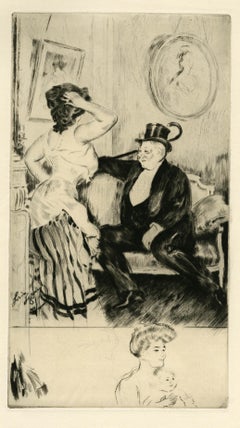
En passant (Passing by) Drypoint, 1909 Unsigned (as issued in the deluxe portfolio) From the album "Les Bars" (8 plates plus cover illustration) Edition: 30, this state with remarque Published by Gustav Pellet, Paris A very rich impression wwith burr Condition: Excellent Image/Plate size: 9 7/8 x 6 3/8 inches Reference: Arwas 391a (remarque) Exteens 277 i/II IFF 148 (portfolio) Louis Auguste Mathieu Legrand (29 September 1863 – 1951) was a French artist, known especially for his aquatint engravings, which were sometimes erotic. He was awarded the Légion d'honneur for his work in 1906. Life Legrand was born in the city of Dijon in the east of France. He worked as a bank clerk before deciding to study art part-time at Dijon's Ecole des Beaux-Arts. He won the Devosge prize at the school in 1883.[2] In 1884 Legrand studied engraving under the Belgian printmaker Félicien Rops. Legrand's artworks include etchings, graphic art and paintings. His paintings featured Parisian social life. Many were of prostitutes, dancers and bar scenes, which featured a sense of eroticism. According to the Hope Gallery, "Louis Legrand is simply one of France's finest early twentieth century masters of etching." His black and white etchings especially provide a sense of decadence; they have been compared to those of Henri de Toulouse-Lautrec, though his drawings of the Moulin Rouge, the can-can dance and the young women of Montmartre preceded Toulouse-Lautrec's paintings of similar scenes. He made over three hundred prints of the night life of Paris. They demonstrate "his remarkable powers of observation and are executed with great skill, delicacy, and an ironic sense of humor that pervades them all." Two of his satirical artworks caused him to be tried for obscenity. The first, "Prostitution" was a symbolic drawing which depicted a naked girl being grasped by a dark monster which had the face of an old woman and claws on its hands; the second, "Naturalism", showed the French novelist Émile Zola minutely studying the thighs of a woman with a magnifying glass. Defended by his friend the lawyer Eugène Rodrigues-Henriques (1853–1928), he was found not guilty in the lower court, but was convicted in the appeal court and then given a short prison sentence for refusing to pay his fine. Legrand was made famous by his colour illustrations for Gil Blas magazine's coverage of the can-can, with text by Rodrigues (who wrote under the pseudonym Erastene Ramiro). It was a tremendous success, with the exceptional quantity of 60,000 copies of the magazine being printed and instantly sold out in 1891. In 1892, at the instigation of the publishing house Dentu, Legrand made a set of etchings of his Gil Blas illustrations. The etchings were published in a book, Le Cours de Danse Fin de Siecle (The End of the Century Dance Classes). Legrand took a holiday in Brittany, which inspired him to engrave a set of fourteen lithographs of simple country life called Au Cap de la Chevre (On Goat Promontory). It was published by Gustave Pellet who became a close friend of Legrand's. Pellet eventually published a total of 300 etchings by Legrand, who was his first artist; he also published Toulouse-Lautrec and Félicien Rops among others. He did not only work in graphics; he exhibited paintings at the Paris salon of the Société Nationale des Beaux-Arts starting in 1902. In 1906 he was made a chevalier of the Légion d'honneur. Legrand died in obscurity in 1951. A retrospective exhibition was held at the Félicien Rops museum in Namur, Belgium in 2006 to celebrate his graphic art. The art collector Victor Arwas published a catalogue raisonné for the occasion. Books illustrated de Maupassant, Guy: Cinq Contes Parisiens, 1905. Poe, Edgar Alan: Quinze Histoires d'Edgar Poe...

Category

Art Nouveau Early 20th Century Interior Prints
Materials

Drypoint

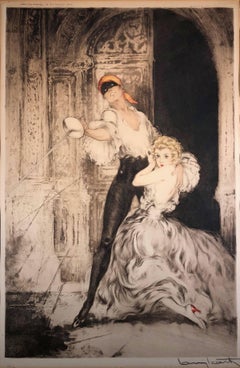
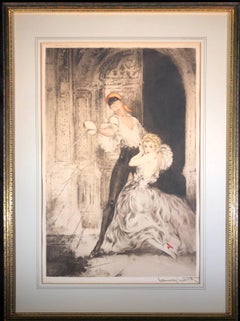
Don Juan
Don Juan

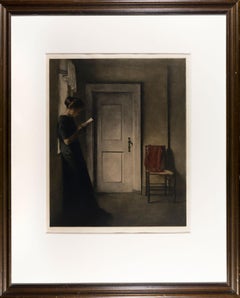
Louis IcartDon Juan, 1928

$2,800Sale Price|20% Off

Don Juan

By Louis Icart

Located in Missouri, MO

Aquating Engraving Image Size: approx. 20 1/4 x 13 3/8 Framed Size: 28 x 20.5 inches Pencil Signed Lower Right Louis Justin Laurent Icart was born in Toulouse in 1890 and died in Paris in 1950. He lived in New York City in the 1920s, where he became known for his Art-Deco color etchings of glamourous women. He was first son of Jean and Elisabeth Icart and was officially named Louis Justin Laurent Icart. The use of his initials L.I. would be sufficient in this household. Therefore, from the moment of his birth he was dubbed 'Helli'. The Icart family lived modestly in a small brick home on rue Traversière-de-la-balance, in the culturally rich Southern French city of Toulouse, which was the home of many prominent writers and artists, the most famous being Henri de Toulouse-Lautrec. Icart entered the l'Ecole Superieure de Commerce de Toulouse in order to continue his studies for a career in business, particularly banking (his father's profession). However, he soon discovered the play writings of Victor Hugo (1802-1885), which were to change the course of his life. Icart borrowed whatever books he could find by Hugo at the Toulouse library, devouring the tales, rich in both romantic imagery and the dilemmas of the human condition. It was through Icart's love of the theater that he developed a taste for all the arts, though the urge to paint was not as yet as strong for him as the urge to act. It was not until his move to Paris in 1907 that Icart would concentrate on painting, drawing and the production of countless beautiful etchings, which have served (more than the other mediums) to indelibly preserve his name in twentieth century art history. Art Deco, a term coined at the 1925 Paris Exposition des Arts Decoratifs, had taken its grip on the Paris of the 1920s. By the late 1920s Icart, working for both publications and major fashion and design studios, had become very successful, both artistically and financially. His etchings reached their height of brilliance in this era of Art Deco, and Icart had become the symbol of the epoch. Yet, although Icart has created for us a picture of Paris and New York life in the 1920s and 1930s, he worked in his own style, derived principally from the study of eighteenth-century French masters such as Jean Antoine Watteau, François Boucher and Jean Honoré Fragonard. In Icart's drawings, one sees the Impressionists Degas...

Category

Art Deco Early 20th Century Interior Prints
Materials

Engraving, Aquatint

Nu couché. Intérieur à la lampe vénitienne

Nu couché. Intérieur à la lampe vénitienne

By Henri Matisse

Located in London, GB

Henri Matisse Nu couché. Intérieur à la lampe vénitienne 1929 Etching on Chine appliqué on Arches Velin paper, Edition of 25 Paper size: 28 x 38 cms (11 x 15 ins) Plate size: 9.1 x 1...

Category

Modern Early 20th Century Interior Prints
Materials

Etching

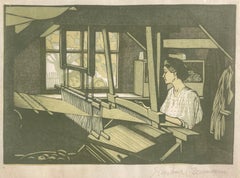
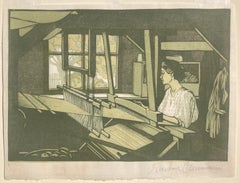
THE RUG WEAVER
THE RUG WEAVER

THE RUG WEAVER

By Gustave Baumann

Located in Santa Monica, CA

GUSTAVE BAUMANN (1881 – 1971) THE RUG WEAVER, 1910 (Chamberlain 26) Color woodcut signed in pencil. Unnumbed from an edition 100 as published in the Hills o’ Brown...

Category

American Modern Early 20th Century Interior Prints
Materials

Woodcut

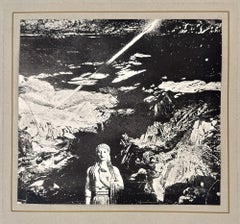
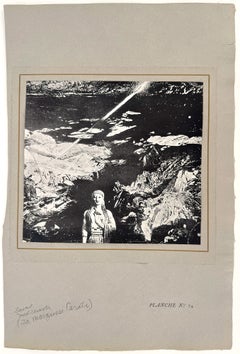
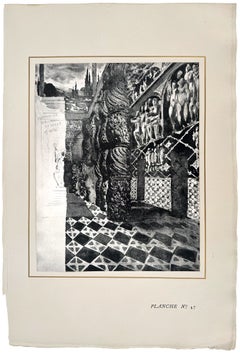
Terror Antiquus (detail)

Terror Antiquus (detail)

By Leon Bakst

Located in Middletown, NY

Lithograph on wove paper adhered to a gray wove paper matrix with text, 15 3/4 x 11 inches (400 x 279 mm), full margins. In good condition with marginal wear and some minor toning, a...

Category

Art Deco Early 20th Century Interior Prints
Materials

Lithograph

A set design for Le Martyre de Saint Sébastien, Act III

A set design for Le Martyre de Saint Sébastien, Act III

By Leon Bakst

Located in Middletown, NY

London: De la More Press, 1913. Lithograph on wove paper adhered to a gray wove paper matrix with text, 15 3/4 x 11 inches (400 x 279 mm), full margins. In good condition with margi...

Category

Art Deco Early 20th Century Interior Prints
Materials

Lithograph

Set design for Papillons (Un Salon)

Set design for Papillons (Un Salon)

By Leon Bakst

Located in Middletown, NY

London: De la More Press, 1913. Lithograph on wove paper adhered to a gray wove paper matrix with text, 15 3/4 x 11 inches (400 x 279 mm), full margins. In good condition with margi...

Category

Art Deco Early 20th Century Interior Prints

Materials

Lithograph

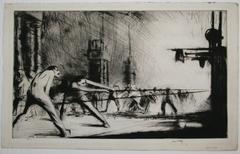
France at her Furnaces

France at her Furnaces

By James McBey

Located in Plano, TX

1917. Etching. Hardie 175. 8 x 15 (sheet 10 1/8 x 16 15/16). Edition 76. Slight mat line; otherwise excellent condition. A rich impression printed on antique laid paper with full m...

Category

Modern Early 20th Century Interior Prints

Materials

Drypoint, Etching

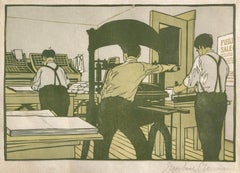
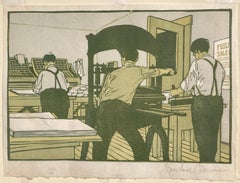
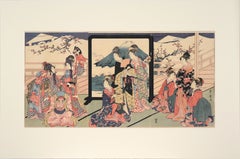
The Print Shop
The Print Shop

The Print Shop

By Gustave Baumann

Located in Santa Monica, CA

GUSTAVE BAUMANN (1881 – 1971) THE PRINT SHOP 1910 (Chamberlain 27) Color woodcut signed in pencil. Unnumbed from an edition 100 as published in the Hills o’ Brown Portfolio, (plate 11 of 12). Image 9 x 13 1/8, sheet 10 ¼ x 13 7/8 with deckle edge at the bottom. The print portrays the Brown County...

Category

American Modern Early 20th Century Interior Prints
Materials

Lithograph

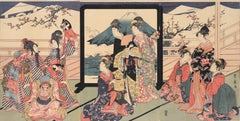
Maurice Dufrene, Study, 3 Lithographs, 1906

Maurice Dufrene, Study, 3 Lithographs, 1906

By Maurice Dufrêne

Located in Saint Amans des cots, FR

Set of three lithographs enhanced with gouache by Maurice Dufrène. Three original plans of "Interieur Moderne d'une Famille Française" by Maurice Dufrene in 1906. These three plans ...

Category

Art Nouveau Early 20th Century Interior Prints
Materials

Lithograph

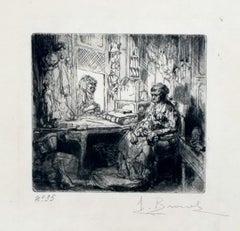
La Prêteuse sur Gage

La Prêteuse sur Gage

By Auguste Brouet

Located in Middletown, NY

Brussels: Fondation de Dietrich et Cie, 1914. Etching with drypoint on Japon paper, 3 5/8 x 4 inches (93 x 102 mm); sheet 11 1/8 x 9 7/8 inches (283 x 251 mm), full margins. Signed a...

Category

French School Early 20th Century Interior Prints

Materials

Handmade Paper, Etching, Drypoint

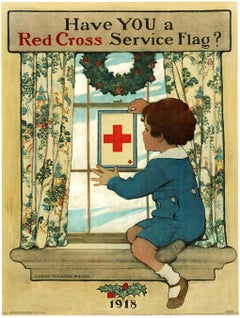
Original Have You a Red Cross Service Flag? vintage WW1 poster

Original Have You a Red Cross Service Flag? vintage WW1 poster

By Jessie Willcox Smith

Located in Spokane, WA

Original 1918 Red Cross Poster - "Have YOU a Red Cross Service Flag?" - Illustrated by Jessie Willcox Smith, Linen Backed. Restored horizontal fold mark and restored small tears along the bottom. This poster is, after all, more than 107 years old. Own a Piece of History! 1918 "Have You a Red Cross Service Flag?" Poster ✨ Step back into history with this original 1918 Red Cross poster. It is a poignant and touching piece of WWI-era Americana, beautifully preserving a time of nationwide unity and heartfelt service. Illustrated by the celebrated artist Jessie Willcox Smith, this lithograph captures the tender moment of a child hanging a Red Cross service flag in the window—a symbol of hope, sacrifice, and pride in supporting humanitarian efforts during World War I. The poster radiates warmth, with Smith’s signature style of innocence and emotional depth shining through in the delicate depiction of the boy, the adorned window, and the serene winter backdrop. The vibrant red and white cross emblem on the service flag is a focal point of the artwork, inspiring viewers to reflect on the values of compassion and generosity that the Red Cross championed during this period. As a significant historical artifact and a beautiful piece of early 20th-century American illustration, this poster would be an exceptional addition to any serious collection of WWI memorabilia...

Category

American Modern Early 20th Century Interior Prints

Materials

Lithograph

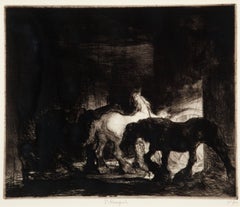
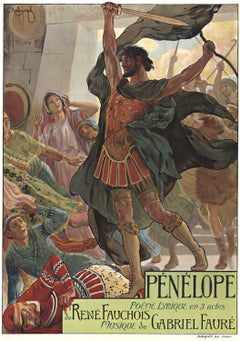
Night Time in a Stable.

Night Time in a Stable.

By Edmund Blampied

Located in Plano, TX

Night Time in a Stable. 1927-28. Drypoint. Appleby 131. 10 1/8 x 12 1/8 (sheet 11 1/2 x 16 1/2). Edition 100. Illustrated: Print Collector's Quarterly 25 (1...

Category

Modern Early 20th Century Interior Prints
Materials

Drypoint, Etching

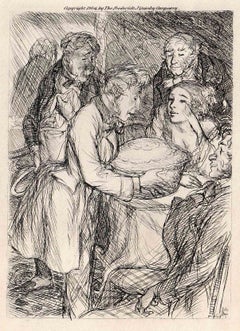
The Silent Pie

The Silent Pie

By John Sloan

Located in Middletown, NY

Etching on cream wove paper, 5 3/8 x 4 1/4 inches (135 x 107 mm), signed in the plate, lower right. Third state (of 3), from the novel The Flower Girl, vol. 2. by Paul de Kock. In go...

Category

American Modern Early 20th Century Interior Prints
Materials

Handmade Paper, Etching

Un Sculpteur de Paris

Un Sculpteur de Paris

By Arthur William Heintzelman

Located in Middletown, NY

Etching and drypoint on cream laid Van Gelder Zonen watermarked paper, 8 7/8 x 6 1/2 inches (220 x 164 mm), full margins. Signed, titled, and inscribed "ed. 100" in pencil, lower mar...

Category

Modern Early 20th Century Interior Prints
Materials

Laid Paper, Drypoint, Etching

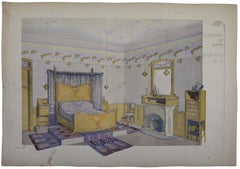
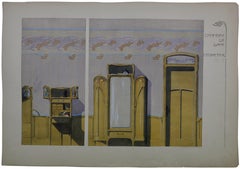
Lady's Bedroom, Set of 4 Lithographs, 1906

Lady's Bedroom, Set of 4 Lithographs, 1906

By Maurice Dufrêne

Located in Saint Amans des cots, FR

Set of four lithographs enhanced with gouache by Maurice Dufrene. Four original plans from "Interieur Moderne d'une Famille Française" by Maurice Dufrene in 1906. These four plans ar...

Category

Art Nouveau Early 20th Century Interior Prints
Materials

Lithograph

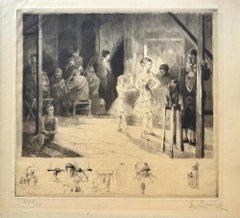
La Parade
La Parade

La Parade

By Auguste Brouet

Located in Middletown, NY

Etching on wove Japon paper, 8 5/8 x 9 1/4 inches (219 x 235 mm), wide margins. Signed, titled, and numbered 6/75 in pencil, lower margin, and with the Dietrich & Cie éditeurs blinds...

Category

French School Early 20th Century Interior Prints
Materials

Handmade Paper, Etching

Original "Othello"  (and Desdemona)  vintage lithographic theater poster

Original "Othello" (and Desdemona) vintage lithographic theater poster

Located in Spokane, WA

Original vintage poster for Othello, horizontal format; linen-backed. Full lithograph from the 1920. Stafford & Co., England. Brilliant, scarce stone lithograph of Othello with a dagger and sleeping Desdemona in the climactic scene of Shakespeare’s tragedy. This is an Art Nouveau period English poster for a production of the Shakespeare play Othello. S Co Ltd, Stafford & Co Ltd, Netherfield, 1920s printed this poster. Excellent condition. Othello, a Moorish general of Venice, has just promoted Cassio as his lieutenant; Iago, who was hoping for the promotion himself, plots against both Cassio and Othello to exact revenge. Othello has secretly married Desdemona, the beautiful daughter of Venetian senator Brabantio, and Iago is determined to use Desdemona as the means of his revenge. William Shakespeare's tragedy "Othello," which has been adapted into numerous films, plays, and other media since its original publication in 1622. This is an Original Vintage Theater Poster...

Category

Art Nouveau Early 20th Century Interior Prints
Materials

Lithograph

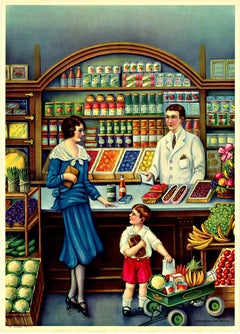
Original Groceries and Fruits chromolithograph vintage poster 1920s

Original Groceries and Fruits chromolithograph vintage poster 1920s

Located in Spokane, WA

Original Groceries and Fruits vintage chromolithograph poster. Antique Cromo lithograph of your early fruit and grocery store. What service! Printed in Germany. This printing st...

Category

American Realist Early 20th Century Interior Prints
Materials

Lithograph

Original "Stufe Pagliero Michele" vintage Italian poster

Original "Stufe Pagliero Michele" vintage Italian poster

Located in Spokane, WA

Original Stufe Pagliero Michele vintage Italian antique poster. Archival linen backed and ready to frame. Lithograph from 1929. Excellent condition, ready to frame. A condition. Bright and vibrant colors. The company was founded in 1814 and is the oldest in Italy. Note there is a tax stamp on the left side near the word “Iipi,” as shown in 1 photograph. Italian terracotta and tile stoves are traditional heating devices that have been used in Italy for centuries. They are typically made from terracotta clay, a type of earthenware known for its heat-retaining properties. The stoves are often decorated with colorful tiles, creating a beautiful and functional piece of furniture. Terracotta stoves...

Category

Art Deco Early 20th Century Interior Prints
Materials

Lithograph

Politics
Politics

Edmund BlampiedPolitics, 1926

$1,250Sale Price|28% Off

Politics

By Edmund Blampied

Located in Plano, TX

Politics (Tonnere de Brest). 1926. Drypoint. Appleby 108. 7 x 9 (sheet 10 1/2 x 15 1/2). A rich impression printed on cream wove paper with full margins. Illustrated: Salaman, Modern...

Category

Modern Early 20th Century Interior Prints
Materials

Drypoint, Etching

The Letter
The Letter

Edmund BlampiedThe Letter, 1921

$1,250Sale Price|28% Off

The Letter

By Edmund Blampied

Located in Plano, TX

The Letter. 1921. Drypoint. Appleby 107. 7 x 9 3/8 (sheet 10 1/2 x 15 7/16). Edition 100. Illustrated: Fine Prints of the Year, 1925; Salaman, Modern Masters of Etching: Edmund Blamp...

Category

Modern Early 20th Century Interior Prints
Materials

Drypoint, Etching

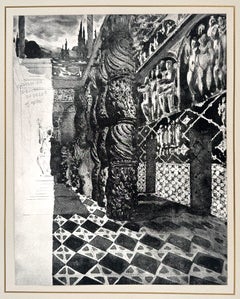
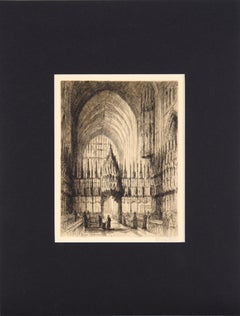
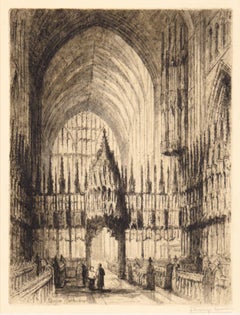
Chester Cathedral - Drypoint Etching in Ink on Paper

Chester Cathedral - Drypoint Etching in Ink on Paper

Located in Soquel, CA

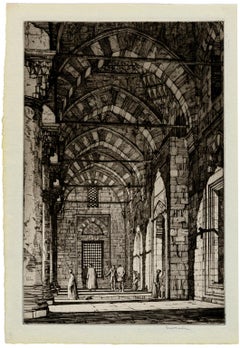
Chester Cathedral - Drypoint Etching in Ink on Paper Dramatic drypoint etching by J. Alphege Brewer (British, 1881-1946). This composition shows the interior of Chester Cathedral in Brewer's characteristic style - highly detailed and with strong contrast. The scene encompasses the cathedral from floor to ceiling, capturing the immense size of the building. There are several people in the scene which contribute to the sense of scale. Signed by hand "J. Alphege Brewer" in the lower right corner. Titled "Chester Cathedral" in plate, lower left corner. Includes original card with artist's name. Presented in a new black mat with foamcore backing. Mat size: 16"H x 12"W Paper size: 10.75"H x 7.75"W James Alphege Brewer was well known in the early 20th century as a producer of color etchings of European cathedrals and other scenes of church, college, and community. He was born July 24, 1881, in the Kensington section of London, England, the son of Henry W. Brewer, noted artist of historical architecture and prominent convert to the Catholic Church, and the grandson of John Sherren Brewer, Jr., “the brilliant editor of the Calendar of Letters of Henry VIII.” His great uncle was E. Cobham Brewer, the polymath who compiled Brewer’s Dictionary of Phrase and Fable. Among his older siblings were the artist Henry C. Brewer and the organist and writer John Francis Brewer. Brewer attended the Westminster School of Art in London, where his brother Henry also trained. In 1910, he married Florence Emma Lucas, an accomplished painter in oil and watercolor, whose father was the noted landscape artist George Lucas and whose great uncle was David Lucas, the famous engraver for John Constable. Florence's brothers Edwin and George assisted Brewer in the printing of Brewer's etchings. Brewer exhibited at the Royal Academy (RA) and the Royal Institute of Painters in Watercolour (RI), at the Paris Salon of the Académie des Beaux-Arts, and in the shows of the Royal Cambrian Academy (RCA). He became an associate of the Royal Cambrian Academy in 1929 and a full member in the last two years of his life. He was also a member of the Hampstead Society of Artists, the Society of Graphic Art, and the Ealing Arts Club, where he was first Honorary Art Secretary and then Honorary Art Chairman. Most of Brewer's larger etchings were published by Alfred Bell...

Category

Romantic Early 20th Century Interior Prints

Materials

Paper, Ink, Drypoint

Soup
Soup

Soup

By Edmund Blampied

Located in Plano, TX

Soup. 1920. Drypoint. Appleby 65. 9 x 8 1/8 (sheet 15 x 11 9/16). Edition 100. Illlustrated: Print Collector's Quarterly 13 (1926): 85. Signed in pencil. Edmund Blampied was a painter, etcher, lithographer and sculptor. Born in 1886 to a family of three boys in St. Martin, Jersey, Blampied became interested in drawing at an early age. After visiting the studio of John Helier Lander in 1899, Blampied decided to make a career as an artist. In 1903 he went to London to attend Lambeth Art School, where he studied etching under Walter Seymour. In 1905, he joined the Daily Chronicle as an artist. In that year he was awarded a scholarship to Bolt Court Scool of Photo-engraving and Lithography. In 1912 he left the Chronicle and established his own studio. He earned a living by illustrating novels and short stories. In 1913, he had his first exhibition at the Leicester Gallery in London. The following year he married Marianne Van Abbé. During the 1920's, he became a member of the Royal Society of Painter-Etchers and Engravers. During the 1920s Blampied became a member of the Royal Society of Painters-Etchers and Engravers and exhibited in London to critical acclaim. He produced a folio of comic drawings in the 1930s which was published in New York in 1934 and another that was published in London in 1936. The Keeper of Prints and Drawings at the British Museum published a mongraph on his work. His London exhibitions were highly successful. In 1938, he moved to Bulwarks, St.Aubin in Jersey, but at the onset of the Occupation, had to relocate to Route Orange, St. Brelade. remained there throughout World War II during the German Occupation, despite the fact that his wife was Jewish. During the Occupation he designed bank...

Category

Modern Early 20th Century Interior Prints

Materials

Drypoint, Etching

Original "This is what GOD give us ..." vintage poster  WW1

Original "This is what GOD give us ..." vintage poster WW1

Located in Spokane, WA

Original United States Food Administration vintage poster. This is what GOD gives us United States Food Administration. Artist A. Hendee. This is what GOD gives us What are you giving so that others may live? Eat less --wheat --meat --fats --sugar Send more to Europe or they will Stave. A bounty of freshly harvested food is shown in the image. One of the more beautiful posters produced by the United States Food Administration for the war effort. World War 1 posters...

Category

American Realist Early 20th Century Interior Prints

Materials

Lithograph

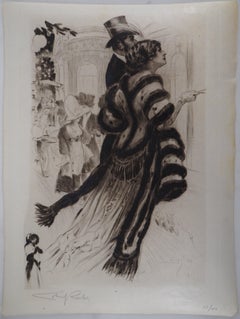
Cat and book - Original Etching, Handsigned

Cat and book - Original Etching, Handsigned

By Mily Possoz

Located in Paris, IDF

Mily POSSOZ Cat and book Original etching Handsigned in pencil Limited /40 copies On Rives vellum 20 x 15" INFORMATIONS : Bears the blind stamp of the editor "Marcel Guiot" Excell...

Category

Modern Early 20th Century Interior Prints
Materials

Etching

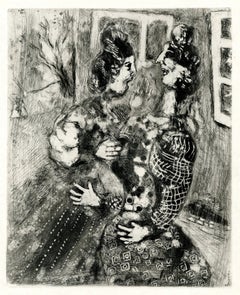
Two Women in a Coffee Shop - Handsigned original lithograph

Two Women in a Coffee Shop - Handsigned original lithograph

By Yves Alix

Located in Paris, IDF

Yves ALIX (1890 - 1969) Two Women in a Coffee Shop, c. 1930 Original stone lithograph Handsigned in pencil Numbered / 30 copies On vellum 43 x 32 cm (c. 17 x 13 inch) Very good con...

Category

Art Nouveau Early 20th Century Interior Prints
Materials

Lithograph

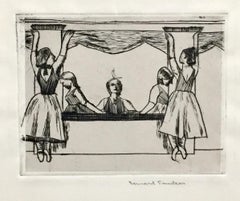
Bernard Sanders, Dancers

Bernard Sanders, Dancers

By Bernard Sanders

Located in New York, NY

Sander's interiors are always intriguing. This work also reads as a stage with a dance; it recalls the Porch of the Maidens at the Erectheum at the Acropolis in Athens. There of cour...

Category

American Modern Early 20th Century Interior Prints
Materials
Drypoint