Want more images or videos?
Request additional images or videos from the seller.

John Sartain
Famous Portaits of George and Martha Washington after Gilbert Stuart

1865

$2,500
£1,927.04
€2,305.14
CA$3,635.68
A$3,748.10
CHF 2,129.64
MX$47,444.14
NOK 24,387.37
SEK 25,548.79
DKK 17,232.30

About the Item

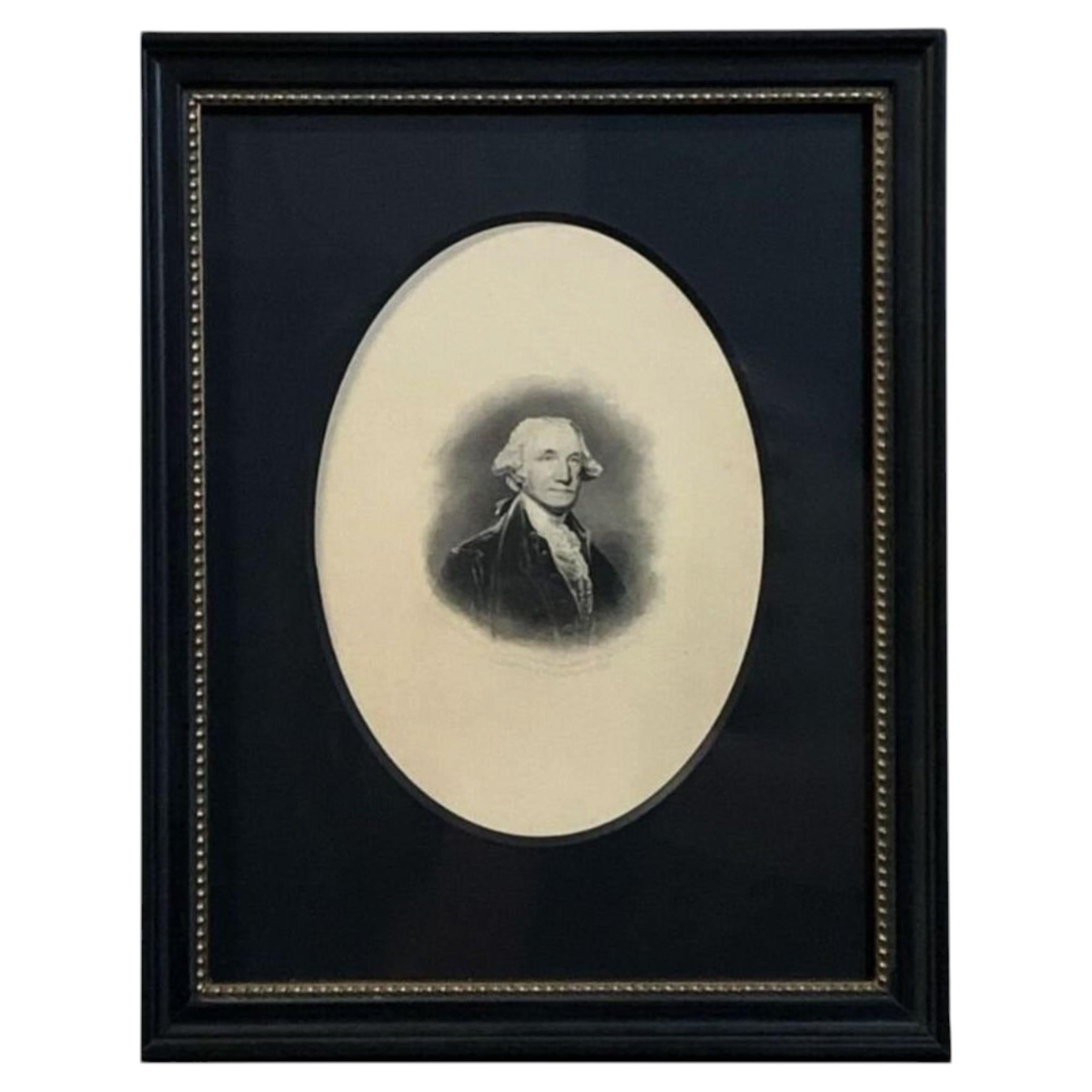
John Sartain (1808-1897) after Gilbert Stuart (1755-1828) George Washington and Martha Washington, A Pair Mezzotints, handsomely framed in period style reproduction frames with silk matting a gilt fillets Both Signed in pencil by Sartain lower left (see photos) each signed in pencil by John Sartain. Proof impressions before the engraved titles, retaining the engraved artist’s and engraver’s credits and the Bradley publication/copyright inscriptions, as described Condition: Excellent, a few tiny stains Image size: 10 5/8 x 8 3/4 inches (see photos) Frames size: 27 1/2 x 24 1/4 inches each (see photos) Pencil signed proofs before titles Published by Bradley & Company, Philadelphia The Gilbert Stuart paintings are in the collection of the National Portrait Gallery, Washington Reference: W. S. Baker, The Engraved Portraits of Washington (Philadelphia, 1880), p. 156, no. 325, for the George Washington portrait, subject to visual confirmation. Baker gives image dimensions of 10½ × 8¾ inches; these describe the composition rather than necessarily the full plate These companion portraits unite Gilbert Stuart’s enduring images of George and Martha Washington with the tonal refinement of John Sartain’s mezzotint engraving. Conceived for display together, the pair presents the Washingtons as both national figures and a married couple, bringing the imagery of the founding generation into the domestic interior. Their appeal rests in the combination of recognizable likenesses, restrained presentation, and the rich blacks and delicate transitions of tone characteristic of mezzotint. The underlying portrait tradition originated in Stuart’s celebrated paintings of the Washingtons. In 1796 Martha commissioned companion portraits of herself and the president for Mount Vernon. Stuart retained the unfinished paintings, now known as the Athenaeum portraits, using George’s likeness as the basis for subsequent versions. The original paintings are jointly owned by the National Portrait Gallery and the Museum of Fine Arts, Boston. Without photographs of your prints, the precise relationship of Sartain’s compositions to these originals or to Stuart’s replicas should remain qualified. Sartain was particularly well suited to translating painted portraits into prints. Born in London, he settled in Philadelphia in 1830 and became a prominent engraver and participant in the city’s artistic institutions. His career included a long association with the Pennsylvania Academy of the Fine Arts and work for the Philadelphia Centennial Exhibition of 1876. Mezzotint offered him a means of suggesting the softness of flesh, the weight of clothing, and the atmospheric depth of a painted background through graduated light and shade. John Sartain (1808–1897) was one of nineteenth-century America’s leading mezzotint engravers, particularly admired for translating painted portraits into richly shaded prints. Born in London, he began his apprenticeship with the engraver John Swaine in 1823 and subsequently married Swaine’s daughter, Susannah. The couple emigrated to Philadelphia in 1830, where Sartain established a career closely connected with the city’s painters, publishers, and artistic institutions. Sartain’s importance lies in his revival and popularization of mezzotint in the United States. Although sometimes credited with introducing the process to America, he had earlier American predecessors; “revived” or “popularized” is therefore more precise. The Philadelphia Museum of Art emphasizes his role in renewing a technique already long favored in England for reproducing paintings. Its ability to move smoothly from deep black through subtle grays to luminous highlights made mezzotint especially effective for portraiture. In mezzotint, the plate is roughened to hold ink, then selectively scraped and burnished to produce lighter passages. Sartain frequently combined its tonal effects with etched, engraved, and stippled work. This approach allowed him to suggest the softness of skin, the texture of fabric, and the depth of a painted background while retaining precise facial features. The Free Library’s exhibition documents such combinations throughout his career, including portraits after John Neagle and Franz Xaver Winterhalter. Working with prominent painters, including Thomas Sully, Henry Inman, and Neagle, Sartain helped circulate their portraits beyond the owners of the original canvases. His production is estimated at more than 1,500 prints, ranging from separately published engravings to illustrations for Godey’s Lady’s Book, Graham’s Magazine, and the Eclectic Magazine. He also became a publisher: Sartain’s Union Magazine of Literature and Art, issued from 1849 to 1852, published contributions by leading writers, including Edgar Allan Poe’s “The Bells.” His influence extended through his children Emily, Samuel, and William, who pursued artistic careers, and through his institutional work in Philadelphia. He served as art director of the 1876 Centennial Exposition. In 1997 the Philadelphia Museum of Art marked the centenary of his death with Mezzotints by John Sartain: Philadelphia Printmaker, 1808–1897, drawn entirely from its own collection—an indication of the depth of its holdings and his continuing significance in American print history. For your particular George and Martha Washington pair, I have not yet verified a museum holding of the full-size Bradley publication, or of its pencil-signed proofs before title. The institutional records located require these distinctions: Institution Documented holding Relationship to your pair Pennsylvania Academy of the Fine Arts John Sartain, George Washington, Martha Washington, mid-nineteenth century; mezzotint, etching, engraving, and stipple; accession 1948.23.774, Bequest of Dr. Paul J. Sartain Two small compositions, each approximately 3⁷⁄₁₆ × 2¼ inches. This is a different, smaller work, not confirmation of your Bradley pair. Philadelphia Museum of Art A collection of Sartain mezzotints sufficient to supply its 1997 exhibition Confirms substantial holdings of his work, but the exhibition record does not identify your pair. Smithsonian American Art Museum John Sartain after Edward Savage, George Washington and His Family, c.1865; accession 1966.48.56
  • Creator:
    John Sartain (1808 - 1897, American)
  • Creation Year:
    1865
  • Dimensions:
    Height: 27.5 in (69.85 cm)Width: 24.25 in (61.6 cm)Depth: 2 in (5.08 cm)
  • Medium:
  • Movement & Style:
  • Period:
  • Condition:
    Very fine condition, very slight spotting, archival framing wiith fillet and silk matting by Hackman Frames, Columbus, Ohio.
  • Gallery Location:
    Fairlawn, OH
  • Reference Number:
    Seller: FA36751stDibs: LU14018768422

More From This Seller

View All
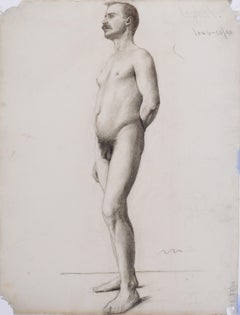
Antique Vintage Artwork, Oil on Canvas, Signed, 20th Century, Framed

Antique Vintage Artwork, Oil on Canvas, Signed, 20th Century, Framed

Located in Fairlawn, OH

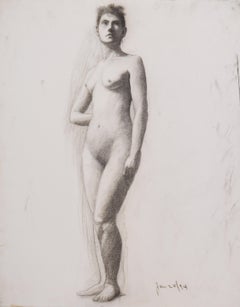
Standing Female Academic Nude Drawing Charcoal on Berville-Lalanne watermark paper, Jan 25, 1894 Unsigned Condition: Excellent Sheet/Image size: 22 x 18 inches Provenance: William Gr...

Category

1890s American Impressionist Nude Drawings and Watercolors

Materials

Charcoal

Untitled (Portrait)

Untitled (Portrait)

By William H. Bailey

Located in Fairlawn, OH

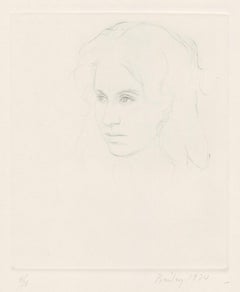
Untitled (Portrait) Drypoint printed in blue-black graphite mixed with silver, 1974 Signed and dated lower ight (see photo) From: Series entitled Six Drypoints Edition: 23 (4/23) Numbered lower left (see photo) Print Shop: Crown Point Press Printer: Jeannie Fine Publisher: Parasol Press, New York Note: A portfolio is in the collection of the National Gallery, Australia, Fine Arts Museums of San Francisco- de Young/Legion of Honor, Davis Museum at Wellesley College and the Yale University Art Gallery. Condition: Excellent Image/Plate size: 6 3/8 x 5 3/8 inches Sheet size: 24 x 20 inches From a portfolio of six drypoints, printed with unqiue combination of blue-black graphite shavings combined with silver to create the appearence of an original drawing. I know of no other artist to use a similar printing technique. William Bailey studied art at the University of Kansas, Yale University and Yale School of Art where he studied with Josef Albers receiving his MFA in 1957. Mr. Bailey’s first exhibition in New York was at Robert Schoelkopf Gallery in 1968, where he showed regularly until its closing in 1990. During the 90’s he exhibited at the Andre Emmerich Gallery and on its closing, exhibited at the Robert Miller Gallery. In 2004 Bailey moved to the Betty Cuningham Gallery where his most recent exhibition was held from April 30 - June 11, 2016. Mr. Bailey’s work has been exhibited extensively in both America and Europe. He is represented in the collections of The Whitney Museum of American Art, The Museum of Modern Art, the Pennsylvania Academy of Fine Arts, and the Hirschhorn Museum and Sculpture Garden, among others. He was awarded a Guggenheim Fellowship in painting in 1965. Mr. Bailey was elected to The National Academy of Design in 1983 and to The American Academy of Arts and Letters in 1986. Mr. Bailey taught at The Yale School of Art from 1958 to 1962 and from 1969 to 1995. He has also taught at The Cooper Union, University of Pennsylvania and Indiana University. He maintains studios in New Haven and in Umbertide, Italy. Courtesy Betty Cunningham Gallery Tribute to William Bailey THE NEW YORK TIMES William Bailey, whose pristine, idealized still lifes and female nudes made him one of the leading figures in the return of figurative art in the 1980s, died on April 13 at his home in Branford, Conn. He was 89. His death was confirmed by his daughter, Alix Bailey. Beyond his painting, Mr. Bailey influenced generations of students in his many years as a teacher at the Yale School of Art. In some of his best-known work, Mr. Bailey arranged simple objects — the eggs, bowls, bottles and vases that he once called “my repertory company” — along a severe horizontal shelf, or on a plain table, swathing them in a breathless, deceptively serene atmosphere heavy with mystery. William Bailey, Modernist Figurative Painter, Dies at 89 He swathed his nudes and still lifes of eggs, vases, bottles and bowls in a breathless, deceptively serene atmosphere heavy with mystery. The painter William Bailey in 2009. He was never given a career survey in a major museum, but his influence, particulary on students at Yale, was deep. Ford Bailey By William Grimes for the New York Times April 18, 2020 William Bailey, whose pristine, idealized still lifes and female nudes made him one of the leading figures in the return of figurative art in the 1980s, died on April 13 at his home in Branford, Conn. He was 89. His death was confirmed by his daughter, Alix Bailey. Beyond his painting, Mr. Bailey influenced generations of students in his many years as a teacher at the Yale School of Art. In some of his best-known work, Mr. Bailey arranged simple objects — the eggs, bowls, bottles and vases that he once called “my repertory company” — along a severe horizontal shelf, or on a plain table, swathing them in a breathless, deceptively serene atmosphere heavy with mystery. His muted ochres, grays and powdery blues conjured up a still, timeless world inhabited by Platonic forms, recognizable but uncanny, in part because he painted from imagination rather than life. “They are at once vividly real and objects in dream, and it is the poetry of this double life that elevates all this humble crockery to the realm of pictorial romance,” Hilton Kramer wrote in The New York Times in 1979. Mr. Bailey’s female figures, some clothed in a simple shift or robe and others partly or entirely nude, are disconcertingly impassive, implacable and unreadable, fleshly presences breathing an otherworldly air. The critic Mark Stevens, writing in Newsweek in 1982, credited Mr. Bailey with helping to “restore representational art to a position of consequence in modern painting.” But his version of representation was entirely idiosyncratic, seemingly traditional but in fact “a modernism so contrarian,” the artist Alexi Worth wrote in a catalog essay for the William Harrison Bailey...

Category

1970s Realist Portrait Prints

Materials

Drypoint

La Belle-Fillle de Goya (after Francisco de Goya)

La Belle-Fillle de Goya (after Francisco de Goya)

Located in Fairlawn, OH

La Belle-Fillle de Goya (after Francisco de Goya) Etching on cream laid paper, 1872 Signed in the plate lower right of image Inscribed: Goya, pinx, lower left Published in Gazette de...

Category

1870s Romantic Figurative Prints

Materials

Etching

Self Portrait sketching with Vignette in Profile

Self Portrait sketching with Vignette in Profile

Located in Fairlawn, OH

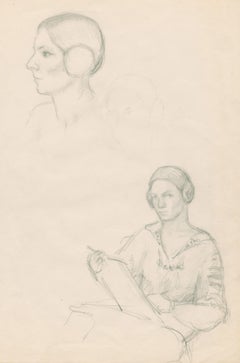
Self Portrait sketching with Vignette in Profile Graphite on thin wove paper, c. 1940's Unsigned Condition: Small nicks in the right margin, not affecting the image Sheet size: 14 1/2 x 10 inches Provenance: Paul Cadmus Jon F. Anderson (1937-2018) Born in Hoboken, New Jersey, Margaret Hoening (1906–1998) was a painter and an etcher perhaps best known for her photographs as part of the PaJaMa photography collective. After attending Smith College, she settled in New York, where she pursued formal artistic training at the Art Students League. There, she met the artist couple Paul Cadmus and Jared French. In 1937, she married French, fifteen years her junior, who had spent the previous decade with Cadmus. The trio formed a tight bond, with Cadmus and French continuing their relationship. Born in Hoboken, New Jersey, Margaret Hoening (1906–1998) was a painter and an etcher perhaps best known for her photographs as part of the PaJaMa photography collective. After attending Smith College, she settled in New York, where she pursued formal artistic training at the Art Students League. There, she met the artist couple Paul Cadmus and Jared French. In 1937, she married French, fifteen years her junior, who had spent the previous decade with Cadmus. The trio formed a tight bond, with Cadmus and French continuing their relationship. Together, the three formed PaJaMa (a mashup of their first names, Paul, Jared, and Margaret). Using Hoening’s Leica, they captured themselves, their artist friends, and members of the gay community posing in artful tableaux on the beaches of Fire Island, Provincetown, and Nantucket over the following eight years. Those captured by their camera include the photographer George Platt Lynes; Cadmus’s sister and artist Fidelma; artist Bernard Perlin; and Monroe Wheeler, director of exhibitions at the Museum of Modern Art, among others. Though she produced few canvases, Hoening’s paintings demonstrate the influences of French and Cadmus, particularly with her adoption of the time-intensive, traditional medium of egg tempera that they championed. In the 1940s, the Frenches’ social circle continued to expand. They befriended the British author E.M. Forster, who stayed with them on his first trip to New York in 1947, spending a few days with them in Provincetown, and visiting them again in 1949. When Cadmus began a relationship with the young artist George Tooker in 1944, the trio became a foursome, with Tooker regularly vacationing with the group and appearing in PaJaMa’s photographs...

Category

1940s American Modern Portrait Drawings and Watercolors

Materials

Graphite

Untitled

Untitled

Located in Fairlawn, OH

Untitled Watercolor on paper, c,. 1890 Unsigned Provenance: Estate of the artist Image/Sheet size: 3 1/4 x 4 1/8 inches From Wikipedia "Francis Augustus Lathrop (June 22, 1849 – Oct...

Category

1890s American Impressionist Landscape Drawings and Watercolors

Materials

Watercolor

You May Also Like

Portrait of President George Washington, Early 19th Century

Portrait of President George Washington, Early 19th Century

Located in Fredericksburg, VA

This early 19th-century French School portrait of President George Washington, rendered in pastel and graphite on paper, exemplifies the European admiration for the American leader. ...

Category

Early 19th Century Portrait Paintings

Materials

Paper, Oil Pastel, Graphite

George Washington, Lithograph by George Deem

George Washington, Lithograph by George Deem

By George Deem

Located in Long Island City, NY

Artist: George Deem, American (1932 - 2008) Title: George Washington, George Washington Year: 1978 Medium: Lithograph, signed and numbered in pencil Edition: 300; AP 30 Image Size: ...

Category

1970s Conceptual Portrait Prints

Materials

Lithograph

George Washington Engraving by H. B. Hall, after William Birch

George Washington Engraving by H. B. Hall, after William Birch

By William Birch

Located in Colorado Springs, CO

Presented is a handsome engraved portrait of George Washington by artist H. B. Hall. This engraving was published in New York, in a limited edition of 125 impressions. The engraving is based on a painting by William Birch Gilbert Stuart, a small miniature in enamel, completed in 1796. Birch painted Washington from life in his office in Philadelphia, by the request of I. G. Van Staphorst, Esqr. of Amsterdam. In the small portrait, Washington is depicted in a head and shoulders pose, facing right. He wears a dark coat and vest and a white shirt and ruffled cravat. The father of our country, George Washington was the commander in chief of the Continental Army during the American Revolutionary War (1775-83) and served two terms as the first United States president...

Category

Antique 19th Century American Federal Prints

Materials

Paper

$1 George Washington

$1 George Washington

By Houben R.T.

Located in Boston, MA

Artist: Houben, R.T. Title: $1 George Washington Date: 2025 Medium: Acrylic and foil on canvas Unframed Dimensions: 40" x 30" Signature: Signed Edition: Unique

Category

2010s Contemporary Figurative Paintings

Materials

Mixed Media, Acrylic

George Washington with Powder, Surrealist Portrait Lithograph by George Deem

George Washington with Powder, Surrealist Portrait Lithograph by George Deem

By George Deem

Located in Long Island City, NY

Artist: George Deem, American (1932 - 2008) Title: George Washington with Powder Year: Circa 1980 Medium: Lithograph, signed and numbered in pencil Edition: 300; AP 40 Image Size: 25...

Category

1970s Conceptual Portrait Prints

Materials

Lithograph, Screen