Luis Jiménez
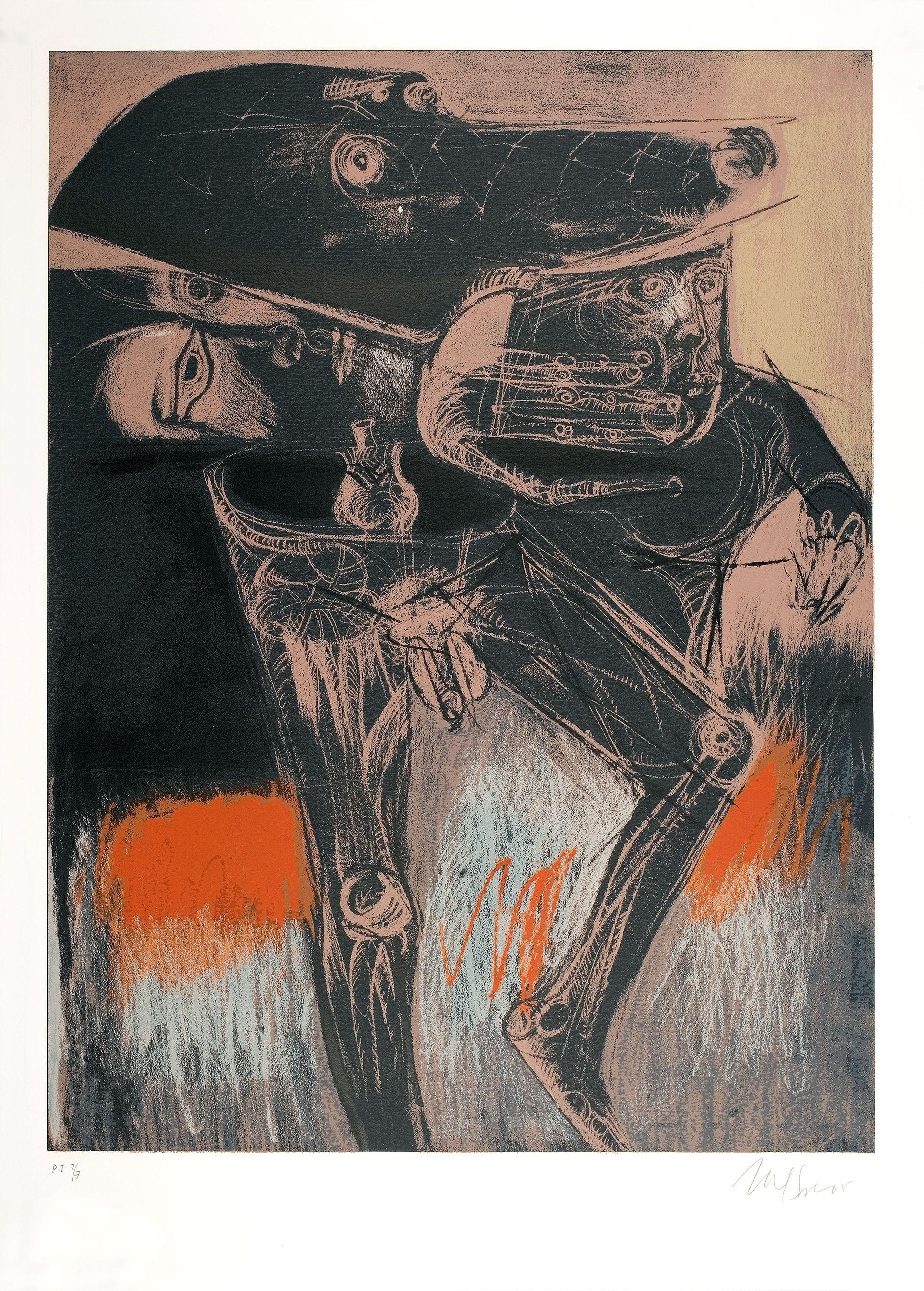
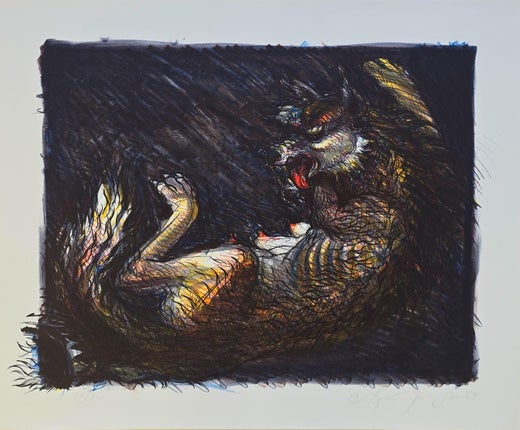
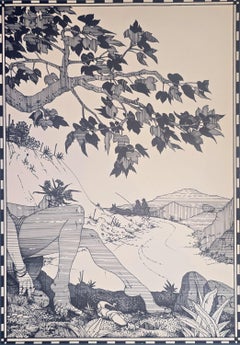
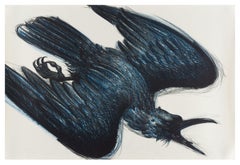
Born in El Paso, Texas, he worked at his father's neon sign studio as a child, which prepared him to make public art. He studied art and architecture at the University of Texas in Austin and El Paso, earning a bachelor's degree in 1964. He moved to New York City in 1966 after completing his post-graduate work at Ciudad Universitaria, Mexico City, D.F. He became an accomplished artist and taught art at the University of Arizona and later the University of Houston. As a sculptor, Jiménez was known for his large polychromed fiberglass sculptures, often of Southwestern and Hispanic themes. His works were often controversial. They are eminently recognizable due to their themes, his original sculptural style, and the colorful, undulating surfaces the artist employed. The finish of his sculptures had more in common with commercial products than with conventional fine art sculptures. Man on Fire (1969) at the Smithsonian American Art Museum in 2023 Jiménez was influenced by the murals of José Clemente Orozco and Diego Rivera. He was very much a contemporary artist whose roots were in pop art, as much as they were in both the modernism of the Mexican muralists and the regionalism of Thomas Hart Benton and Grant Wood. Heroic sculptures were Jiménez's forte, championing the common man in his work. By working in his father's shop on neon signs and sculptures, he was brought in contact with popular culture, which also included lowrider car culture. The brightly painted fiberglass bodywork, often accented with glitter, served as a particularly relevant artistic influence.[5] While he is best known as a sculptor, Jiménez also made remarkable color lithographs and color drawings in pencil, pastel, and oil stick. He made preparatory drawings for his sculptures, some of which were very large. Most of his sculptures were made of fiberglass, which were cast in a mold, after which they were painted with multiple layers of paint and coated with epoxy. One art expert has noted, "There was no surface on any Luis Jiménez sculpture that was ever any less than six different colors, each airbrushed separately adding a slightly different tone." Jiménez would also often use flake, that glittery quality often seen on lowrider cars, in his paint. In 1993, Jiménez was a recipient of the New Mexico Governor's Awards for Excellence in the Arts. In 1998 he received a Distinguished Alumni award from the University of Texas in recognition of his artwork.