(after) Raoul Dufy
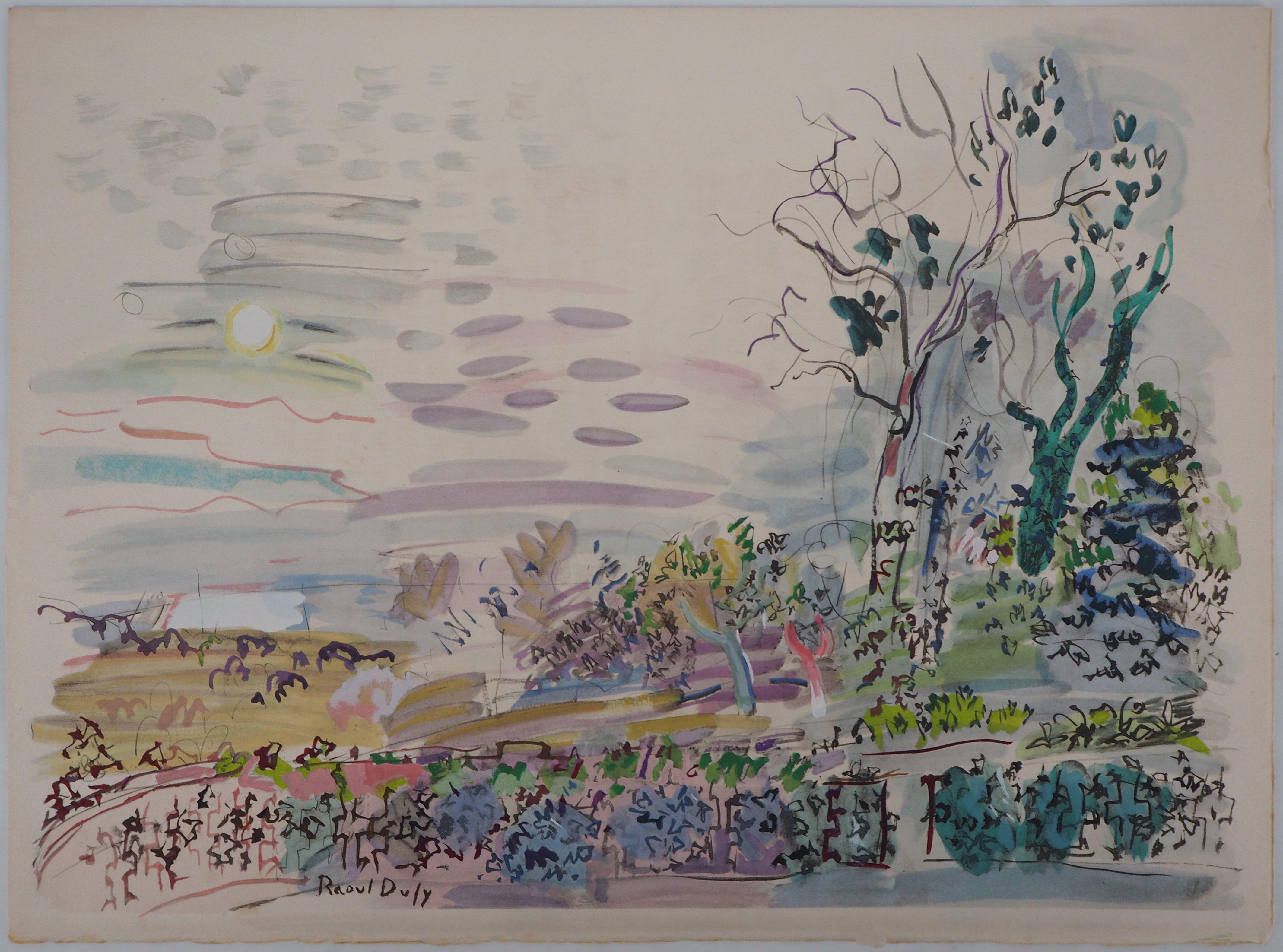
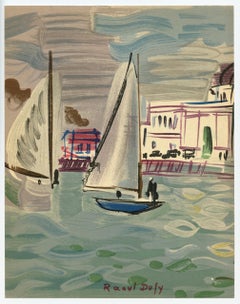
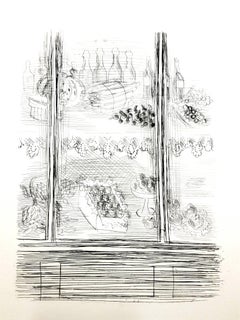
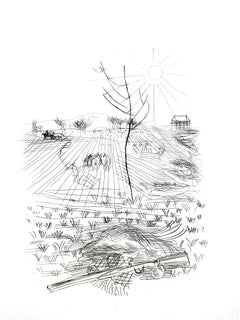
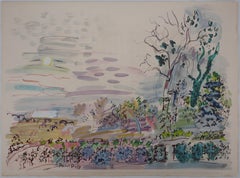
Raoul Dufy (1877 – 1953) was a French Fauvist painter, brother of Jean Dufy. He developed a colorful, decorative style that became fashionable for designs of ceramics and textiles, as well as decorative schemes for public buildings. He is noted for scenes of open-air social events. He was also a draftsman, printmaker, book illustrator, scenic designer, a designer of furniture, and a planner of public spaces. The impressionist landscape painters, such as Claude Monet and Camille Pissarro, influenced Dufy profoundly. Matisse's Luxe, Calme et Volupte, which Dufy saw at the Salon des Independants in 1905, was a revelation to the young artist, and it directed his interests towards Fauvism. Les Fauves (the wild beasts) emphasized bright color and bold contours in their work. Dufy's painting reflected this aesthetic until about 1909, when contact with the work of Cezanne led him to adopt a subtler technique. It was not until 1920, however, after he had flirted briefly with yet another style, cubism, that Dufy developed his own distinctive approach. It involved skeletal structures, arranged with foreshortened perspective, and the use of thin washes of color applied quickly, in a manner that came to be known as stenographic. Dufy's cheerful oils and watercolors depict events of the time period, including yachting scenes, sparkling views of the French Riviera, chic parties, and musical events.