Video Loading
Want more images or videos?
Request additional images or videos from the seller.

Seymour Fogel
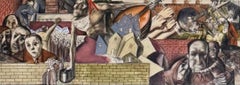
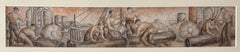
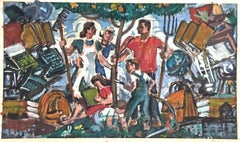
WPA Mural Study American Scene Social Realism Mid 20th Century Modern Workers

c. 1930s/40s

$50,000
£38,179.37
€45,754.65
CA$71,978.85
A$74,214.23
CHF 41,843.92
MX$949,892.34
NOK 482,454.90
SEK 504,619.50
DKK 342,133.50

About the Item

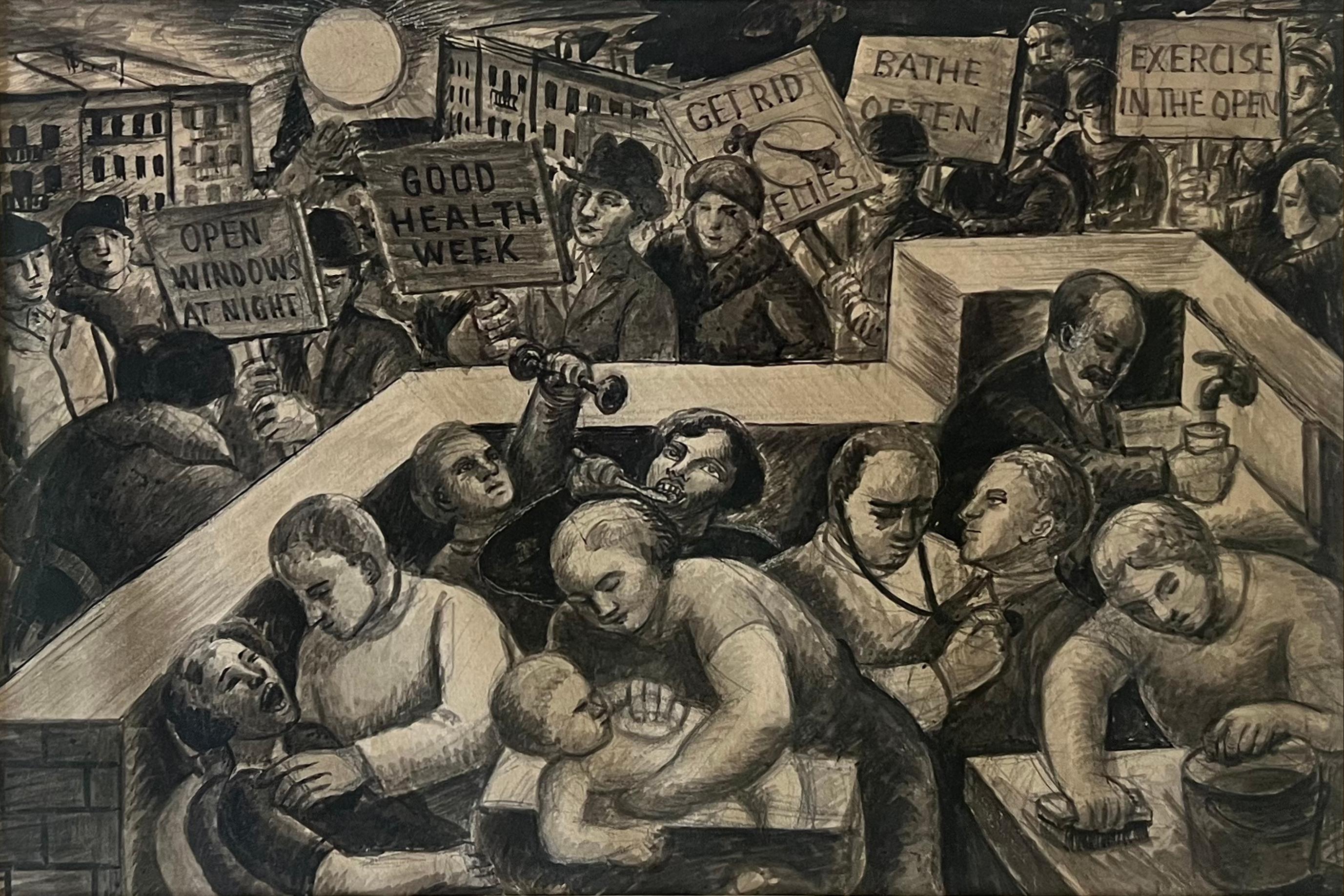
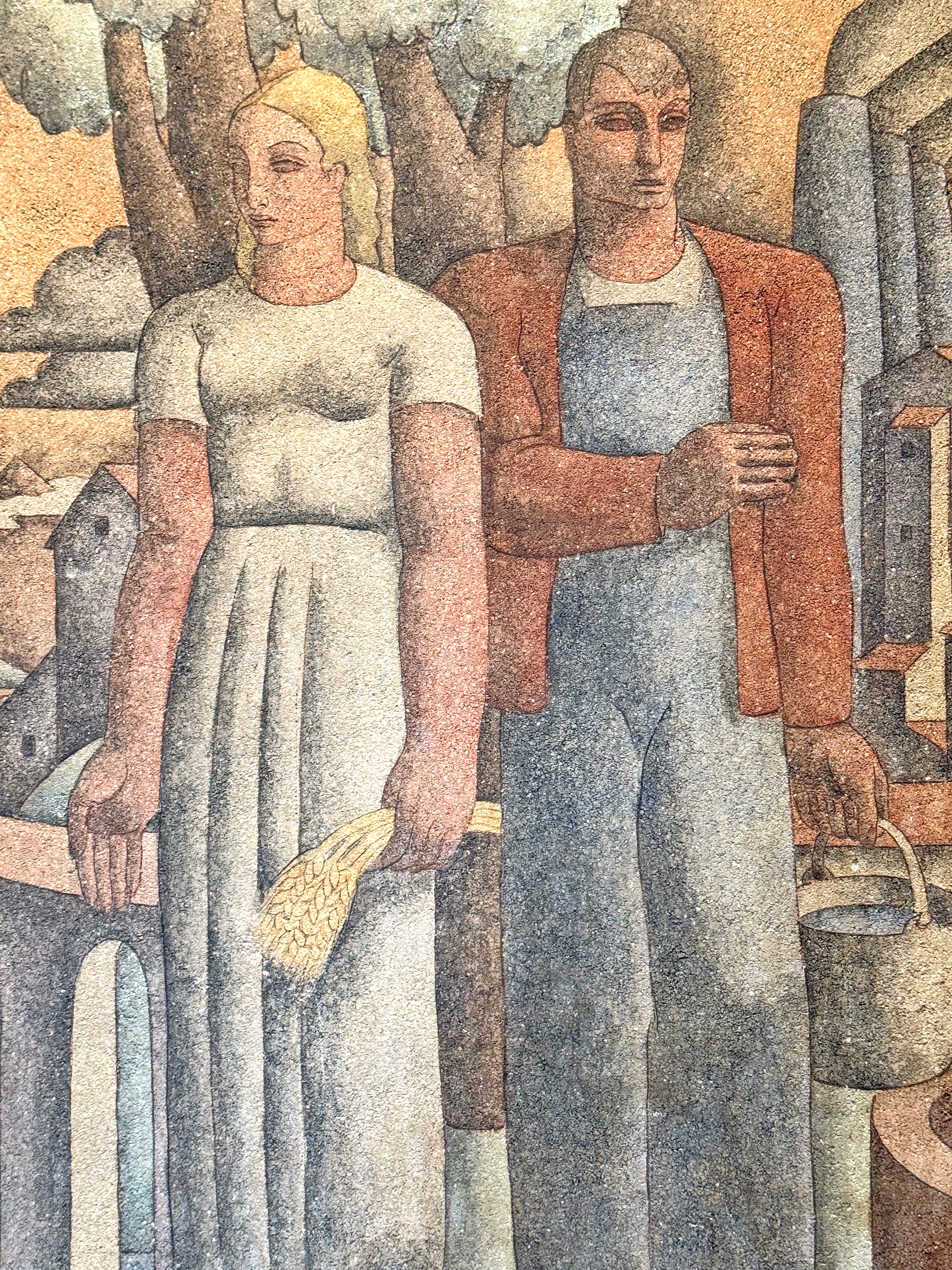
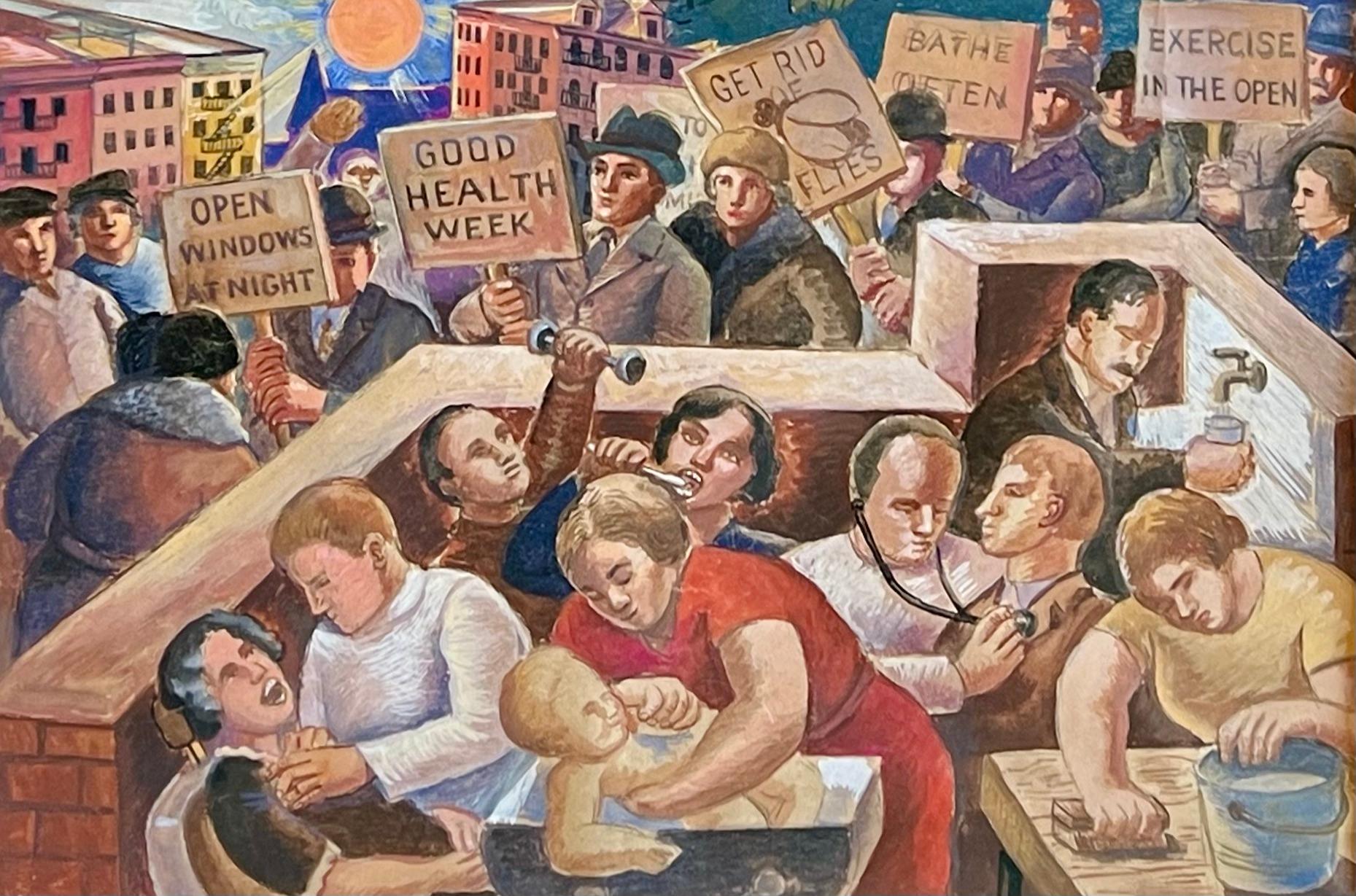
WPA Mural Study American Scene Social Realism Mid 20th Century Modern Workers Seymour Fogel (1911-1984) Mural Study, untitled 11 x 49 1/4 inches (sight) Tempera on board Provenance: Graham Modern label verso Framed 25 x 62 inches BIO Seymour Fogel was born in New York City on August 24, 1911. He studied at the Art Students League and at the National Academy of Design under George Bridgeman and Leon Kroll. When his formal studies were concluded in the early 1930s he served as an assistant to Diego Rivera who was then at work on his controversial Rockefeller Center mural. It was from Rivera that he learned the art of mural painting. Fogel was awarded several mural commissions during the 1930s by both the Works Progress Administration (WPA) and the Treasury Section of Fine Arts, among them his earliest murals at the Abraham Lincoln High School in Brooklyn, New York in 1936, a mural in the WPA Building at the 1939-1940 New York World's Fair, a highly controversial mural at the U.S. Post Office in Safford, Arizona (due to his focus on Apache culture) in 1941 and two murals in what was then the Social Security Building in Washington, D.C., also in 1941. Fogel's artistic circle at this time included Phillip Guston, Ben Shahn, Franz Kline, Rockwell Kent and Willem de Kooning. In 1946 Fogel accepted a teaching position at the University of Texas at Austin and became one of the founding artists of the Texas Modernist Movement. At this time he began to devote himself solely to abstract, non-representational art and executed what many consider to be the very first abstract mural in the State of Texas at the American National Bank in Austin in 1953. He pioneered the use of Ethyl Silicate as a mural medium. Other murals and public works of art done during this time (the late 1940s and 1950s) include the Baptist Student Center at the University of Texas (1949), the Petroleum Club in Houston (1951) and the First Christian Church, also in Houston (1956), whose innovative use of stained glass panels incorporated into the mural won Fogel a Silver Medal from the Architectural League of New York in 1958. Fogel relocated to the Connecticut-New York area in 1959. He continued the Abstract Expressionism he had begun exploring in Texas, and began experimenting with various texturing media for his paintings, the most enduring of which was sand. In 1966 he was awarded a mural at the U.S. Federal Building in Fort Worth, Texas. The work, entitled "The Challenge of Space", was a milestone in his artistic career and ushered in what has been termed the Transcendental/Atavistic period of his art, a style he pursued up to his death in 1984. Painted and raw wood sculpture was also reflective of this style. Another mural done during this period was the U.S. Customs Building at Foley Square in New York City that was entirely executed in mosaic tiles, a mural medium he preferred in the last decades of his career. Fogel's work is well represented in the collections of major museums, among them the Metropolitan Museum of Art and the Whitney Museum of American Art in New York City, the Dallas Museum of Fine Art in Texas, the National Portrait Gallery and the Hirshhorn Museum and Sculpture Garden in Washington, D.C., The State Museum of Louisiana in New Orleans, and the Telfair Museum in Savannah, Georgia. During his life Fogel authored numerous articles on the interrelationship of art and architecture, served as a Vice President of the Architectural League of New York (1960) and has had his work imaged and/or discussed in some thirty books, including Nathanial Pousette-Dart's seminal work "American Painting Today" (1956) where Fogel was included along with the likes of Milton Avery, Robert Motherwell, Jackson Pollock, Edward Hopper, Yasuo Kuniyoshi and Stuart Davis as important American artists.
  • Creator:
    Seymour Fogel (1911-1984, American)
  • Creation Year:
    c. 1930s/40s
  • Dimensions:
    Height: 25 in (63.5 cm)Width: 62 in (157.48 cm)
  • Medium:
  • Movement & Style:
  • Period:
  • Condition:
  • Gallery Location:
    New York, NY
  • Reference Number:
    1stDibs: LU1156215036892

More From This Seller

View All
WPA Mural Study Mid-Century Modern American Scene Social Realism Workers

WPA Mural Study Mid-Century Modern American Scene Social Realism Workers

By Anton Refregier

Located in New York, NY

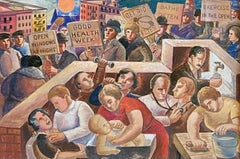
WPA Mural Study Mid-Century Modern American Scene Social Realism Workers Anton Refregier (1905-1979) Mural Study, Untitled 7 ¾ x 22 inches (sight) Gouache, pencil, and charcoal on board, c. 1940s Unsigned Provenance: Estate of Seymour Fogel, noted verso Thomas McCormick Gallery...

Category

1940s American Modern Mixed Media

Materials

Charcoal, Gouache, Board, Pencil

St, Louis River Mural Study American Scene Social Realism Mid 20th Century WPA

St, Louis River Mural Study American Scene Social Realism Mid 20th Century WPA

By Jo Cain

Located in New York, NY

St, Louis River Mural Study American Scene Social Realism Mid 20th Century WPA Jo Cain (1904-2003) The Drama of the St. Louis Great River 23 1/4 x 25 ½ inches Gouache on board c. 19...

Category

1930s American Realist Figurative Paintings

Materials

Gouache, Board

WPA Post Office Mural Study American Scene Regionalism Social Realism Modern Art

WPA Post Office Mural Study American Scene Regionalism Social Realism Modern Art

By Louise Ronnebeck

Located in New York, NY

WPA Post Office Mural Study American Scene Regionalism Social Realism Modern Art Louise Emerson Ronnebeck (1901 - 1980) Oil Riggers, Mural Study Image: 6 1/2 x 37 inches Watercolor ...

Category

1930s American Modern Figurative Drawings and Watercolors

Materials

Paper, Watercolor, Cardboard

You May Also Like

A Large, Striking Cubist Modern 1930s WPA-Era Mural Study Drawing, Farm Scene

A Large, Striking Cubist Modern 1930s WPA-Era Mural Study Drawing, Farm Scene

By Eugene Dana

Located in Chicago, IL

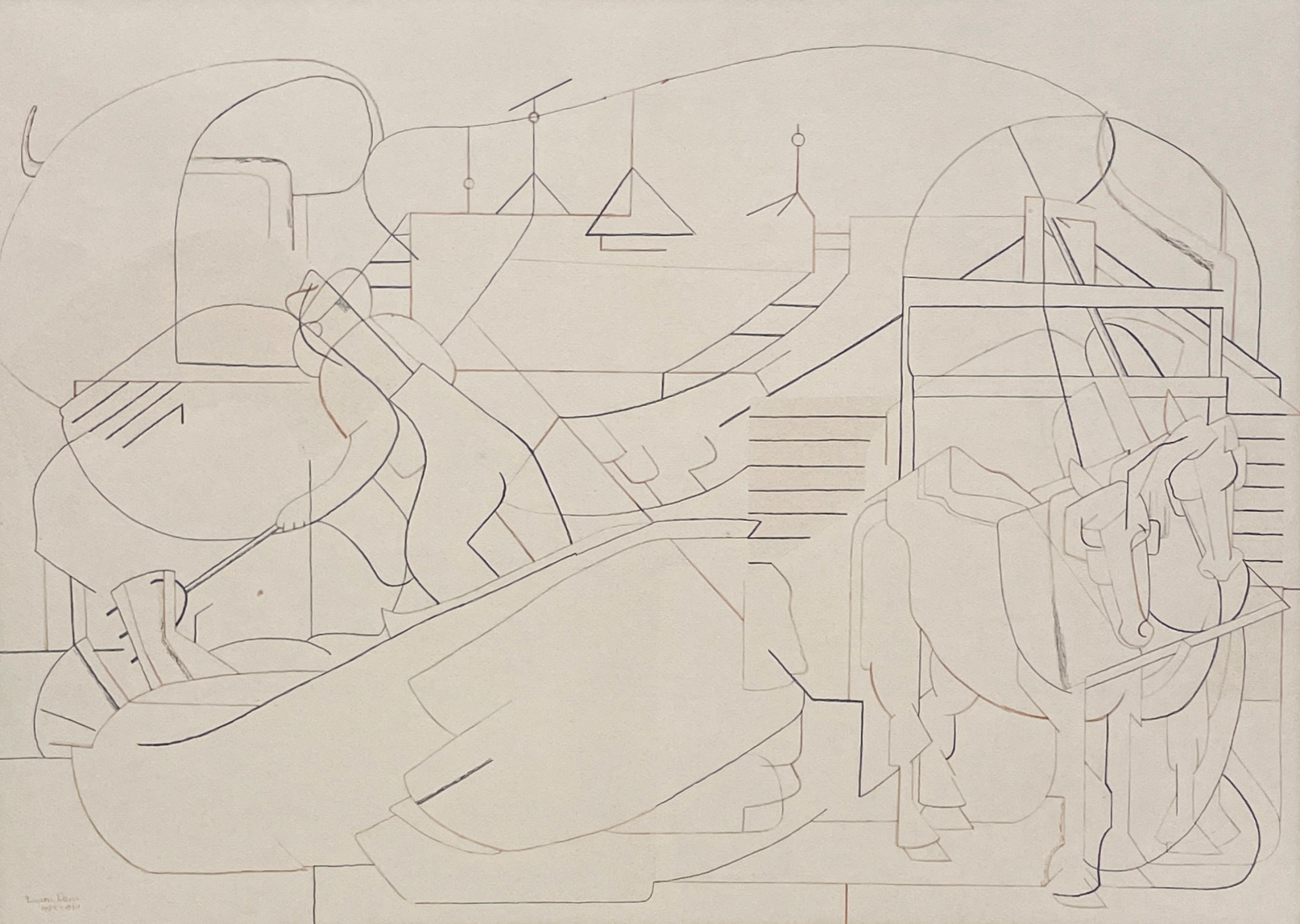
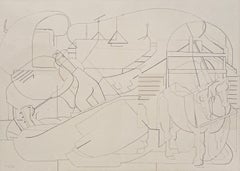
A large, striking, finely drawn 1930s Cubist Modern WPA Era mural study ink drawing of a rural farm scene (Batchelder Farm, Stillwater, MN) by notable Chicago Institute of Design art...

Category

1930s American Modern Landscape Drawings and Watercolors

Materials

Paper, Ink

"Industry and Agriculture", Allegorical Art Deco Fresco, 1934 Chicago Art Inst.

"Industry and Agriculture", Allegorical Art Deco Fresco, 1934 Chicago Art Inst.

Located in Philadelphia, PA

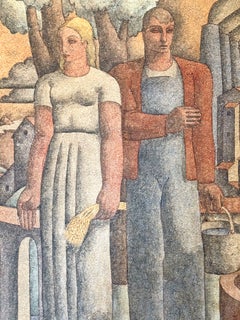
This superb example of WPA-period allegorical painting by Edwin Boyd Johnson is both classic and highly unusual. Unlike most WPA paintings and studies, which are oil on canvas or go...

Category

Vintage 1930s American Art Deco Paintings

Materials

Paint

Gatherers of Dry Wood -  Oil Painting Cubism - French

Gatherers of Dry Wood - Oil Painting Cubism - French

By Valentine Prax

Located in London, GB

VALENTINE ZADKINE PRAX 1897-1981 (French) Title: Gatherers of Dry Wood / Ramasseuses de Bois Mort, circa 1925 Technique: Original Signed Oil Painting on canvas size: 116.2 x 100.3 cm / 45.75 x 39.5 in Additional Information: This original oil painting by Valentine Prax-Zadkine is hand signed by the artist at the lower left part. It was painted in circa 1925. Provenance: Collection Pierre Alexandre Regnauld (1868-1954), Amsterdam. Anonymous sale; Collection de Tableaux Modernes de feu P.A. Regnault, Paul Brandt...

Category

1920s Cubist Figurative Paintings

Materials

Oil

Samuel Greenburg, Rural Scene Mural Study

Samuel Greenburg, Rural Scene Mural Study

Located in New York, NY

This Rural Scene Mural Study by Samuel Greenburg is scored in a manner indicating transfer to a larger format. However as yet no related image or mural is...

Category

Mid-20th Century Other Art Style Figurative Drawings and Watercolors

Materials

Tempera, Pencil

A Bold 1940s Cubist Mural Study of a Chicago City Scene by Rudolph Weisenborn

A Bold 1940s Cubist Mural Study of a Chicago City Scene by Rudolph Weisenborn

By Rudolph Weisenborn

Located in Chicago, IL

A bold 1940s graphite on paper WPA era mural study of a Chicago city scene by Rudolph Weisenborn. Artwork size: 12 1/2 x 9 1/4 inches. Archivally matted to 18 x 16 inches, Provenance: Estate of the artist. Rudolph Weisenborn was born in Strassburg, Germany in 1881, but was orphaned at the age of nine. He was taken-in by Mid-Western farmer Thomas Westaby and spent his early years in Wisconsin, Iowa and North Dakota. Weisenborn first attended the University of North Dakota in 1898, then the Students School of Art in Denver. Various accounts have him working out west as a gold miner and cowboy. Around 1912, he settled in Chicago and worked as a window designer for Marshall Field’s. Weisenborn is best known as the founder of the Chicago No-Jury Society of Artists. The group was founded because many artists could not get their work accepted into the mainstream Art Institute shows. Weisenborn is quoted as saying that he harbored feelings of disdain for any jury and that his own paintings were frequently rejected by conservative jurors. He was also involved and helped found other radical artist’s groups such as the Salon des Refuses, Cor Ardens and Neo-Arlimusic. In 1936, he helped found the New York-based American Abstract Artist’s Group. He created the only abstract mural for the 1933 Century of Progress Exhibition in Chicago and also worked for the Federal Arts Project in the Easel Division. His WPA murals can be found in Crane Technical High School and Nettlehorst Elementary School in Chicago, IL. In 1945, Chicago businessman Herman Spertus...

Category

1940s American Modern Landscape Drawings and Watercolors

Materials

Paper, Graphite