
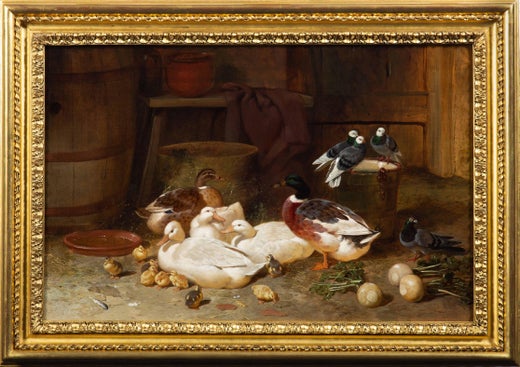
Barnyard Companions
By Edgar Hunt
Located in Belgravia, London, London
Oil on canvas Canvas size: 20 x 30 inches Framed size: 29 x 36.5 inches Signed lower right
Category
19th Century Animal Paintings
Materials
Canvas, Oil
John Frederick Herring Sr., born in London in 1795, was the son of a London merchant of Dutch parentage, who had been born overseas in America. The first eighteen years of Herring's life were spent in London, where his greatest interests were drawing and horses. In 1814, at the age of 18, he moved to Doncaster in the north of England, and by 1815, had married Ann Harris. His sons John Frederick Herring Jr., Charles Herring, and Benjamin Herring were all to become artists, while his two daughters, Ann and Emma, both married painters.
In Doncaster, Herring was employed as a painter of inn signs and coach insignia on the sides of coaches, and his later contact with a firm owned by a Mr. Wood led to Herring's subsequent employment as a night coach driver. Herring spent his spare time painting portraits of horses for inns, and he became known as the “artist coachman.” Herring's talent was recognized by wealthy customers, and he began painting hunters and racehorses for the gentry.
In 1830, Herring left Doncaster for Newmarket, England, where he spent three years before moving to London. During this time, Herring might have received tuition from equestrian artist Abraham Cooper. In London, Herring experienced financial difficulties and was given financial assistance by W. T. Copeland, who commissioned many paintings, including some designs used for the Copeland Spode bone china. In 1840–41, Herring visited Paris, painting several pictures, on the invitation of the Duc d’Orleans, the son of the French King Louis-Phillipe.
In 1845, Herring was appointed Animal Painter to the Duchess of Kent, followed by a subsequent commission from the ruling Queen Victoria, who remained a patron for the rest of his life. In 1853, Herring moved to rural Kent in the southeast of England and stopped painting horse portraits. He spent the last 12 years of his life at Meopham Park near Tonbridge, where he lived as a country squire. He then broadened his subject matter by painting agricultural scenes and narrative pictures, as well as his better-known sporting works of hunting, racing and shooting.
A highly successful and prolific artist, Herring ranks along with Sir Edwin Landseer as one of the more eminent animal painters of mid-nineteenth century Europe. The equestrian paintings of Herring were very popular, and many were engraved, including 33 winners of the St. Leger and 21 winners of the Derby. Herring exhibited at the Royal Academy from 1818–65, at the British Institution from 1830–65, and at the Society of British Artists in 1836–52, where Herring became Vice President in 1842.
Find original John Frederick Herring Sr. paintings, prints and other art on 1stDibs.
(Biography provided by Isherwood Fine Art)
Barnyard Companions
By Edgar Hunt
Located in Belgravia, London, London
Oil on canvas Canvas size: 20 x 30 inches Framed size: 29 x 36.5 inches Signed lower right
Canvas, Oil
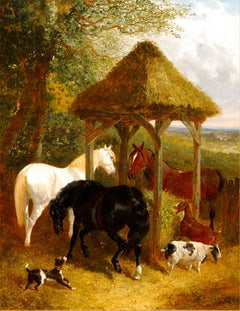
On the Farm
By John Frederick Herring Jr
Located in Belgravia, London, London
Oil on canvas Canvas size: 21 x 17 inches Signed lower right
Canvas, Oil
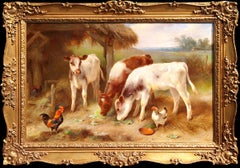
Farmyard Siblings
By Walter Hunt
Located in Belgravia, London, London
Oil on canvas Canvas size: 20 x 30 inches Framed size: 25.5 x 35.5 inches Signed lower right
Canvas, Oil
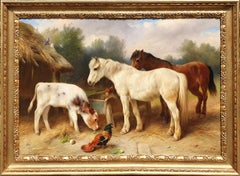
Feeding Companions
By Walter Hunt
Located in Belgravia, London, London
Oil on canvas Canvas size: 30 x 45 inches Framed size: 36.5 x 51.5 inches Signed and dated 1918 lower right
Canvas, Oil
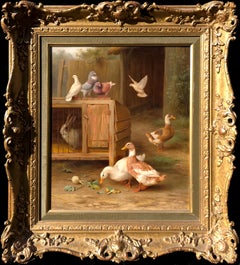
Farmyard Friends
By Edgar Hunt
Located in Belgravia, London, London
Farmyard Friends by Edgar Hunt British, 1876–1953 Oil on Board Board size: 14 x 12 inches Framed size: 20 x 18 inches
Canvas, Oil

A Farmyard Gathering
By Edgar Hunt
Located in Belgravia, London, London
Oil on canvas Canvas size: 30 x 50 inches Framed size: 38 x 57.75 inches Signed and dated 1907 lower right
Canvas, Oil
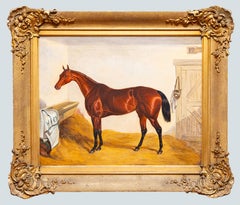
Bay race horse in a stable, William Osborne RHA, Irish Artist, 1823 - 1901
By William Osborne
Located in GB
This painting by William Osborne, an Irish artist from the 19th century, features a bay racehorse in a stable, captured in rich oil on canvas. The scene evokes a sense of realism and attention to detail, as Osborne was known for his vivid depictions of horses, particularly those involved in racing or in stables. The piece is signed with the artist’s initials, and still features the original frame. William Osborne is today best remembered as the father of the artist Walter Osborne. But he was a significant artist in his own right. He specialised in painting animals especially his own terriers who were often depicted in his studio. Strickland wrote ''His pictures of dogs...
Canvas, Oil
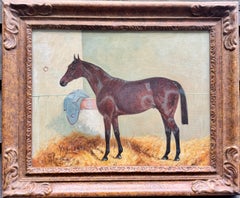
Portrait of the Race Horse Ypsilanti, Winner of the Great Jubilee in a stable
By George Paice
Located in Woodbury, CT
GEORGE PAICE Ypsilanti, Winner of the Great Jubilee Handicap at Kempton Park Oil on canvas, dated 1904 Signed lower left Presented in a decorative gilt frame This accomplished late nineteenth-century British sporting portrait by George Paice depicts the celebrated racehorse Ypsilanti, winner of the Great Jubilee Handicap at Kempton Park. Painted and dated 1894, the work records the successful thoroughbred standing in a stable interior. Ypsilanti is shown in full profile facing left, standing alert yet composed upon a straw-covered stable floor. The horse’s rich bay coat is carefully modelled with deep brown and chestnut tones, enlivened by cool highlights along the neck, back and muscular hindquarters. The upright ears, attentive eye and finely drawn head convey an intelligent and spirited character. A blue-grey horse blanket is draped over the partition behind the animal, introducing a subtle note of colour and reinforcing the stable setting. The pale walls and restrained interior provide a quiet backdrop, allowing the horse’s elegant outline and athletic proportions to dominate the composition. Particular attention has been given to Ypsilanti’s conformation. The long neck, deep chest, powerful hindquarters and slender legs are described with the anatomical understanding expected of an experienced equestrian painter. Paice combines precise observation with a direct and decorative approach, presenting the horse both as an individual animal and as a distinguished winner on the racecourse. George Paice (1854–1925) was a British painter best known for his portraits of horses, dogs and other sporting subjects. Working during the late Victorian and Edwardian periods, he developed a reputation for characterful and carefully observed animal portraits. His paintings frequently depict named racehorses, hunters and family animals within stable, landscape or domestic settings. The work is painted in oil on canvas and is signed and dated by Paice at the lower left. The inscription identifies the horse as Ypsilanti, winner of the Great Jubilee Handicap at Kempton Park, giving the portrait an important connection with British racing history. The painting is presented in a decorative gilt frame with broad moulded corners and a foliate inner border. Its warm, time-softened finish complements the bay colouring of the horse and provides an appropriately substantial setting for the composition. An attractive combination of equestrian portraiture and British racing history, this work would make a distinctive addition to a collection of sporting art, racehorse paintings...
Canvas, Oil

Oil Painting by Henry Charles Woollett "A Stable Interior"
By Henry Charles Woollett
Located in Mere, GB
Oil Painting by Henry Charles Woollett "A Stable Interior" 1826 - 1893 A London painter of rustic landscapes with animals. Similar to John Frederick Herring. Exhibited at the Royal ...
Oil
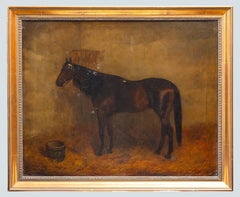
Horse in a Stable, Oil on Canvas, Academic Style, 19th Century, Framed
By English School
Located in GB
This painting presents a quietly dignified portrait of a horse, rendered with a restraint and sensitivity that places it firmly within the tradition of British sporting and animal pa...
Canvas, Oil
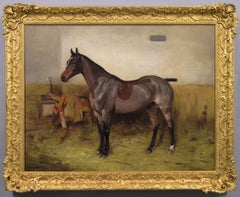
Sporting horse portrait oil painting of bay hunter in a stable
By Alfred Grenfell Haigh
Located in Nr Broadway, Worcestershire
Alfred Grenfell Haigh British, (1880-1963) Braydon Oil on canvas, signed & dated 1913, further inscribed Braydon Image size: 22.5 inches x 29.5 inches Size including frame: 28.5 in...
Canvas, Oil
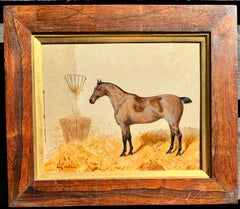
19th century English Portrait of a Bay Horse in a Stable, called Penny Wren
By George Paice
Located in Woodbury, CT
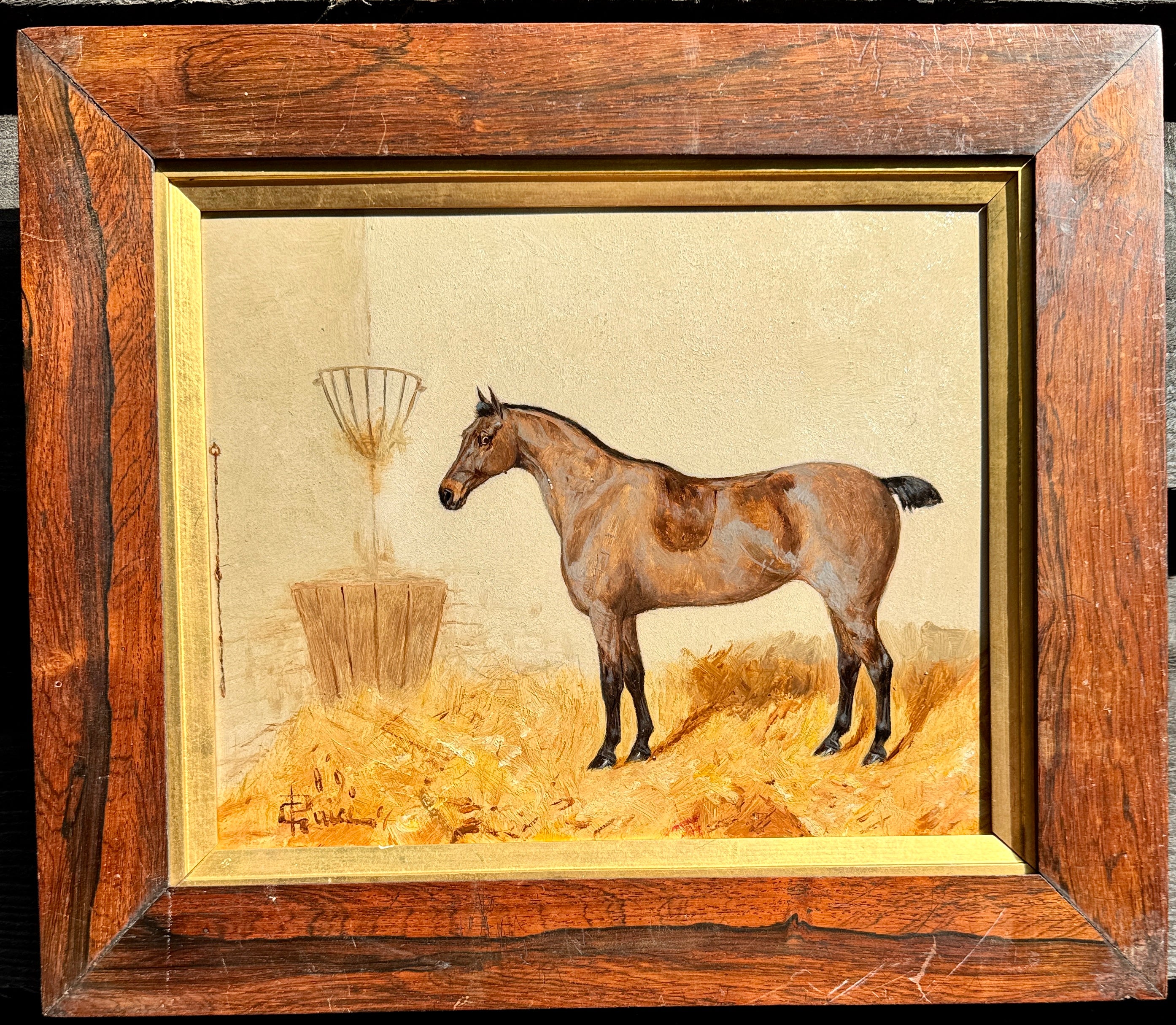
George Paice (1854–1925) Portrait of a Bay Horse in a Stable, circa 1900 Oil on artist’s card Signed lower left: “G. Paice” Circa 1900 Presented in an antique rosewood frame with g...
Oil, Panel