Want more images or videos?
Request additional images or videos from the seller.

Navajo
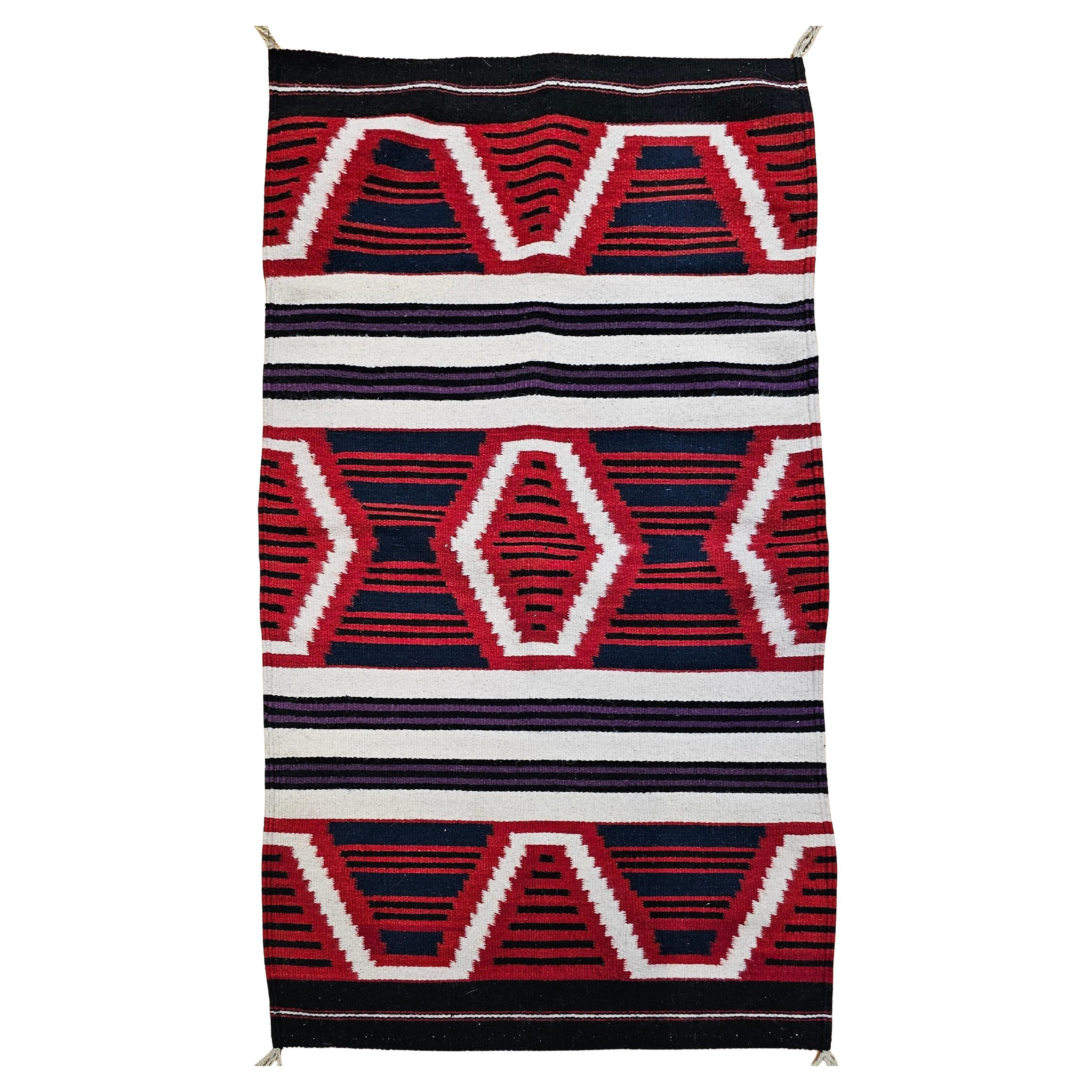
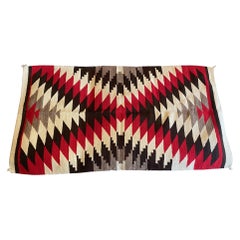
"THIRD PHASE" CHEIF'S BLANKET NAVAJO RUGS 64 X 50

1940s-50s

$3,200
£2,437.19
€2,920.70
CA$4,564.32
A$4,647.75
CHF 2,689.37
MX$61,287.57
NOK 30,071.67
SEK 32,017.80
DKK 21,828.52

About the Item

Navajo Rugs, Blankets Image Size: 64 x 50 "Third Phase" Chiefs Blanket Biography Navajo Rugs, Blankets Western Indian, Native American Natural wool Navajo rugs are made using natural wool that is undyed. Early Navajo rugs commonly used wool from churro sheep, and the use of native-sourced plant yarns such as sumac, yucca, and juniper became widespread after 1880. The natural dye style, featuring shades of earthy brown, indigo blue, white, and madder red, is a classic characteristic among older Navajo rugs. The Navajo Indians used weaving as a way to make Native American rugs and blankets. In fact, most Navajo weavings, whether blanket or rug, are referred to as Navajo rugs. The technique of making these items has not changed since the arrival of the Europeans to this country. The Navajo use a vertical wooden frame loom to weave colored thread together. Traditionally, mothers passed the art of weaving down to their daughters. A daughter was taught to weave in steps, often starting with the cleaning of the wool to get it prepared for weaving. After that, they were taught to spin the wool, and then finally began using their own small loom. Most Navajo rugs will be great examples of what is known as symmetrical balance. This means that when the rug is viewed, it looks like each side is a mirror design of the other side. If the Native American rugs were folded in half, the designs would match up symmetrically. The design found on the right side of the rug is symmetrical from left to right. The rug is also symmetrical in design from top to bottom. The top half and the bottom half appear to be mirror images of each other. Even those just starting to weave were taught to carefully plan out their design before they began creating the rug. Although Navajo weaving is steeped in tradition, that does not mean it hasn’t changed. In the late 1800s, the settlers had an influence of the design, patterns, and even size of the Native American rugs. At one point, demand was very high, and quality suffered. Rather than lose the art forever, many traders encouraged weavers to use older designs but newer dyes. Navajo weavings such as Native American rugs and blankets have become very popular lately. They are one of the earliest forms of true American folk art. In fact, one Native American blanket was such a prized possession that Sotheby’s sold it for more than $100,000 in 1983. These Native American rugs and blankets are not for everyday use anymore but used more for decoration in fashionable homes and offices. One reason these items have become so highly sought after and desired is there is no such thing as a Navajo machine-made rug. There may be imitators who use machines and claim to be Navajo made, but true Native American rugs are all made by hand on a loom. Many fear that Native American weaving will be lost because it is a lot of hard work and in today’s world; many people would rather pay less for an inferior product. Most weavers who are still active today are over the age of thirty-five and many of the younger generation do not want to take time to learn the skill. Because of this, purchasing an authentic Native American rug may be a good investment in the long run.
  • Creator:
    Navajo (Native American Indian - Southwest, American)
  • Creation Year:
    1940s-50s
  • Dimensions:
    Height: 64 in (162.56 cm)Width: 50 in (127 cm)Depth: 1 in (2.54 cm)
  • Medium:
  • Movement & Style:
  • Period:
  • Framing:
    Framing Options Available
  • Condition:
    Please visit my 1stdibs storefront for a large selection of Vintage Texas & Vintage American & Vintage Western Art. Paintings, Sculpture and Pottery. We are the largest in Texas with two galleries.
  • Gallery Location:
    San Antonio, TX
  • Reference Number:
    1stDibs: LU769318566252

More From This Seller

View All
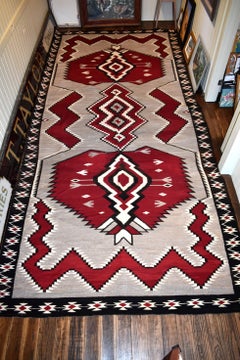
"HUGE NAVAJO RUG" NAVAJO RUG BLANKET 1930s Approx. 17 ft x 8 ft

"HUGE NAVAJO RUG" NAVAJO RUG BLANKET 1930s Approx. 17 ft x 8 ft

By Navajo

Located in San Antonio, TX

Navajo Rugs, Blankets Image Size: A HUGE 17 feet x 8 feet 1930s "Huge Navajo Rug" Biography Navajo Rugs, Blankets Western Indian, Native American Natural wool Navajo rugs are made us...

Category

1930s Tribal More Art

Materials

Wool

"VALLEY OF THE MONUMENTS" NAVAJO ARIZONA / UTAH HERDERS

"VALLEY OF THE MONUMENTS" NAVAJO ARIZONA / UTAH HERDERS

By Marjorie Reed

Located in San Antonio, TX

Marjorie Reed a.k.a. Harvey Day (1915-1996) California, Arizona Artist Size: 18 x 24 Frame: 23.25 x 29.25 Medium: Oil on Canvas "Valley of the Monuments" Marjorie Reed Biography Biography Marjorie Reed a.k.a. Harvey Day (1915-1996) Born in Springfield, Illinois and raised in Los Angeles, Marjorie Reed gained a reputation for paintings of western scenes, particularly Butterfield Overland Stagecoaches and other scenes of cowboys, horses and figures associated with the Overland Mail Route. Sometimes she signed her paintings with men's names including Harvey Day and Fred Day. At age three, she began art lessons from her father, Walter Stephen Reed, a commercial artist, whom she later assisted in the designing of Christmas cards and with illustrations for the Mickey Mouse Beverage Company, affiliated with Walt Disney. In fact, she was so accomplished that shortly after, she was hired by Walt Disney Studios to do animation. But she did not like the regimentation of that work. In the mid-1930s, she studied at the Chouinard Art School and took lessons from Jack Wilkinson Smith, a renowned landscape painter who was a key artist in establishing the Biltmore Salon in Los Angeles. Knowing her love of the outdoors and horses, he encouraged her to roam the countryside. She became a friend of Captain William Banning who had been a stagecoach driver for his father Phineas Banning. She learned the romantic story of the Butterfield Overland Mail Stage, which, from 1857 to 1858, ran from San Francisco to the Yuma crossing on the Colorado River. In her Model-T Ford with her Alaskan Husky dog, she, based in Los Angeles from the late 1930s to late 1940s, traveled the stage-coach route and sketched for the paintings of her project to learn about and sketch various points along the route. Her travels included Palm Springs, which she visited many times after her first stop in 1937, and she also spent time in Julian, a California mountain town. Her "Butterfield Stage" series, about the 1858 Butterfield Overland Stage from St. Louis to San Francisco were completed in 1957 after years of travel and research, and a book titled The Colorful Overland Stage was published with twenty of her color reproductions and text by Richard Pourade. In 1967, she finished a second set of Overland Stage illustrations focused on Arizona. A third set was then devoted to New Mexico and Texas and a fourth set to Oklahoma, Arkansas and Missouri. In her later years, she and her fourth husband, Cecil Creese, a miner, became residents of Tombstone, Arizona in 1963 after living in northern California on the Placer River. According to her daughter, Judy Morris, Marjorie Reed died in 1997, living in the desert near the Butterfield Stage Station in California. Exhibition venues included the Biltmore Salon and Ebell Salon in Los Angeles, the Heard Museum in Phoenix, the Desert Inn Gallery in Palm Springs, and the Palm Desert Art...

Category

20th Century Impressionist Landscape Paintings

Materials

Oil

"NATIVE" NATIVE AMERICAN INDIAN PORTRAIT

"NATIVE" NATIVE AMERICAN INDIAN PORTRAIT

By Cynthia Wiggins

Located in San Antonio, TX

Cynthia Wiggins Austin Artist Image Size: 14 x 11 Frame Size: 19 x 16 Medium: Oil "Native"

Category

20th Century Impressionist Portrait Paintings

Materials

Oil

You May Also Like

Early Navajo Handwoven "Klagetoh" Rug

Early Navajo Handwoven "Klagetoh" Rug

By Navajo

Located in Lambertville, NJ

Beautiful Navajo "Klagetoh" rug distinctive Regional style of weaving known for its rich red, grey, and tan wool displayed in a central diamond motif. Large size 94" x 64"

Category

Vintage 1940s American Native American Caucasian Rugs

Materials

Wool

Antique Navajo rug, Chief 's blanket third phase variant design, Circa 1940

Antique Navajo rug, Chief 's blanket third phase variant design, Circa 1940

Located in Paradise Valley, AZ

It is truly rare to find a one-of-a-kind antique that survived in the excellent condition as this rug has. The talented Navajo weaver wove this chief blanket with wool yarns that wer...

Category

Vintage 1940s American Navajo North and South American Rugs

Materials

Wool

Navajo Inspired Hand-Woven Rug, Fine Wool, Contemporary Design, Mexico

Navajo Inspired Hand-Woven Rug, Fine Wool, Contemporary Design, Mexico

Located in Paradise Valley, AZ

Introducing a striking blend of contemporary design and traditional craftsmanship, this modern rug seamlessly marries the rich textile heritage of Mexico with the finest wool sourced...

Category

2010s Mexican Tribal Central Asian Rugs

Materials

Wool

Indigenous Native American Indian Navajo Handwoven X-Pattern Rug Blanket

Indigenous Native American Indian Navajo Handwoven X-Pattern Rug Blanket

By Native American Art

Located in Studio City, CA

A wonderful, highly engaging, intricately hand woven antique Native North American Indian Navajo tribe wool rug/blanket featuring a geometric X-pattern (the Navajo tribe is famed for...

Category

Mid-20th Century American Native American Native American Objects

Materials

Wool

1930s Vintage American Hooked Navajo Rug 3' x 5'

1930s Vintage American Hooked Navajo Rug 3' x 5'

Located in New York, NY

Vintage circa 1930 American Native hand-woven wool rug, 3' x 5' (36 x 60 in). Condition: good, repaired. Wear consistent with age and use. Overall Good Condition. Navajo Wool Small ...

Category

Vintage 1930s American Native American North and South American Rugs

Materials

Wool