Want more images or videos?
Request additional images or videos from the seller.

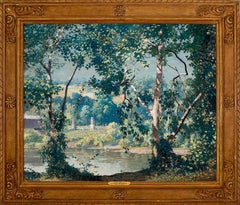
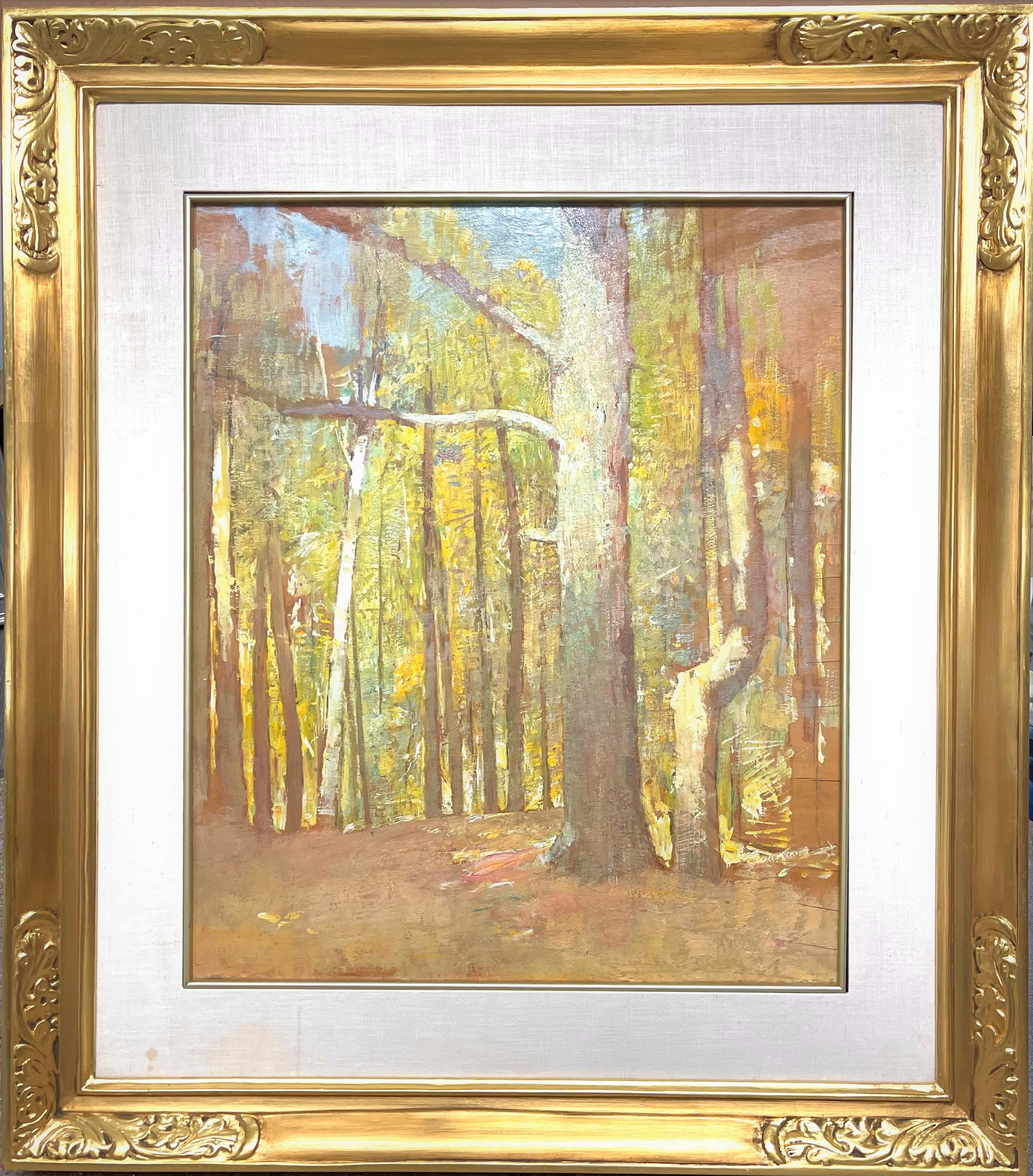
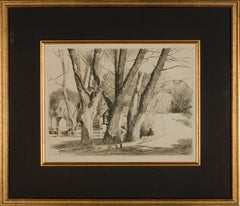
Daniel Garber
"Bare Tree"

c. 1920s - 1940s

$35,625
£27,123.62
€32,431.18
CA$50,787.11
A$51,696.56
CHF 29,936.32
MX$682,661.71
NOK 334,613.87
SEK 357,059.54
DKK 243,366.77

About the Item

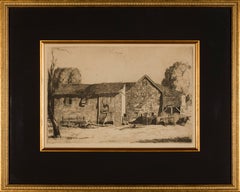
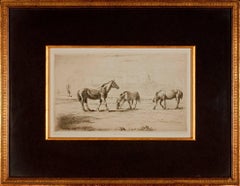
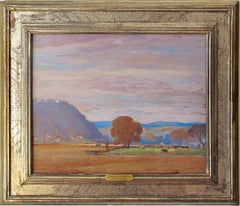
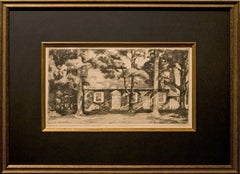
Jim’s of Lambertville Fine Art Gallery is proud to present this piece by Daniel Garber (1880 - 1958). One of the two most important and, so far, the most valuable of the New Hope School Painters, Daniel Garber was born on April 11, 1880, in North Manchester, Indiana. At the age of seventeen, he studied at the Art Academy of Cincinnati with Vincent Nowottny. Moving to Philadelphia in 1899, he first attended classes at the "Darby School," near Fort Washington; a summer school run by Academy instructors Anshutz and Breckenridge. Later that year, he enrolled at the Pennsylvania Academy of the Fine Arts. His instructors at the Academy included Thomas Anshutz, William Merritt Chase and Cecilia Beaux. There Garber met fellow artist Mary Franklin while she was posing as a model for the portrait class of Hugh Breckenridge. After a two year courtship, Garber married Mary Franklin on June 21, 1901. In May 1905, Garber was awarded the William Emlen Cresson Scholarship from the Pennsylvania Academy, which enabled him to spend two years for independent studies in England, Italy and France. He painted frequently while in Europe, creating a powerful body of colorful impressionist landscapes depicting various rural villages and farms scenes; exhibiting several of these works in the Paris Salon. Upon his return, Garber began to teach Life and Antique Drawing classes at the Philadelphia School of Design for Women in 1907. In the summer of that same year, Garber and family settled in Lumbertville, Pennsylvania, a small town just north of New Hope. Their new home would come to be known as the "Cuttalossa," named after the creek which occupied part of the land. The family would divide the year, living six months in Philadelphia at the Green Street townhouse while he taught, and the rest of the time in Lambertville. Soon Garber’s career would take off as he began to receive a multitude of prestigious awards for his masterful Pennsylvania landscapes. During the fall of 1909, he was offered a position to teach at the Pennsylvania Academy as an assistant to Thomas Anshutz. Garber became an important instructor at the Academy, where he taught for forty-one years. Daniel Garber painted masterful landscapes depicting the Pennsylvania and New Jersey countryside surrounding New Hope. Unlike his contemporary, Edward Redfield, Garber painted with a delicate technique using a thin application of paint. His paintings are filled with color and light projecting a feeling of endless depth. Although Like Redfield, Garber painted large exhibition size canvases with the intent of winning medals, and was extremely successful doing so, he was also very adept at painting small gem like paintings. He was also a fine draftsman creating a relatively large body of works on paper, mostly in charcoal, and a rare few works in pastel. Another of Garber’s many talents was etching. He created a series of approximately fifty different scenes, most of which are run in editions of fifty or less etchings per plate. Throughout his distinguished career, Daniel Garber was awarded some of the highest honors bestowed upon an American artist. Some of his accolades include the First Hallgarten Prize from the National Academy in 1909, the Bronze Medal at the International Exposition in Buenos Aires in 1910, the Walter Lippincott Prize from the Pennsylvania Academy and the Potter Gold Medal at the Art Institute of Chicago in 1911, the Second Clark Prize and the Silver Medal from the Corcoran Gallery of Art for “Wilderness” in 1912, the Gold Medal from the Panama-Pacific Exposition in San Francisco of 1915, the Second Altman Prize in1915, the Shaw prize in 1916, the First Altman Prize in 1917, the Edward Stotesbury Prize in1918, the Temple Gold Medal, in 1919, the First William A. Clark Prize in 1921, the Gold Medal from the Philadelphia Art Club in 1923, the Carnegie Institute Bronze Medal in 1924, the Gold Medal of Honor in 1929, the Jenny Sesnan Gold Medal in 1937, the Pennell Medal in 1942, and the Pennsylvania Academy Fellowship Award in1947 among many others. Daniel Garber and Edward Redfield are known by most art enthusiasts as the two leading figures associated with the New Hope Art Colony. This is a correct assessment, but in the broader scope, as key figures in twentieth century American Art, their importance is equally paramount. As this group, once considered regional, secures it’s place in history, painters like Garber and Redfield are destined to be considered the true American Masters by the international art world. Garber's work is included in nearly thirty museum collections nationally and this number is growing. He is also the first of the "New Hope School" painters to exceed the million dollar mark at auction which occurred in 2003.
  • Creator:
    Daniel Garber (1880-1958, American)
  • Creation Year:
    c. 1920s - 1940s
  • Dimensions:
    Height: 18 in (45.72 cm)Width: 24 in (60.96 cm)
  • Medium:
  • Movement & Style:
  • Period:
  • Condition:
  • Gallery Location:
    Lambertville, NJ
  • Reference Number:
    Seller: LAMNJ1172016441stDibs: LU374940433

More From This Seller

View All
"Spring Valley Willows"

"Spring Valley Willows"

By Daniel Garber

Located in Lambertville, NJ

Jim’s of Lambertville Fine Art Gallery is proud to present this piece by Daniel Garber (1880 - 1958). One of the two most important and, so far, the most valuable of the New Hope School Painters, Daniel Garber was born on April 11, 1880, in North Manchester, Indiana. At the age of seventeen, he studied at the Art Academy of Cincinnati with Vincent Nowottny. Moving to Philadelphia in 1899, he first attended classes at the "Darby School," near Fort Washington; a summer school run by Academy instructors Anshutz and Breckenridge. Later that year, he enrolled at the Pennsylvania Academy of the Fine Arts. His instructors at the Academy included Thomas Anshutz, William Merritt Chase and Cecilia Beaux. There Garber met fellow artist Mary Franklin while she was posing as a model for the portrait class of Hugh Breckenridge. After a two year courtship, Garber married Mary Franklin on June 21, 1901. In May 1905, Garber was awarded the William Emlen Cresson Scholarship from the Pennsylvania Academy, which enabled him to spend two years for independent studies in England, Italy and France. He painted frequently while in Europe, creating a powerful body of colorful impressionist landscapes depicting various rural villages and farms scenes; exhibiting several of these works in the Paris Salon. Upon his return, Garber began to teach Life and Antique Drawing classes at the Philadelphia School of Design for Women in 1907. In the summer of that same year, Garber and family settled in Lumbertville, Pennsylvania, a small town just north of New Hope. Their new home would come to be known as the "Cuttalossa," named after the creek which occupied part of the land. The family would divide the year, living six months in Philadelphia at the Green Street townhouse while he taught, and the rest of the time in Lambertville. Soon Garber’s career would take off as he began to receive a multitude of prestigious awards for his masterful Pennsylvania landscapes. During the fall of 1909, he was offered a position to teach at the Pennsylvania Academy as an assistant to Thomas Anshutz. Garber became an important instructor at the Academy, where he taught for forty-one years. Daniel Garber painted masterful landscapes depicting the Pennsylvania and New Jersey countryside surrounding New Hope. Unlike his contemporary, Edward Redfield, Garber painted with a delicate technique using a thin application of paint. His paintings are filled with color and light projecting a feeling of endless depth. Although Like Redfield, Garber painted large exhibition size canvases with the intent of winning medals, and was extremely successful doing so, he was also very adept at painting small gem like paintings. He was also a fine draftsman creating a relatively large body of works on paper, mostly in charcoal, and a rare few works in pastel. Another of Garber’s many talents was etching. He created a series of approximately fifty different scenes, most of which are run in editions of fifty or less etchings per plate. Throughout his distinguished career, Daniel Garber was awarded some of the highest honors bestowed upon an American artist. Some of his accolades include the First Hallgarten Prize from the National Academy in 1909, the Bronze Medal at the International Exposition in Buenos Aires in 1910, the Walter Lippincott Prize from the Pennsylvania Academy and the Potter Gold Medal at the Art Institute of Chicago in 1911, the Second Clark Prize and the Silver Medal from the Corcoran Gallery of Art for “Wilderness” in 1912, the Gold Medal from the Panama-Pacific Exposition in San Francisco of 1915, the Second Altman Prize in1915, the Shaw prize in 1916, the First Altman Prize in 1917, the Edward Stotesbury Prize in1918, the Temple Gold Medal, in 1919, the First William A...

Category

1940s American Impressionist Landscape Prints

Materials

Etching

"Improvidence"

"Improvidence"

By Daniel Garber

Located in Lambertville, NJ

Jim’s of Lambertville Fine Art Gallery is proud to present this piece by Daniel Garber (1880 - 1958). One of the two most important and, so far, the most valuable of the New Hope Sc...

Category

1920s American Impressionist Landscape Prints

Materials

Etching

"Old Barney"

"Old Barney"

By Daniel Garber

Located in Lambertville, NJ

Jim’s of Lambertville Fine Art Gallery is proud to present this piece by Daniel Garber (1880 - 1958). One of the two most important and, so far, the most valuable of the New Hope Sc...

Category

Mid-20th Century American Impressionist Landscape Prints

Materials

Etching

"Up the Valley"

"Up the Valley"

By Daniel Garber

Located in Lambertville, NJ

In an original Harer frame. Illustrated in "Daniel Garber Catalogue Raisonne" Vol. II, pg. 271, and in book titled "Blue Chips", pg. 33 Jim’s of Lambertville is proud to offer this artwork by: Daniel Garber (1880-1958) One of the two most important and, so far, the most valuable of the New Hope School Painters, Daniel Garber was born on April 11, 1880, in North Manchester, Indiana. At the age of seventeen, he studied at the Art Academy of Cincinnati with Vincent Nowottny. Moving to Philadelphia in 1899, he first attended classes at the "Darby School," near Fort Washington; a summer school run by Academy instructors Anshutz and Breckenridge. Later that year, he enrolled at the Pennsylvania Academy of the Fine Arts. His instructors at the Academy included Thomas Anshutz, William Merritt Chase and Cecilia Beaux. There Garber met fellow artist Mary Franklin while she was posing as a model for the portrait class of Hugh Breckenridge. After a two year courtship, Garber married Mary Franklin on June 21, 1901. In May 1905, Garber was awarded the William Emlen Cresson Scholarship from the Pennsylvania Academy, which enabled him to spend two years for independent studies in England, Italy and France. He painted frequently while in Europe, creating a powerful body of colorful impressionist landscapes depicting various rural villages and farms scenes; exhibiting several of these works in the Paris Salon. Upon his return, Garber began to teach Life and Antique Drawing classes at the Philadelphia School of Design for Women in 1907. In the summer of that same year, Garber and family settled in Lumbertville, Pennsylvania, a small town just north of New Hope. Their new home would come to be known as the "Cuttalossa," named after the creek which occupied part of the land. The family would divide the year, living six months in Philadelphia at the Green Street townhouse while he taught, and the rest of the time in Lambertville. Soon Garber’s career would take off as he began to receive a multitude of prestigious awards for his masterful Pennsylvania landscapes. During the fall of 1909, he was offered a position to teach at the Pennsylvania Academy as an assistant to Thomas Anshutz. Garber became an important instructor at the Academy, where he taught for forty-one years. Daniel Garber painted masterful landscapes depicting the Pennsylvania and New Jersey countryside surrounding New Hope. Unlike his contemporary, Edward Redfield, Garber painted with a delicate technique using a thin application of paint. His paintings are filled with color and light projecting a feeling of endless depth. Although Like Redfield, Garber painted large exhibition size canvases with the intent of winning medals, and was extremely successful doing so, he was also very adept at painting small gem like paintings. He was also a fine draftsman creating a relatively large body of works on paper, mostly in charcoal, and a rare few works in pastel. Another of Garber’s many talents was etching. He created a series of approximately fifty different scenes, most of which are run in editions of fifty or less etchings per plate. Throughout his distinguished career, Daniel Garber was awarded some of the highest honors bestowed upon an American artist. Some of his accolades include the First Hallgarten Prize from the National Academy in 1909, the Bronze Medal at the International Exposition in Buenos Aires in 1910, the Walter Lippincott Prize from the Pennsylvania Academy and the Potter Gold Medal at the Art Institute of Chicago in 1911, the Second Clark Prize and the Silver Medal from the Corcoran Gallery of Art for “Wilderness” in 1912, the Gold Medal from the Panama-Pacific Exposition in San Francisco of 1915, the Second Altman Prize in1915, the Shaw prize in 1916, the First Altman Prize in 1917, the Edward Stotesbury Prize in1918, the Temple Gold Medal, in 1919, the First William A...

Category

1940s American Impressionist Landscape Paintings

Materials

Oil, Panel

"Birmingham Meeting House"

"Birmingham Meeting House"

By Daniel Garber

Located in Lambertville, NJ

Jim’s of Lambertville Fine Art Gallery is proud to present this piece by Daniel Garber (1880 - 1958). One of the two most important and, so far, the most valuable of the New Hope Sc...

Category

1930s American Impressionist Landscape Prints

Materials

Etching

"Fields in Jersey"

"Fields in Jersey"

By Daniel Garber

Located in Lambertville, NJ

Jim’s of Lambertville Fine Art Gallery is proud to present this piece by Daniel Garber (1880 - 1958). One of the two most important and, so far, the most valuable of the New Hope Sc...

Category

Early 1900s American Impressionist Landscape Paintings

Materials

Canvas, Oil

You May Also Like

"Tree in Winter" Delos Palmer Jr, Sketch of Tree 20th Century Impressionist Work

"Tree in Winter" Delos Palmer Jr, Sketch of Tree 20th Century Impressionist Work

Located in New York, NY

Delos Palmer Jr. Tree in Winter Signed lower left Oil on Masonite 10 x 8 inches Delos Palmer, Jr. was born January 26, 1890 in New York City. His father was Dr. Delos Palmer, a socially prominent Park Avenue dentist. His mother was Jennifer Emma Banta. His parents were both born in NYC, where they married in 1880 and had five children. There had three sons and two daughters. He was the fourth born. They lived in a private townhouse at 48 West 50th Street, with a cook, a waitress, and a nurse to assist in his father's dental practice on the ground floor. They lived a privileged life and the children all went to the best private schools. He graduated high school in June of 1908. He studied at The Art Students League from 1911 to 1915 with the renowned American Impressionist, George Bellows. According to the artist, "Bellows was a good influence on me. He taught me how to paint what I see and what I feel!" In 1916 Palmer moved to the historic Holbein Studios at 139 West 55th Street. He worked there until 1920, when he moved to the more fashionable Greenwich Village, where he became a successful society portraitist. He was 27 years old during the Great War, so he was not selected for military service. In 1923 Palmer began to sell interior story illustrations to Metropolitan Magazine, The Saturday Evening Post, and Liberty. In 1924 he married Helen Smith Romme and moved to Stamford, CT, where they raised a daughter and two step-sons. The fateful market crash of 1929 ended Palmer's high society portrait business, but he soon found work through his contacts at Liberty magazine's MacFadden Publishing, which also produced several crime and detective magazines such as Master Detective and True Detective. He then began to paint pulp covers for Dime Mystery, Clues, Frontier Stories, Action Stories, Western Trails, All Star Adventure, Complete Western Book...

Category

Early 20th Century American Impressionist Figurative Paintings

Materials

Masonite, Oil

METCALF American Impressionist Landscape Watercolor

METCALF American Impressionist Landscape Watercolor

By Willard LeRoy Metcalf

Located in New York, NY

Willard Metcalf (1858-1925) was an important American Impressionist, member of the American Watercolor Society, and teaching at Cooper Union and the Art Student's League. This comp...

Category

Early 20th Century American Impressionist Landscape Paintings

Materials

Watercolor

Late 19th Century Tonalist Landscape with Oak Trees

Late 19th Century Tonalist Landscape with Oak Trees

By Willard LeRoy Metcalf

Located in Soquel, CA

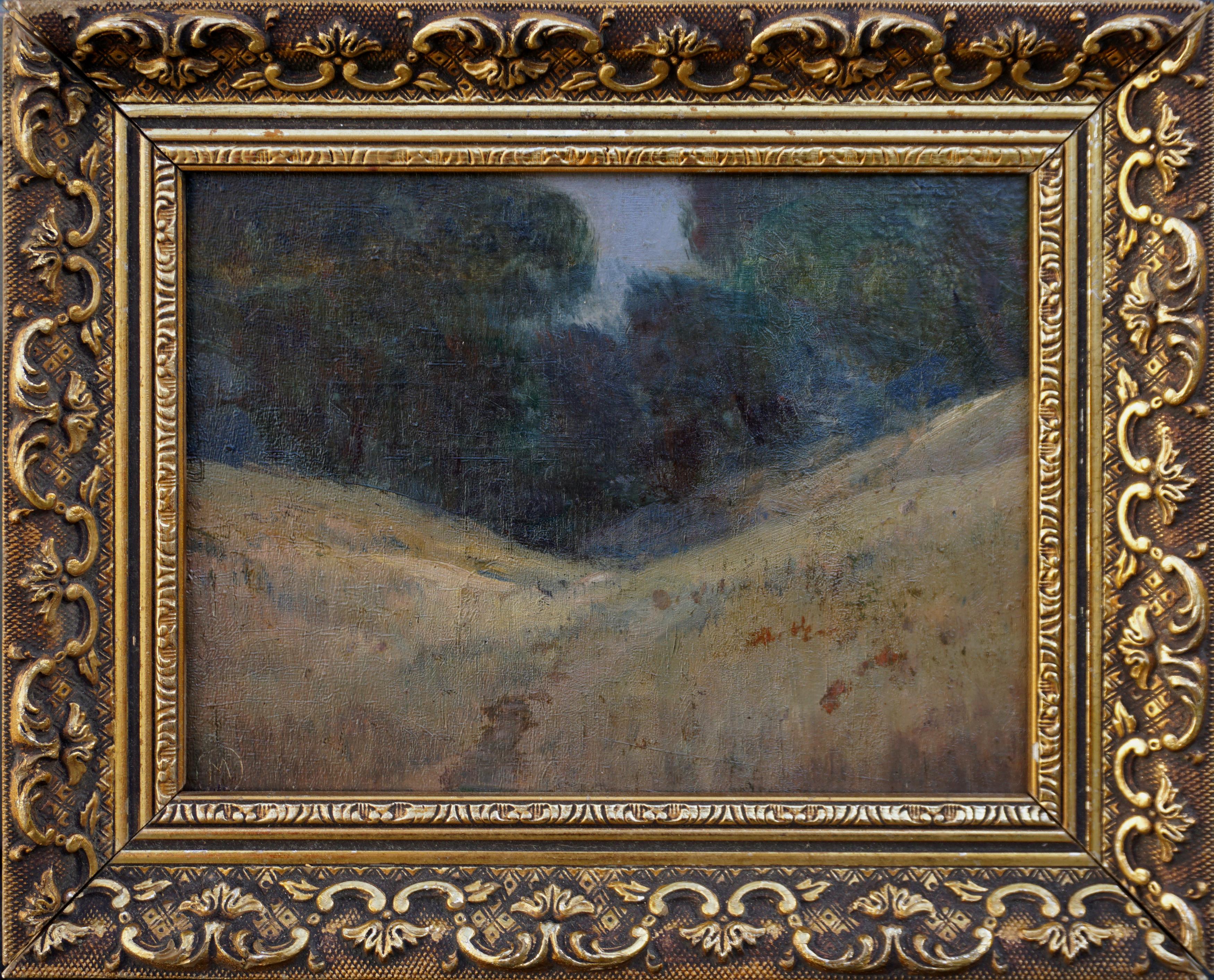
Gorgeous late 19th century Tonalist landscape painting of foothills and oak trees in the style of Willard Leroy Metcalf circa 1900. Inscribed "M" in circle monogram lower left corner and on frame verso. Presented in original rustic giltwood frame. Image size: 6"H x 8"W. Framed size: 8.5"H x 10.5"W. Tonalist are usually intimate works, painted with a limited palette. Tonalist paintings are softly expressive, suggestive rather than detailed, often depicting the landscape at twilight or evening, when there is an absence of contrast. Tonalist paintings could also be figurative, but in them, the figure was usually out of doors or in an interior in a low-key setting with little detail. Tonalism had its origins in the works of the French Barbizon school and in the works of American painters who were influenced by them. California Tonalism was born when the emphasis in California landscape painting passed from the grand landscapes of works like those of Thomas Hill and William Keith's early career, to more intimate views of a domesticated landscape. At the same time, the parallel Pictorialist Photography...

Category

1890s Tonalist Landscape Paintings

Materials

Oil, Cardboard

Charles Partridge Adams Winter Trees Watercolor Rocky Mountain Landscape

Charles Partridge Adams Winter Trees Watercolor Rocky Mountain Landscape

By Charles Partridge Adams

Located in Denver, CO

A refined and highly collectible early 20th-century watercolor by Charles Partridge Adams, this winter landscape exemplifies the artist’s mastery of the Rocky Mountain subject and hi...

Category

Early 20th Century American Impressionist Landscape Drawings and Waterco...

Materials

Watercolor

Sparse Forest Scene

Sparse Forest Scene

By William McGregor Paxton

Located in Fredericksburg, VA

Sparse Forest Scene by William McGregor Paxton is a testament to the artist's mastery of light, atmosphere, and nuanced detail. Known for his contributions to American Impressionism,...

Category

Early 20th Century American Impressionist Landscape Paintings

Materials

Oil, Board